
Your baby's 3-5 day checkup (Well-Child Visit): Let's be aware of this!

Your baby's 3-5 day checkup (Well-Child Visit): Let's be aware of this!

Congratulations to you and your little one! You must be very busy these days, and you must be facing a lot of new experiences. A few days after the baby is born, that is, between 3 and 5 days, you will have to show the baby to the doctor or take him to the clinic. This is what we call a `( Well-Child Visit )`. This is a very important check-up. So, let's see what happens during this check-up, and what you should expect.
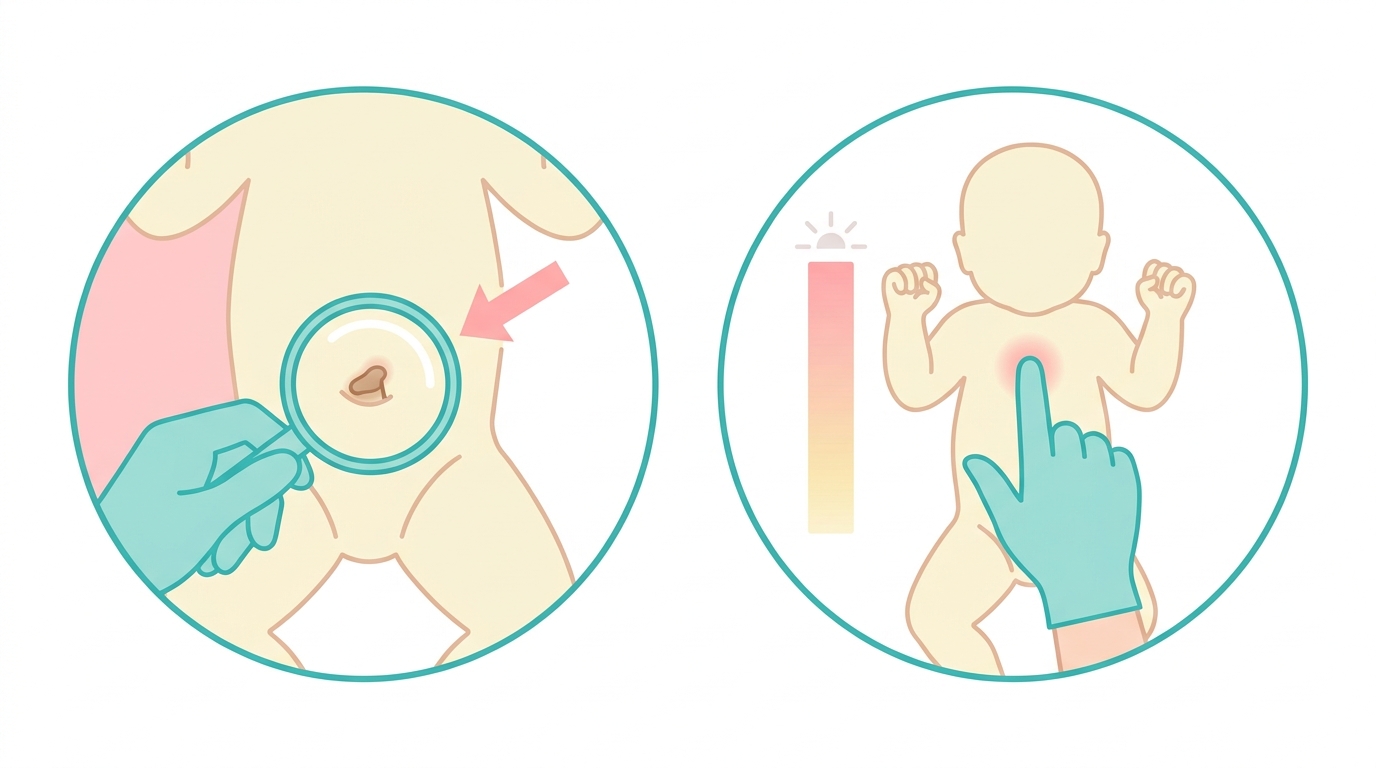
What happens during this checkup?

During this first checkup, the doctor or nurse will check many things about your baby. This is a great time to ask any questions you have and talk about what's on your mind.

1. Measuring baby's growth :

  • The first thing to do is to measure the baby's weight, length, and head circumference and record them on a ``Growth Chart.`` This allows the doctor to see if the baby is growing properly.

2. Asks you questions and gives advice:

The doctor or nurse will ask you about your baby's eating, sleeping, urinating , pooping , etc. Don't hesitate to ask any questions you have, no matter how small.

  • Breastfeeding method: Newborn babies should be breastfed whenever they are hungry.
  • If you are breastfeeding : You may feel hungry every 1-3 hours. Your doctor or nurse can help you with any problems by watching you breastfeed. Don't forget to burp your baby after and during feedings.
  • If you are giving formula: You may feel hungry every 2-4 hours.
  • How to urinate and poop: A newborn baby should have about 6 wet diapers a day. The number of times a baby poops can vary from baby to baby, but usually the baby will pass stool 3-4 times a day, gently and easily. If you have any questions about this, talk to your doctor.
  • Sleep: A newborn baby can sleep for about 14-17 hours a day. However, this sleep is not continuous, and they wake up frequently throughout the day and night to feed.
  • Breastfed babies usually wake up every 1-3 hours.
  • Formula- fed babies may sleep a little longer because formula takes longer to digest, making them feel fuller. They will wake up about every 2-4 hours.
  • The most important thing is to not let your baby sleep for more than 4 hours between feedings until he is gaining weight properly (usually within the first few weeks). After that, it's okay for your baby to sleep a little longer.
  • Growth and abilities:Within the first month, babies should demonstrate the following:
  • They look at faces and illuminated objects about 8-12 inches (20-30 cm) away.
  • Responds to sounds - may become quiet, blink , turn head, twitch, or even cry when they hear a sound.
  • Keep your arms and legs folded.
  • Both limbs move together.
  • When placed on the stomach (this should only be done when the baby is awake and you are watching), raise his head for a while.
  • Newborn babies have innate reactions (Newborn Reflexes) . These are things that happen automatically. Here are a few examples:
  • `Rooting and Sucking Reflex`: When something is placed near the mouth, the baby turns its head in that direction and starts sucking (just like searching for the mother's breast or the nipple of a bottle).
  • Grasp Reflex: When a finger is placed on the palm, it tightens and grasps.
  • `Fencer's Pose`: Turn your head to one side, extending your arm on that side and bending your arm on the other side. As if you are drawing a bow.
  • `Moro Reflex` (Startle Response): When suddenly startled, the body throws out both arms and legs and then pulls them back in.

3. Full body check:

The doctor will remove all of the baby's clothes and examine the baby in front of you. This will include checking the baby's eyes , listening to the baby's heartbeat, checking the pulse, checking the umbilical cord, and checking the hip bones.

4. Special tests `(Screening Tests)`:

The doctor will review the results of the screening tests done at the hospital. If necessary, some tests may be repeated. If the baby's hearing test was not done at the hospital, it will be done at this time.

5. Vaccines :

Vaccinations are very important to protect your baby from serious diseases. Therefore, it is essential to give your baby the vaccines on time. Vaccination schedules may vary slightly between clinics. So talk to your doctor to find out what to expect.

Keep these things in mind until your next checkup (in a month).

The next time you take your baby for a checkup is in about a month. Until then, please take care of these things.

About food and drink

  • Feed your baby whenever he is hungry. Also pay attention to the signs your baby shows when he is hungry. For example, turning his head away from the breast or bottle, covering his mouth, etc.
  • Do not give solid foods or fruit juice .
  • Unless the doctor advises,Do not put cereal in your baby's milk bottle.
  • If you are breastfeeding:
  • Help the baby latch on properly: The mouth should be wide open, the tongue should be under the nipple, and as much of the breast as possible should be taken into the mouth.
  • You should continue to take a ``Prenatal Vitamin'' or ``Multivitamin'' daily.
  • Ask your doctor about Vitamin D drops for your baby.
  • Do not use bottles or pacifiers until breastfeeding is well established (usually about a month).
  • If you are a breastfeeding mother:
  • Give your baby iron-fortified formula.
  • Follow the instructions on the powdered milk package exactly when making and storing bottles.
  • Do not leave bottles propped up on anything, or put your baby to sleep with a bottle.
  • If you are changing a type of formula, talk to your doctor.

Daily care

  • Always wash your hands thoroughly before handling your baby. Keep your baby away from people who are sick.
  • To prevent the umbilical cord from drying out, wrap the diaper below the navel. The umbilical cord usually falls off in 10-14 days.
  • If the baby is a boy who has been circumcised, apply a little petroleum jelly to his genitals or in front of his penis.
  • Until the umbilical cord falls off and the circumcision wound heals , bathe your baby using the sponge bath method. Test the water on your wrist to make sure it is not too hot.
  • Use unscented soaps and lotions.
  • Hold your baby often and take care of their needs. You can't spoil a newborn baby. That means they won't be spoiled just because you hold them.
  • Sing songs, talk, and read books to your baby. Babies learn best when they interact with people.
  • It is normal for babies to have periods of fussiness and frequent crying. However, for some babies, this crying can be very severe, lasting for hours a day. This is called `(Colic)`. If a normally healthy baby develops `(Colic)`, it usually starts around 3 weeks of age.
  • If your baby's temperature is 100.4°F (38°C) or higher when you look at their back, call your doctor right away. Also, if your baby seems sick, isn't drinking, isn't urinating , has a yellow complexion, or has redness or pus around the umbilical cord or circumcision site, call your doctor. Don't give any medicine to a baby under 2 months of age without first talking to your doctor.
  • It's normal for new mothers to feel overwhelmed and stressed at times. But if these feelings are overwhelming, or if you feel sad, anxious, or worried, talk to your doctor.
  • If you are concerned about your living situation, talk to your doctor. Do you have what you need to care for the baby? Do you have enough food, a safe place to live, and health insurance? The doctor can tell you about community resources or refer you to a social worker.

About security

  • To reduce the risk of Sudden Infant Death Syndrome (SIDS), do these things:
  • Always put your baby to sleep on his or her back (not on his or her stomach or side), on a firm, flat mattress. Do not place crib bumpers, blankets, pillows, or soft toys in the crib or bassinet.
  • If possible, breastfeed the baby.
  • Until your baby is one year old, or at least for the first 6 months, when the risk of SIDS is highest, sleep in a crib in your room, next to your bed.
  • Keep the room temperature comfortable and prevent your baby from getting too hot. Dress your baby appropriately for the room temperature, and don't overdress him. Don't cover his head while he's sleeping. Check to see if he's sweating or feeling hot.
  • Consider giving your baby a pacifier to suck on while you're putting him to sleep. Don't force him to suck on a pacifier if he doesn't like it. If he swallows the pacifier while sleeping, you don't need to put it back in. If you're breastfeeding, don't give him a pacifier until he's well-accustomed to breastfeeding.
  • Do not let your baby sleep on anything that is not designed for babies to sleep on (e.g. car seats, feeding pillows, baby loungers).
  • Do not use any devices that claim to reduce the risk of SIDS (e.g., sleep positioners, baby heart rate and breathing monitors). There is no product that actually does this.
  • Check that everything you use to put your baby to sleep complies with relevant safety standards.
  • Do not smoke, do not use e-cigarettes or vape. Do not let anyone smoke near the baby.
  • Always place your baby in the back seat, in a rear-facing car seat. Never leave your baby alone in a car.
  • When your baby is awake, don't leave him alone, especially in high places or during bath time.
  • Never shake a baby! Doing so can cause bleeding inside the brain and even death. If you ever feel like you might hurt your baby, put the baby in the crib for a few minutes and call a friend, relative, or your doctor for help.
  • Keep your baby covered and in the shade whenever possible to avoid sun exposure. Sunscreen is not recommended for babies under 6 months of age. However, if shade and clothing do not provide adequate protection, a baby under 6 months of age can use a small amount of sunscreen.

Remember, all of this is for the good of you and your baby. You are not alone, and if you have any questions, ask your doctor.

The most important things to keep in mind (Take-Home Message)

Okay, so let's remind you again of some of the things we've talked about:

  • Go for checkups on time: This is very important to know about the baby's growth and health.
  • Take care of your nutrition: If you are breastfeeding, continue to do so. If you are formula feeding, do so as directed by your doctor.
  • Safety is paramount: Be sure to follow the precautions, especially those to prevent SIDS. Never shake your baby.
  • Ask your questions: Don't hesitate to ask your doctor, even if it's something small.
  • Think about yourself: It's normal to feel tired and overwhelmed as a new mother. But if it's too much to bear, ask for help.

Wishing you and your little one a healthy, happy time!

👩🏽‍⚕️ Additional questions (FAQs)

💬 Why do I need to go back for a checkup (3-5 Day Visit) 3-5 days after the baby is born?

This is a very important clinic! It is essential to check if the baby has jaundice (yellow eyes), if the mother is getting enough breast milk, and if the baby's weight loss after birth is at a normal level.

💬 Will the baby's umbilical cord be examined during this checkup?

Yes, the nurse or doctor will carefully examine the wound to see if it is dry, bleeding, or infected, and will give the mother the correct instructions for cleaning it.

💬 If the mother's milk supply is not enough, will the doctor give her formula at this time?

In most cases, the milk may be a little delayed in coming in during the first 5 days. The doctor will first check to see if the baby is able to suckle. Doctors do not recommend giving formula milk at this time, unless it is absolutely necessary.


` Healthy babies, baby health, first baby checkup, breastfeeding, baby development, SIDS, baby safety

⚠️ Important: The medical articles and information on Nirogi Lanka are for general awareness only, and are by no means a substitute for professional medical advice, diagnosis, or treatment. For any medical problem you have, consult a qualified physician immediately.

💬 Comments (0)

No comments have been posted yet. Add your comment here for the first time.

Add your comment

Please calculate: 8 + 2 =
Your baby's 3-5 day checkup (Well-Child Visit): Let's be aware of this!
Preventive HealthApril 3, 2026

Your baby's 3-5 day checkup (Well-Child Visit): Let's be aware of this!

Congratulations to you and your little one! You must be very busy these days, and you must be facing a lot of new experiences. A few days after the baby is born, that is, between 3 and 5 days, you will have to show the baby to the doctor or take him to the clinic. This is what we call a `( Well-Child Visit )`. This is a very important check-up. So, let's see what happens during this check-up, and what you should expect.

What happens during this checkup?

During this first checkup, the doctor or nurse will check many things about your baby. This is a great time to ask any questions you have and talk about what's on your mind.

1. Measuring baby's growth :

  • The first thing to do is to measure the baby's weight, length, and head circumference and record them on a ``Growth Chart.`` This allows the doctor to see if the baby is growing properly.

2. Asks you questions and gives advice:

The doctor or nurse will ask you about your baby's eating, sleeping, urinating , pooping , etc. Don't hesitate to ask any questions you have, no matter how small.

  • Breastfeeding method: Newborn babies should be breastfed whenever they are hungry.
  • If you are breastfeeding : You may feel hungry every 1-3 hours. Your doctor or nurse can help you with any problems by watching you breastfeed. Don't forget to burp your baby after and during feedings.
  • If you are giving formula: You may feel hungry every 2-4 hours.
  • How to urinate and poop: A newborn baby should have about 6 wet diapers a day. The number of times a baby poops can vary from baby to baby, but usually the baby will pass stool 3-4 times a day, gently and easily. If you have any questions about this, talk to your doctor.
  • Sleep: A newborn baby can sleep for about 14-17 hours a day. However, this sleep is not continuous, and they wake up frequently throughout the day and night to feed.
  • Breastfed babies usually wake up every 1-3 hours.
  • Formula- fed babies may sleep a little longer because formula takes longer to digest, making them feel fuller. They will wake up about every 2-4 hours.
  • The most important thing is to not let your baby sleep for more than 4 hours between feedings until he is gaining weight properly (usually within the first few weeks). After that, it's okay for your baby to sleep a little longer.
  • Growth and abilities:Within the first month, babies should demonstrate the following:
  • They look at faces and illuminated objects about 8-12 inches (20-30 cm) away.
  • Responds to sounds - may become quiet, blink , turn head, twitch, or even cry when they hear a sound.
  • Keep your arms and legs folded.
  • Both limbs move together.
  • When placed on the stomach (this should only be done when the baby is awake and you are watching), raise his head for a while.
  • Newborn babies have innate reactions (Newborn Reflexes) . These are things that happen automatically. Here are a few examples:
  • `Rooting and Sucking Reflex`: When something is placed near the mouth, the baby turns its head in that direction and starts sucking (just like searching for the mother's breast or the nipple of a bottle).
  • Grasp Reflex: When a finger is placed on the palm, it tightens and grasps.
  • `Fencer's Pose`: Turn your head to one side, extending your arm on that side and bending your arm on the other side. As if you are drawing a bow.
  • `Moro Reflex` (Startle Response): When suddenly startled, the body throws out both arms and legs and then pulls them back in.

3. Full body check:

The doctor will remove all of the baby's clothes and examine the baby in front of you. This will include checking the baby's eyes , listening to the baby's heartbeat, checking the pulse, checking the umbilical cord, and checking the hip bones.

4. Special tests `(Screening Tests)`:

The doctor will review the results of the screening tests done at the hospital. If necessary, some tests may be repeated. If the baby's hearing test was not done at the hospital, it will be done at this time.

5. Vaccines :

Vaccinations are very important to protect your baby from serious diseases. Therefore, it is essential to give your baby the vaccines on time. Vaccination schedules may vary slightly between clinics. So talk to your doctor to find out what to expect.

Keep these things in mind until your next checkup (in a month).

The next time you take your baby for a checkup is in about a month. Until then, please take care of these things.

About food and drink

  • Feed your baby whenever he is hungry. Also pay attention to the signs your baby shows when he is hungry. For example, turning his head away from the breast or bottle, covering his mouth, etc.
  • Do not give solid foods or fruit juice .
  • Unless the doctor advises,Do not put cereal in your baby's milk bottle.
  • If you are breastfeeding:
  • Help the baby latch on properly: The mouth should be wide open, the tongue should be under the nipple, and as much of the breast as possible should be taken into the mouth.
  • You should continue to take a ``Prenatal Vitamin'' or ``Multivitamin'' daily.
  • Ask your doctor about Vitamin D drops for your baby.
  • Do not use bottles or pacifiers until breastfeeding is well established (usually about a month).
  • If you are a breastfeeding mother:
  • Give your baby iron-fortified formula.
  • Follow the instructions on the powdered milk package exactly when making and storing bottles.
  • Do not leave bottles propped up on anything, or put your baby to sleep with a bottle.
  • If you are changing a type of formula, talk to your doctor.

Daily care

  • Always wash your hands thoroughly before handling your baby. Keep your baby away from people who are sick.
  • To prevent the umbilical cord from drying out, wrap the diaper below the navel. The umbilical cord usually falls off in 10-14 days.
  • If the baby is a boy who has been circumcised, apply a little petroleum jelly to his genitals or in front of his penis.
  • Until the umbilical cord falls off and the circumcision wound heals , bathe your baby using the sponge bath method. Test the water on your wrist to make sure it is not too hot.
  • Use unscented soaps and lotions.
  • Hold your baby often and take care of their needs. You can't spoil a newborn baby. That means they won't be spoiled just because you hold them.
  • Sing songs, talk, and read books to your baby. Babies learn best when they interact with people.
  • It is normal for babies to have periods of fussiness and frequent crying. However, for some babies, this crying can be very severe, lasting for hours a day. This is called `(Colic)`. If a normally healthy baby develops `(Colic)`, it usually starts around 3 weeks of age.
  • If your baby's temperature is 100.4°F (38°C) or higher when you look at their back, call your doctor right away. Also, if your baby seems sick, isn't drinking, isn't urinating , has a yellow complexion, or has redness or pus around the umbilical cord or circumcision site, call your doctor. Don't give any medicine to a baby under 2 months of age without first talking to your doctor.
  • It's normal for new mothers to feel overwhelmed and stressed at times. But if these feelings are overwhelming, or if you feel sad, anxious, or worried, talk to your doctor.
  • If you are concerned about your living situation, talk to your doctor. Do you have what you need to care for the baby? Do you have enough food, a safe place to live, and health insurance? The doctor can tell you about community resources or refer you to a social worker.

About security

  • To reduce the risk of Sudden Infant Death Syndrome (SIDS), do these things:
  • Always put your baby to sleep on his or her back (not on his or her stomach or side), on a firm, flat mattress. Do not place crib bumpers, blankets, pillows, or soft toys in the crib or bassinet.
  • If possible, breastfeed the baby.
  • Until your baby is one year old, or at least for the first 6 months, when the risk of SIDS is highest, sleep in a crib in your room, next to your bed.
  • Keep the room temperature comfortable and prevent your baby from getting too hot. Dress your baby appropriately for the room temperature, and don't overdress him. Don't cover his head while he's sleeping. Check to see if he's sweating or feeling hot.
  • Consider giving your baby a pacifier to suck on while you're putting him to sleep. Don't force him to suck on a pacifier if he doesn't like it. If he swallows the pacifier while sleeping, you don't need to put it back in. If you're breastfeeding, don't give him a pacifier until he's well-accustomed to breastfeeding.
  • Do not let your baby sleep on anything that is not designed for babies to sleep on (e.g. car seats, feeding pillows, baby loungers).
  • Do not use any devices that claim to reduce the risk of SIDS (e.g., sleep positioners, baby heart rate and breathing monitors). There is no product that actually does this.
  • Check that everything you use to put your baby to sleep complies with relevant safety standards.
  • Do not smoke, do not use e-cigarettes or vape. Do not let anyone smoke near the baby.
  • Always place your baby in the back seat, in a rear-facing car seat. Never leave your baby alone in a car.
  • When your baby is awake, don't leave him alone, especially in high places or during bath time.
  • Never shake a baby! Doing so can cause bleeding inside the brain and even death. If you ever feel like you might hurt your baby, put the baby in the crib for a few minutes and call a friend, relative, or your doctor for help.
  • Keep your baby covered and in the shade whenever possible to avoid sun exposure. Sunscreen is not recommended for babies under 6 months of age. However, if shade and clothing do not provide adequate protection, a baby under 6 months of age can use a small amount of sunscreen.

Remember, all of this is for the good of you and your baby. You are not alone, and if you have any questions, ask your doctor.

The most important things to keep in mind (Take-Home Message)

Okay, so let's remind you again of some of the things we've talked about:

  • Go for checkups on time: This is very important to know about the baby's growth and health.
  • Take care of your nutrition: If you are breastfeeding, continue to do so. If you are formula feeding, do so as directed by your doctor.
  • Safety is paramount: Be sure to follow the precautions, especially those to prevent SIDS. Never shake your baby.
  • Ask your questions: Don't hesitate to ask your doctor, even if it's something small.
  • Think about yourself: It's normal to feel tired and overwhelmed as a new mother. But if it's too much to bear, ask for help.

Wishing you and your little one a healthy, happy time!

👩🏽‍⚕️ Additional questions (FAQs)

💬 Why do I need to go back for a checkup (3-5 Day Visit) 3-5 days after the baby is born?

This is a very important clinic! It is essential to check if the baby has jaundice (yellow eyes), if the mother is getting enough breast milk, and if the baby's weight loss after birth is at a normal level.

💬 Will the baby's umbilical cord be examined during this checkup?

Yes, the nurse or doctor will carefully examine the wound to see if it is dry, bleeding, or infected, and will give the mother the correct instructions for cleaning it.

💬 If the mother's milk supply is not enough, will the doctor give her formula at this time?

In most cases, the milk may be a little delayed in coming in during the first 5 days. The doctor will first check to see if the baby is able to suckle. Doctors do not recommend giving formula milk at this time, unless it is absolutely necessary.


` Healthy babies, baby health, first baby checkup, breastfeeding, baby development, SIDS, baby safety

⚠️ Important: The medical articles and information on Nirogi Lanka are for general awareness only, and are by no means a substitute for professional medical advice, diagnosis, or treatment. For any medical problem you have, consult a qualified physician immediately.

💬 Comments (0)

No comments have been posted yet. Add your comment here for the first time.

Add your comment

Please calculate: 8 + 2 =