
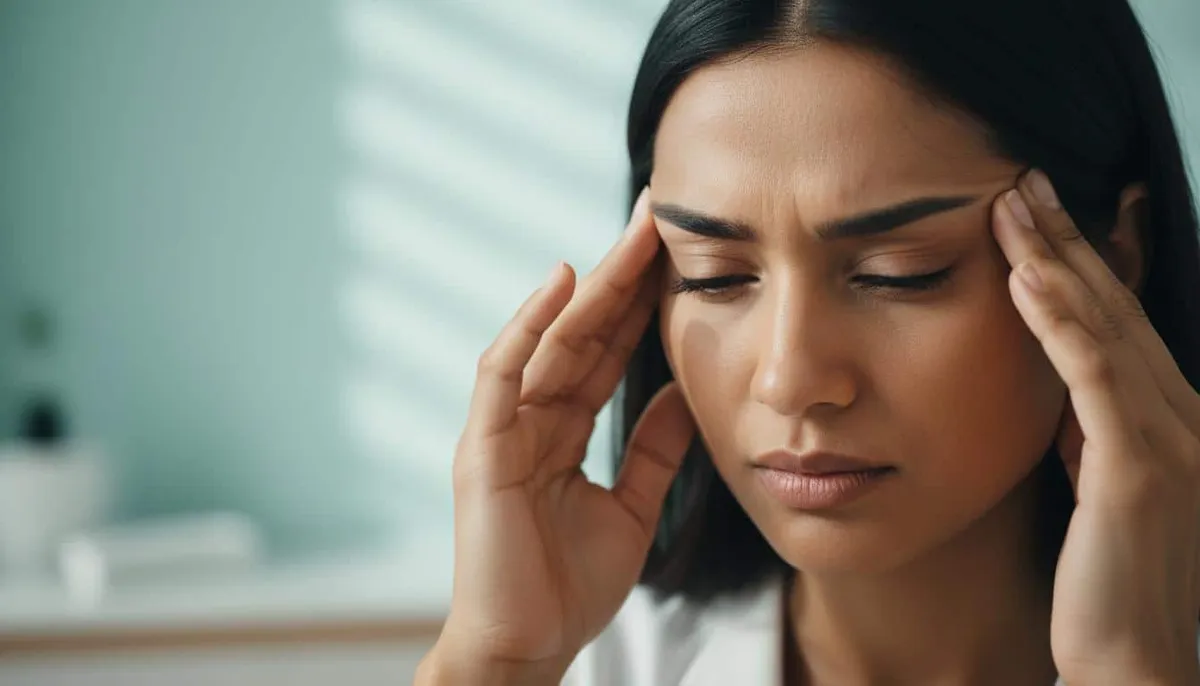
What exactly does a headache mean?
Simply put, a headache is a pain that occurs somewhere in the head or neck. It can occur for a variety of reasons, and the intensity of the pain can vary. There are two main types of headaches that we see. 1. Tension Headache 2. Migraine Now let's look at each of these in more detail .What are the symptoms of these headaches? Do you have any of these?
If you have a tension headache...
This is the most common type of headache that most people experience. It occurs when the muscles in your head or neck become tight, like they're being squeezed. Imagine if you felt someone squeezing your head from the sides, front, or back . This is what this pain usually feels like:- A feeling of being trapped, like your head is being squeezed.
- It feels very dark and heavy .
- It keeps hurting the same way.
- Sometimes pain can also occur in areas such as the shoulders and neck.
A migraine is a little different...
A migraine is a more severe, throbbing headache than a tension headache. Not everyone gets it, but it can be very painful if you do. Symptoms of a migraine may include:- A throbbing/throbbing pain on one or both sides of the head, accompanied by nausea .
- It may feel like dizziness .
- Stomach upset, nausea, and vomiting may also occur.
- Some people experience flashes of light, colored dots, or circles in front of their eyes . This is called an aura.'' This is a warning sign before a migraine occurs.
If you have small children, they may not be able to tell you that they have a headache. So they may be more restless than usual, have a loss of appetite , vomit, and turn pale.If you are experiencing symptoms like this, it could be due to a headache.
Why do we get headaches like this? Let's look at the causes.
It's hard to pinpoint a single cause of headaches. It's possible that changes in certain chemicals, nerves, or blood vessels in our brain cause these pain messages to travel to the brain and cause us to feel a headache. Often, headaches can be caused by:- Infections: Ear infections , viral infections like the common cold , strep throat, and some serious infections like meningitis ( inflammation of the brain ), and sinusitis (inflammation of the sinuses ).
- If you hit your head somewhere: It could be from a minor accident.
- Certain medications: Some medications can cause headaches as a side effect.
- Lack of sleep or changes in sleep: not sleeping well, changing bedtimes frequently.
- Dehydration: Not drinking enough water.
- Stress: Mental pressure caused by things like excessive work, exams, and family problems.
- Allergies: Some people get headaches when they are allergic to things like pollen.
- Hormonal changes: This can be caused by hormonal changes, especially in women, related to menstruation or during pregnancy.
- Skipping meals: Not eating on time.
- Excessive use of computers and TV: Spending a lot of time in front of a screen.
- Eye problems: If your eyes are not seeing properly, that is also a reason.
- Long distance travel: When traveling for a long time on the bus or in the car.
- Loud noise: Exposure to loud noises.
- Smoking or the smell of smoke: cigarette smoke, other types of pungent smoke.
- Strong odors: Things like some perfumes, the smell of new car seat covers, and the smell of new carpet.
- Excessive caffeine intake: Excessive caffeine intake from things like (energy drinks), coffee, tea, and chocolate.
- Some foods: Cheese, nuts, pizza, chocolate, ice cream, fatty foods, sausages, hot dogs, yogurt, artificial sweeteners like (Aspartame), (MSG) (Ajinomoto) can cause headaches in some people. Just think, some people get headaches when they eat chocolate.
Who gets these headaches the most?
Headaches are very common among young children and young adults. Migraines, especially, tend to run in families . This means that if your mother, father, grandmother, or grandfather had the condition, you and your child are more likely to develop it. Some people are more sensitive to the above triggers than others. Even the smallest thing can cause them to get a headache.How does a doctor diagnose this?
When you go to see a doctor, he or she will first ask you questions and examine you to find out what is causing this. The doctor may ask things like:- " How often do you get headaches? How many times a day?"
- "Since when did your head start hurting like this?"
- "How does it feel when you get hurt? Which part of your head hurts the most? "
- "Does this always come the same way, or does it change?"
- "Apart from the headache , are you having any other problems? (like vomiting, dizziness)"
- "Have you hit your head anywhere recently?"
- "Is this triggered by doing something special?"
- "What are your eating, drinking, and sleeping patterns like? Does doing something make this worse or worse?"
- "Are you stressed these days?"
- "Have you had any major illnesses in the past?"
- "Are you currently taking any medication?"
- "Do you have any allergies?"
- "Does anyone in the family have frequent headaches like this?"
- Blood tests
- Brain imaging tests such as a CT scan or MRI scan.
What can be done to treat headaches? (Treatment)
Treatment for a headache depends on what your doctor thinks is causing it. However, most common everyday headaches can be treated at home. Try these things to help relieve the pain:- Stay in a cold, dark, quiet room.
- Place a cloth soaked in cold water on your forehead or eyes.
- Relax your mind, take a deep breath, and exhale slowly.
- Drink plenty of water and eat something light.
Most importantly: Never give aspirin to children and young adults unless directed to do so by a doctor! Aspirin can cause a life-threatening condition called (Reye syndrome).If your child gets migraines frequently, the doctor may give you a medicine to take when they start or a medicine to take every day (preventative). Talk to your doctor about pain management. You may also want to try things like these without medication:
- (Relaxation exercises) (Exercises to calm the mind)
- (Stress-reduction techniques) (Methods to reduce stress)
- Avoiding triggers.
What else do we need to know about this? What are the dangerous symptoms?
It's normal to feel scared when your child has a headache that makes their head spin. But most of the time, a headache isn't a sign of a serious illness. However, you should definitely see a doctor in these cases:- If headaches occur more frequently than usual.
- If it doesn't go down easily.
- If it hurts very badly.
- It often occurs in the morning (when you wake up) , especially if you wake up from sleep because of a headache.
- If you feel more lethargic and less alert than usual.
- If you vomit frequently.
- If you get a headache after hitting your head or losing consciousness.
- If you are having seizures/fits.
- If there is a change in vision (seeing double, blurred vision).
- If you have a tingling sensation in your body.
- If you feel lifeless and weak.
- If you have a clumsiness, a tendency to be clumsy.
- If there is a skin rash.
- If it's hard to walk or stand properly.
- If it's hard to speak, if words get tangled.
- If you have neck pain or stiffness .
- If you have a fever or other signs of infection (such as body aches, fever accompanied by chills).
- If there is a big change in behavior (personality change).
- If you drink a lot of water or urinate a lot more than usual.
- If it is too difficult to go to school or do daily tasks.
Remember, if you have these symptoms, it could be more than just a simple headache. So it's best to see a doctor right away and get advice.
Take-Home Message
Although headaches are very common, their onset, severity, and causes vary.- If your child has frequent headaches , it is very helpful to keep a headache diary to find the cause.
- Often, headaches can be controlled with simple things like proper rest, a healthy diet, adequate sleep, and drinking water .
- When using painkillers, be careful about the correct dosage. Do not give aspirin to young children.
- Be aware of red flags. If you have a headache accompanied by fever, vomiting, vision changes, difficulty speaking, or loss of consciousness, seek medical advice immediately.






Janiw kuna arsuwinakas jichhakamax uñt’ayatäkiti. Aka chiqanx amuyt’awim jan ukax jiskt’awim yapxatañamawa.