
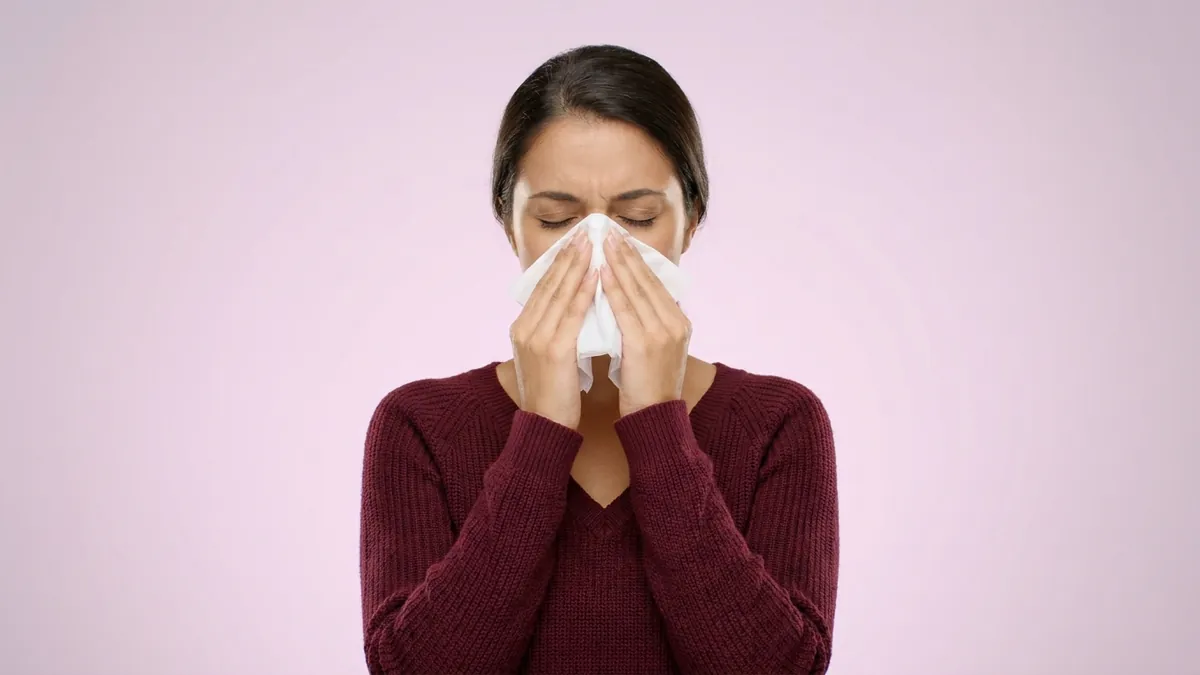
Do you often get a cold , and then your nose gets stuffy, your head feels heavy, and you feel a strange pressure inside your face? Sometimes you may also have yellow mucus. Many people call this condition "sinusitis." Medically, we call this (Acute Sinusitis) or sinus infection . There is nothing to worry about, this is usually not a serious condition. Let's talk about this in detail today.
What exactly is acute sinusitis?
Simply put, (Acute Sinusitis) is a short-term infection of the small cavities around your nose, called the (Sinuses). It starts like a cold and can last for about seven to ten days. In most cases, it gets better without any special medical treatment. These symptoms can be controlled with home remedies and some over-the-counter medications ((Decongestants)).
Let's find out exactly what the symptoms of this are?
If you suspect you have (Acute Sinusitis), be aware of these symptoms:
- Thick, yellow or green mucus from the nose.
- Nasal congestion , a feeling of heaviness , or difficulty breathing altogether.
- A feeling of intense pain or pressure in your face, forehead, or around your eyes . As if someone is pressing on you from the inside.
- The sense of smell may be reduced or completely lost. The sense of taste may also be reduced.
- Bad breath.
- Sometimes, a fever can accompany a feeling of weakness .
- Ear pain or a feeling of pressure inside the ear.
- Headaches may be worse, especially upon waking in the morning.
- Fatigue .
- Some people may also feel this as a toothache .
Why do we get sinusitis?
Think about it, we have small air cavities called Sinuses around our nose, inside our cheeks, and inside our skull in the forehead area. These are all connected to each other. When we breathe, the air that enters our nose passes through these sinus cavities before going to our lungs.
These sinus cavities are lined with a thin membrane ((Mucous membrane)). Also, these membranes constantly produce a thin amount of mucus. This mucus keeps the inside of the nose moist, and also contains the air we breathe.It captures things like germs and dust and carries them out of the body.
Now, when you have something like a cold, sometimes viruses or bacteria get into these sinus cavities, and the membranes there start to swell. At that time, the sinus cavities start to produce more mucus. Normally, this mucus flows out of the nose to get rid of the germs. But, when those membranes swell, the passageways for the mucus to drain become blocked.
It's like a drain clogged with leaves. The mucus can't drain out and fills up inside the sinus cavities.
That's when you start to feel like your nose is blocked and your face is tight. Sometimes you can even feel pain when you touch your face. This is what we call a " sinus headache ."
Who is at higher risk of developing sinusitis?
Some people are more likely to develop Acute Sinusitis than others. Let's see who they are:
- People with frequent allergies : People who are allergic to dust, pollen, and certain foods can easily get sinus blockage because their nasal membranes can become constantly swollen.
- People with certain problems with the structure of the nose: For example, people with things like a deviated septum or small fleshy growths inside the nose (nasal polyps) may have difficulty draining mucus.
- People who are often in high-traffic areas: Imagine, for example, someone who works in a home with a preschooler or a childcare center. These areas are more likely to be contaminated with germs.
Can sinusitis cause serious complications?
This is a very rare occurrence , but it's good to be aware of it. Sometimes, the infection that caused (Acute Sinusitis) can spread and affect parts of our (Nervous system), such as the brain, eyes, or spinal cord. But, again, this happens very rarely.
How does a doctor recognize this?
A doctor will usually diagnose acute sinusitis by asking about your symptoms, how long you've had them, and whether they're getting worse. In addition, he or she will examine your ears, nose, and throat to check for swelling and mucus. In most cases, no extensive testing is needed.
What are the treatments for this?
Most cases of (Acute Sinusitis) get better without prescription medication. However, it can take a few days for the sinus cavities to clear up. However, there are many things you can do to reduce your discomfort in the meantime.
Treatments you can do at home
- If your nose is stuffy when you wake up in the morning, use a saline nasal spray.This will loosen the mucus and reduce congestion. Another good method is to use a Neti pot'' to rinse your nose. But you should ask someone who knows how to do this properly.
- Take a hot shower. The steam from the hot water will open up your sinuses and help relieve pressure. If you don't have time to take a shower, squeeze a cloth soaked in hot water and place it over your face for a while.
- Keep a humidifier or vaporizer near your bed. This will add moisture to the air you breathe while you sleep, preventing your nose from drying out.
- Drink plenty of fluids, especially hot water with a little lime, or drinking warm things like tea, can help loosen mucus.
- Get more rest. Since your body is fighting the infection at this time, it is more important to rest than usual.
Do you need to get medicine from a doctor?
If your (Acute Sinusitis) condition is caused by a bacterial infection, your doctor may prescribe you antibiotics. However, most doctors do not prescribe (Antibiotics) right away. They only prescribe them after waiting a while and if the symptoms do not improve. Usually, if symptoms persist for more than 10 days, it is likely that it is a bacterial infection.
Can sinusitis be prevented?
"Prevention is better than cure," they say. So, there are a few things we can do to reduce the occurrence of this annoying sinusitis:
- If you smoke, stop. Avoid places where other people smoke ((Second-hand smoke)). If you need help quitting smoking, talk to a doctor.
- Stay away from things that cause allergies. If your nose is blocked by things like animal dander, dust, mold, or pollen, be careful of them. If you have allergies, ask a doctor about medications you can take.
- Protect yourself from illnesses like colds and flu. Stay away from people who are sick. Wash your hands thoroughly before and after eating, and after using the bathroom.
- Keep your immune system strong. Eat plenty of vegetables and fruits, and drink plenty of water.
What happens if you get sinusitis? What to expect?
The best part is that (Acute Sinusitis) usually gets better in about a week to ten days, without any special treatment. However, during those days, you have to suffer a little. It is very uncomfortable when your nose is blocked and your head is heavy. Sometimes you can't sleep at night. This is not a life-threatening illness, but it can be a hindrance to your daily activities. If you feel the same, talk to a doctor and ask what else you can do.
When do you need to see a doctor?
In such a case, you should definitely see a doctor:
- YoursIf symptoms last more than 10 days.
- It seemed to have subsided a little at first, but then the symptoms increased again.
- If you have a severe sinus headache .
- If you've done everything you can at home and the pain still isn't getting better, a doctor can advise you on what else you should do.
What questions should you ask the doctor?
When you go to see the doctor, it's a good idea to ask some questions like these:
- Is my sinusitis caused by a viral infection or a bacterial infection?
- Could there be another cause for my symptoms?
- If I have a viral infection, what kind of decongestants can I buy at the pharmacy?
- How quickly will I get better?
- What should I do if my symptoms worsen?
What is the difference between acute sinusitis and chronic sinusitis?
The main difference is the duration of symptoms. If you have Acute Sinusitis'', your symptoms will improve in about a week to ten. Some people may have them for up to four weeks. But Chronic Sinusitis'' is a condition where symptoms last for 12 weeks or more. It's a bit more complicated and may require separate treatment.
Is it better to stay home during this difficult time?
If you have (Acute Sinusitis) due to a cold or flu, yes, it is best to stay home and rest as much as possible. That way, you can prevent yourself from spreading the illness to others.
Things to remember in brief
Okay, so, (Acute Sinusitis) is a condition that causes a stuffy nose, a sore face, and fatigue. Don't worry, this is not a serious illness, but it can be very uncomfortable. The best thing is, it can be controlled with home remedies and sometimes over-the-counter medications.
Remember, if your symptoms last more than 10 days, get worse, or are unbearable, you should definitely see a doctor. He or she will be able to tell you exactly what's wrong and what you need to do.
Wishing you a speedy recovery!






Janiw kuna arsuwinakas jichhakamax uñt’ayatäkiti. Aka chiqanx amuyt’awim jan ukax jiskt’awim yapxatañamawa.