

Today we are going to talk about a disease that is very common among young children, but which scares us a little as parents. If your little one has red blisters on their mouth, palms, soles, and sometimes buttocks, along with a slight fever, it could be Hand, Foot, and Mouth Disease. So let's take a closer look at what it is, how it develops, what are the symptoms, what you can do at home, and whether you should see a doctor.
What exactly is Hand, Foot, and Mouth Disease?
Simply put, this is a viral infection . It's like the common cold or flu. But it's specifically caused by a virus called the Coxsackievirus. Although other viruses can also cause it, the most common cause is the Coxsackievirus.
This disease causes painful red blisters to form inside a child's mouth and throat . They can also appear on the hands (especially the palms of the hands), feet (especially the soles of the feet), and in some children, the diaper area. It usually affects children under the age of 7. This is because their immune systems are still developing, and it can spread quickly from one child to another in places where young children gather, such as daycare centers, preschools, schools, and summer camps.
How is this disease transmitted? Very important!
We must remember that this is very contagious . Imagine, if a child with this virus sneezes, has a cold, or even just a drop of saliva touches something, another child who touches that area can easily catch it. Not only that, this virus can spread through the following ways:
- Unwashed hands: If a child with the virus wipes their nose, mouth, or blister fluid with their hands and then touches a toy with the same hand, it can be passed on to another child who touches that toy. That's why handwashing is so important .
- Poop: Don't be surprised, this virus can also be found in a child's poop. That's why it's essential to wash your hands thoroughly after changing a baby's diaper and using the toilet.
- Spit: Children spit and put toys in their mouths. These things can also spread the virus.
- Mucus from the nose: This virus can also be present in the mucus from the nose when you have a cold.
- Fluid from the blisters: The fluid that comes out of the blisters I mentioned also contains the virus. Therefore, you should be careful not to let that fluid come into contact with other people.
Now you understand how easily this spreads, right? That's why it spreads so quickly in places where young children are together.
What are the symptoms? How do you recognize it?
When this disease develops, the child may experience a variety of symptoms. The main symptoms are:
The nature of the blisters
The blisters that appear in this disease are red and have a small water bubble on top . Sometimes these blisters dry out, the skin peels off, and small wounds (ulcers) can form in those places. These wounds are usually seen with a red bottom.
- Inside the mouth: These blisters can appear inside the mouth, on the tongue, gums, and throat. These can make it very difficult for the child to eat or drink. That's why some children refuse to eat.
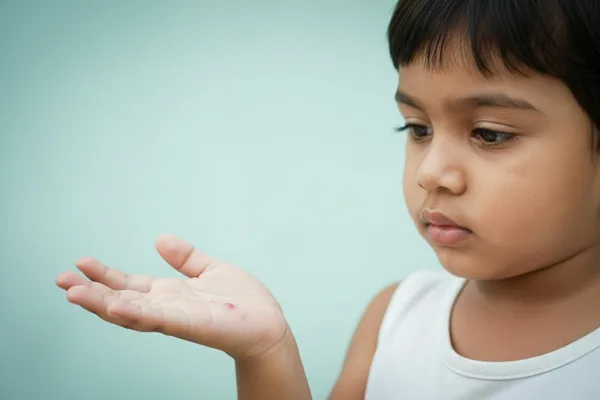
- Hands and feet: The palms and soles of the feet may appear as red, flat spots, or as blisters with watery blisters.
- Other places: Some children also get these blisters or red spots on their buttocks, knees, and elbows.
Fever and other discomforts
A child may have a fever a day or two before the blisters appear. Along with that,
- Sore throat
- Appetite
- Tiredness, just a withered nature
- Stomach upset (for some children)
Symptoms like these may also be seen. These symptoms usually subside completely after about 7 to 10 days , and the child recovers.
The most important thing is that children may refuse to eat or drink due to the pain in their mouth caused by these blisters. This can lead to dehydration . Therefore, you should be careful to give your child fluids in small amounts.
What can you do at home if your little one gets this illness?
There is currently no specific treatment for Hand, Foot, and Mouth Disease, nor is there a vaccine to prevent it . However, there are some things we can do at home to help our child feel more comfortable until he or she recovers. When you see a doctor, he or she will give you more advice about this.
- Reduce pain: If your child has a fever or pain, you can give them something like Paracetamol as directed by your doctor. Never give aspirin to young children without medical advice.
- Relief from mouth pain:
- Give cool liquids . Cool liquids may be less painful than hot liquids.
- Give soft, low-salt/low-pepper foods . You can give things like yogurt, ice cream (low sugar), jelly, porridge, and mashed fruit. Spicy, sour, and hard foods can increase the pain in the mouth.
- You can rinse your mouth with salt water (if the child is old enough to do so), but it's best to consult a doctor before doing this.
- Prevent dehydration:Make sure your child is drinking enough fluids. Give them things like water, fruit juice (low sugar), and Jeevani.
- Give your child a good rest: Let him sleep well and rest.
- Reduce itching of blisters: Sometimes these blisters can be itchy. If this happens, you can use something like an anti-itch lotion as directed by your doctor.
Do I need to see a doctor? When should I go?
Although this illness usually subsides within a few days, in some cases it is necessary to see a doctor. Be sure to take your child to a doctor if they have the following symptoms:
- If the child is completely refusing to drink fluids and is showing signs of dehydration (e.g. dry mouth, hasn't urinated in 6-8 hours, sunken eyes, no tears when crying).
- If the fever lasts more than 3 days or if there is a high fever.
- If your child's symptoms do not improve after 10 days or get worse.
- If the child is behaving in a very uncomfortable or unusual manner (e.g. excessive sleepiness, lethargy, seizures).
- If you know that your child's immune system is weak .
- If you have any doubts or fears about this disease .
Mom, Dad, if you have any doubts about anything, if you notice a change in your child's behavior, please see a doctor. That's the best thing to do.
Is this a serious illness? Should I be afraid?
Most of the time, hand, foot, and mouth disease is not a serious illness . Children usually recover completely within 7-10 days. However, very rarely, some complications can occur. For example, dehydration is one. More rarely, conditions like viral meningitis can occur, but that is very rare . So don't be unnecessarily scared. But, be aware of the risk signs I mentioned earlier.
Can't we prevent the disease from recurring?
Because there are several types of viruses that cause this disease, once you have it, you can't be sure that you won't get it again . However, there are things we can do to prevent the disease from spreading:
- Wash your hands often: Wash your child's and your own hands thoroughly with soap and water, especially before eating, after using the toilet, after changing diapers, and after coming home from the bathroom.
- Teach your child how to wash their hands too.
- Keep toys and areas where your child hangs out clean: Always clean surfaces that may have the virus.
- If your child is sick, keep them away from other children:Avoid sending your child to school, preschool, or daycare until they have a fever and the blisters have healed. This will help prevent the spread of the illness to other children.
- Teach your child to cover their mouth and nose when sneezing and coughing.
- Avoid sharing items such as cups, plates, and spoons used by your child with others.
The most important things to say at home (Take-Home Message)
Okay, so let's remind you of a few things we've talked about that we think are important to you:
- Hand, Foot, and Mouth Disease is a common, contagious viral infection .
- The main symptoms are painful blisters in the mouth, hands, and feet, and fever .
- There is no specific medicine or vaccine for this. Home care is the key.
- It is very important to prevent dehydration . Give your child fluids frequently.
- Taking care of cleanliness can prevent the spread of disease.
- If you have any doubts about your child's condition or see any risk signs , be sure to seek medical advice .
- Most of the time, this is not serious, and children recover quickly . So don't worry unnecessarily, but be vigilant.
If your child has these symptoms, don't panic, take the necessary steps. Wishing you a speedy recovery!
` Hand Foot and Mouth Disease, Children's Diseases, Infectious Diseases, Viral Infections, Coxsackie Virus, Coxsackievirus, Blisters




💬 Comments (0)
No comments have been posted yet. Add your comment here for the first time.
Add your comment