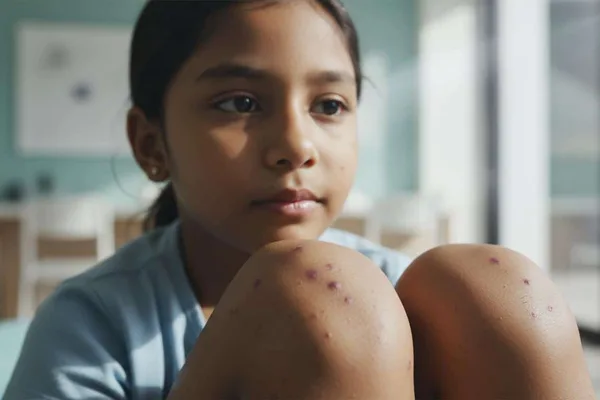
Does your little one bruise easily? It could be Immune Thrombocytopenia (ITP)!

Does your little one bruise easily? It could be Immune Thrombocytopenia (ITP)!

It's scary to see bruises and small red spots on your child's body, isn't it? Sometimes you can see things like this even after a minor cold has passed. So today we're going to talk about a condition called Immune Thrombocytopenia (ITP), which can cause symptoms like these, but is nothing to worry about if you understand it properly. Let's see what it is, why it happens, how to recognize it, and what else can be done.

What is Immune Thrombocytopenia (ITP)? Let's understand it simply!

Simply put, Immune Thrombocytopenia (ITP) is when our immune system (the system that protects us from disease ) goes haywire and attacks a type of cell in our own body called platelets . Now you might be wondering what platelets are. They are the little cells that help stop bleeding when we get a wound somewhere in our body. Like the helpers who help a wounded soldier in a war. These platelets work together to form blood clots and stop the bleeding.

So, what happens in a child with ITP is that the immune system mistakenly destroys these good platelets. What happens then? The number of platelets in the body decreases. When that happens, it becomes difficult to stop bleeding even from a small wound, and sometimes it can even cause bleeding.

But there is good news! Most of the time, when young children develop ITP, it gets better on its own within about 6 months . But sometimes it can take longer, or it can get better and then come back. That's why it's important to be aware of this.

What symptoms might a child with ITP have?

Now let's look at what symptoms a child with ITP may exhibit. Don't panic if you see these, but it's very important to seek medical advice.

  • Easy bleeding:
  • Just a nosebleed .
  • Bleeding gums when brushing your teeth.
  • Sometimes a little blood comes out with the stool or urine . (This is a bit scary, but you should tell a doctor).
  • In the case of a girl who has reached puberty, bleeding during her monthly period is heavy and lasts for many days.
  • Symptoms caused by bleeding under the skin:
  • Bruising easily . Even a small bump can cause the skin to turn blue/purple.
  • The appearance of tiny red-purple spots on the skin. We medically call this (Petechiae) . These are small dots that look like they were drawn with a pen tip.
  • Purple, slightly larger, bruise-like spots on the skin. This is called (Purpura) . These are larger than (Petechiae).

Imagine, if your child falls while playing and gets a bigger bruise than usual, or if you see things like the red dots you mentioned, you should be concerned about it.

Very rarely, especially if there is a severe head injury , ITP can also cause bleeding inside the brain (similar to a stroke). This is very rare, but remember to see a doctor immediately if you have a head injury.

Why does ITP develop? What are the causes?

The main reason for ITP is, as mentioned earlier, that our immune system mistakenly attacks platelets , as if our own army were attacking our own people.

The main reason why children's immune systems are compromised in this way is viral infections . For example, some children may develop ITP after recovering from a cold or flu. When the virus enters the body, the immune system, when fighting it, sometimes "over-reacts" and starts attacking platelets.

In addition, very rarely, ITP can be caused by another medical condition , an autoimmune disease (a disease in which the immune system attacks healthy parts of our own body), or certain medications . But most of the time, it is difficult to find a specific reason why the immune system attacks platelets.

Who is most likely to develop ITP?

ITP, which is most often seen in childhood, occurs most often in children between the ages of 1 and 7. However, it can also occur in older and younger children.

The important thing is that a child with ITP usually appears otherwise healthy and well . That is, apart from the bleeding and bruising, the child may be playing, eating, drinking, and going about their daily activities normally.

How do doctors diagnose ITP?

When you take your child to a doctor, they will do the following to find out if they have ITP:

1. Asking questions:You will be asked a lot of questions about your child's symptoms, how they started, and whether they have had any recent illnesses.

2. Physical examination: The doctor will examine the child carefully. They will check for bruises, (Petechiae), (Purpura), and any other abnormalities.

3. Blood Tests: This is the most important step. A blood sample is taken and the following tests are performed:

  • The platelet count is checked. In ITP, this should be low.
  • Other blood cell types (red blood cells, white blood cells) are checked to see if they are normal . These are usually not changed in ITP.
  • Check for signs of an infection (for example, a viral infection).
  • We are investigating whether there are other possible causes of low platelets.

These tests are the only way to determine whether you have ITP or if there is another cause for these symptoms.

What are the treatments for ITP?

Treatment for ITP varies depending on the severity of the symptoms . Some children may not need any treatment if they only have bruising and small red dots (petechiae). Doctors will monitor the child.

However, if treatment is needed, here are some things you can do:

  • Medications that stop the immune system from attacking platelets:
  • Steroids: These can be given as pills or as an injection into a vein. These help to quickly increase the number of platelets.
  • IV (intravenous) antibody injections: These are also called immunoglobulins or rituximab . These work by slightly suppressing the immune system.
  • Medications that help the body make more platelets: Sometimes these medications can also be given.
  • Spleen removal surgery: The spleen is an organ in our body. Platelets are mainly destroyed in this spleen. So, this surgery is only done as a last resort for children with very severe symptoms who have not responded to other treatments. This is often considered for older children or young adults.

Important: Only a doctor can decide which treatment is right for your child. Therefore, it is very important to follow your doctor's instructions.

How can you help as parents?

There are many things you can do as a parent when caring for your child during ITP.

  • Keep your child away from sports and activities that can cause injury or bleeding for a while. For example, you may need to stop cycling and contact sports.
  • Do not give your child any medicine containing ibuprofen (e.g., Motrin, Advil ) or aspirin without your doctor's approval. These medicines can increase the risk of bleeding. Paracetamol, which is given for a common fever and aches, is usually safe, but check with your doctor before giving it to your child.

Most children with ITP recover completely within a few months. Here are some things you can do to help your child:

  • Be sure to take your child to all doctor's appointments.
  • Follow your doctor's instructions exactly. Pay close attention to what activities are appropriate and what you should not do.
  • If your child hits their head anywhere or has a serious injury, see a doctor or go to a hospital immediately. This is very important.
  • Be careful not to give your child any medications that the doctor says are not appropriate.
  • If your child shows signs of new bleeding, bruising, or red/purple spots on the skin, call your doctor immediately.

The most important things to keep in mind (Take-Home Message)

Hearing about ITP can be a bit scary. But remember, most of the time, it goes away on its own when it occurs in children . The most important thing is not to panic, but to seek proper medical advice and act accordingly .

If your child has these symptoms, definitely see a pediatrician or a haematologist. They will give you all the advice you need. Wishing you a speedy recovery!

👩🏽‍⚕️ Frequently Asked Questions (FAQ) from the Doctor

💬 What is ITP, Doctor? Can you explain it to me in simple terms?

Simply put, ITP is when the immune system, which protects us from diseases in our body, goes a little crazy and attacks the small cells called 'platelets' that help stop bleeding. Then, the number of these platelets decreases, which can cause bleeding in the child. But there is nothing to worry about, if we understand this properly, we can manage it well.

💬 What are the symptoms that can tell if a child has ITP? Should we be worried if we see these?

Yes, a child with ITP may experience minor bruising, small red spots, nosebleeds, and bleeding gums when brushing their teeth. Sometimes, there may be a little blood in their stool or urine . Don't panic if you see these, but it's important to see a doctor for advice. The good news is that most children get better on their own within about 6 months.


` Immune Thrombocytopenia, ITP, platelets, bleeding, children's diseases, immune system, bruising

⚠️ Important: The medical articles and information on Nirogi Lanka are for general awareness only, and are by no means a substitute for professional medical advice, diagnosis, or treatment. For any medical problem you have, consult a qualified physician immediately.

💬 Comments (0)

No comments have been posted yet. Add your comment here for the first time.

Add your comment

Please calculate: 7 + 2 =
Does your little one bruise easily? It could be Immune Thrombocytopenia (ITP)!

Does your little one bruise easily? It could be Immune Thrombocytopenia (ITP)!

It's scary to see bruises and small red spots on your child's body, isn't it? Sometimes you can see things like this even after a minor cold has passed. So today we're going to talk about a condition called Immune Thrombocytopenia (ITP), which can cause symptoms like these, but is nothing to worry about if you understand it properly. Let's see what it is, why it happens, how to recognize it, and what else can be done.

What is Immune Thrombocytopenia (ITP)? Let's understand it simply!

Simply put, Immune Thrombocytopenia (ITP) is when our immune system (the system that protects us from disease ) goes haywire and attacks a type of cell in our own body called platelets . Now you might be wondering what platelets are. They are the little cells that help stop bleeding when we get a wound somewhere in our body. Like the helpers who help a wounded soldier in a war. These platelets work together to form blood clots and stop the bleeding.

So, what happens in a child with ITP is that the immune system mistakenly destroys these good platelets. What happens then? The number of platelets in the body decreases. When that happens, it becomes difficult to stop bleeding even from a small wound, and sometimes it can even cause bleeding.

But there is good news! Most of the time, when young children develop ITP, it gets better on its own within about 6 months . But sometimes it can take longer, or it can get better and then come back. That's why it's important to be aware of this.

What symptoms might a child with ITP have?

Now let's look at what symptoms a child with ITP may exhibit. Don't panic if you see these, but it's very important to seek medical advice.

  • Easy bleeding:
  • Just a nosebleed .
  • Bleeding gums when brushing your teeth.
  • Sometimes a little blood comes out with the stool or urine . (This is a bit scary, but you should tell a doctor).
  • In the case of a girl who has reached puberty, bleeding during her monthly period is heavy and lasts for many days.
  • Symptoms caused by bleeding under the skin:
  • Bruising easily . Even a small bump can cause the skin to turn blue/purple.
  • The appearance of tiny red-purple spots on the skin. We medically call this (Petechiae) . These are small dots that look like they were drawn with a pen tip.
  • Purple, slightly larger, bruise-like spots on the skin. This is called (Purpura) . These are larger than (Petechiae).

Imagine, if your child falls while playing and gets a bigger bruise than usual, or if you see things like the red dots you mentioned, you should be concerned about it.

Very rarely, especially if there is a severe head injury , ITP can also cause bleeding inside the brain (similar to a stroke). This is very rare, but remember to see a doctor immediately if you have a head injury.

Why does ITP develop? What are the causes?

The main reason for ITP is, as mentioned earlier, that our immune system mistakenly attacks platelets , as if our own army were attacking our own people.

The main reason why children's immune systems are compromised in this way is viral infections . For example, some children may develop ITP after recovering from a cold or flu. When the virus enters the body, the immune system, when fighting it, sometimes "over-reacts" and starts attacking platelets.

In addition, very rarely, ITP can be caused by another medical condition , an autoimmune disease (a disease in which the immune system attacks healthy parts of our own body), or certain medications . But most of the time, it is difficult to find a specific reason why the immune system attacks platelets.

Who is most likely to develop ITP?

ITP, which is most often seen in childhood, occurs most often in children between the ages of 1 and 7. However, it can also occur in older and younger children.

The important thing is that a child with ITP usually appears otherwise healthy and well . That is, apart from the bleeding and bruising, the child may be playing, eating, drinking, and going about their daily activities normally.

How do doctors diagnose ITP?

When you take your child to a doctor, they will do the following to find out if they have ITP:

1. Asking questions:You will be asked a lot of questions about your child's symptoms, how they started, and whether they have had any recent illnesses.

2. Physical examination: The doctor will examine the child carefully. They will check for bruises, (Petechiae), (Purpura), and any other abnormalities.

3. Blood Tests: This is the most important step. A blood sample is taken and the following tests are performed:

  • The platelet count is checked. In ITP, this should be low.
  • Other blood cell types (red blood cells, white blood cells) are checked to see if they are normal . These are usually not changed in ITP.
  • Check for signs of an infection (for example, a viral infection).
  • We are investigating whether there are other possible causes of low platelets.

These tests are the only way to determine whether you have ITP or if there is another cause for these symptoms.

What are the treatments for ITP?

Treatment for ITP varies depending on the severity of the symptoms . Some children may not need any treatment if they only have bruising and small red dots (petechiae). Doctors will monitor the child.

However, if treatment is needed, here are some things you can do:

  • Medications that stop the immune system from attacking platelets:
  • Steroids: These can be given as pills or as an injection into a vein. These help to quickly increase the number of platelets.
  • IV (intravenous) antibody injections: These are also called immunoglobulins or rituximab . These work by slightly suppressing the immune system.
  • Medications that help the body make more platelets: Sometimes these medications can also be given.
  • Spleen removal surgery: The spleen is an organ in our body. Platelets are mainly destroyed in this spleen. So, this surgery is only done as a last resort for children with very severe symptoms who have not responded to other treatments. This is often considered for older children or young adults.

Important: Only a doctor can decide which treatment is right for your child. Therefore, it is very important to follow your doctor's instructions.

How can you help as parents?

There are many things you can do as a parent when caring for your child during ITP.

  • Keep your child away from sports and activities that can cause injury or bleeding for a while. For example, you may need to stop cycling and contact sports.
  • Do not give your child any medicine containing ibuprofen (e.g., Motrin, Advil ) or aspirin without your doctor's approval. These medicines can increase the risk of bleeding. Paracetamol, which is given for a common fever and aches, is usually safe, but check with your doctor before giving it to your child.

Most children with ITP recover completely within a few months. Here are some things you can do to help your child:

  • Be sure to take your child to all doctor's appointments.
  • Follow your doctor's instructions exactly. Pay close attention to what activities are appropriate and what you should not do.
  • If your child hits their head anywhere or has a serious injury, see a doctor or go to a hospital immediately. This is very important.
  • Be careful not to give your child any medications that the doctor says are not appropriate.
  • If your child shows signs of new bleeding, bruising, or red/purple spots on the skin, call your doctor immediately.

The most important things to keep in mind (Take-Home Message)

Hearing about ITP can be a bit scary. But remember, most of the time, it goes away on its own when it occurs in children . The most important thing is not to panic, but to seek proper medical advice and act accordingly .

If your child has these symptoms, definitely see a pediatrician or a haematologist. They will give you all the advice you need. Wishing you a speedy recovery!

👩🏽‍⚕️ Frequently Asked Questions (FAQ) from the Doctor

💬 What is ITP, Doctor? Can you explain it to me in simple terms?

Simply put, ITP is when the immune system, which protects us from diseases in our body, goes a little crazy and attacks the small cells called 'platelets' that help stop bleeding. Then, the number of these platelets decreases, which can cause bleeding in the child. But there is nothing to worry about, if we understand this properly, we can manage it well.

💬 What are the symptoms that can tell if a child has ITP? Should we be worried if we see these?

Yes, a child with ITP may experience minor bruising, small red spots, nosebleeds, and bleeding gums when brushing their teeth. Sometimes, there may be a little blood in their stool or urine . Don't panic if you see these, but it's important to see a doctor for advice. The good news is that most children get better on their own within about 6 months.


` Immune Thrombocytopenia, ITP, platelets, bleeding, children's diseases, immune system, bruising

⚠️ Important: The medical articles and information on Nirogi Lanka are for general awareness only, and are by no means a substitute for professional medical advice, diagnosis, or treatment. For any medical problem you have, consult a qualified physician immediately.

💬 Comments (0)

No comments have been posted yet. Add your comment here for the first time.

Add your comment

Please calculate: 7 + 2 =