
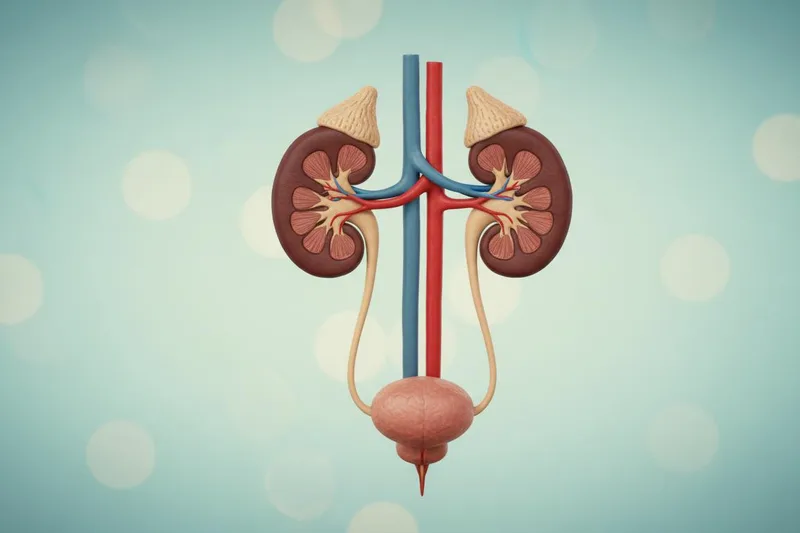
There are a lot of amazing things going on inside all of our bodies, right? It's like a big factory. So there must be ways to get rid of the waste products that are produced in this factory. One of the main ways to get rid of the waste products in our body is through the urinary system . There are two heroes in this urinary system, and that is the Kidneys . Today we are going to talk about these Kidneys and the Urinary Tract. Very simply, as you can understand.
What are these kidneys? Where are they located in our body?
Now you're probably wondering what these kidneys are and where they are located, right? It's very simple. The kidneys are two bean-shaped organs . Each kidney is about the size of your fist. They are located on either side of our spine , just below the ribs in the chest, towards the back of the body. They are like two of the most powerful filters in our body.
There's a very complex system inside these kidneys. But to put it simply, a kidney has an outer part and an inner part. Inside these are millions of tiny filtering units that clean the blood . We call them nephrons . Imagine how much delicate work goes on in such a small space!
What is the main function of the kidneys? Why are they so important?
The main and most important function of the kidneys is to clean our blood . It's like a water filter in the kitchen, but much more complex and advanced. The kidneys filter out waste products produced by the work of our body's cells - for example , urea, which is formed when the protein we eat is digested - as well as salts and water, all of which are filtered out of the blood and made into urine.
Think about it this way:
- Impure blood enters the kidneys.
- This blood is purified by the tiny filters inside the kidneys called nephrons that I mentioned earlier.
- Waste and extra water are collected as urine.
- The purified blood circulates throughout the body again.
Isn't it amazing? In a day, our two kidneys purify about twenty to thirty times the amount of blood in our entire body! That means there's no time for these two to just sit around.
There are many other amazing things that the kidneys do!
In addition to purifying the blood, the kidneys perform many other important functions for our bodies. Let's take a look at what they do.
1. Blood Pressure Control
Yes, yours.The kidneys also help maintain blood pressure . They do this by regulating the amount of water and salt in the body, and by producing hormones (such as renin) that control blood pressure .
2. Helping to make red blood cells
The kidneys also produce the hormone erythropoietin, which stimulates our bone marrow to produce red blood cells. This means that kidney health also affects the condition of anemia, or low blood count. Have you ever thought about that?
3. Activating Vitamin D
We know how important vitamin D is for keeping our bones strong. So, the vitamin D we get from food and from the sun is activated by the kidneys so that it can be used by the body.
4. Maintaining a balance of salt and water in the body
The kidneys do a great job of keeping the right balance of salts, such as sodium and potassium, and water in our bodies. If this doesn't happen properly, many problems can arise.
5. Acid-base balance in the body
The kidneys also help maintain the pH (balance between acid and base) of the fluids inside our bodies. This too must be very carefully controlled.
You see, the kidneys are not just two machines that filter blood, they do so much more than that!
So what is this urinary tract?
The urinary system is the path that urine, which is produced in the kidneys, travels until it leaves the body. It is made up of several parts:
- Ureters: These are the two thin tubes that carry urine from the kidneys to the bladder. They are like two messengers carefully carrying urine from the kidneys to the bladder.
- Urinary Bladder: This is a small bag made of muscles that collects and stores urine. It can be stretched like a rubber balloon. It gradually gets bigger as urine accumulates. Usually, we feel the need to urinate when we have about 2 cups (400-500 ml) of urine.
- Urethra: This is the final tube that carries urine from the bladder out of the body. Men have a slightly longer urethra, while women have a shorter one. This difference makes women more likely to develop urinary tract infections (UTIs).
Simply put, how urine is formed...
The process of urine formation inside the kidneys is very complex, but let's keep it simple. There are three main steps:
1.Filtration: The blood goes into the small meshes called nephrons mentioned earlier. There, things like waste products, extra water, and salts are filtered out. Things like large protein particles and red blood cells in the blood are not filtered, they go back into the blood.
2. Reabsorption: The filtered fluid may contain important substances that the body needs again. For example, some of the water, glucose (sugar), and some salts are reabsorbed into the body. Because valuable substances cannot be wasted.
3. Further addition of unnecessary things `(Secretion)`: Some waste products remaining in the blood, such as fragments of drugs, are added directly to the filtered fluid.
The liquid that forms when these three steps are complete is what we call urine . This urine then travels through the ureters to the bladder, where it is collected, and finally exits through the urethra.
What can we do to keep the kidneys and urinary system healthy?
Our kidneys are two very quiet, but tireless workers. It's our responsibility to keep them healthy. Here are some simple things we can do:
- Drink plenty of water throughout the day: You should drink at least 8 glasses of water a day. This helps the kidneys filter waste products more easily and also reduces the risk of urinary tract infections.
- Eat a healthy diet: Reduce salt intake . Reduce packaged and artificially sweetened foods as much as possible. Eat more vegetables and fruits.
- Control blood pressure and diabetes: If you have high blood pressure (Hypertension) or diabetes (Diabetes Mellitus), controlling them well is very important to prevent kidney damage.
- Do not use painkillers more than necessary: Continuous and excessive use of painkillers, especially those of the type called ``NSAIDs'' (e.g. ibuprofen, diclofenac), is harmful to the kidneys. Do not take these continuously without medical advice.
- Don't delay urinating: Holding in urine puts pressure on the bladder and can lead to urinary tract infections.
- Exercise regularly.
- Avoid smoking: Smoking can damage the blood vessels that supply blood to the kidneys.
- Get regular medical checkups: Especially if you are at risk of developing kidney disease (e.g., if someone in your family has it, if you have diabetes, high blood pressure), see a doctor regularly for advice and get the necessary tests done.
A short story: Kamal's experience
Kamal is a busy young man. One day, he felt a slight burning sensation while urinating. But with his work responsibilities, he didn't pay much attention to it. "Maybe he didn't drink enough water," he thought. After a few days, the burning increased, and he also had to urinate more often. He also felt a slight pain in his back. It was only when he finally went to see a doctor that he learned that he had a urinary tract infection (UTI) . The doctor said, "Kamal, if you had waited a little longer, this could have affected his kidneys. You should also pay attention to the little signals your body is giving you." From that day on, Kamal started thinking more about his kidneys and urinary system.
When should we see a doctor?
If there is a problem with your kidneys or urinary system, your body will give you clues. If you have any of these symptoms, you should definitely see a doctor:
- If you feel pain or burning when urinating.
- If you need to urinate frequently, or if you suddenly have a strong need to urinate (Urgency).
- If you have blood in your urine (hematuria) .
- If the urine is dark in color or has a strong odor.
- If you have pain on either side of your back (where your kidneys are located).
- If your legs, ankles, or around your eyes are swollen.
- If you feel persistent extreme fatigue.
- If there is a big difference in the amount of urine you pass (either too little or too much).
If you have one or more of these symptoms, please do not ignore them. Seeking medical advice promptly can prevent a major problem.
Finally, remember this...
Your kidneys are two silent workers in your body. We may not always be aware of what they are doing, but we could not live without them. Therefore, it is your responsibility to take good care of these two precious organs.
Incorporate the simple lifestyle changes we've talked about into your life. Listen to what your body is telling you. If you have any doubts or questions, don't delay in seeing a doctor. A healthy pair of kidneys is a great blessing for a healthy life!
So, today we talked about a lot of simple things about the kidneys and urinary system. I hope you found these facts useful. Take care of your health!
Kidneys, Urinary System, Healthy Kidneys, Urinary Tract Infections, Kidney Diseases, Sri Lanka Health, Kidney health Sinhala


💬 Comments (0)
No comments have been posted yet. Add your comment here for the first time.
Add your comment