

Today we are going to talk about a stomach ache that is quite common among young children, especially those under the age of five, but can sometimes be serious. Doctors call it Shigellosis. You may have heard this name before, or maybe a doctor has told you. It is an infection caused by a bacteria called Shigella. So let's see what it is exactly, how it develops, what are the symptoms, and what else we can do.
What is Shigellosis?
Simply put, Shigellosis is an infectious disease that occurs when a germ belonging to the bacteria group `Shigella` enters our digestive system. The main thing that happens in this is diarrhea . That is, the passage of watery stools several times a day. Sometimes, a little blood or mucus can also be passed along with these stools. This is a special characteristic of this disease.
What are the symptoms of Shigellosis?
Symptoms usually begin to appear within a day or two after the Shigella bacteria enters the body. In addition to diarrhea, there are several other symptoms:
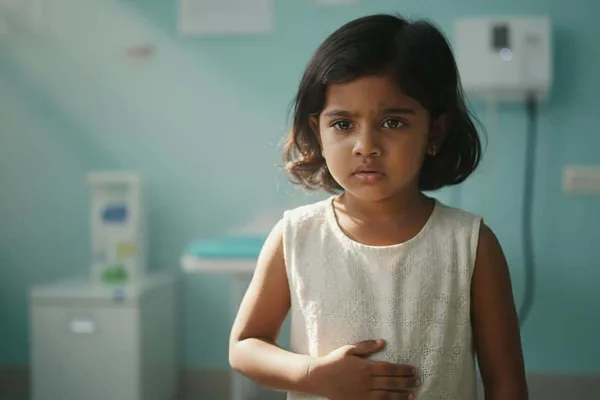
- You may experience severe stomach pain or cramping , as if you are holding your stomach in pain.
- You can get a high fever , sometimes reaching 40 degrees Celsius (104 Fahrenheit).
- Anorexia develops. The child may go without eating.
- Nausea and vomiting may also occur.
- When going to the toilet, that means feeling pain when defecating , or having to go more frequently.
You may experience one or more of these symptoms at once. But the most important thing is that this diarrhea causes the body to lose water and salts, which can lead to dehydration . This means that the body lacks water. If a young child becomes dehydrated, it can be dangerous.
Imagine how distressing it is for a young child to have to deal with these kinds of difficulties all at once. Therefore, we need to be very attentive to these signs.
In rare cases, and that is, very rare, this ``Shigellosis`` infection can cause other complications such as arthritis , seizures, or kidney damage. That is why it is not a good idea to take this lightly.
How is Shigellosis transmitted?
This is something we need to be especially aware of. Shigellosis is a very contagious disease .. To be precise, even a very small amount of bacteria is enough to cause an infection. This is spread when the `Shigella` bacteria, which are mainly found in the stool of an infected person, somehow get into the mouth of a healthy person.
Now let's see how this can happen:
- Dirty hands: If an infected person, especially a young child, does not wash their hands properly after going to the toilet, the bacteria will remain on their hands. The bacteria can then be transferred to objects such as toys, doorknobs, and tables that are touched by those hands. If someone else, especially a young child, touches these objects and puts their hand in their mouth, they can become infected.
- Through food: If an infected person (whether they are an adult or a child) prepares food without washing their hands properly, the bacteria can get into the food. People who eat that food can get sick.
- Contaminated water: Drinking water from unclean water sources, especially water contaminated with feces, can cause this disease. In our country, this situation is a little less common, but in some areas this risk may exist.
- From flies: Flies are a major vector of germs . If a fly lands on infected feces and then lands on food that we eat, the bacteria can enter through that as well.
- When changing a diaper: If proper care is not taken when changing a small child's diaper, bacteria can enter the hands of the person changing the diaper and spread to other areas.
This is why the disease is so common in daycare centers, preschools, and schools . Because young children play together and use the same toys, it can easily spread from one person to another.
Surprisingly, a person can shed the bacteria in their stool for up to four weeks after they have recovered from Shigellosis. This means that even if the illness seems to have gone away, they can still infect others.
How is Shigellosis treated?
If your child has these symptoms, such as diarrhea, stomach pain , and fever, the best thing to do is to see a doctor right away. The doctor will examine the child and, if necessary, take a stool sample to test for the presence of the Shigella bacteria.
Most cases of shigellosis resolve within 5 to 7 days without any special treatment. However, if the symptoms are severe, or if the child has other chronic conditions (for example, a child with a weakened immune system), the doctor may prescribe antibiotics.You can decide to give it. These antibiotics shorten the time it takes to recover from the disease and prevent the disease from spreading to others.
Important: If the doctor prescribes antibiotics, they should be given to the child exactly as prescribed, for the prescribed duration. Do not stop halfway.
Do not give your child nonprescription medicines for diarrhea without your doctor's advice. Sometimes they can make the illness worse or make the illness last longer. To reduce fever, you can give acetaminophen (e.g., Paracetamol) as directed by your doctor. This will make your child feel a little more comfortable.
The most important thing to do at this time is to prevent dehydration. You should give your child plenty of fluids to drink. The doctor may also prescribe an oral rehydration solution (ORS) (such as Pedialyte). This will help replace lost water and salts.
If the child is severely dehydrated , or if the symptoms are very severe, they may need to be hospitalized for treatment.
Can Shigellosis be prevented?
Yes, you can! The best way to protect yourself from not only shigellosis, but many other infectious diseases, is to wash your hands regularly . This is a very simple thing, but it is very important. Especially:
- After using the bathroom (or after changing a small child's diaper).
- Before eating and before preparing food.
If you are caring for a child with diarrhea, wash your hands thoroughly with soap and water before handling other people and before preparing food. No one with diarrhea should prepare food for others. Always clean the toilet that someone with shigellosis has used with disinfectant.
Also be careful about these things:
- Dispose of used diapers from a child with shigellosis in a well-sealed trash can.
- After each diaper change, clean the changing area with a disinfectant.
- Keep a young child (especially one of diaper age) with shigellosis or any other type of diarrhea away from other children, otherwise the illness could spread to others.
- Think about food safety too. That means handling, storing, and preparing food properly is very important. Keep food that needs to be kept cold, keep it cold, and keep food that needs to be kept hot, keep it hot. That will reduce the growth of bacteria.
- Do not take your child to swimming pools until the diarrhea has completely stopped and for a week , as the water can infect others.
When should you see a doctor?
If your child has any of these symptoms, be sure to see a doctor:
- If the stomach is empty like water.
- If there is blood or mucus in the stool.
- If you have a stomach ache.
Also, if your child has diarrhea and shows signs of dehydration , it could be an emergency. So take them to a doctor right away. Here are some of the main signs of dehydration:
- If your mouth feels dry and sticky.
- If you urinate less often than usual (if you haven't urinated for 6-8 hours, it's risky).
- If tears don't come when you cry.
- If you feel dizzy or drowsy.
- If a small baby has a sunken fontanelle at the front of their head.
- When the skin is stretched and released, it returns to its previous state (skin turgor).
If you see a sign like this, don't delay.
Take-Home Message
Okay, so, I hope you have a good understanding of Shigellosis from what we have discussed. The most important thing to remember is cleanliness . Just by washing your hands, preparing food cleanly, you can stay safe from many diseases like this.
It's sad to see young children suffer when they get sick like this. Therefore, seek medical advice as soon as you notice symptoms. Be especially careful about dehydration.
I hope this information is helpful to you. If your child is having this problem, I wish them a speedy recovery!
👩🏽⚕️ Additional questions (FAQs)
💬 What disease is Shigellosis?
This is a severe intestinal disease caused by the bacteria 'Shigella'. In this, the large intestine is infected and bloody diarrhea occurs with blood and mucus. This is also called 'bloody diarrhea'.
💬 How does this develop and spread?
This bacteria enters the body when people eat food with dirty hands that have been contaminated by insects such as flies or water that has been contaminated by feces.
💬 What treatment is needed for this?
This will be cured by seeing a doctor and taking antibiotics for a few days. However, until it subsides, it is very important to give ORS to prevent dehydration.
` Shigellosis, diarrhea, children's diseases, Shigella, stomach ache, dehydration, hand washing




💬 Comments (0)
No comments have been posted yet. Add your comment here for the first time.
Add your comment