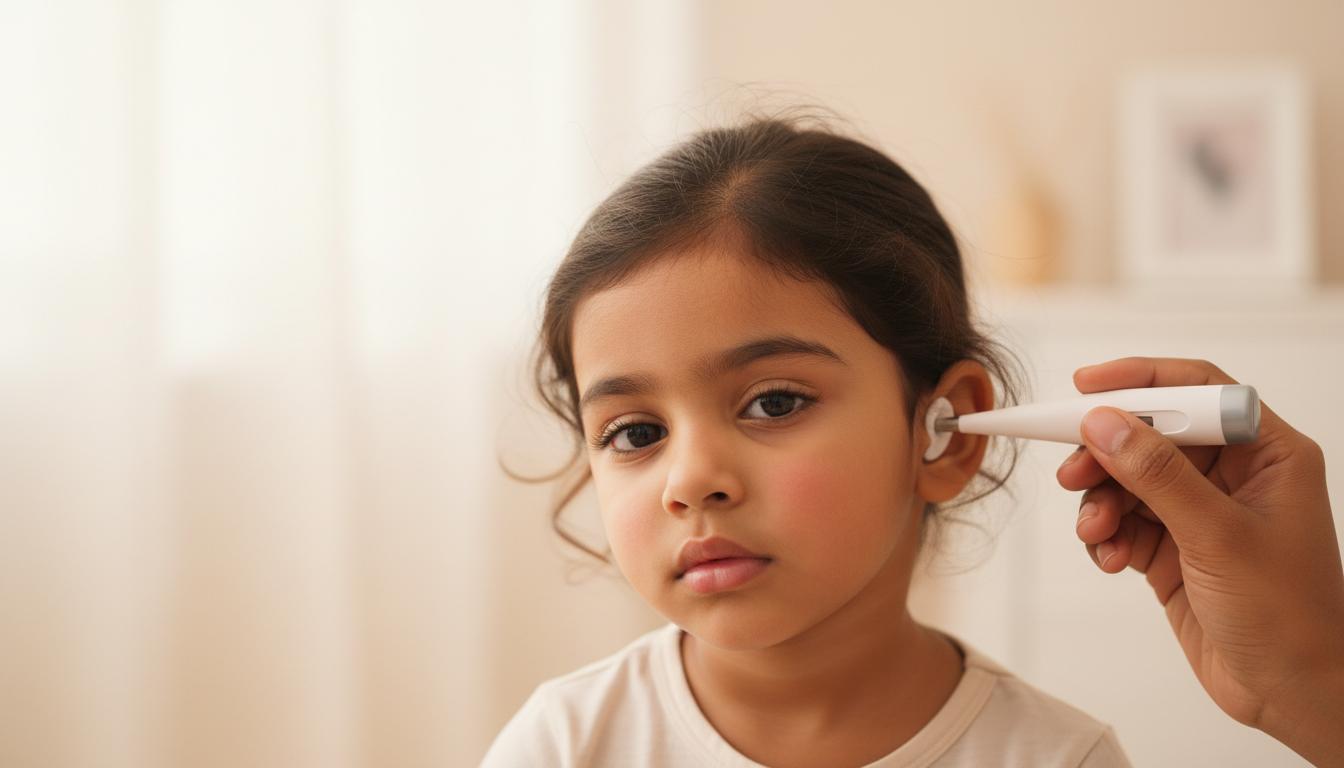
Does your baby feel warm? Or are they acting differently—perhaps more tired, lethargic, or showing a loss of appetite and interest in play? When this happens, it is natural to worry and ask yourself, “Could my child have a fever?” Knowing if your child has a fever is vital so you can take the necessary steps to help them feel better. Today, we will discuss how to check your baby’s temperature accurately and safely, which thermometers are recommended, and the best methods to use based on your child’s age.
What type of thermometer should you use?
While we might remember the old glass thermometers, doctors today strongly recommend using only digital thermometers. They are fast, highly accurate, and much safer to use. There are three main types of digital thermometers; let’s take a look.
1. Regular Digital Thermometers
These are the most common ones you will find. They consist of a slender rod with a temperature sensor at one end and a digital display screen at the other. This type of thermometer can be used in a few different ways:
- For oral temperature (under the tongue)
- For axillary temperature (under the armpit)
- For rectal temperature
Once the reading is complete, these thermometers will usually give an audible signal, such as a beep. Always refer to the included instruction manual for specific usage guidelines.
2. Ear (Tympanic) Digital Thermometers
These thermometers measure the heat waves emitted by the eardrum. You simply place the probe gently into the ear canal to get a reading.
An important note: Ear thermometers should only be used for children older than 6 months. In newborns, the ear canal is too small to obtain an accurate reading, which could lead to errors.
3. Temporal Artery Digital Thermometers
This is a modern technology that measures heat waves from the temporal artery, which runs just under the skin of the forehead. You essentially “scan” the forehead. The best part is that this can be used on all ages—from infants to adults. It is incredibly convenient because you can check a sleeping baby’s temperature without waking them up.
However, keep in mind that operating procedures may vary slightly by manufacturer. Always read the package insert carefully to ensure you are using the device correctly.
Avoid these types of thermometers!
There are several types of thermometers on the market that doctors do not recommend because they are often inaccurate. Avoid these:
- Plastic strip forehead thermometers: These are pressed against the forehead but do not provide an accurate reading of the core body temperature.
- Pacifier thermometers: While marketed as convenient, your child would need to hold the pacifier perfectly still in their mouth for an extended period, which is rarely practical.
- Smartphone temperature apps: These are not yet considered reliable for medical diagnostics.
- Glass mercury thermometers: Do not use these under any circumstances. They contain mercury, which is highly toxic. If the glass breaks, it poses a severe health risk to your baby and family.
What is the best way to take a temperature based on age?
We know how difficult it can be to keep a wiggly child still! The best method depends on your child’s age and their level of cooperation. Generally, medical professionals recommend the following:
- Infants under 3 months:
For the youngest babies, rectal temperatureis the gold standard for accuracy. Because fever in this age group requires immediate medical attention, precision is essential.
- Babies 3 to 6 months:
Rectal temperature remains the most recommended method. However, if that is not possible, a temporal artery or axillary (underarm) method may be used.
- Children 6 months to 3 years:
Rectal temperature is still the most accurate. Alternatively, you can use the temporal artery, ear (if over 6 months), or axillary methods.
- Children 4 years and older:
If your child can hold the thermometer correctly under their tongue, oral temperature is preferred. If they cannot, you can use the other methods mentioned above.
Quick tips for each method
Regardless of the method you choose, always follow the manufacturer’s instructions carefully.
Rectal Temperature
This is the most accurate method for infants. Apply a small amount of water-based lubricant to the tip of the thermometer. Lay your baby down securely and insert the tip gently, no more than 1.5 to 2.5 centimeters.
Oral Temperature
Place the thermometer under the tongue, towards the back of the mouth. Your child should keep their mouth closed and hold the thermometer in place with their lips. Avoid giving them hot or cold drinks for at least 15 minutes prior to measuring.
Axillary (Underarm) Temperature
Place the tip of the thermometer directly against the dry skin in the center of the armpit and hold the arm firmly against the body. Note that this method typically reads slightly lower than rectal or oral readings, so keep that in mind when interpreting the results.
Important reminders
Even though taking a temperature is a routine task, keep these points in mind for accuracy:
- Do not take your baby’s temperature immediately after a bath. Also, avoid checking it if the baby has been tightly bundled or overdressed, as these factors can cause a temporary rise in surface temperature. Wait a little while until they have been in a normal environment.
- Stay with your baby during the entire process. Never leave them unattended, especially when using rectal or oral methods.
- Clean the thermometer before and after every use. You can sanitize it with alcohol-based wipes or wash it with cool water and mild soap as directed in the packaging.
Take-Home Message
If you suspect your little one has a fever, stay calm and check their temperature systematically.
The most important factors are using a reliable digital thermometer and choosing the method best suited for your child’s age.
Evaluate the temperature, your child’s age, and any accompanying symptoms, and seek medical advice if necessary. If your baby is under 3 months old and has a fever (typically 38°C / 100.4°F or higher), contact your doctor or emergency services immediately, as this is considered a medical priority.
We hope this information helps you feel more confident in caring for your child. Wishing your little one a speedy recovery!