
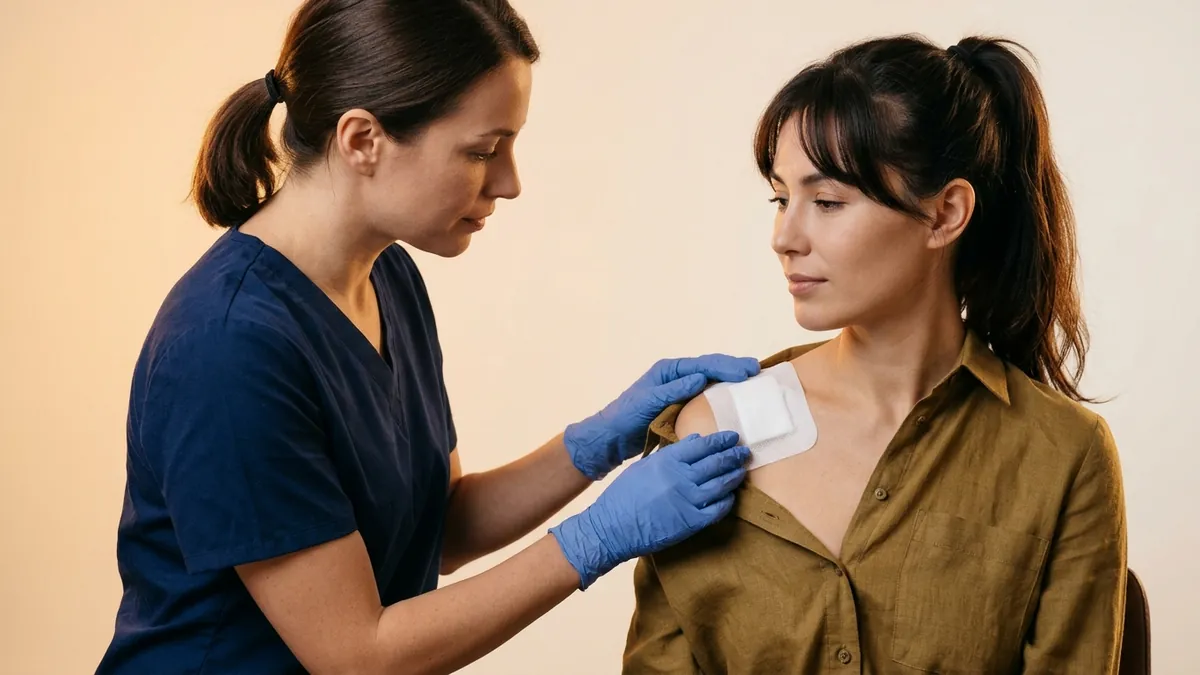
Sometimes, after an operation or when you have an injury, fluids can come out of the wound, right? If these things are not removed properly, they can also become infected. In such cases, something called a Penrose Drain comes to the rescue. Let's see what it is, how it works, and how to properly care for someone who has one.
What is a Penrose Drain?
Simply put, a Penrose drain is a very soft, flexible rubber tube. It looks like a small piece of rubber tubing. It is used to drain excess fluid from a surgical site or wound. Think of it this way: after surgery, blood, lymphatic fluid, or other body fluids can collect in the wound. If these are left there, there is a greater chance of bad bacteria growing and causing an infection. The Penrose drain is used to reduce that risk and help the wound heal faster. Sometimes your doctor may also call it a 'straight drain' or 'open drain'. Think of it like a soft drink tube. This is very soft, so it fits snugly against the wound, leaving the skin on the surface of the wound open and allowing the fluid inside to drain out.
How does this Penrose drain work?
This works in a very simple way. It's called a 'passive drain'. That is, it doesn't use a special suction feature to pull the fluid out. It relies entirely on gravity. Think of it this way, like something above falling down, the fluid that collects inside the wound also comes out through the drain due to gravity.
The surgeon places most of the drain inside the incision, leaving a small portion visible. Usually, the drain is sutured to the skin to prevent it from falling out. Sometimes, a small safety pin is placed on the outside of the drain to keep it from going back in. So, gravity naturally allows the fluid to drain out of the body, and the drain simply makes a way for it to do so.
When is a Penrose drain needed?
This Penrose drain is very helpful in preventing infections after an operation. It is also used to drain bad pus from an already infected wound. In fact, infection is one of the most common complications that can be prevented after surgery.
Your surgeon may decide to place a Penrose drain in these cases:
- Drain an abscess on the skin. An abscess is a place where pus has collected and become infected. It only heals when the pus is drained.
- Remove fluids from the abdominal cavity. For example, these drains are used to remove fluid that accumulates in the abdominal cavity after hernia repair surgery. Do you know what a hernia is? It is a protrusion of part of our body, usually an organ, through the abdominal wall.
How do I take care of my drain? (Penrose Drain Care)
This is the most important part. If you have a Penrose drain, it is essential to take good care of it to prevent infection. The main thing to do is to change the dressing, or bandage, that is applied to the wound. This dressing usually has two parts: one is a piece of gauze that is placed on the skin to absorb the fluid that drains from the drain, and the other is a piece of gauze that covers the drain.
Your doctor will tell you to write down some information about the fluid coming out of the drain. For example, how wet the gauze is, what color the fluid is, and whether it smells . These notes are very important because they can give the doctor a good idea of how well your wound is healing.
What do I need to change the dressing?
Before changing the dressing, it's a good idea to have everything you need ready. Since you'll need to wash your hands while doing this, it's best to do this near a sink. This is to prevent bacteria from entering the wound. Here's what you'll need:
- Two gauze squares. Place one under the drain, on top of the skin, to absorb fluid. The other covers the drain.
- Two pieces of surgical tape. Keep the dressing in place.
- Clean scissors. These are not essential, but can be used if you need to cut the gauze around the drain to fit it properly.
- Non-sterile gloves. The most common type of glove used for wound care.
- A small piece of cloth.
- A clean towel (one or two).
- Soap and water or alcohol-based hand sanitizer.
How do I change the dressing?
Okay, now let's see how to do this exactly. Do you have to do these steps in order?
1. First, clean your hands thoroughly. Wash your hands with soap and running water for at least 20 seconds. Dry them with a clean towel. After washing your hands, use the same towel to turn off the faucet and prevent bacteria from spreading to your hands. Alternatively, you can use a hand sanitizer.
2. Remove the old dressing. Carefully remove the tape and old gauze pieces. Be careful not to pull on the drain .This is what you need to do. When you remove it, take a good look at how the wound looks and how much fluid is in the gauze. Is it a little wet? Medium? Very wet? What color is the fluid? Does it smell? Make a note of all this to tell your doctor .
3. Wash your hands again and clean the wound and drain. This time, when you're done washing your hands, put on the two non-sterile gloves we prepared. Use soap and water and a small cloth to thoroughly clean under and around the drain. Then rinse with water, pat dry with a clean towel, and pat dry. (Sometimes, your doctor will tell you to take a shower after removing the old dressing. This will allow the soapy water to drain down the drain.)
4. Apply a new dressing. Place the new piece of gauze under the drain, flat against the skin. The safety pin on the drain should be in the middle of the gauze. Place the other piece of gauze over the drain and tape it in place.
Finally, throw away all the used gloves, old dressings, and pieces of tape in the trash. Wash your hands thoroughly again.
Important: It is very important to keep your hands clean every time you change the dressing and to be careful not to pull on the drain .
How often should I change the dressing?
Usually, you need to change the dressing at least twice a day. However, it is important to follow your doctor's instructions exactly. If the dressing becomes loose or very wet, you should change it immediately. Keeping the skin dry can reduce the risk of infection.
It's a good habit to change the dressing at the same times every day and to note those times. Then it's easier to give those details to the doctor .
How long has a Penrose drain been in place?
It's hard to say for sure. It depends on what surgery you had, how big the wound is, and how much fluid is coming out. In most cases, fluid can drain for a few days after surgery.
Your doctor will tell you when to come back to have the drain removed. Follow those instructions exactly.
What time should I see the doctor?
If your drain slips, becomes loose, or comes out completely, call your doctor right away. It may need to be re-secured.
Also, if you notice any signs of an infection, you should inform your doctor immediately. Here are some of the signs:
- Fever. If you have a fever of 100.4 Fahrenheit (38 Celsius) or higher.
- If the wound area becomes red, swollen, feels hot, or the pain increases.
- If you see red streaks from the wound.
- Fluid coming from the woundIf it has a bad odor, is green or thick. (Usually, the discharge from a non-infected wound is red at first, then turns pink, then light yellow, and finally becomes clear like water.)
If you have any questions about how to care for the drain or how the wound is healing, never be afraid to ask your doctor about that.
What is the difference between a Jackson-Pratt (JP) drain and a Penrose drain?
A Jackson-Pratt drain also does the same thing: it removes fluid from a wound. However, unlike a Penrose drain, a Jackson-Pratt drain is an 'active drain'. This means that it has a bulb that can be squeezed . It hangs outside the body. The pressure created when this bulb is squeezed draws fluid from the wound. Often, there are markings on this bulb to measure how much fluid has accumulated.
So, unlike a Penrose drain where you can tell the amount of fluid by looking at the amount of gauze that has been soaked, a Jackson-Pratt drain allows you to see exactly how much fluid has come out in cubic centimeters (CCs), milliliters (mLs), or ounces (oz).
💡 Final Take-Home Message
If you have a Penrose drain, it is important to take good care of it for a speedy recovery. Always follow your doctor's instructions exactly. How often you need to change the dressing and when you need to come back to have the drain removed may vary depending on your surgery and your healing process.
In the meantime, keep a record of how much fluid is coming out of the wound and how it looks. This information will be a great help to your doctor in monitoring your healing process. If you have any concerns or doubts, don't forget to seek medical advice immediately. We wish you a speedy recovery!





Janiw kuna arsuwinakas jichhakamax uñt’ayatäkiti. Aka chiqanx amuyt’awim jan ukax jiskt’awim yapxatañamawa.