
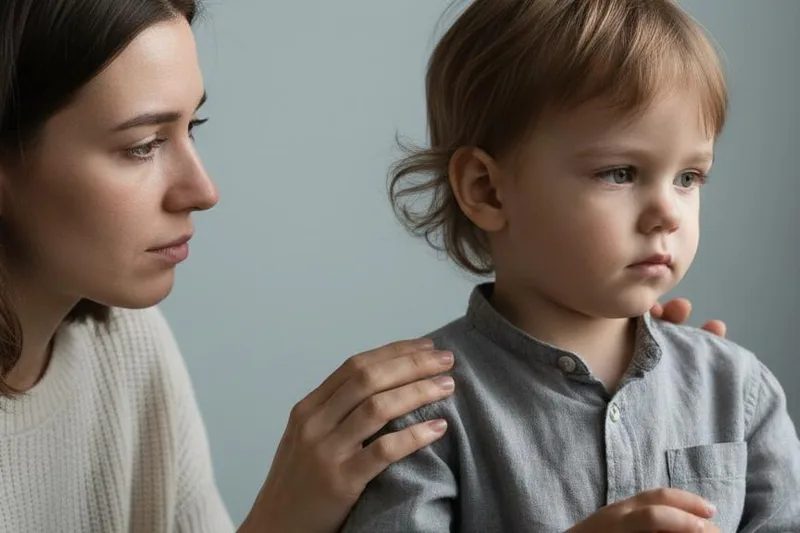
Is it hard to win over a child? Let's talk about Reactive Attachment Disorder (RAD)

Is it hard to win over a child? Let's talk about Reactive Attachment Disorder (RAD)

Even though you love your child very much, do you sometimes wonder if your child will return that love and affection to you? Does your child pull away when you go to hug him? Do you feel like you have a hard time understanding what is going on in his mind? You must be feeling sad and anxious because of things like this. It is really a very difficult experience. Today we are talking about such a condition. We call this Reactive Attachment Disorder, or (RAD) for short. This is a problem with the emotional attachment between a child and the person who is the main caretaker of him (mother, father or guardian). Let's talk about this in detail.

Simply put, what is Reactive Attachment Disorder (RAD)?

Reactive Attachment Disorder (RAD) is a condition in which a child does not develop a healthy emotional bond with their primary caregivers (we call them `caretakers`). The main cause of this is usually early in life, during infancy, when the child is emotionally neglected or abused in some way.

Children with this condition have a hard time regulating and managing their emotions . They also struggle to form meaningful, deep relationships with others. Children with RAD rarely seek comfort or show signs of comfort. Sometimes, no matter how loving and kind their caregivers are, we may see the child as fearful or anxious about them.

Who is affected the most by this situation?

This condition is most often seen in children who have been physically or emotionally neglected or abused. However, sometimes older children can also develop RAD. A child is at higher risk of developing RAD if:

  • Frequent changes in care: Consider this: Some children are placed in foster care situations. When they are constantly changing places, the child does not have the opportunity to form a lasting bond with the same person.
  • Separation from primary caregivers: If a child has developed a good emotional bond with their parents, and then has to be separated from them for some reason, it can be a great shock to the child.
  • Traumatic losses in early life: Experiencing several traumatic events, such as death or major loss, early in life.
  • Caregivers not being emotionally close: Some parents or caregivers do not try to be emotionally close to the child. They do not show interest in understanding the child's feelings or comforting him/her.
  • Institutional upbringing:Children growing up in institutions like orphanages may be deprived of the attention of a single, loving caregiver.

This can be especially challenging for adoptive parents, as they may not know the full story of their child's past. If you are a new adoptive parent and your child is showing signs of RAD, or you are having difficulty bonding with your child, it is not your fault. Be sure to talk to your child's doctor about it.

What are the common symptoms of RAD?

Every child may show unique symptoms. However, there are some common symptoms that can be seen in infants and young children. Let's understand these clearly.

Symptom What does this mean?
Not showing positive emotions When you're with other people, you don't show any positive feelings like comfort, love, or happiness on your face or in your actions. You act as if you don't matter at all.
Avoiding eye contact and physical contact When someone looks you in the eye, hugs you, or holds your hand, you pull away. You don't want to get physically close.
Expressing fear or anger They show anger by yelling loudly and throwing things on the floor (`tantrums`). They are always unhappy and sad.
Trying to control They look for things in their environment that they can control. This can often lead to them breaking the rules.

What is the difference between RAD and DSED?

There is another condition that is related to RAD, but is slightly different. It is called Disinhibited Social Engagement Disorder (DSED). It is important to understand the differences between the two.

Characteristic Reactive Attachment Disorder (RAD) Disinhibited Social Engagement Disorder (DSED)
Behavior with guardians Avoiding guardians. Trying to stay away. Maybe you can be too friendly with anyone.
Behaviour with strangers I like to be alone, away from society. Overly friendly with strangers. May be tempted to go with strangers even without asking their parents.
Seeking comfort Resists when someone tries to comfort them (e.g., hug them). Expecting attention and affection from anyone.
Common behavior Although they are aware of what is happening around them, they do not respond emotionally. They act like children younger than their age. They don't understand social boundaries.

What causes this RAD condition?

There is no single, definitive reason for this. Studies show that there are several reasons why a child may not form a bond with their caregivers. The main ones are:

  • Abuse or neglect: The child feels abandoned and alone.
  • Basic needs not being met:When a child does not receive the basic necessities of life, such as food, cleanliness, and safety, they do not develop confidence in the world.
  • Fear of safety: The child constantly feels afraid that he is in danger.
  • Lack of cleanliness: Things like being in a wet diaper for hours can make a child feel uncomfortable and neglected.
  • Inconsistent care: The child's needs are met only occasionally. The child loses any certainty about whether they will be comforted or given what they need.

Simply put, when a child's basic physical and emotional needs are met consistently and consistently, trust is built between the child and the caregiver. This trust is the foundation of a healthy bond. If these needs are not met, the child is at greater risk of developing RAD.

How does a doctor diagnose this condition?

To diagnose RAD, your doctor will ask you about your child's medical history and symptoms. The doctor may ask questions like:

  • Has your child been subjected to any form of abuse or neglect?
  • When did you first notice these symptoms?
  • How do you and your child get along with each other?
  • How is your family's living situation ?
  • Are there other caregivers who are dealing with the child?

Based on this information, if the doctor suspects RAD, they may refer the child to a pediatrician , psychologist, or psychiatrist to properly diagnose and recommend appropriate treatment.

Can RAD and Autism Spectrum Disorder (ASD) be confused?

Yes, sometimes the symptoms of these two conditions can be similar on the surface. Therefore, before a doctor concludes that a child has RAD, they will test to make sure that there are no other conditions, such as Autism Spectrum Disorder ( ASD ) . The main difference is that ASD is a developmental condition. It is not caused by abuse or neglect. Whereas RAD is directly related to a child’s early experiences.

What are the treatments for RAD?

The main goal of treatment for RAD is to repair the fearful or difficult relationship between the child and the caregiver and create a healthy emotional bond. These treatments benefit both the child and the caregiver.

Treatment method Simply put…
Psychotherapy/Counseling A mental health counselor works with the child and parents to help them build healthy emotional skills and reduce problematic behaviors that interfere with bonding.
Family Therapy The primary caregivers and the child work together to develop healthy ways of interacting with each other.
Social Skills Intervention The child is taught how to behave appropriately in normal social situations with peers. Parents are also involved in this.
Special Education If a child needs it, school-based programs help the child learn skills to succeed academically and socially.
Parenting Skills Classes Parents can learn how to manage their child's difficult behaviors more effectively.

How can I, as a caregiver, help my child?

Along with treatment, as a caregiver, you can do many things to build a healthy bond with your child.

1. Establish clear boundaries

A consistent environment is very beneficial for all children. Therefore, setting boundaries is very important. With reasonable limits and appropriate, non-physical methods of discipline , children know what is expected of them and what will happen if they break the rules. This reduces children's fears and motivates them to behave appropriately.

2. Even when your child misbehaves, you remain calm.

When your child misbehaves, stay calm. Don't react when you're angry. Discipline your child according to the rules you've discussed with your child beforehand. As soon as your child has calmed down and is ready to be with you again, show him love and care. This shows your child that you're there for him even in difficult times.

3. Give lots of love and attention

Spend time alone with your child. Talk to him, sing songs, play with him. Hug him, hold him. But remember that some children do not like this kind of physical contact very much. Never use withholding love and affection as a form of punishment.

When should I see a doctor?

If you notice that your child is having difficulty forming normal relationships , or if your child has any of the RAD symptoms mentioned in this article, see your child's doctor immediately for advice. The earlier this condition is identified and treated, the greater the chance of successful outcomes for your child.

Seeking help from a doctor doesn't mean you're a bad parent. It just opens the door to building a strong, healthy, lifelong relationship with your child.

Take-Home Message

  • Reactive Attachment Disorder (RAD) is a serious, but treatable, condition that results from early neglect or trauma in a child.
  • This is neither the child's fault nor the fault of the parents who took on the responsibility of raising a child.
  • The main characteristics are emotional detachment, refusal to comfort, and difficulty forming bonds with others.
  • The main goal of treatment is to build a secure, stable, and loving bond between the child and the caregiver.
  • Seeking medical advice early, and providing patient and consistent love and care are very important for the child's future.

Reactive Attachment Disorder, RAD, child mental health, child behavior, emotional attachment, parental relationship, neglect, treatment

⚠️ Important: The medical articles and information on Nirogi Lanka are for general awareness only, and are by no means a substitute for professional medical advice, diagnosis, or treatment. For any medical problem you have, consult a qualified physician immediately.

💬 Comments (0)

No comments have been posted yet. Add your comment here for the first time.

Add your comment

Please calculate: 8 + 1 =
Is it hard to win over a child? Let's talk about Reactive Attachment Disorder (RAD)
For ParentsNovember 29, 2025

Is it hard to win over a child? Let's talk about Reactive Attachment Disorder (RAD)

Even though you love your child very much, do you sometimes wonder if your child will return that love and affection to you? Does your child pull away when you go to hug him? Do you feel like you have a hard time understanding what is going on in his mind? You must be feeling sad and anxious because of things like this. It is really a very difficult experience. Today we are talking about such a condition. We call this Reactive Attachment Disorder, or (RAD) for short. This is a problem with the emotional attachment between a child and the person who is the main caretaker of him (mother, father or guardian). Let's talk about this in detail.

Simply put, what is Reactive Attachment Disorder (RAD)?

Reactive Attachment Disorder (RAD) is a condition in which a child does not develop a healthy emotional bond with their primary caregivers (we call them `caretakers`). The main cause of this is usually early in life, during infancy, when the child is emotionally neglected or abused in some way.

Children with this condition have a hard time regulating and managing their emotions . They also struggle to form meaningful, deep relationships with others. Children with RAD rarely seek comfort or show signs of comfort. Sometimes, no matter how loving and kind their caregivers are, we may see the child as fearful or anxious about them.

Who is affected the most by this situation?

This condition is most often seen in children who have been physically or emotionally neglected or abused. However, sometimes older children can also develop RAD. A child is at higher risk of developing RAD if:

  • Frequent changes in care: Consider this: Some children are placed in foster care situations. When they are constantly changing places, the child does not have the opportunity to form a lasting bond with the same person.
  • Separation from primary caregivers: If a child has developed a good emotional bond with their parents, and then has to be separated from them for some reason, it can be a great shock to the child.
  • Traumatic losses in early life: Experiencing several traumatic events, such as death or major loss, early in life.
  • Caregivers not being emotionally close: Some parents or caregivers do not try to be emotionally close to the child. They do not show interest in understanding the child's feelings or comforting him/her.
  • Institutional upbringing:Children growing up in institutions like orphanages may be deprived of the attention of a single, loving caregiver.

This can be especially challenging for adoptive parents, as they may not know the full story of their child's past. If you are a new adoptive parent and your child is showing signs of RAD, or you are having difficulty bonding with your child, it is not your fault. Be sure to talk to your child's doctor about it.

What are the common symptoms of RAD?

Every child may show unique symptoms. However, there are some common symptoms that can be seen in infants and young children. Let's understand these clearly.

Symptom What does this mean?
Not showing positive emotions When you're with other people, you don't show any positive feelings like comfort, love, or happiness on your face or in your actions. You act as if you don't matter at all.
Avoiding eye contact and physical contact When someone looks you in the eye, hugs you, or holds your hand, you pull away. You don't want to get physically close.
Expressing fear or anger They show anger by yelling loudly and throwing things on the floor (`tantrums`). They are always unhappy and sad.
Trying to control They look for things in their environment that they can control. This can often lead to them breaking the rules.

What is the difference between RAD and DSED?

There is another condition that is related to RAD, but is slightly different. It is called Disinhibited Social Engagement Disorder (DSED). It is important to understand the differences between the two.

Characteristic Reactive Attachment Disorder (RAD) Disinhibited Social Engagement Disorder (DSED)
Behavior with guardians Avoiding guardians. Trying to stay away. Maybe you can be too friendly with anyone.
Behaviour with strangers I like to be alone, away from society. Overly friendly with strangers. May be tempted to go with strangers even without asking their parents.
Seeking comfort Resists when someone tries to comfort them (e.g., hug them). Expecting attention and affection from anyone.
Common behavior Although they are aware of what is happening around them, they do not respond emotionally. They act like children younger than their age. They don't understand social boundaries.

What causes this RAD condition?

There is no single, definitive reason for this. Studies show that there are several reasons why a child may not form a bond with their caregivers. The main ones are:

  • Abuse or neglect: The child feels abandoned and alone.
  • Basic needs not being met:When a child does not receive the basic necessities of life, such as food, cleanliness, and safety, they do not develop confidence in the world.
  • Fear of safety: The child constantly feels afraid that he is in danger.
  • Lack of cleanliness: Things like being in a wet diaper for hours can make a child feel uncomfortable and neglected.
  • Inconsistent care: The child's needs are met only occasionally. The child loses any certainty about whether they will be comforted or given what they need.

Simply put, when a child's basic physical and emotional needs are met consistently and consistently, trust is built between the child and the caregiver. This trust is the foundation of a healthy bond. If these needs are not met, the child is at greater risk of developing RAD.

How does a doctor diagnose this condition?

To diagnose RAD, your doctor will ask you about your child's medical history and symptoms. The doctor may ask questions like:

  • Has your child been subjected to any form of abuse or neglect?
  • When did you first notice these symptoms?
  • How do you and your child get along with each other?
  • How is your family's living situation ?
  • Are there other caregivers who are dealing with the child?

Based on this information, if the doctor suspects RAD, they may refer the child to a pediatrician , psychologist, or psychiatrist to properly diagnose and recommend appropriate treatment.

Can RAD and Autism Spectrum Disorder (ASD) be confused?

Yes, sometimes the symptoms of these two conditions can be similar on the surface. Therefore, before a doctor concludes that a child has RAD, they will test to make sure that there are no other conditions, such as Autism Spectrum Disorder ( ASD ) . The main difference is that ASD is a developmental condition. It is not caused by abuse or neglect. Whereas RAD is directly related to a child’s early experiences.

What are the treatments for RAD?

The main goal of treatment for RAD is to repair the fearful or difficult relationship between the child and the caregiver and create a healthy emotional bond. These treatments benefit both the child and the caregiver.

Treatment method Simply put…
Psychotherapy/Counseling A mental health counselor works with the child and parents to help them build healthy emotional skills and reduce problematic behaviors that interfere with bonding.
Family Therapy The primary caregivers and the child work together to develop healthy ways of interacting with each other.
Social Skills Intervention The child is taught how to behave appropriately in normal social situations with peers. Parents are also involved in this.
Special Education If a child needs it, school-based programs help the child learn skills to succeed academically and socially.
Parenting Skills Classes Parents can learn how to manage their child's difficult behaviors more effectively.

How can I, as a caregiver, help my child?

Along with treatment, as a caregiver, you can do many things to build a healthy bond with your child.

1. Establish clear boundaries

A consistent environment is very beneficial for all children. Therefore, setting boundaries is very important. With reasonable limits and appropriate, non-physical methods of discipline , children know what is expected of them and what will happen if they break the rules. This reduces children's fears and motivates them to behave appropriately.

2. Even when your child misbehaves, you remain calm.

When your child misbehaves, stay calm. Don't react when you're angry. Discipline your child according to the rules you've discussed with your child beforehand. As soon as your child has calmed down and is ready to be with you again, show him love and care. This shows your child that you're there for him even in difficult times.

3. Give lots of love and attention

Spend time alone with your child. Talk to him, sing songs, play with him. Hug him, hold him. But remember that some children do not like this kind of physical contact very much. Never use withholding love and affection as a form of punishment.

When should I see a doctor?

If you notice that your child is having difficulty forming normal relationships , or if your child has any of the RAD symptoms mentioned in this article, see your child's doctor immediately for advice. The earlier this condition is identified and treated, the greater the chance of successful outcomes for your child.

Seeking help from a doctor doesn't mean you're a bad parent. It just opens the door to building a strong, healthy, lifelong relationship with your child.

Take-Home Message

  • Reactive Attachment Disorder (RAD) is a serious, but treatable, condition that results from early neglect or trauma in a child.
  • This is neither the child's fault nor the fault of the parents who took on the responsibility of raising a child.
  • The main characteristics are emotional detachment, refusal to comfort, and difficulty forming bonds with others.
  • The main goal of treatment is to build a secure, stable, and loving bond between the child and the caregiver.
  • Seeking medical advice early, and providing patient and consistent love and care are very important for the child's future.

Reactive Attachment Disorder, RAD, child mental health, child behavior, emotional attachment, parental relationship, neglect, treatment

⚠️ Important: The medical articles and information on Nirogi Lanka are for general awareness only, and are by no means a substitute for professional medical advice, diagnosis, or treatment. For any medical problem you have, consult a qualified physician immediately.

💬 Comments (0)

No comments have been posted yet. Add your comment here for the first time.

Add your comment

Please calculate: 8 + 1 =