
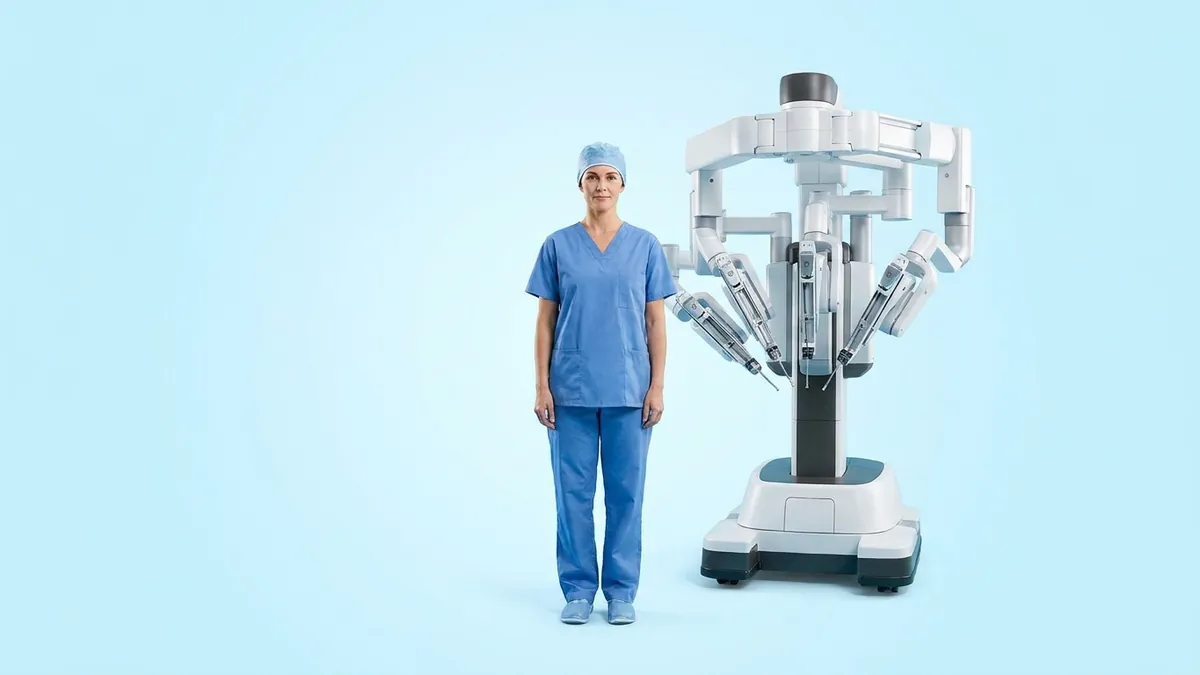
Sometimes, when performing an operation , especially one that requires very delicate and precise movements, doctors need special help. That's where robotic surgery comes in. Simply put, this system allows doctors to perform even the most complex surgeries with a high level of precision and control.
What exactly is Robotic Surgery?
Most often, doctors use this method for minimally invasive surgery , but there are times when it is also used in traditional open surgery.
This is not something that has been around for a long time. Research into this technology has been going on since the 1970s. NASA was the first to sponsor a project like this to see if it could perform surgeries on astronauts and soldiers who couldn't get to human surgeons.
Imagine how old this technology is, as far back as 1985, a brain biopsy was performed using a robotic machine called PUMA 560. Since then , this technology has improved over time, reaching the state we see today.
How does this robot perform surgery?
This is a very interesting process. A robotic surgery system basically has several mechanical arms. One arm is equipped with a high-definition 3D camera. The other arms are equipped with very delicate instruments that the doctor uses to perform the surgery.
The surgeon sits at a special monitor and control console near the patient. From there, he can control the robotic arms in the operating room. He can also perform the surgery while looking at a magnified, clear 3D view from the camera.
It's like playing a video game . The doctor controls this robotic arm with a controller. The important thing here is that the robot is always controlled by your doctor . The robot only operates on the commands given by the doctor. It has no ability to make decisions on its own. Also, doctors have to undergo special training to use this equipment.
What conditions are treated with robotic surgery?
Doctors use robotic surgery technology to treat a wide range of health problems. The table below clearly shows this.
| Body system/condition type | Diseases and conditions treated |
|---|---|
| Gastrointestinal System | |
| Abdominal organs | Colon, Rectum, Liver, Gallbladder, Esophagus, Stomach, Pancreas, Hernia repair. |
| Difficulty swallowing | Swallowing difficulties such as achalasia. |
| Genitourinary System | |
| Women's diseases | Pelvic prolapse, fibroids, endometriosis, hysterectomy, abnormal uterine bleeding. |
| Urinary system | Problems related to the prostate, kidneys, adrenal glands, and bladder. |
| Other situations | |
| Bones and nerves | Degenerative disk disease, scoliosis. |
| Head and neck | Cancer, sleep apnea, tonsillectomy, cyst removal. |
| Other | Obesity surgeries (e.g. gastric bypass), heart and lung problems. |
What are the advantages and disadvantages of robotic surgery?
Like any medical procedure, robotic surgery has its advantages as well as some disadvantages and risks.
Compared to traditional surgery, robotic surgery is very precise . The doctor has more control and range of motion. Since the robotic arm can rotate 360 degrees, it can easily reach places that are difficult for a human hand to reach. Also, because of the 3D camera, even microscopic structures can be clearly seen.
Below are the main advantages and disadvantages.
| Advantages | Disadvantages & Risks |
|---|---|
| Reduced pain and bleeding. | More expensive than traditional surgeries. |
| Reduced risk of complications such as infection after surgery. | It takes longer to prepare for the surgery than a regular surgery. |
| Short hospital stay (usually 1-2 days). | As with any surgery, there is a certain risk of infection and other complications. |
| Able to recover quickly (complete recovery within 6 weeks). | Not all hospitals have this facility. |
| Being able to resume normal daily activities quickly. | The surgeon needs special training to handle this. |
| The amount of scars left on the body is very small. |
The future of robotic surgery technology
Many hospitals in the US and Europe are currently using this technology, and researchers and companies are continuously trying to create smaller, lighter, and more advanced robotic systems.
Virtual Reality and Augmented Reality Training
Doctors can now practice robotic surgery using Virtual Reality (VR) technology before actually going into the operating room. This allows them to see the exact conditions they will face during surgery on a computer screen and plan patient-specific surgeries in advance.
Augmented Reality (AR) technology can add more information to the patient's real 3D images, allowing for a clearer view of body parts and structures. These technologies allow for the detection of even subtle details that are too subtle for the human eye to see.
Technological advances
Over time, these robotic systems have become easier for doctors to use, and new features have been added, such as 3D cameras that magnify images by 10 times and infrared technology.
Amazingly, a team of doctors recently successfully performed surgery on a patient in Europe from the United States via a high-speed internet connection. This suggests that in the future, a doctor on Earth may be able to perform surgery on an astronaut in space.
Also, research is currently underway into robots that perform surgeries completely automatically, without human intervention.
💡 Take-Home Message
- Robotic surgery is a highly advanced device controlled by a doctor, not a robot working alone.
- This provides many benefits such as less pain, smaller scars , less bleeding , and faster healing.
- But this is more expensive than regular surgery, and this method is not suitable for every surgery.
- If you are scheduled to have surgery, find out if robotic surgery is right for you and what its advantages and disadvantages are.Always talk openly with your surgeon. Only then can you make the best decision.






Janiw kuna arsuwinakas jichhakamax uñt’ayatäkiti. Aka chiqanx amuyt’awim jan ukax jiskt’awim yapxatañamawa.