It's normal for us to get small cuts and scrapes while we work or play every day. Sometimes we don't pay much attention to them. Even though we may think, 'What's that, it's just a small thing,' sometimes even this small wound can be a big problem. That is, sometimes germs can enter through this and cause an infection. So, today we'll talk about how to properly care for such a small cut or scrape at home, and when we should see a doctor.
What should you do at home for a minor injury?
Simply put, if you have a minor cut or scrape, it can usually be treated at home without any major complications. But you need to take proper care of it. Here's how to do it:
1. Stop the bleeding first.
The first thing you need to do when you get a cut is to stop the bleeding. Take a clean, soft cloth (a piece of gauze is best) and apply pressure to the cut. Usually, the bleeding will stop after a few minutes. However, if the cut is bleeding heavily, you may need to apply pressure for 10 to 15 minutes at a time.
While applying pressure, remember not to remove the bandage to check if the bleeding has stopped. If you do, the blood that has started to clot may start flowing again.
2. Clean the wound thoroughly.
Once the bleeding has stopped, the next
most important thing to do is to clean the wound thoroughly.- Turn on the tap (without the hose) and let the water run over the wound for about 5 minutes.
- Then, add some soap and wash the wound and the area around it thoroughly.
- Imagine that you fell while playing and scraped your knee or elbow. Then there could be small stones, sand, or dirt inside the wound, right? Remove as much of that as possible. Try to wipe it off with a damp, clean cloth.
- It is very important to clean the wound thoroughly, because that is when the bacteria that cause infection are removed.
- If you can't get all the dirt out of the wound, definitely see a doctor. Don't try to force it out and make the wound worse.
3. Apply an antiseptic ointment (if desired)
After cleaning and drying the wound thoroughly, if possible, apply a thin layer of antibiotic ointment around the wound. This will kill any remaining germs and prevent new germs from entering.
- However, you should check in advance if you are allergic to the medications in that ointment.If you don't know, it's best to ask at the pharmacy or a doctor. This isn't necessary for every wound, just a good cleaning will suffice.
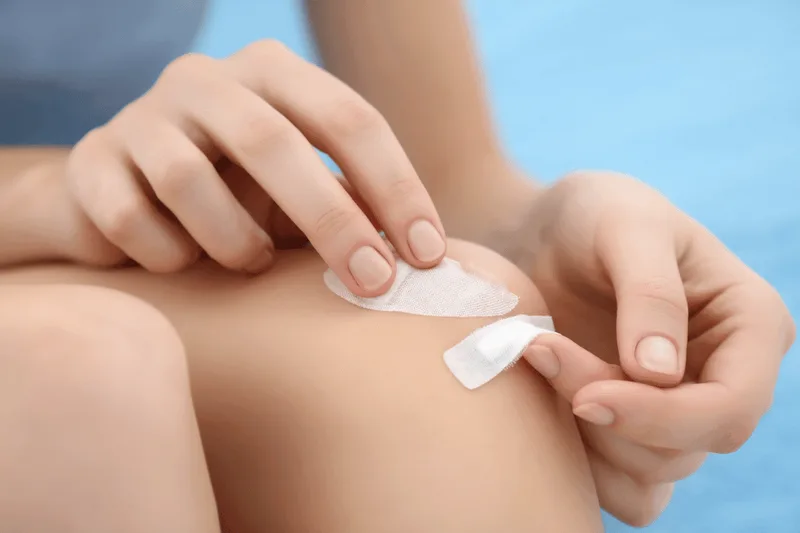
4. Keep the wound closed.
Next, cover the wound with a piece of clean gauze or an adhesive bandage.
- Closing the wound in this way prevents germs from entering the wound and causing infection, and reduces the risk of the wound spreading to other areas and causing pain.
- If the bandage gets wet or dirty, you should put on a new one right away.
5. Take care every day, watch for signs of infection
- Every day, at least once a day, remove the bandage, wash the wound thoroughly with soap and clean water, and apply a new bandage.
- Check to see if the wound is infected . This means looking closely at the area around the wound for redness, swelling, warmth to the touch, increased pain, or yellow/green pus -like fluid coming from the wound. We'll talk about these things in a bit.
6. Don't scratch the crust!
As the wound heals, a scab forms over it. This is the natural covering that protects the wound.
- To help the wound heal quickly and reduce the risk of leaving a large scar later, do not pick at the scab that forms on the wound or pull on the skin around the wound. Doing so may cause more bleeding, more germs, and delayed healing.
When should you see a doctor for an injury?
Not all injuries can be treated at home. There are times when you definitely need to see a doctor. Let's look at what those times are:
- If the bleeding doesn't stop: If you've applied pressure for 10-15 minutes and the wound continues to bleed heavily, see a doctor immediately. In the meantime, apply pressure to the wound with a clean cloth. If the cloth gets wet with blood, don't remove it, but apply pressure with another cloth over it. Keep the wound (such as an arm or leg) above your heart if possible.
- If the wound is very deep, long, or has a large gap: If the wound appears to be very deep, is longer than an inch, or if the two sides of the wound are far apart and have a large gap, you should see a doctor. Because for such a wound to heal properly, the two sides need to be brought together and held together.
- The doctor may put stitches on it. Don't worry, a doctor or nurse will apply a numbing medicine to your skin before putting the stitches in. If you put stitches, you will have to go back to the doctor in about 5 to 10 days to have the stitches removed. There are some types of stitches that dissolve on their own, so you don't have to go back.
- Sometimes, for small, straight cuts (especially on certain parts of the body), doctors use medical glue or Steri-strips (thin medical tape that holds the skin together). These also fall off on their own after a few days.
- If you are worried about leaving a large scar: It is normal for a wound to leave a scar on the skin after it heals. However, if you do not see a doctor in time to have your wound stitched or bandaged, your scar may be slightly visible.
- If you are injured by an animal bite or a human bite: If you are injured by an animal (such as a dog or cat) or a human bite, you should definitely see a doctor. This is because bacteria from the mouth of an animal or a human can enter the wound and cause a serious infection. You will probably need to take antibiotics to prevent infection. Also, if you were bitten by an animal, the doctor or nurse will ask you questions to make sure the animal has a disease such as rabies .
- If you get a wound from something dirty or rusty: If you get a wound from something dirty or rusty (such as an old nail or piece of wire), you can get a dangerous infection called tetanus. But, that's only if you haven't had your tetanus shots on time. You (or your mom or dad) can check your medical card to see if you've had a tetanus shot recently. If it's more than 5-10 years old, your doctor may recommend a new shot.
- If something is stuck inside the wound: If something like a piece of glass or wood is stuck inside the wound, do not try to pull it out yourself. Have a doctor remove it.
How do you know if a wound is infected?
Sometimes, a small cut or scrape that doesn't seem like a big deal at first can become infected. This means that germs can get into the wound and cause problems. If you notice one or more of these symptoms around the wound,
it could be a sign of an infection. If so, you should call a doctor right away:- Redness around the wound (if the redness spreads further than it was initially).
- Starting from the wound and spreading upwards along the skin like red streaks .
- Swelling or pain around the wound increases day by day .
- Feeling warm when touching the wound.
- A white, yellow, or green fluid (like pus) oozing from the wound, sometimes with a foul odor.
- Fever (increased body temperature).
If you have these symptoms, your doctor will examine your wound and prescribe antibiotics to help your body fight off the infection. However, most of the time, minor cuts and scrapes will heal on their own. This is because our bodies have amazing healing abilities. However, if a wound seems more serious or looks infected, you should definitely see a doctor.
So, what are the most important things we need to remember from this story?
Okay, so here are some things to keep in mind from what we've talked about today:
- Don't take even a small wound lightly. Clean it properly and bandage it if necessary.
- To stop the bleeding, apply pressure to the wound with a clean cloth. Do not open it frequently, as this will interfere with the blood clotting process.
- Wash the wound thoroughly with soap and clean running water. Carefully remove any dirt or sand.
- If desired, a thin layer of antibiotic ointment can be applied after cleaning.
- Check the wound daily for infection (redness, swelling, pus, fever, increased pain).
- Don't pick at the scab that forms on the wound. Let it fall off on its own.
- If the bleeding doesn't stop, the wound is very deep/long/wide, if an animal has bitten you, if something rusty has bitten you, if something is stuck inside the wound, etc., you should definitely see a doctor.
- If you have signs of infection (redness, swelling, pus, fever) , tell a doctor immediately.
Remember, your body is amazing at healing wounds. But if you need help, don't hesitate to seek help from a doctor. Your health is more important than anything else!



💬 Comments (0)
No comments have been posted yet. Add your comment here for the first time.
Add your comment