

Do you sometimes feel a little difficult when you urinate? Or do you feel like your urine is running low, or do you feel like there is still more after you finish urinating? These are common problems. But the reason for this may be that your urethra is a little narrow. In medical terms, we call this a urethral stricture .
What is Urethral Stricture?
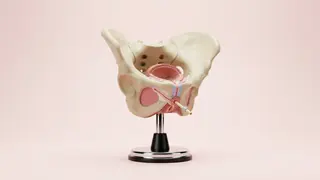
Simply put, a urethral stricture is a narrowing of your urethra. You know, urination is the way our body eliminates waste. This urine comes out through a small tube that comes from the bladder. We call this tube the urethra.
Now look, in a man , this urethra runs from the bladder to the urethral meatus at the tip of the penis. In a woman , this tube connects from the bladder to the opening just in front of the vagina.
So, if this passageway for urine, that is, the (Urethra), gets blocked or narrowed for some reason, then that is when (Urethral Stricture) occurs. It is like a water pipe getting blocked in the middle. Some people also call this (Urethral Stricture Disease).
How common is this condition?
Urethral stricture is more common in men. Roughly speaking, it affects about 1% of men. It is less common in women.
What are the symptoms of this?
The main symptom of urethral stricture is a decrease in the speed of urine flow, or a narrowing of the urethra. You may experience the following:
- Straining to urinate: You have to exert a lot of effort to release urine.
- Pain during urination (dysuria).
- Frequent urinary tract infections (UTIs). You may experience fever and chills.
- Prostatitis: This can occur in men.
Imagine if you were in a situation where you were so stressed out that you couldn't even urinate? That would be really difficult, wouldn't it?
Sometimes, if this (Urethral Stricture) becomes very severe, you may suddenly experience a condition where you are unable to urinate (Acute Urinary Retention). This is a condition that requires emergency medical treatment. Because, if not treated, urine can back up and affect both kidneys, causing them to swell (Hydronephrosis). Also, there is a possibility of kidney failure (Kidney Failure). Therefore, you need to be very careful about this.
How does it feel when you have a (Urethral Stricture)?
This really depends on the severity of your urethral stricture. For some peopleYou may feel like you need to urinate frequently, as if you still have to urinate after you come from the bathroom. Or you may suddenly have an uncontrollable urge to urinate. In some cases, you may even feel pain when you urinate.
What causes this?
In most cases, the main cause of a urethral stricture is chronic inflammation or scar tissue from an injury. This scar tissue narrows the urethra, making it difficult for urine to flow easily.
This scar tissue can gradually form due to the following reasons:
- An injury to your penis or scrotum (the sac that holds your testicles), perhaps from a fall or an accident.
- An infection, especially a sexually transmitted infection (STI), such as chlamydia.
- Urinary catheters or other instruments are inserted through the urethra during surgery or other medical procedures.
- Due to conditions such as urethral or prostate cancer .
- Due to receiving radiation therapy .
Sometimes, you don't realize you have a urethral stricture until long after the inflammation or injury to the urethra has healed. Other times, this narrowing can occur right after the injury.
Can you urinate when you have a urethral stricture?
Many people can urinate even with a urethral stricture. However, it can be difficult and painful. You may feel as if your bladder has not emptied completely. However, if the urethral stricture is severe, you may not be able to urinate at all. If you have a urinary tract infection but are unable to urinate, it is important to seek medical advice immediately.
Who is affected the most by this situation?
Anyone can develop a urethral stricture. However, if you are male and over the age of 55, you are more likely to develop this condition.
How do you know if you have a (Urethral Stricture)?
If you feel like you are urinating too slowly or too weak, see a doctor right away. He or she may do some simple tests to see if you have problems emptying your bladder. While these tests cannot directly tell if you have a urethral stricture, they can help identify if there is a problem. These are the tests that are usually done:
- Urine flow tests: This measures the flow rate of urine when you go to the bathroom.
- Post-void residual urine test (PVR): This is an imaging test that measures how much urine is left in your bladder after you urinate. Normally, your bladder should be completely empty after you urinate. However, if you have a stricture, some urine may remain.
These simple tests cannot tell for sure whether your difficulty emptying your bladder is due to a urethral stricture or another condition. Therefore, if your doctor suspects a stricture, he or she may order an X-ray called a retrograde urethrogram to identify it and measure its length and width. In this test, the doctor injects a special liquid (contrast dye) into your urethra. This liquid helps the X-ray show where the stricture is and how long it is.
Your doctor may also perform a test called a cystoscopy . This involves inserting a small, flexible tube (scope) with a camera attached to the end into your urethra. The cystoscope allows the doctor to see where the stricture is. Before the test, a numbing medicine is injected into your urethra to reduce discomfort.
How to treat a (Urethral Stricture)?
There are several treatments for Urethral Stricture. Your doctor will determine the most appropriate treatment based on your condition.
- Urethral Dilation: In this procedure, a urologist uses a series of long, thin rods to widen the narrowed area, gradually inserting rods of increasing thickness.
- Internal Urethrotomy: In this, a small knife (scalpel) is attached to the end of a cystoscope, and the scar tissue is cut and removed.
- Urethral Reconstruction: This is a slightly larger surgery. In this, the narrowed part is removed and the two healthy ends of the urethra are reconnected.
The most important thing is to talk to your doctor and decide which treatment is right for you.
How quickly will I feel better after treatment?
It depends on the type of treatment you receive. A simple treatment like Urethral Dilation may start to relieve your symptoms within a few days. However, if you have surgery, it can take up to eight weeks to fully recover. Your doctor will give you a clear idea of your recovery time, depending on the treatment recommended for you.
What to expect if you have a (Urethral Stricture)?
With proper treatment, the condition (Urethral Stricture) usually has good outcomes. However, as scar tissue can recur, multiple treatments may be necessary.You will need to have follow-up appointments with your doctor to see if you are healing properly and if scar tissue is forming again.
Is it possible to live with a (Urethral Stricture)?
If left untreated, urethral stricture can lead to life-threatening complications, such as kidney failure and severe infections. Therefore, if you have symptoms of urethral stricture, especially if the symptoms come on suddenly, see a doctor as soon as possible.
How to prevent a urethral stricture from forming?
Not all causes of urethral stricture can be prevented. However, you can do the following to help prevent injury to your pelvic area:
- Wear a properly fitting protective covering (athletic cup/jockstrap) when playing sports or other high-impact activities.
- When inserting a urinary catheter, apply plenty of lubricating jelly.
- Avoid sexually transmitted infections (STIs). You and/or your partner should use condoms. If you suspect you have an STI, see a doctor immediately. Take the antibiotics your doctor prescribes for the full duration.
Remember, these are things we can do. Not everything is in our control, but it's important to be as careful as possible.
When should you see a doctor?
If you have symptoms of a urethral stricture, see a doctor right away. After treatment, keep regular appointments with your doctor to make sure you are healing properly and that the stricture does not return. If you still have symptoms, he or she may recommend further treatment.
When should you go to an Emergency Treatment Unit (ETU) ?
If you have any of these symptoms, go to the nearest emergency room:
- Inability to urinate at all.
- Increased pain when urinating.
- Blood in the urine (Hematuria).
- Having symptoms of an infection, such as a fever.
What questions should you ask the doctor?
When you go to see the doctor, you can ask questions like:
- How do you know for sure that I have a (Urethral Stricture)?
- Why did I develop this (Urethral Stricture)?
- How big/severe is my (Urethral Stricture)?
- How should I take care of myself while I have this (Urethral Stricture)?
- What kind of treatment do you recommend?
- How often do I need to come for follow-up appointments?
- What is the chance of my (Urethral Stricture) recurring?How much ?
Don't be afraid to ask your doctor any questions you have. That way, you can get a better understanding of this condition.
Finally, you have to say...
Urethral stricture is a narrowing of the urethra due to scar tissue. Although this can happen to anyone, it is more common in men over the age of 55. This can cause bothersome, sometimes life-threatening, problems such as difficulty urinating.
But you don't have to suffer with these problems. If you have symptoms, see a doctor. He or she can widen this narrowed space and relieve your symptoms. So don't panic, the most important thing is to seek medical advice as soon as possible.





Janiw kuna arsuwinakas jichhakamax uñt’ayatäkiti. Aka chiqanx amuyt’awim jan ukax jiskt’awim yapxatañamawa.