

Have you ever had someone say, "Oh, you don't look like someone from that area..."? Or have you ever heard someone say, "You're so beautiful even though you're black"? Maybe you've said, "You look so white" because you speak English well. When you hear these things, maybe you laugh, but don't you feel a little uncomfortable, a little hurt somewhere in your heart? Those are the things we do without realizing it, which subtly create anger, sadness, and insecurity in the heart of the person listening to us, which we call (Microaggress ION ).
This is a really complicated topic. Because most people who do these things don't mean to hurt others. But the damage they do can be huge. According to Columbia University psychology professor Darrell Wing Soo, "We all unconsciously hold certain biases about things like race, gender, and sexual orientation. So we all have the potential to act in ways that hurt others and discriminate against them."
What exactly is microaggression?
Simply put, this is subtle, even unintentional, harassment that targets someone's race, religion, caste, gender, disability, or any minority group they belong to, through words, behavior, or our surroundings. While this may not be as obvious as direct insults, it sends the message to the other person that "you are not like us, you are different," "you are inferior."
These are so common that you've probably had similar experiences . And you may have done something like this without even realizing it. Think about these examples.
| What is said (example) | The hidden meaning implied (This is how the heart hurts) |
|---|---|
| "Your English/Sinhala is very good!" (Especially for someone of another race) | "I thought people from your race/region couldn't speak the language so well. You're special in that regard." This implies that the person's group is inferior. |
| "No no, where are you really from?" (asking someone because of their appearance) | It gives the impression that "You don't look like a Sri Lankan. You're an outsider, you don't belong here." |
| "Even though you're a girl, you know a lot of 'technical' stuff!" | "Women are usually not good at technical things. You are different in that regard." This reinforces a stereotype about women's abilities. |
| "We are all human, what race?" | While this may seem like a good thing, it is saying, "I do not accept that you have different, special experiences and problems because of your race/religion." |
What would you do if something like this happened to you?
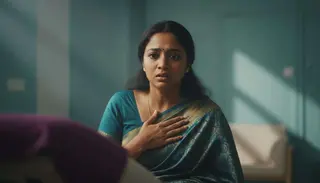
When something like this happens, the pain, anger, and discomfort that comes to mind are overwhelming. At that time , you should first think about your mental well-being.
1. Understand your feelings: It's okay to feel sad or angry. It's not your fault. Don't bottle up those feelings.
2. Talk to trusted people: Talk to friends who have been through similar things to you. When you feel like "I'm the only one," it can be comforting to know that other people are going through the same thing. You'll know you're not alone.
3. Respond immediately (only if necessary): Sometimes, simply sending what was said back to the person can disarm'' them and make them understand how hurtful it is.
- If someone says, "You're a Tamil, but you speak Sinhala well," you can smile and say, "You're also a Sinhala, but you speak Sinhala well." Then that person will understand the strangeness of that statement.
4. Think about the context: If the person you're talking to is someone you care about and you feel comfortable talking about it, talk about it later. It may be difficult to say, "I felt a little sad when you said that," but it will express your feelings.
5. It's not wrong to be silent: If we try to answer everything all the time, it can make us even more depressed. Therefore, it's okay if you decide to remain silent at that time for your own mental peace. It's not a weakness on your part. You can think about it later and speak up later if you need to.
The most important thing is to protect your mental health . You don't have to go to every fight.
What if you see something like this happening to someone else?
If you see someone else being bullied in this way, be a good ally.
- Support the victim: Go up to the person and ask, "Are you okay?" (Are you okay?). It's a great way to tell the person, "What they said is not right."
- Don't speak for the victim, speak with them: Don't try to speak for the person by saying, "This person must be thinking this way." That can be another form of ( Microaggression ). Instead, speak for yourself by saying, "I think what you said must have hurt their feelings."
What if something like this happens without you knowing?
This is the hardest thing to accept. Many of us think, "I would never do that." But that's not true. We've all been raised in a society where we've been conditioned to think that we're not good enough. It doesn't make you a bad person just because you did something like that. It just means you're a part of that society.
If someone tells you, "What you said hurt my feelings," don't immediately get defensive.
- Rather than trying to correct yourself by saying, "Oh, I didn't mean it that way," pause for a moment.
- Listen. Try to understand how the person is feeling.
- Apologize. Instead of saying, "I'm sorry you felt that way," apologize sincerely by saying, "I'm sorry that what I said hurt your feelings. I didn't mean it. I'll be more careful about that in the future."
- If the person is willing to talk, ask them what they need to do to avoid making the same mistakes in the future. This is a learning process.
We all make mistakes. The important thing is to accept the mistake, learn from it, and try to be a better, more respectful person. If you want to talk about this further, talking to a mental health counselor or your doctor can be very helpful.
💡 Take-Home Message
- Microaggression is a subtle, unintentional act of violence that deeply hurts someone. This is real and serious.
- If something like this happens to you, prioritize your mental well-being . Talk to someone you trust. You don't always have to respond.
- If you see something like this happening to someone else, don't stay silent.Be a supportive friend.
- If something like this happens to you unknowingly, don't be defensive, admit it, apologize sincerely, and learn from it.
- Educating ourselves and educating others about this is essential to building a good society that respects everyone.





Janiw kuna arsuwinakas jichhakamax uñt’ayatäkiti. Aka chiqanx amuyt’awim jan ukax jiskt’awim yapxatañamawa.