
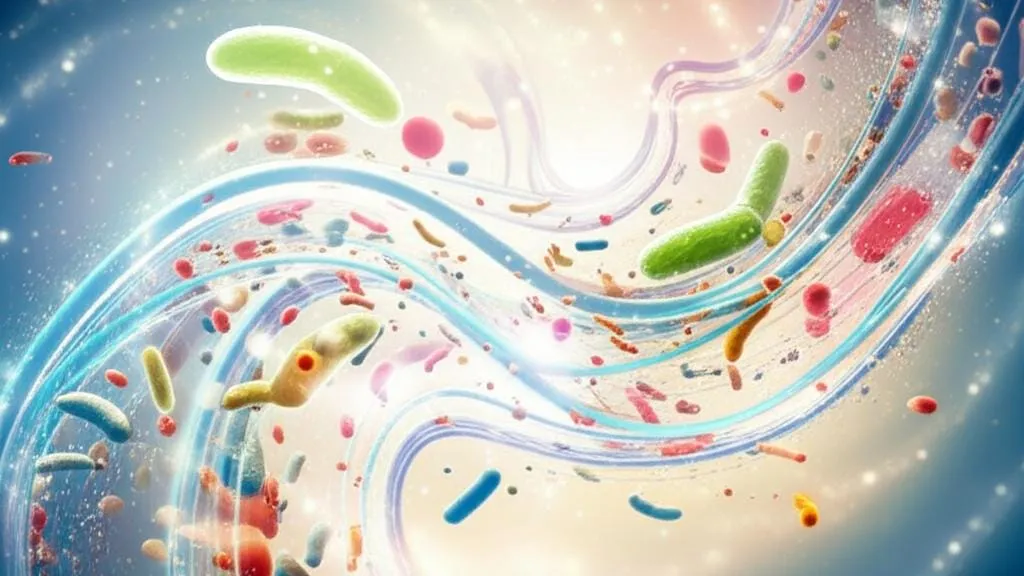
We all know that our bodies are amazing creations. But did you know that trillions of tiny organisms work unseen inside us to keep us healthy? Sometimes these little creatures need a little help. For so long, we've been talking about probiotics to keep our body's microbiome healthy. But now, a new and important topic is postbiotics. Let's talk about this in a simple way today.
First, let's understand what this microbiome is.
Simply put, the microbiome is the collection of "good" and "bad" microbes that live in your body, especially in your gut. These microbes are tiny organisms like bacteria, fungi, and viruses. To maintain our health, there needs to be a proper balance between these good and bad organisms. When this balance is lost, we start to develop various diseases.
Everyone's microbiome is different, just like our fingerprints. That's why what works for one person may not work for another. In medicine, we call this imbalance dysbiosis. This condition can sometimes lead to serious complications. For example:
- New allergies
- Autoimmune diseases (e.g. Inflammatory Bowel Disease, Type 1 Diabetes)
- Cancer
- Psychiatric disorders
So we often hear about three main factors that help us maintain this balance: probiotics, prebiotics, and what we're talking about today, postbiotics.
| Concept | Simply put... |
|---|---|
| Probiotics | These are the "good" bacteria that are beneficial to our bodies. They're like the good friends in our stomachs. They're naturally found in things like yogurt and fermented milk. |
| Prebiotics | These are the foods that the "good" bacteria (probiotics) mentioned above need. These are mainly foods with fiber. Eating these is what helps the good bacteria grow. |
| Postbiotics | These are very beneficial substances that our bodies produce as a byproduct after eating good bacteria (Probiotics) and their food (Prebiotics). These are not living organisms. |
So what exactly are these postbiotics?
Think of it like bees drinking probiotics and prebiotics and making honey (postbiotics). Honey is neither a bee nor a nectar, it is a new, beneficial thing that is formed as a result of both. That's what postbiotics are like.
When the good bacteria in our gut digest the fibrous foods we eat (prebiotics), they produce various beneficial substances as a result of that process. For example, short-chain fatty acids, enzymes, vitamins (like B and K), and amino acids. These beneficial byproducts are what we call postbiotics.
Because these are not living microorganisms, they can sometimes be more beneficial than probiotics.
What are the benefits and risks of postbiotics?
Although research is still ongoing into the health benefits of postbiotics, current findings suggest that they are similar to those of probiotics.
Health benefits
- Strengthens the immune system: Increases resistance to disease.
- Prevents inflammation in the body: Inflammation is the root cause of many chronic diseases.
- Anti-cancer properties: May help control the growth of some cancer cells.
- Acts as an antimicrobial: Helps prevent harmful bacterial infections.
- Can reduce the risk of heart disease.
- It supports the production of the hormone oxytocin, which is important for wound healing and childbirth processes.
One of the biggest advantages of postbiotics over probiotics is their reduced risk. Since postbiotics do not contain live microorganisms, there is no risk of introducing new bacteria into the body.
Probiotics are usually safe for the average healthy person. ButThere is a very small risk of infection from probiotics for someone with a weakened immune system, someone who is seriously ill, or someone recovering from major surgery. This risk is almost non-existent with postbiotics.
Practical advantages
There are other advantages to postbiotics in terms of production and use:
- Shelf-life is longer.
- Easy to store (no need to refrigerate).
- It's easy to transport.
- Resistant to temperature changes.
How can you get postbiotics?
There are two main ways to get probiotics: through food and through supplements. But we must always remember that the best and safest way is to get them through natural foods.
Changing your diet
If you feed the good bacteria (probiotics) that are already in your gut, they will produce the postbiotics you need. The best thing to do is to feed them. That means eating more high-fiber foods .
Here are some foods that are rich in prebiotics, which means they are good food for your good bacteria:
- Garlic
- Large onion
- Leeks
- Asparagus
- Bananas (especially those that are slightly raw)
- Seaweed
- Cereals, vegetables and fruits
Important: When changing your diet, add new foods gradually. Eating a lot of high-fiber foods all at once can cause bloating and gas. Be sure to talk to your doctor before making any major changes to your diet, especially if you have gastrointestinal conditions.
Be careful about supplements.
There are postbiotic supplements on the market, but since these are still being researched, it's not a good idea to decide on your own what's right for you. There are many factors that affect your body's microbiome, including genes, age, environment, and medications.
Therefore, if you are considering using a probiotic or postbiotic supplement, be sure to consult your doctor first. He or she will recommend the most appropriate one based on your health condition.
💡 Take-Home Message
- The balance of "good" and "bad" microbes (microbiome) in our bodies, especially in the gut, is crucial for health.
- Postbiotics are beneficial byproducts of the digestion of "good" bacteria (probiotics) and fibrous foods (prebiotics). These are not living organisms.
- Postbiotics may be safer than probiotics for some people (e.g., those with weakened immune systems).
- The best and most natural way to get postbiotics is to eat fiber-rich vegetables, fruits, and grains.
- Never start taking probiotics or postbiotic supplements without medical advice. Talk to your doctor first.



Janiw kuna arsuwinakas jichhakamax uñt’ayatäkiti. Aka chiqanx amuyt’awim jan ukax jiskt’awim yapxatañamawa.