
There is no greater pain for a mother or father than seeing their child sick. How worried do we get over a common cold? When that happens, the pain a parent feels when they learn that their child has a serious illness like cancer is beyond words. Today we are going to talk about a very rare but very dangerous type of brain cancer that occurs in children. This is called DIPG, or Diffuse Intrinsic Pontine Glioma. Although the name may seem a bit complicated, let's talk about it simply.
What actually happens to the brain in DIPG?
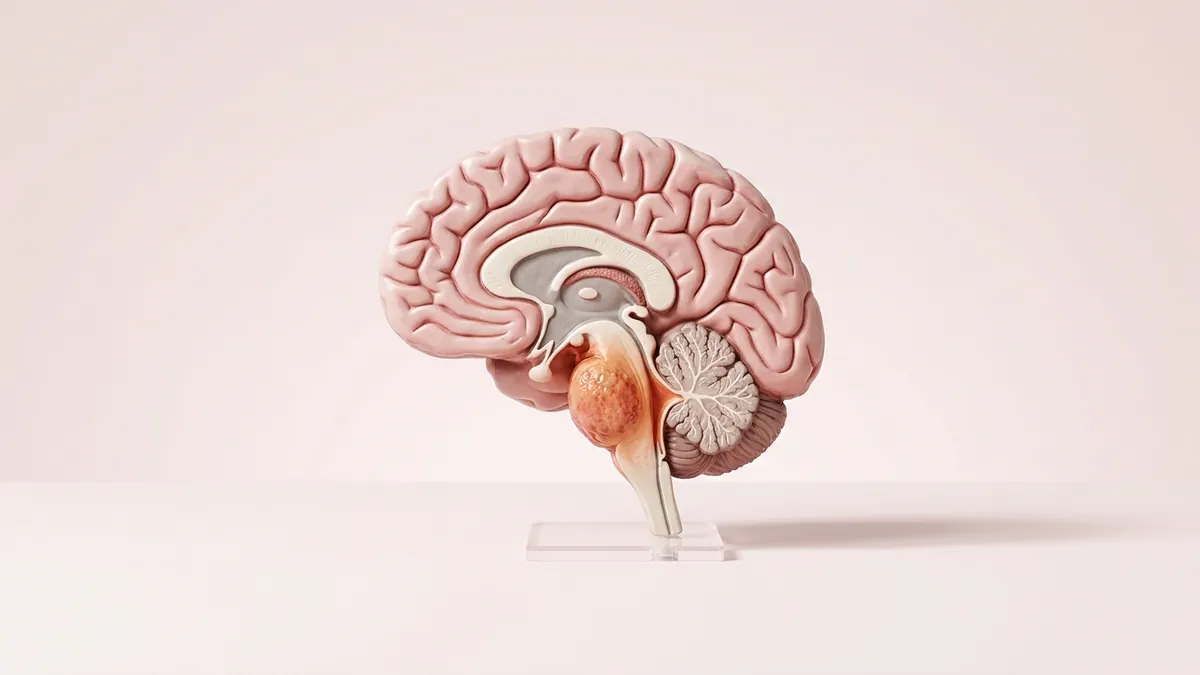
Okay, let's first look at what this is. Simply put, DIPG is a cancerous tumor that develops in a part of the brain stem that connects to our brain. Specifically, this tumor develops in an area of the brain stem called the "pons."
Imagine, if our body were a big building, this part called the "pons" would be like the main electrical control room of that building. It is here that the most important and essential functions of our lives are controlled.
- Breathing
- Heart rate (heartbeat)
- Blood pressure
- Swallowing food
- Eyesight and eye movement
- Body balance
When a cancer develops in a place where such essential things are controlled, you can imagine the impact it has on the body.
This cancer belongs to a group called glioma, which means it starts in glial cells in the brain. That's why it's sometimes called pontine glioma.
Who is most likely to get this disease?
DIPG is a disease that affects children more than adults. Although it is very rare, it most often affects children between the ages of 4 and 11. Only 200 to 400 children are diagnosed with the disease each year worldwide. It affects both boys and girls equally.
What are the symptoms of DIPG?
These tumors grow very quickly. So the child's symptoms can get worse in a very short time. As the tumor grows, it presses on the "pons" part of the brain. This disrupts the body's functions that are controlled by that part. Watch for these symptoms in your child.
| Symptom category | How to show |
|---|---|
| Balance and walking | A sudden feeling of unsteadiness when walking, as if you are losing your balance. |
| Changes in the face and mouth | Difficulty chewing and swallowing, changes in speech, and drooping of one side of the face. |
| Eye problems | Inability to control eye movement, double vision, drooping eyelids. |
| Hearing problems | Rapid hearing loss or complete loss of hearing. |
| Other common features | Nausea and vomiting, especially in the morning or after vomiting, headache, weakness in the arms and legs. |
These tumors can grow and become large, severely affecting vital functions such as breathing and heartbeat, and can even be life-threatening.
What causes DIPG? Can it be prevented?
This is the biggest question that comes to your mind as a parent. You may be wondering, "Why did this happen to my child? Was it my fault?"
Please remember one thing: DIPG is not a disease caused by anything you did wrong.
DIPG tumors may have certain genetic changes (doctors call these mutations). However, it is not a disease that is passed down from parents to children through genes. Nor is it caused by exposure to anything in the environment, such as smoke, chemicals, or radiation. Therefore , there is nothing we can do to prevent this disease or reduce the risk of our children developing it.
Doctors believe that the disease may be related to the way a child's brain is developing. These tumors are more likely to form at an age when the brain is changing rapidly.
How to accurately diagnose the disease? (Diagnosis)
If your child has these symptoms, you should first take them to a pediatrician. The doctor will examine your child and ask about their symptoms and medical history. Then, they may do some tests to confirm the diagnosis.
1. Brain scans (Imaging)
Brain scans, especially CT scans and MRI scans, can help confirm DIPG. Sometimes, a special test called magnetic resonance spectroscopy (MRS) may also be done. To show the tumor clearly, a special liquid called contrast dye may be injected before the MRI. Doctors may suspect DIPG by looking at the location of the tumor in the brain stem and how it has spread to surrounding tissue.
2. Biopsy
Although MRI can usually diagnose the disease, some children with unusual symptoms may need to undergo a biopsy to confirm the diagnosis 100%. This is done by a pediatric neurosurgeon. This involves making a very small hole in the skull, inserting a thin needle through it into the brain, and taking a very small piece of tissue from the tumor. This method is called a stereotactic biopsy''. A pathologist then examines the tissue sample under a microscope to confirm whether there are cancer cells.
What are the treatments for DIPG?
This is the hardest part to talk about. Because DIPG is a very difficult type of cancer to treat. The current treatments cannot completely cure this disease. However, there are treatments that can help reduce the child's symptoms and prolong their life.
- Radiation Therapy: This is the main treatment for DIPG. It involves the use of high-energy X-rays aimed at the tumor. This is done in several sessions daily, sometimes up to 30 sessions in total. In most children, this treatment shrinks the tumor, reducing the pressure on the brain and relieving symptoms. This can extend the child's life by several months. However, the effect is temporary. The tumor will start to grow again within a few months.
- Chemotherapy: Newer chemotherapy drugs that are currently being tested are given in combination with radiation therapy. However, no effective treatment has yet been found for this type of cancer. As a new approach, sometimes treatments that deliver cancer drugs directly to the tumor are also being tested.
- Surgery: Surgery is not usually possible for DIPG. This is because the tumor is like butter on a slice of bread. That is, it has spread and grown into healthy brain cells. So it is not a solid tumor that can be easily removed. If surgery is performed, the risk of damaging healthy, vital parts of the brain is very high. It can even be life-threatening for the child.
Outlook for DIPG
Honestly, the outlook for a child with DIPG is not very good. I know this is very painful to hear. The main goal of doctors is to make the child as comfortable and pain-free as possible. Current treatments are aimed at controlling the symptoms rather than curing the disease.
According to statistics, only 10% of children survive 2 years after diagnosis. Less than 2% survive 5 years. I understand how you feel when you hear these numbers. But it's important to be aware of this situation.
💡 Take-Home Message
- DIPG is a very rare but very dangerous type of brain stem cancer in children.
- This disease is not caused by any fault of the parents or the influence of the external environment. Don't regret it.
- If you notice a sudden change in your child's walking, balance, eye movement, speech, or swallowing, see a doctor immediately .
- Surgery is not effective for this disease. The main treatment is radiation therapy to relieve symptoms.
- This is a very difficult time for the child and the family. It is very important to seek support from doctors, friends, and counselors.






Janiw kuna arsuwinakas jichhakamax uñt’ayatäkiti. Aka chiqanx amuyt’awim jan ukax jiskt’awim yapxatañamawa.