
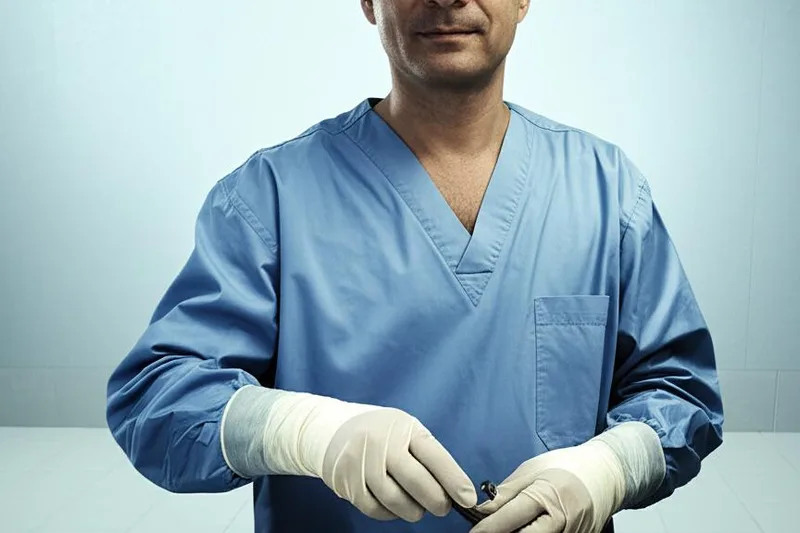
We have all heard of an "operation" or "surgery" at least once in our lives, right? Maybe one of our family members or friends has had to do it. Or maybe we have seen it on TV or in a movie. It is normal to feel a little scared and curious when we hear these words. So who is this surgeon? What exactly do they do? Today we will talk about this very simply, in a way that you can understand.
Simply put, a surgeon is a doctor who specializes in diagnosing and treating conditions that may require surgery. "Surgery" is the act of making changes to the human body to correct an illness or injury. Inside the operating room, the surgeon is the one who leads the entire team. The other doctors and nurses all work together to make sure everything goes smoothly, under the surgeon's guidance.
Think of it this way: a surgeon is like a skilled mechanic who builds a car engine. But what they're building here is our body. It's a very responsible job that requires skill.
Surgeons use a variety of instruments for their work. For example:
- Lasers
- Ultrasound technology
- Scalpels
- Lots of things like needles.
What are the types of surgery?
There are two main types of surgery.
1. Open Surgery: This involves making a small incision in the skin and performing surgery directly on the affected area of the body. For example, this method is used to remove a large tumor or in some heart surgeries.
2. Minimally Invasive Surgery: This is the "camera-assisted surgery" we've all heard of. Instead of a large incision, one or more small incisions are made. A camera and special instruments are inserted through those incisions to perform the surgery. The advantages of this are that recovery time is shorter, pain is less, and the scars are much smaller . However, not all surgeries can be performed this way. That's up to your doctor.
Different specializations of surgeons
There are surgeons who specialize in each part of our body. Just like there is a separate person for the tires of a car and a separate person for the engine. Let's see what the main surgical specialties are.
| Surgical Specialty | What They Treat |
|---|---|
| General Surgeon | Surgery is performed for a wide range of conditions that can occur in any part of the body (e.g. appendicitis, gallstones, hernias). |
| Neurosurgeon | Surgery is performed for diseases related to the brain, spine, and nervous system (e.g., brain tumors, spinal cord injuries, nerve compressions). |
| Orthopedic Surgeon | They treat problems related to bones, muscles, and joints. Imagine, when we break an arm or leg in an accident, or when we need a joint transplant like a knee, we go to this doctor. |
| Thoracic / Cardiothoracic Surgeon | Specialists who perform surgeries (e.g., bypass surgery) on the heart, lungs, and other organs in the chest. |
| Obstetrician and Gynecologist (OB/GYN) | Cesarean sections for pregnant mothers and surgeries for diseases of the female reproductive system (e.g. uterine fibroids). |
| Pediatric Surgeon | From newborns to young children, we perform specialized surgeries just for children. |
| Plastic Surgeon | They restore body parts damaged in accidents, heal burns, and perform cosmetic surgeries. |
| Ophthalmologist | Ophthalmologists, who perform eye and vision-related surgeries, such as cataract removal. |
| Ear, Nose and Throat Surgeon (ENT Surgeon) | They perform things like tonsil removal, sinus problems, and ear surgeries. |
The journey to becoming a surgeon
Becoming a surgeon is a long, dedicated journey. It requires years of study and training.
- First, you need to pass the Advanced Level Biology section with flying colors and then enter medical school.
- After that, you need to study for 5 years in medical school and get an MBBS degree.
- After that, you have to choose a surgical specialty of your choice and undergo years of training (residency) in hospitals until you become a specialist in that specialty.
This journey can take about 10-15 years. So you can understand how much knowledge and experience a surgeon has. So if you are going to have surgery, you can be sure that you are in very safe hands.
Why do we need surgery?
There are many reasons why surgery may be required. Some are emergency (emergent), while others are elective.
Imagine, if you have a serious accident and the bleeding cannot be stopped, that is an emergency surgery . It needs to be done right away. Otherwise, a knee replacement surgery, where you take medicine for a while for knee pain and then have it done the next day, is a planned surgery .
Here are some of the main reasons why surgery may be performed:
- Diagnose a disease precisely: Sometimes, to find out exactly what the disease is, a surgery is performed to take a small piece of tissue from inside the body and examine it (a biopsy).
- Remove/repair damaged or diseased parts: For example, removing a part of the intestine when appendicitis occurs, or removing a cancerous tumor.
- Remove an obstruction: If a kidney stone is stuck, remove it.
- Organ transplant: Transplanting organs like kidneys, hearts, and livers.
- Insert a device into the body: Like inserting a pacemaker to regulate the heart's function.
- Change appearance: To make some changes in appearance through plastic surgery.
If the doctor says you need surgery, don't be afraid of it. Any questions or concerns you have about it,Ask the doctor. He will explain everything to you.
Take-Home Message
- A surgeon is a highly trained and knowledgeable specialist who treats diseases through surgery.
- Surgeries are mainly divided into two types: open and minimally invasive.
- There are surgeons who specialize in different parts of our body (e.g., heart, brain, bones).
- Surgery is necessary for various reasons, such as to diagnose a disease, correct an injury, or save a life.
- If you are scheduled for surgery, don't be afraid to talk openly with your doctor and get all the information. Trust that you are in the hands of a skilled and safe medical team.
👩🏽⚕️ Additional questions (FAQs)
💬 Who exactly is a Gynecologist and Obstetrician / VOG?
A 'Gynecologist' is a doctor who specializes in diseases of the 'female reproductive system (uterus, ovaries, vagina)' (Cysts, Fibroids). Similarly, an 'Obstetrician' is a doctor who is in charge of 'Pregnancy and Childbirth'. In Sri Lanka, we combine these two fields (OB/GYN) and call them 'VOG (Obstetrician and Gynecologist)'.
💬 When should a woman visit a Gynecologist (VOG) for the first time?
This is why women need a VOG not only when they are trying to conceive/conceive a child! Even a woman who has started menstruating normally should see this specialist if 1) her monthly period lasts an unusually long time/is painful (if the cramps are unbearable), 2) she has severe vaginal discharge or a suspicious lump.
💬 What are the deadly/dangerous 'Red Flags' that require you to rush to a gynecologist?
The biggest danger! 1) If a pregnant woman experiences severe lower abdominal pain with vaginal bleeding (Ectopic Pregnancy), the tube will burst and the patient will die within seconds! 2) If bleeding occurs again after many years of menopause (Endometrial Cancer), you should immediately go to a VOG!


💬 Comments (0)
No comments have been posted yet. Add your comment here for the first time.
Add your comment