Dobsonfly: Is this scary insect really dangerous?

Dobsonfly: Is this scary insect really dangerous?

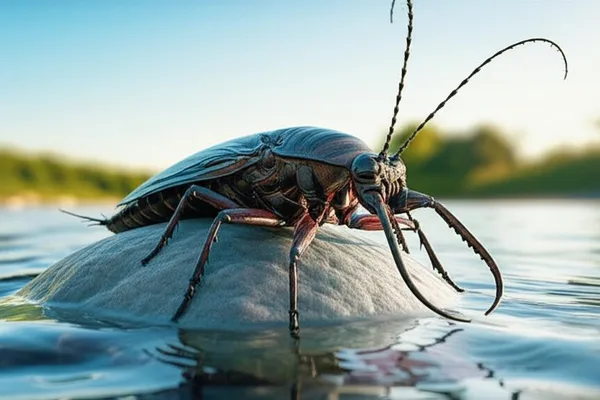
Have you ever been near a stream, river, or creek? When you were there, did you see a large, strange-looking insect perched on a rock or a tree branch? You might have been scared by the male of this insect, which has two large, tooth-like jaws. Many people, when they see an insect like this, think that it must be a very dangerous and poisonous animal. So today we are talking about this scary-looking, but very important insect, the Dobsonfly.

Who really is Dobsonfly?

First of all, despite the word "fly" in its name, the Dobsonfly is not a "real fly" like the housefly we know. Although they are all insects, they belong to different orders. For example, houseflies and mosquitoes belong to the order Diptera. However, the Dobsonfly belongs to the order Megaloptera. The meaning of this name is "large wings." True to its name, the Dobsonfly is one of the largest insects after butterflies and moths.

An adult Dobsonfly's body can be about 2-2.5 inches long. But when its wings are spread, it can be about 5 inches wide . Like a small bird.

There is a big difference between the males and females of these animals.

  • Male Dobsonfly: The male has two large mandibles that look like two tusks, sometimes over an inch long. These are what scare most people. But surprisingly, they don't use these large mandibles to bite violently, but mainly to hold onto the female during mating.
  • Female Dobsonfly: The female's jaws are much smaller and stronger.

These insects are found in most parts of the world except Europe and Antarctica, and they live primarily in ecosystems with clean, flowing water.

The life story of a Dobsonfly

The life span of a Dobsonfly can be anywhere from one to three years. But the amazing thing is, they spend most of that time underwater. As an adult insect, that is, as a winged animal that we see, they live a very short time, about three to ten days.

There are four main stages in the life of a Dobsonfly, as we will see in this table.

Life stage Description
Egg The female lays her eggs on a rock or tree branch near a stream or river. She can lay up to 1,000 eggs at a time. The eggs hatch in 2-3 weeks.
Larva / Hellgrammite The young hatch from the eggs and fall directly into the water. Another name for these larvae is 'Hellgrammite'. They live among rocks underwater for about 1-3 years. They look a bit like a frog. During this time, they shed their skin about ten times.
Pupa After the larva has grown well, it emerges from the water and digs a small hole in the damp soil near the riverbank, such as a decaying log, and then crawls inside to enter the pupa stage. Within 1-2 weeks, the adult insect develops from this larva.
Suhumbula (Adult) The winged Dobsonflies that we see emerge from the nest. Their sole purpose is to quickly find a mate and reproduce. The males die within a few days. The females die after laying their eggs (within 8-10 days).

Where do they live? What do they eat?

Dobsonflies are a species of animal that prefers clean, flowing water ecosystems . In our country, these animals can be seen in the streams and rivers of areas like Kitulgala and Belihuloya. Since their larvae live underwater, they cannot survive in polluted water. Therefore, the presence of Dobsonflies in a certain area is a good indicator that the water in that area is clean.

Speaking of food, a Dobsonfly eats most of its food during its flight. When underwater, they eat other insects, small worms, and other animals.

However, it is believed that an adult Dobsonfly does not eat solid food. The male has a very short lifespan, so he hardly eats anything. The female has been reported to sometimes suck on something liquid, such as nectar.

The most important question: Do Dobsonflies bite? Are they dangerous?

Okay, now let's get to the biggest question everyone has. Does this animal bite? Is it dangerous?

Simply put, if you don't bother this animal, it won't bother you.

Dobsonflies only bite when they feel threatened or scared. This means that if you try to touch them or squeeze them, they may bite in self-defense.

The most important thing to remember here is:

  • A female's bite is painful. Their jaws are small but very strong. So if a female bites you, you may feel intense pain and may even break the skin and bleed a little .
  • Although the male's jaws appear larger, they cannot bite as hard. Because of the way his jaws are positioned, he can pinch someone tightly, but it is difficult for him to bite as painfully as the female.

Important: Dobsonflies are not venomous. Although their bites are painful, they do not inject venom into the body. Therefore, they are not fatal. However, as with any bite, there is a risk of infection if the wound is not cleaned properly. Therefore, in the rare event that this happens, wash the wound thoroughly with soap and water to keep it clean. If you have any doubts about the wound, see your doctor immediately for advice.

Dobsonflies are very important to the ecosystem. Their young eat other small animals, which in turn are eaten by animals such as fish and crabs. The adults are eaten by animals such as birds and bats. In this way, they help maintain ecosystem balance.

Take-Home Message

  • Although the Dobsonfly may look scary, it usually doesn't harm humans unless disturbed.
  • The ability to bite painfully is mainly possessed by the female . The male, with its larger jaws, cannot bite as hard.
  • These animals are not venomous . Although the bite is painful, it is not life-threatening.
  • If you see a Dobsonfly, it means that the rivers and streams in that area are not polluted and are clean . That's a good sign.
  • So, the next time you see an animal like this, don't be afraid or try to touch it, but just look at its beauty from a distance. They are a very valuable resource for our environment.

Dobsonfly, Insects, Insect bite, Hellgrammite, Animals of Sri Lanka, Insect bites
⚠️ Important: The medical articles and information on Nirogi Lanka are for general awareness only, and are by no means a substitute for professional medical advice, diagnosis, or treatment. For any medical problem you have, consult a qualified physician immediately.

💬 Comments (0)

No comments have been posted yet. Add your comment here for the first time.

Add your comment

Please calculate: 8 + 6 =
Dobsonfly: Is this scary insect really dangerous?
How the Body WorksJuly 6, 2026

Dobsonfly: Is this scary insect really dangerous?

Have you ever been near a stream, river, or creek? When you were there, did you see a large, strange-looking insect perched on a rock or a tree branch? You might have been scared by the male of this insect, which has two large, tooth-like jaws. Many people, when they see an insect like this, think that it must be a very dangerous and poisonous animal. So today we are talking about this scary-looking, but very important insect, the Dobsonfly.

Who really is Dobsonfly?

First of all, despite the word "fly" in its name, the Dobsonfly is not a "real fly" like the housefly we know. Although they are all insects, they belong to different orders. For example, houseflies and mosquitoes belong to the order Diptera. However, the Dobsonfly belongs to the order Megaloptera. The meaning of this name is "large wings." True to its name, the Dobsonfly is one of the largest insects after butterflies and moths.

An adult Dobsonfly's body can be about 2-2.5 inches long. But when its wings are spread, it can be about 5 inches wide . Like a small bird.

There is a big difference between the males and females of these animals.

  • Male Dobsonfly: The male has two large mandibles that look like two tusks, sometimes over an inch long. These are what scare most people. But surprisingly, they don't use these large mandibles to bite violently, but mainly to hold onto the female during mating.
  • Female Dobsonfly: The female's jaws are much smaller and stronger.

These insects are found in most parts of the world except Europe and Antarctica, and they live primarily in ecosystems with clean, flowing water.

The life story of a Dobsonfly

The life span of a Dobsonfly can be anywhere from one to three years. But the amazing thing is, they spend most of that time underwater. As an adult insect, that is, as a winged animal that we see, they live a very short time, about three to ten days.

There are four main stages in the life of a Dobsonfly, as we will see in this table.

Life stage Description
Egg The female lays her eggs on a rock or tree branch near a stream or river. She can lay up to 1,000 eggs at a time. The eggs hatch in 2-3 weeks.
Larva / Hellgrammite The young hatch from the eggs and fall directly into the water. Another name for these larvae is 'Hellgrammite'. They live among rocks underwater for about 1-3 years. They look a bit like a frog. During this time, they shed their skin about ten times.
Pupa After the larva has grown well, it emerges from the water and digs a small hole in the damp soil near the riverbank, such as a decaying log, and then crawls inside to enter the pupa stage. Within 1-2 weeks, the adult insect develops from this larva.
Suhumbula (Adult) The winged Dobsonflies that we see emerge from the nest. Their sole purpose is to quickly find a mate and reproduce. The males die within a few days. The females die after laying their eggs (within 8-10 days).

Where do they live? What do they eat?

Dobsonflies are a species of animal that prefers clean, flowing water ecosystems . In our country, these animals can be seen in the streams and rivers of areas like Kitulgala and Belihuloya. Since their larvae live underwater, they cannot survive in polluted water. Therefore, the presence of Dobsonflies in a certain area is a good indicator that the water in that area is clean.

Speaking of food, a Dobsonfly eats most of its food during its flight. When underwater, they eat other insects, small worms, and other animals.

However, it is believed that an adult Dobsonfly does not eat solid food. The male has a very short lifespan, so he hardly eats anything. The female has been reported to sometimes suck on something liquid, such as nectar.

The most important question: Do Dobsonflies bite? Are they dangerous?

Okay, now let's get to the biggest question everyone has. Does this animal bite? Is it dangerous?

Simply put, if you don't bother this animal, it won't bother you.

Dobsonflies only bite when they feel threatened or scared. This means that if you try to touch them or squeeze them, they may bite in self-defense.

The most important thing to remember here is:

  • A female's bite is painful. Their jaws are small but very strong. So if a female bites you, you may feel intense pain and may even break the skin and bleed a little .
  • Although the male's jaws appear larger, they cannot bite as hard. Because of the way his jaws are positioned, he can pinch someone tightly, but it is difficult for him to bite as painfully as the female.

Important: Dobsonflies are not venomous. Although their bites are painful, they do not inject venom into the body. Therefore, they are not fatal. However, as with any bite, there is a risk of infection if the wound is not cleaned properly. Therefore, in the rare event that this happens, wash the wound thoroughly with soap and water to keep it clean. If you have any doubts about the wound, see your doctor immediately for advice.

Dobsonflies are very important to the ecosystem. Their young eat other small animals, which in turn are eaten by animals such as fish and crabs. The adults are eaten by animals such as birds and bats. In this way, they help maintain ecosystem balance.

Take-Home Message

  • Although the Dobsonfly may look scary, it usually doesn't harm humans unless disturbed.
  • The ability to bite painfully is mainly possessed by the female . The male, with its larger jaws, cannot bite as hard.
  • These animals are not venomous . Although the bite is painful, it is not life-threatening.
  • If you see a Dobsonfly, it means that the rivers and streams in that area are not polluted and are clean . That's a good sign.
  • So, the next time you see an animal like this, don't be afraid or try to touch it, but just look at its beauty from a distance. They are a very valuable resource for our environment.

Dobsonfly, Insects, Insect bite, Hellgrammite, Animals of Sri Lanka, Insect bites
⚠️ Important: The medical articles and information on Nirogi Lanka are for general awareness only, and are by no means a substitute for professional medical advice, diagnosis, or treatment. For any medical problem you have, consult a qualified physician immediately.

💬 Comments (0)

No comments have been posted yet. Add your comment here for the first time.

Add your comment

Please calculate: 8 + 6 =