
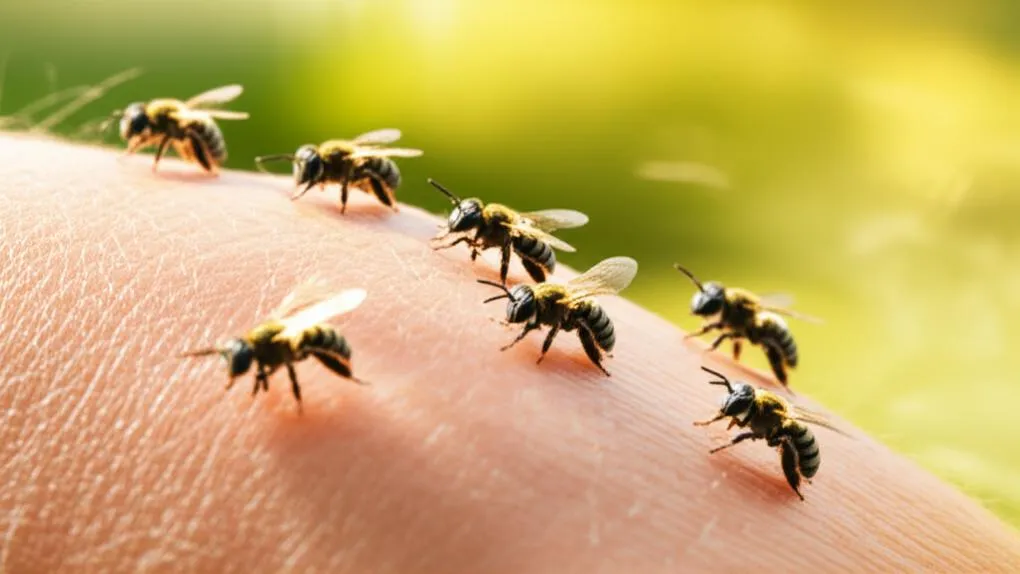
Imagine you're sweating profusely, working in the garden, or playing with your friends. Suddenly, a small fly-like creature lands on your hand. When you look, it's licking your sweat! Has this happened to you too? Don't worry, this is very common. Most of the time, this is caused by a species of insect called 'Sweat Bees'. As the name suggests, they love our sweat. Today, let's talk about these little friends.
Who is this Sweat Bee?
Simply put, sweat flies are a small insect species that can be found all over the world. Scientifically, they are members of the family Halictidae. Scientists have discovered more than 3,500 different species in this family. This means that the sweat flies we see are not all the same, but there are many different types.
These animals, which are often seen in our gardens and flower beds, are a very important insect group that helps a lot in pollination, just like bees. Therefore, don't be afraid of them or be quick to kill them when you see them.
How do they look?
The appearance of sweat flies varies depending on their species.
- Size: They are often very small, ranging from flies as small as 3 millimeters to large ones as large as 15 millimeters (1.5 centimeters).
- Color: Most are brown or black, but some species are very beautiful. There are sweat flies that shine in green, blue, and purple with a metallic sheen.
- Other characteristics: Some have fine white hairs that look like stripes on their bodies. They have a short tongue that they use to drink nectar. Females collect pollen in a special spot on their hind legs.
What do they eat and where do they live?
The main food of sweat flies is nectar and pollen from flowers. They also feed their young with this pollen.
So why do they come to our bodies? The reason is our sweat . They need the salts and some nutrients in our sweat, especially for the growth of their young. That's why they come and slowly lick our skin on a day when we've sweated a lot.
They live on almost every continent except Antarctica. That means they are also common in Sri Lanka. They can adapt to any environment, such as deserts, grasslands, and forests. Many species build nests on the ground. While some live alone, others live in small groups in nests.
Do sweat flies bite? Are they dangerous?
This is the biggest problem that many people have.
The best news is that sweat flies are generally very docile creatures. They are not aggressive.
If you see a fly sucking on your hand, you can gently move it away. If you do that, it won't come back to bite you.
However, female sweat flies can sting. They only do so if they feel threatened. For example, if you try to kill them, if you try to crush them, or if you damage one of their nests, they may sting.
For the average person, the pain of being stung by a sweat fly is much less than being stung by a bee. It's just a slight itchy pain.
The only real danger is if you are allergic to bee venom. Some people can have a severe allergic reaction to the venom of any type of bee. So we need to be careful about that.
On the other hand, sweat flies are very beneficial creatures to our environment. Their help is essential for pollinating many crops, including wildflowers, fruits like peaches and nectarines, watermelons, and sunflowers.
What happens when a fly bites? What should you do?
The symptoms of a sweat fly sting can be divided into two categories. One is a serious allergic reaction. The other is a normal local reaction. It is very important to know the difference between the two.
| Reaction type | Symptoms |
|---|---|
| Dangerous allergic reaction (Anaphylaxis) - go to a hospital immediately! |
|
| Normal local reaction |
How is it treated?
1. In case of a severe allergy (Emergency!)
If you know that you or a child has an allergy to bee venom and any of the above dangerous symptoms occur, go to the nearest hospital's Emergency Department (ETU) immediately.Some people with allergies carry devices like an EpiPen. If so, use it and go to the hospital immediately. Wasting time is very dangerous.
2. Treatment for a common piercing
If the piercing is not severe, you can do the following to reduce pain and itching:
- Clean: First, wash the puncture site thoroughly with soap and water.
- Don't scratch: Avoid scratching. Scratching can damage the skin and increase the risk of bacterial infections.
- Apply a soothing cream: To reduce itching and swelling, you can apply an antihistamine cream, a hydrocortisone cream, or a mixture of baking soda and water. However, it is best to consult your doctor before using any medication.
- For pain: If the pain is severe, you can take a general painkiller. However, it is wise to discuss this with your doctor before making a decision.
What do you do if there are too many of them in the garden?
Sweat flies usually don't need to be removed. However, if you have a nest near your home and it's causing a problem, you may need to remove it. Their nests are in the ground, so they can be difficult to find.
The most important thing is that if you try to remove a nest, you may end up getting several bites. So avoid doing it yourself. The safest way is to seek the help of a professional pest control service.
💡 Take-Home Message
- Sweat bees are a species of small, generally harmless insects that are attracted to our sweat.
- They are environmentally friendly, valuable pollinators.
- They only sting if they feel threatened, and the sting is usually not severe.
- The real danger is a severe allergic reaction to bee venom (anaphylaxis). If you experience symptoms such as difficulty breathing and hives, go to a hospital's emergency room (ETU) immediately.
- For a normal piercing, wash and clean the area and avoid scratching. Consult your doctor before using any ointment or medication.





Janiw kuna arsuwinakas jichhakamax uñt’ayatäkiti. Aka chiqanx amuyt’awim jan ukax jiskt’awim yapxatañamawa.