
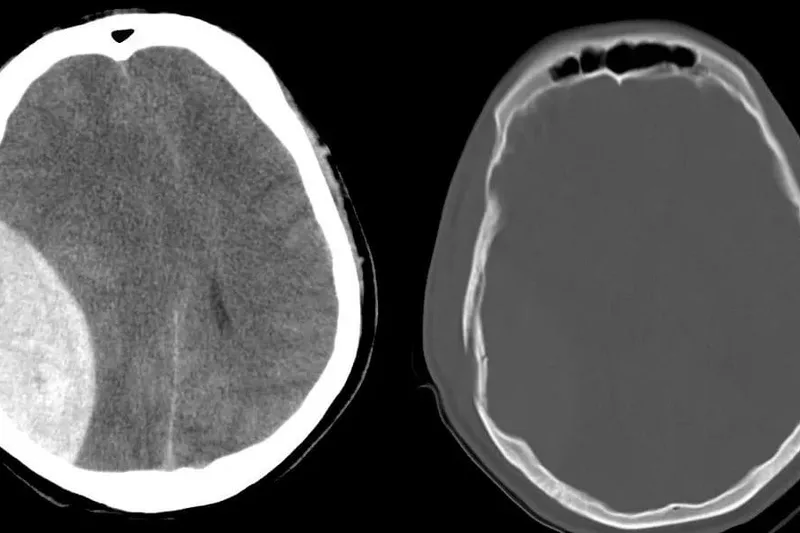
A boy came to me one day and said, "Doctor, I've had a headache for two or three days." I asked him for details.
Here's what happened. A few days ago, I had a bicycle accident. The fall was so severe that I was thrown off the bicycle and went about 15 feet forward. My head hit the ground. (Oh... I wasn't even wearing a helmet !). I also fell to the ground.
But he thought, "Oh, this is just a minor bruise," and didn't even go to the hospital. It was only a few days ago that he started having headaches. That's why he came to see me to get medicine.
Why is it dangerous to just stand there when you hit your head?
Do you understand the biggest mistake that boy made? He hit his head and vomited - that is, he didn't go see a doctor, even though he was giving off a warning signal. The head injury may not have been serious on the outside. But the distance he fell, the way he hit his head, the vomiting - you can tell that something had happened inside. The headache that came back a few days later was probably due to what happened inside.
Why is this so dangerous? Let's see.
How our brains and heads work
The brain inside our heads is very delicate and precious, isn't it? These strong skulls are there to protect it. Like a safe. Inside the skulls are the brain, blood vessels, and a kind of water ( CSF ). The most important thing is, there is room for exactly this much inside these skulls. There is no room for anything else. It's stuck.
What happens inside when you hit your head? (Internal Bleeding)
When you hit your head hard like that boy, sometimes a small blood vessel in the skull can burst. Then some blood starts to leak into the skull. So imagine, what happens when blood starts to collect inside that cramped safe? The blood has nowhere to go.
How the pressure inside increases (brain pressure)
Because there is no extra space inside the skull, as the blood that accumulates increases, the pressure inside the skull (intracranial pressure) increases rapidly. This increased pressure directly hits the delicate brain. The brain begins to squeeze and become trapped inside the skull.
What are the symptoms then?
Brain fog is very dangerous. The parts of the brain that control everything in our lives - breathing, our heartbeat, our consciousness - can be damaged and stop working because of this fog.
This can cause symptoms like these:
- My head hurts a lot (like that boy).
- I'm vomiting again and again.
- My head is spinning, I can't walk properly.
- My vision is blurry, and I can see only one thing at a time.
- My arms and legs are numb and tingling.
- Words get tangled when speaking.
- It's like falling asleep, it's hard to wake up, and your consciousness is confused.
- Something like water or blood is coming out of the ears and nose.
- Eventually, you may lose consciousness (coma) and even die.
Here's something to keep in mind: Like that boy, sometimes you may not see any major signs of illness for hours, or even a day or two after a head injury. (You may vomit at first, and then your head will hurt.) But blood may be leaking inside, and your pressure may be building. That means, if you have a suspicious head injury, especially if you vomit, or if you lose consciousness for a while, you should not just stay at home and say, "It's okay," but go to the hospital immediately.
Why do you need to go to the hospital so quickly?
If you or someone you know has a head injury, go to the hospital right away, especially if you have these symptoms:
- If you vomit (again).
- If you lost consciousness for a while.
- If your head hurts badly.
- If there are any other symptoms mentioned earlier.
- If the fall was severe (like falling from a height, hitting something hard).
Even if there is no visible injury on the outside, there may be something wrong inside. If you go quickly, you can save a life and prevent a major injury.
What are you doing at the hospital?
When you go to the hospital, the doctors can take a closer look and find out what's wrong.
- Observation: Usually for about 24 hours, you will be monitored with a chart, recording your consciousness, heart rate, breathing, blood pressure, and eye function.
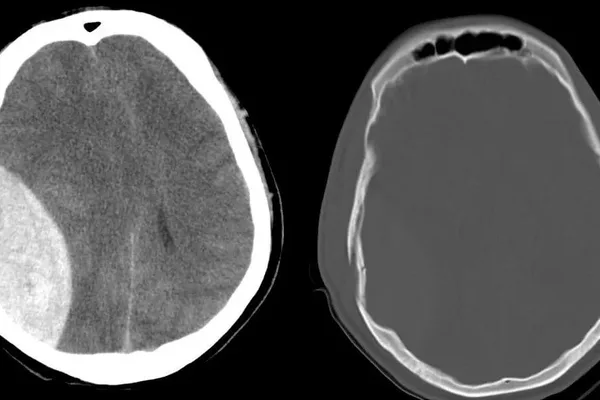
- CT scan : If there is any doubt about internal bleeding or a skull fracture, a CT scan may be ordered. (If there is blood, it will appear white on the CT scan, if there is a contusion in the brain, that will also be visible, and it can also check for skull fractures.)
- Treatment: If they find that there is an internal problem, the doctors will be ready to give the necessary medication without delay, and possibly even perform an operation .
If you go to the hospital quickly and get treatment, you have a great chance of saving your life and preventing serious damage to your brain.
What happens if you are late?
If you wait until symptoms appear like that boy and then take medication too late, you could end up with a big problem. The damage to the brain could become more severe and irreversible. There is a high chance of going into a coma or even death.
The last thing I have to say is this... remember the helmet!
So remember, your head is not something to play with. Don't just wait, even if it's a small bump or a hit. Especially if you get hit hard, vomit, or lose consciousness for a while, don't wait until you have symptoms, but definitely go see a doctor as soon as possible. It's the best thing you can do to save your life!
One more thing:
- Tell this story to others. Share this article if you can to inform them too.
- You should wear a helmet when riding a bike, not because you're afraid of the police, but because you want to protect your head. It's also very important to wear the helmet strap properly!




💬 Comments (0)
No comments yet. Be the first to share your thoughts here.
Add Your Comment