Who is a dermatologist? Let's learn about this!

Who is a dermatologist? Let's learn about this!

Have you ever thought that your skin, that is, the skin, is the largest and heaviest organ in your body? Not only that, but this skin performs so many important functions for us! It protects us from heat, cold, germs, and dangerous things. Also, our skin is a good indicator of the health of our entire body. Sometimes, when the color of the skin changes, the texture changes, we understand that there is something wrong inside the body. So, it is very important to take proper care of our skin and be aware of its health.
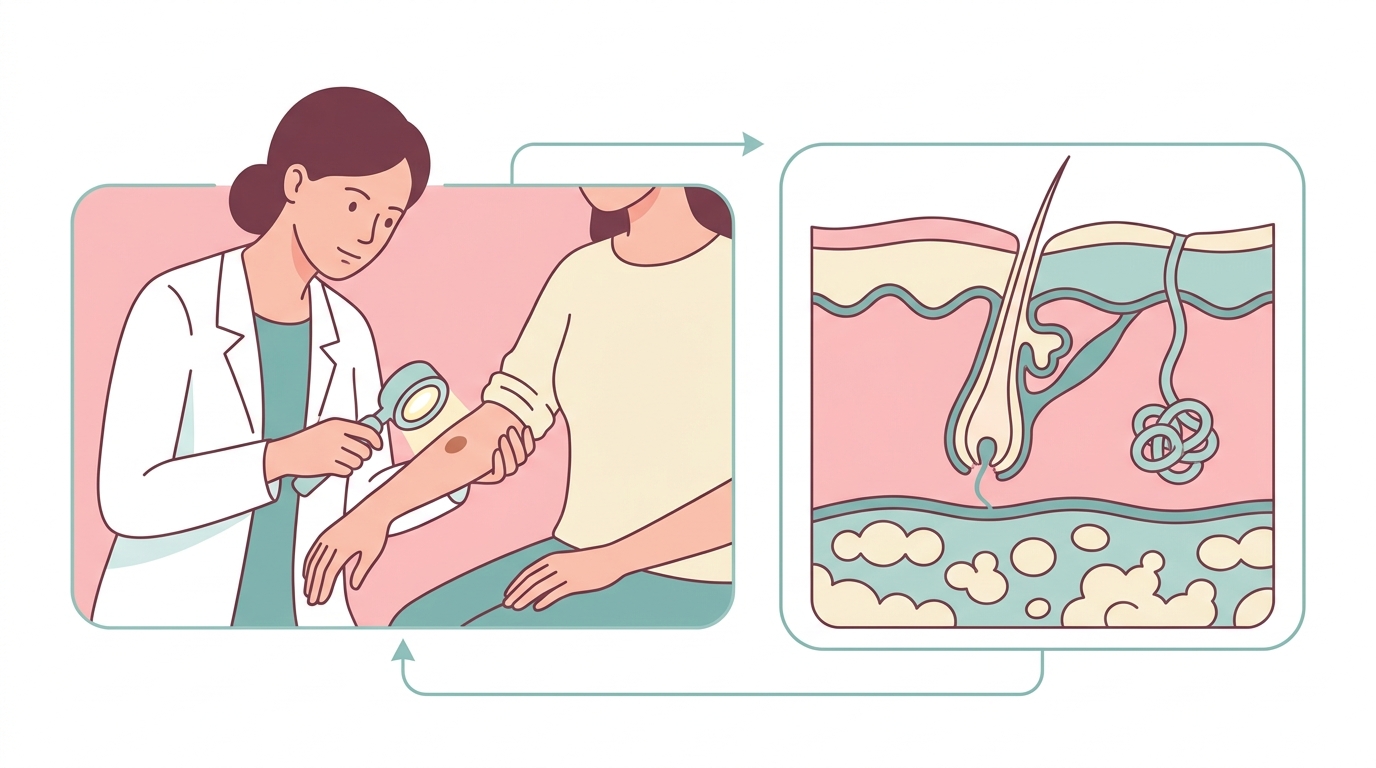
Who exactly is a dermatologist?

Simply put, a dermatologist is a doctor who specializes in skin, hair, and nails . This means that if there is a problem with your skin, hair, or nails, they can diagnose and treat it. They can also manage some cosmetic issues, such as hair loss and skin blemishes. That's important, right?

So, what do these dermatologists do?

Dermatologists primarily diagnose and treat skin conditions. But that's not all. Sometimes, when there are problems with other organs inside our bodies, such as the liver or kidneys, their symptoms can be seen on the surface of our skin. These doctors can also identify such symptoms. Just think, sometimes a yellow color on the skin can give us a clue about a liver problem.

In addition, they perform special tests to diagnose skin diseases. They also use various things as treatments. For example:

  • Medicines that are applied to the skin, or medicines that are injected into the skin.
  • Treatment using ultraviolet rays (UV light therapy).
  • Various skin procedures, such as removing birthmarks and taking small pieces of skin for examination (skin biopsies), Dermatologic surgical procedures.
  • Cosmetic treatments, such as ``chemical peels'' (a treatment that removes the top layer of skin to reveal new skin), ``sclerotherapy'' (a treatment for varicose veins), and `` laser treatments ''.

How much education do you need to become a dermatologist?

Becoming a dermatologist is not easy, but it is good. It requires a lot of study and training. After getting a general medical degree, you have to undergo several years of specialized training in dermatology. This is a very deep field. Some doctors go even further and receive special training (fellowship) in other subspecialties of dermatology. So imagine how knowledgeable and experienced these people are. That is why they are able to provide the best solution to our skin, hair, and nail problems.

What diseases do dermatologists most commonly treat?

There are several common conditions that dermatologists often treat. You may have heard of one or two of these, or you may have experienced them yourself.

  • Acne : This is a problem that many people have, isn't it?
  • Eczema: A condition in which the skin becomes dry, red, and itchy.
  • Hair loss : This is also something that affects many people mentally.
  • Nail fungus infection: Nails become discolored, thick, and brittle.
  • Psoriasis : A condition in which the skin becomes red and has silvery scales on top.
  • Skin cancer : This can be very dangerous, so it's important to detect it early.
  • Rosacea : This causes the face to become red, small blisters appear, and sometimes blood vessels become visible.

What specific treatments do dermatologists perform?

Dermatologists perform a variety of treatments and surgeries. Let's take a look at some of them:

  • Electrosurgery: This involves using a high-frequency electric current to cut or destroy unwanted tissue.
  • Cryosurgery: This involves using extreme cold (such as liquid nitrogen) to freeze and destroy unwanted tissue, such as warts. You may have seen this method used to remove warts.
  • Laser surgery: Surgery using a special light beam (laser). This is useful for things like removing scars, unwanted hair, and some skin blemishes.
  • Excision surgery: This involves cutting out tissue with a sharp knife (scalpel) and then stitching it tightly together. Some birthmarks and skin cancers are removed this way.
  • Mohs surgery:This is a very specific surgical procedure for skin cancer. It aims to precisely identify where the cancer cells are and remove them layer by layer, while preserving as much healthy tissue as possible.
  • Mole removal: The removal of all or part of a mole from the body. It is then tested to see if it is cancerous or another skin condition.
  • Vein treatment: If your veins are damaged, such as varicose veins, dermatologists can treat them with sclerotherapy (injecting a medication into the veins to shrink them) or laser treatment.

What are the subfields of dermatology?

Dermatology is a broad field. So there are many subspecialties within it. That means some doctors go even deeper and become experts in these fields. Here are a few examples:

  • Dermatopathology: This involves taking skin samples (biopsies) and examining them under a microscope to diagnose diseases. It's like being a detective.
  • Mohs surgery: As we have discussed before, this is a specialized surgery for skin cancer.
  • Pediatric dermatology: Specialists in skin diseases in young children, as skin problems in young children can be different from those in adults.
  • Cosmetic dermatology: Specialists in treatments that improve the appearance of the skin and reduce the signs of aging (wrinkles, spots).

What is the difference between a dermatologist and an esthetician?

This is a very important issue that many people are confused about.

A dermatologist is a doctor. That means they can diagnose skin diseases, prescribe medication, and perform surgery if necessary.

But an esthetician is not a doctor. They are not allowed to diagnose skin diseases, prescribe medications, or perform medical treatments. They can only provide non-medical care related to the appearance of the skin.

Simply put, the things a beautician can do are:

  • Scrubbing the skin is ``exfoliating''.
  • Teaching how to apply makeup to cover scars.
  • Treating some acne-related superficial conditions (over-the-counter).
  • Suggesting skin care products that are suitable for the skin.
  • Removing unwanted hair (Waxing).
  • Things like ``(Airbrush tanning)`` (a method of artificially giving the skin a brown color).

So if you have a skin condition, infection, unusual changes, itching, or pain, you should go to a dermatologist, not a beautician.This is something to keep in mind. If you go to the wrong place, your problem could get worse.

When should I see a dermatologist?

Now you're probably thinking, 'Okay, so when should I see this dermatologist?' If you have any of these symptoms, it might be wise to see a dermatologist:

  • If a mole or birthmark on your skin has changed in size, color, or shape.
  • If you suspect skin cancer (e.g. a new, rapidly growing, bleeding spot).
  • If the acne condition is severe, persistent, or causing scarring.
  • If you have a skin rash, such as eczema , and it persists.
  • Hives (These are raised, itchy bumps on the skin in places on the body).
  • If there is a problem with scars (old scars getting bigger, new scars forming).
  • If your eczema is difficult to control.
  • If you have psoriasis .
  • Rosacea `( Rosacea ( Rosacea ) )` condition.
  • Dark spots (hyperpigmentation) on the face.
  • An itchy, burning sensation on the skin that lasts for a long time.
  • Skin infections (e.g. bacterial, fungal infections).
  • If warts appear and are a problem.
  • If hair loss suddenly increases.
  • Nail disorders (change in color, shape, breakage of nails).
  • If you need advice on signs of aging (like wrinkles), learn about possible treatments.
  • If you have varicose veins and spider veins.

In any case like this, it's best to see a dermatologist.

How should I prepare for my first visit to a dermatologist?

If you're going to see a dermatologist for the first time, it's a good idea to do a little preparation to get the most out of your visit. Here are some things you can do:

  • Make a list of the most important things you want to talk about with your doctor. Sometimes you can't remember everything when you see the doctor. Write down any questions you have.
  • If there have been any recent changes in your overall health , remember them or write them down.
  • Keep a diary of your symptoms.It's very important if you can. (Take that with you too.) That means writing down when your symptoms started, how long they've been going on, how severe they are, what you think may have caused them (e.g., eating something, going out in the sun), what your symptoms were, and what you were doing at the time. If possible, take some clear pictures , especially when your symptoms are coming on.
  • Be aware of your family medical history, especially regarding skin diseases. This information can help your doctor diagnose your condition accurately.
  • Wear comfortable, loose clothing. That way, it will be easier for the doctor to examine you, and you won't have any discomfort.
  • Avoid wearing makeup or nail polish. Doing so may make it difficult for the doctor to properly examine your skin and nails.
  • If possible, circle the areas you want to show the doctor with a washable pen. That way, you won't forget, and it'll be easier for the doctor .
  • If you have any test reports, images, or lab reports from another doctor, take copies of them.
  • Bring a list of all the medications and creams you are currently taking. This includes prescription medications, over-the-counter medications, vitamins, supplements, herbal products, soaps, makeup, sunscreens, and more. Also, tell your doctor about any medications that have not worked for you or that have caused side effects.
  • Bring a list of any allergies you have (to medications, foods, anything).
  • If possible, take a friend or family member with you. They can take notes of what the doctor says and help you. Sometimes we don't remember everything the doctor says. At times like these, this kind of help is invaluable.
  • If you have any other questions, ask the doctor if you need to set aside another day to discuss them.

Finally, things to remember

Okay, so we've talked a lot about dermatologists today, haven't we? They're the doctors who specialize in our skin, hair, and nails. They treat everything from minor conditions like acne and eczema to more serious conditions like skin cancer. You can also get help from them for cosmetic issues, hair loss, and scars.

The most important thing is that if you notice anything unusual, a change, or a problem with your skin, hair, or nails, don't ignore it and don't try to self-medicate. Many problems can be cured or controlled with prompt diagnosis and proper treatment.

When you go to see a doctor, be well prepared. Explain your problems and symptoms clearly. A doctor is there to help you. So, don't be afraid to ask any questions you have. They are there to diagnose your condition, treat it in the best way, and support you.

So, take care of your skin! It's like a mirror of your health.

👩🏽‍⚕️ Additional questions (FAQs)

💬 Who is a dermatologist?

This doctor is a doctor who has received special training and a degree in treating any disease that affects our skin, nails, and hair (from acne to skin cancer).

💬 Do I need to see a dermatologist for normal acne on my face?

There's no need to go to the trouble of treating just a few common pimples on your face. But if the creams you buy from the pharmacy don't help, or if you develop large, cystic pimples that leave big scars and pits on your face, you should definitely see a dermatologist for treatment.

💬 Why should you report red spots and rashes on your skin immediately?

Skin rashes and itching can be a sign of underlying liver disease or a dangerous autoimmune disease, so it's best to ignore them.


` Dermatology, Dermatologist, Hair, Nails, Skin Disease Symptoms, Dermatology Treatment, Skin Health

⚠️ Important: The medical articles and information on Nirogi Lanka are for general awareness only, and are by no means a substitute for professional medical advice, diagnosis, or treatment. For any medical problem you have, consult a qualified physician immediately.

💬 Comments (0)

No comments yet. Be the first to share your thoughts here.

Add Your Comment

Please calculate: 2 + 7 =
Who is a dermatologist? Let's learn about this!

Who is a dermatologist? Let's learn about this!

Have you ever thought that your skin, that is, the skin, is the largest and heaviest organ in your body? Not only that, but this skin performs so many important functions for us! It protects us from heat, cold, germs, and dangerous things. Also, our skin is a good indicator of the health of our entire body. Sometimes, when the color of the skin changes, the texture changes, we understand that there is something wrong inside the body. So, it is very important to take proper care of our skin and be aware of its health.

Who exactly is a dermatologist?

Simply put, a dermatologist is a doctor who specializes in skin, hair, and nails . This means that if there is a problem with your skin, hair, or nails, they can diagnose and treat it. They can also manage some cosmetic issues, such as hair loss and skin blemishes. That's important, right?

So, what do these dermatologists do?

Dermatologists primarily diagnose and treat skin conditions. But that's not all. Sometimes, when there are problems with other organs inside our bodies, such as the liver or kidneys, their symptoms can be seen on the surface of our skin. These doctors can also identify such symptoms. Just think, sometimes a yellow color on the skin can give us a clue about a liver problem.

In addition, they perform special tests to diagnose skin diseases. They also use various things as treatments. For example:

  • Medicines that are applied to the skin, or medicines that are injected into the skin.
  • Treatment using ultraviolet rays (UV light therapy).
  • Various skin procedures, such as removing birthmarks and taking small pieces of skin for examination (skin biopsies), Dermatologic surgical procedures.
  • Cosmetic treatments, such as ``chemical peels'' (a treatment that removes the top layer of skin to reveal new skin), ``sclerotherapy'' (a treatment for varicose veins), and `` laser treatments ''.

How much education do you need to become a dermatologist?

Becoming a dermatologist is not easy, but it is good. It requires a lot of study and training. After getting a general medical degree, you have to undergo several years of specialized training in dermatology. This is a very deep field. Some doctors go even further and receive special training (fellowship) in other subspecialties of dermatology. So imagine how knowledgeable and experienced these people are. That is why they are able to provide the best solution to our skin, hair, and nail problems.

What diseases do dermatologists most commonly treat?

There are several common conditions that dermatologists often treat. You may have heard of one or two of these, or you may have experienced them yourself.

  • Acne : This is a problem that many people have, isn't it?
  • Eczema: A condition in which the skin becomes dry, red, and itchy.
  • Hair loss : This is also something that affects many people mentally.
  • Nail fungus infection: Nails become discolored, thick, and brittle.
  • Psoriasis : A condition in which the skin becomes red and has silvery scales on top.
  • Skin cancer : This can be very dangerous, so it's important to detect it early.
  • Rosacea : This causes the face to become red, small blisters appear, and sometimes blood vessels become visible.

What specific treatments do dermatologists perform?

Dermatologists perform a variety of treatments and surgeries. Let's take a look at some of them:

  • Electrosurgery: This involves using a high-frequency electric current to cut or destroy unwanted tissue.
  • Cryosurgery: This involves using extreme cold (such as liquid nitrogen) to freeze and destroy unwanted tissue, such as warts. You may have seen this method used to remove warts.
  • Laser surgery: Surgery using a special light beam (laser). This is useful for things like removing scars, unwanted hair, and some skin blemishes.
  • Excision surgery: This involves cutting out tissue with a sharp knife (scalpel) and then stitching it tightly together. Some birthmarks and skin cancers are removed this way.
  • Mohs surgery:This is a very specific surgical procedure for skin cancer. It aims to precisely identify where the cancer cells are and remove them layer by layer, while preserving as much healthy tissue as possible.
  • Mole removal: The removal of all or part of a mole from the body. It is then tested to see if it is cancerous or another skin condition.
  • Vein treatment: If your veins are damaged, such as varicose veins, dermatologists can treat them with sclerotherapy (injecting a medication into the veins to shrink them) or laser treatment.

What are the subfields of dermatology?

Dermatology is a broad field. So there are many subspecialties within it. That means some doctors go even deeper and become experts in these fields. Here are a few examples:

  • Dermatopathology: This involves taking skin samples (biopsies) and examining them under a microscope to diagnose diseases. It's like being a detective.
  • Mohs surgery: As we have discussed before, this is a specialized surgery for skin cancer.
  • Pediatric dermatology: Specialists in skin diseases in young children, as skin problems in young children can be different from those in adults.
  • Cosmetic dermatology: Specialists in treatments that improve the appearance of the skin and reduce the signs of aging (wrinkles, spots).

What is the difference between a dermatologist and an esthetician?

This is a very important issue that many people are confused about.

A dermatologist is a doctor. That means they can diagnose skin diseases, prescribe medication, and perform surgery if necessary.

But an esthetician is not a doctor. They are not allowed to diagnose skin diseases, prescribe medications, or perform medical treatments. They can only provide non-medical care related to the appearance of the skin.

Simply put, the things a beautician can do are:

  • Scrubbing the skin is ``exfoliating''.
  • Teaching how to apply makeup to cover scars.
  • Treating some acne-related superficial conditions (over-the-counter).
  • Suggesting skin care products that are suitable for the skin.
  • Removing unwanted hair (Waxing).
  • Things like ``(Airbrush tanning)`` (a method of artificially giving the skin a brown color).

So if you have a skin condition, infection, unusual changes, itching, or pain, you should go to a dermatologist, not a beautician.This is something to keep in mind. If you go to the wrong place, your problem could get worse.

When should I see a dermatologist?

Now you're probably thinking, 'Okay, so when should I see this dermatologist?' If you have any of these symptoms, it might be wise to see a dermatologist:

  • If a mole or birthmark on your skin has changed in size, color, or shape.
  • If you suspect skin cancer (e.g. a new, rapidly growing, bleeding spot).
  • If the acne condition is severe, persistent, or causing scarring.
  • If you have a skin rash, such as eczema , and it persists.
  • Hives (These are raised, itchy bumps on the skin in places on the body).
  • If there is a problem with scars (old scars getting bigger, new scars forming).
  • If your eczema is difficult to control.
  • If you have psoriasis .
  • Rosacea `( Rosacea ( Rosacea ) )` condition.
  • Dark spots (hyperpigmentation) on the face.
  • An itchy, burning sensation on the skin that lasts for a long time.
  • Skin infections (e.g. bacterial, fungal infections).
  • If warts appear and are a problem.
  • If hair loss suddenly increases.
  • Nail disorders (change in color, shape, breakage of nails).
  • If you need advice on signs of aging (like wrinkles), learn about possible treatments.
  • If you have varicose veins and spider veins.

In any case like this, it's best to see a dermatologist.

How should I prepare for my first visit to a dermatologist?

If you're going to see a dermatologist for the first time, it's a good idea to do a little preparation to get the most out of your visit. Here are some things you can do:

  • Make a list of the most important things you want to talk about with your doctor. Sometimes you can't remember everything when you see the doctor. Write down any questions you have.
  • If there have been any recent changes in your overall health , remember them or write them down.
  • Keep a diary of your symptoms.It's very important if you can. (Take that with you too.) That means writing down when your symptoms started, how long they've been going on, how severe they are, what you think may have caused them (e.g., eating something, going out in the sun), what your symptoms were, and what you were doing at the time. If possible, take some clear pictures , especially when your symptoms are coming on.
  • Be aware of your family medical history, especially regarding skin diseases. This information can help your doctor diagnose your condition accurately.
  • Wear comfortable, loose clothing. That way, it will be easier for the doctor to examine you, and you won't have any discomfort.
  • Avoid wearing makeup or nail polish. Doing so may make it difficult for the doctor to properly examine your skin and nails.
  • If possible, circle the areas you want to show the doctor with a washable pen. That way, you won't forget, and it'll be easier for the doctor .
  • If you have any test reports, images, or lab reports from another doctor, take copies of them.
  • Bring a list of all the medications and creams you are currently taking. This includes prescription medications, over-the-counter medications, vitamins, supplements, herbal products, soaps, makeup, sunscreens, and more. Also, tell your doctor about any medications that have not worked for you or that have caused side effects.
  • Bring a list of any allergies you have (to medications, foods, anything).
  • If possible, take a friend or family member with you. They can take notes of what the doctor says and help you. Sometimes we don't remember everything the doctor says. At times like these, this kind of help is invaluable.
  • If you have any other questions, ask the doctor if you need to set aside another day to discuss them.

Finally, things to remember

Okay, so we've talked a lot about dermatologists today, haven't we? They're the doctors who specialize in our skin, hair, and nails. They treat everything from minor conditions like acne and eczema to more serious conditions like skin cancer. You can also get help from them for cosmetic issues, hair loss, and scars.

The most important thing is that if you notice anything unusual, a change, or a problem with your skin, hair, or nails, don't ignore it and don't try to self-medicate. Many problems can be cured or controlled with prompt diagnosis and proper treatment.

When you go to see a doctor, be well prepared. Explain your problems and symptoms clearly. A doctor is there to help you. So, don't be afraid to ask any questions you have. They are there to diagnose your condition, treat it in the best way, and support you.

So, take care of your skin! It's like a mirror of your health.

👩🏽‍⚕️ Additional questions (FAQs)

💬 Who is a dermatologist?

This doctor is a doctor who has received special training and a degree in treating any disease that affects our skin, nails, and hair (from acne to skin cancer).

💬 Do I need to see a dermatologist for normal acne on my face?

There's no need to go to the trouble of treating just a few common pimples on your face. But if the creams you buy from the pharmacy don't help, or if you develop large, cystic pimples that leave big scars and pits on your face, you should definitely see a dermatologist for treatment.

💬 Why should you report red spots and rashes on your skin immediately?

Skin rashes and itching can be a sign of underlying liver disease or a dangerous autoimmune disease, so it's best to ignore them.


` Dermatology, Dermatologist, Hair, Nails, Skin Disease Symptoms, Dermatology Treatment, Skin Health

⚠️ Important: The medical articles and information on Nirogi Lanka are for general awareness only, and are by no means a substitute for professional medical advice, diagnosis, or treatment. For any medical problem you have, consult a qualified physician immediately.

💬 Comments (0)

No comments yet. Be the first to share your thoughts here.

Add Your Comment

Please calculate: 2 + 7 =