

Have you ever heard a doctor say, "Let's do a blood test" when you go to the doctor? A simple but very important blood test that is often done is called the hematocrit. Sometimes it may also be listed as `(Hct)` on your report. Simply put, this measures the percentage of red blood cells in your blood. Our blood is made up of red blood cells, white blood cells, platelets, and a liquid part called `(plasma). Having a healthy amount of these red blood cells is very important. Because, they have a very important job – carrying oxygen throughout the body.
The hematocrit test is often done as part of a larger blood test called a complete blood count (CBC). You may need this test if:
- In routine blood tests that are done annually, that is, as part of your full checkup.
- If you have symptoms of a disease that affects your red blood cells. Imagine if you always feel tired and weak.
- If you have a blood-related condition, your doctor may want to monitor your red blood cells regularly.
Let's see how to do this test?
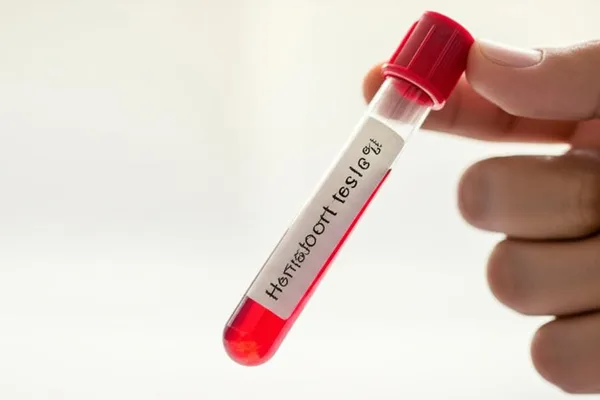
This is actually very simple. For an adult, you usually take a small amount of blood from a vein in your arm. For a small baby, like a few months old, you usually take a small amount of blood from the heel of the foot. The blood is then collected in a special tube, or maybe several tubes, that are designed to collect blood.
Then this blood sample is sent to the lab. There, a special machine spins the blood very fast, separating the different parts of it. Just like when milk is skimmed. Then, the machine itself calculates the exact percentage of red blood cells.
Do you need to do anything special before the test?
Here's some good news for you! You don't need to do anything special to prepare for this hematocrit test. You can eat and drink normally and take any medications you take as usual. Unless your doctor tells you otherwise, you should continue with your daily activities as usual.
But, here's a little something to keep in mind: If you have a slight fear of needles, meaning that you get nervous when you're told to get blood drawn, tell the nurse or medical staff ahead of time. They'll then teach you different ways to relax and reduce your fear. They may talk to you or tell you to slow down, like taking slow breaths.
What happens when you get blood? Is it something to be afraid of?
The blood draw only takes a few minutes. It's a quick process. Here's what usually happens:
- First, the person taking the blood (this could be a nurse or a medical laboratory technician) will find a good vein in your arm (usually on the inside of your elbow).
- Then, on your upper arm, that is, your arm, they put a rubber band, which we also call a ``tourniquet''. This is to make the vein a little bit bigger and make it easier to draw blood.
- Next, the skin where the needle will be inserted is thoroughly cleaned with something like alcohol. This is done to stop germs from entering.
- Then, the needle is carefully inserted into the vein. There will be a slight sting here, like being bitten by an ant . But the pain is very short-lived and goes away quickly. It's easier if you take a deep breath. Don't be afraid.
- The blood that comes through the needle is collected in the special tube or syringe mentioned earlier.
- Once the required amount of blood has been taken, the needle and rubber band are removed, a small plaster or piece of cotton wool is placed over the site of the blood draw, and a bandage is applied.
You will be able to go home in a short time. Before you go, it is a good idea to ask when you will receive your hematocrit `(Hct)` report. The report is usually received within a day or two, sometimes a few days.
Can this cause any side effects?
Most people don't feel any discomfort after donating blood and feel fine. However, some people may feel a little dizzy or lightheaded when the blood is drawn. If you feel this way, it's normal, don't worry. However, be sure to tell the person drawing your blood how you are feeling. They will then tell you to lie down for a while, give you some water to drink, or help you until you feel better. The area where the blood was drawn may turn slightly blue, but this will go away on its own in a few days.
What's in the report? What does this say?
Your hematocrit test result comes as a number, which is expressed as a percentage. For example, if your report says 45, that means 45% of your blood is made up of red blood cells. Here's how normal hematocrit levels vary by age and gender:
- For men : 41% to 50%
- For women : 36% to 44%
- For infants a few months old : 32% to 42%
- For newborns : 45% to 61%
But there is something very important that you need to remember here. This 'normal' range can vary slightly from lab to lab . That means that the normal range of one lab may be slightly different from the range of another. That is why you should compare the value in your report with the 'reference range' given in that report. Also, look for the letter `(H)` (High - that means high) or `(L)` (Low - that means low) next to your value. That way you can understand for yourself whether your value is within the normal range, or high or low.
What happens if the hematocrit value is high?
When the hematocrit value is higher than the recommended amount, we medically call it `(Erythrocytosis)`. Sometimes this can be a sign of a bone marrow disease such as `(Polycythemia vera)`. But most of the time, this means that your body's cells need more oxygen, so your body is making more red blood cells in response. Just as we have difficulty breathing in a place with less oxygen, the same can happen inside the body. Here are some reasons why the hematocrit value may increase:
- Carbon monoxide poisoning: This occurs when you inhale fumes from things like wood stoves and vehicle exhaust.
- Dehydration: When the body does not get enough water, the fluidity of the blood decreases and the percentage of red blood cells increases.
- Some heart diseases: When the heart does not pump blood properly.
- Pulmonary fibrosis: In this, oxygen exchange in the lungs does not occur properly.
- Obstructive sleep apnea: This is when breathing stops for a short time during sleep at night.
- Smoking: The body produces more red blood cells because the blood of smokers has less oxygen-carrying capacity.
- Taking the hormone testosterone externally.
Another thing, if you live at high altitude, your hematocrit may increase as your body adjusts to the low oxygen levels in that environment. But it's not always something to worry about. Your doctor will take into account factors like your lifestyle and the environment you live in when reviewing your report and coming to a conclusion.
What happens if the hematocrit value is low?
A low hematocrit often means that your body doesn't have enough healthy red blood cells. This condition is commonly called anemia. In fact, the main reason to get a hematocrit test is if you suspect you have anemia . You may be experiencing symptoms like fatigue, weakness, lightheadedness, and possibly dizziness due to anemia. There are other reasons why your hematocrit may be low:
- Bleeding: It can be from a wound, a stomach ulcer, or heavy menstruation in women.
- Hyponatremia: This means a decrease in the salt content of the blood.
- Cancers that develop in the blood, such as leukemia.
- Kidney disease: The kidneys produce a hormone that helps make red blood cells, when it becomes impaired.
- Thyroid disease: Especially when thyroid hormones are low.
The hematocrit value may also decrease slightly during pregnancy. This is because the mother's body fluid (plasma) increases during this time, causing the amount of plasma in the blood to increase relative to the amount of red blood cells. This is normal.
When do you need to talk to the doctor?
If you don't understand what's on your report, or if you have any questions or concerns about your hematocrit, be sure to talk to your doctor . Don't be embarrassed or afraid. Remember, a hematocrit that's slightly above normal doesn't always mean something serious. Your doctor will look at your hematocrit, your other test results, your symptoms, and your medical history to determine if there's anything wrong. He or she will explain what those values mean for your health, what to do next if your hematocrit is low or high, and whether any treatment is needed.
Your doctor may have ordered this test because you have symptoms of a condition that affects your hematocrit level (e.g., fatigue, paleness). If so, it's important to tell your doctor if your symptoms are getting worse.
What is the difference between Hematocrit and Hemoglobin?
This is also a question that many people ask, and sometimes get confused. Although both are related to red blood cells, they measure two different things.
Simply put:
- The hematocrit test measures what percentage of your total blood volume is made up of red blood cells (it's like the 'density' of red blood cells in your blood).
- The hemoglobin test measures the amount (usually in grams) of a protein called hemoglobin inside your red blood cells.
This hemoglobin is very important. Because, what helps red blood cells carry oxygen throughout the body, and what captures oxygen, is this protein called hemoglobin. So both of these tell us important information about our health.
What if both hematocrit and hemoglobin are low?
Sometimes your blood test may show both a low hematocrit and a low hemoglobin. There are three main reasons for this:
- You are bleeding : This could be from an injury or an internal medical condition (e.g. stomach ulcers, intestinal bleeding).
- Your bone marrow is not making enough red blood cells : The bone marrow is our blood cell factory. If there is a problem with it, red blood cell production can decrease.
- Your red blood cells are dying (destructing) earlier than normal : Red blood cells have a normal lifespan. If they are destroyed before that, that can also cause these values to drop.
If you have a condition like this, meaning that both your hematocrit `(Hct)` and hemoglobin `(Hb)` are low, your doctor will determine the exact cause and decide what treatment you need.
Finally, the most important things you need to remember!
It's normal to feel a little worried or anxious if your hematocrit `(Hct)` value on your blood test report is higher or lower than normal. However, it's important to understand that there are many reasons why this could happen . Sometimes, these changes can be a sign of a serious illness. But more often than not, they can be due to less serious conditions, or even changes in our diet and lifestyle. Other times, these results can be temporary. For example, when the body is dehydrated, the hematocrit may show up slightly higher.
So, don't immediately assume the worst when you see the report. Don't panic. The most important thing is to talk to your doctor and understand exactly what these values mean for your health . Then you will have a clear understanding, and if there is anything to do, you will know what it is. Tests like these help us a lot to stay healthy!
` Hematocrit, Hct, blood test, red blood cells, anemia, CBC, blood count




💬 Comments (0)
No comments yet. Be the first to share your thoughts here.
Add Your Comment