

Have you ever wondered what's really going on inside your body when you move your arm or leg, run, or jump? We can do all these things because the muscles and bones in our body work together. So, do you know what connects these muscles to the bones? That's what we call tendons . We're going to talk about these tendons today.
What exactly is a tendon?
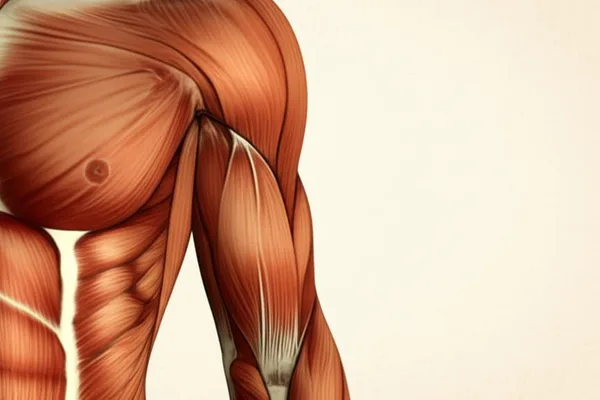
Simply put, a tendon is a strong, flexible piece of tissue, like a rope. Think about it, you have muscles, and those muscles are held tightly to the bones by these tendons. They are like a bridge between the muscles and the bones. When you raise an arm, when you bend an arm, when you bend an arm, these tendons help with all of this.
We have thousands of these tendons in our bodies, from our heads to our toes. You may have heard of the ``Achilles tendon.'' That's the tendon that connects the muscle in our shins to the heel bone. In fact, it's the largest tendon in our bodies.
These tendons don't tear easily, they're very strong. However, they don't stretch like a rubber band. That means they can easily become injured if they're overstretched (strain). If that happens, it takes a while to heal.
What actually happens with a tendon?
Okay, now let's look at what happens with a tendon. What happens when you mentally tighten (`contract`) a muscle? Then, the tendon that is attached to that muscle pulls on the corresponding bone. That's when the bone moves, which means something like your arm or leg moves.
Tendons are like ``levers`` that help move bones when muscles contract and relax. They are tougher than muscles and have great strength. For example, some tendons in your foot can support up to eight times your body weight! Isn't that amazing?
Where is the tendon located?
As mentioned earlier, tendons are found all over our bodies. For example, tendons connect muscles to bones in places like your elbow, ankle, knee, shoulder, and wrist. This means that these tendons help you move almost everywhere.
What are the parts of a tendon?
A tendon is not just a piece of rope. It has a complex structure inside. Let's take a look at what those parts are:
- Epitenon: This is the thin layer of connective tissue that surrounds the entire tendon, like a little sheath placed over the tendon.
- Paratenon: This is located outside the epitenon. It is a loose connective tissue. This is what allows the tendon to move around without touching the surrounding tissue.
- Sharpey fibers: These are a type of collagen fiber that firmly connects the tendon to the bone.
- Endotenon: This is the connective tissue that surrounds the primary, secondary, and tertiary fiber bundles inside the tendon. It helps the fiber bundles slide inside the tendon without tangling.
- Sheath (Synovium): Some tendons in our hands and feet have a sheath around them. It is like a protective covering for the tendon. It produces a lubricating substance called synovial fluid . This substance allows the tendon to glide easily where it meets the muscle and bone. However, not all tendons have this sheath.
What do tendons look like? What are they made of?
Tendons are mostly made up of a protein called `Collagen` . This `Collagen` is a very common protein found in many parts of our body. In addition, there are blood vessels and nerves inside the tendon.
Collagen fibers are very flexible, strong, and not easily damaged. The structure of a tendon is like a fiber-optic cable or a rope. The small collagen fibers are arranged in bundles. This bundle structure makes the tendon stronger.
These bundles of collagen fibers in a tendon are further divided into smaller parts:
- Subfascicles: These are the smallest fascicles.
- Secondary fascicles: These are formed by the joining of several primary fascicles.
- Tertiary fiber bundles: Several of these secondary fiber bundles (`fascicles`) come together to form the entire tendon.
How do tendons connect to muscles and bones?
There are two main points of contact in tendons:
- Musculotendinous junction (MTJ): This is where the tendon attaches to the muscle. This is the area that is most often injured.
- Osteotendinous junction (OTJ): This is where the tendon attaches to the bone.
There are those `Sharpey fibers` that I mentioned earlier, which go deep into the bone and hold the tendon tightly. The tendons in the arm or leg sometimes go through a `reflection pulley` -like connection that helps keep them in place. Also, where the tendons attach to the bones, there are small, fluid-filled sacs called `tendon bursae` . These act as a cushion for the tendon.
What diseases and disorders can affect the tendons?
Since tendons connect almost every muscle in our body, they can be affected by a variety of disorders and medical conditions. Tendon-related problems are especially common as we age . This is because tendons become thinner as we age, their blood supply decreases, and the tendon fibers can become weak due to small amounts of damage.
Some of the most common conditions that affect tendons are:
- Enthesopathy and Enthesitis: These are inflammatory conditions that occur where the tendon attaches to the bone.
- Strains: This is when a tendon is stretched too much and part of it tears. We've talked about this before.
- Tendinosis: This is the gradual weakening of the collagen fibers in the tendon. This can occur without inflammation.
- Tendonitis: This is inflammation of a tendon. This means that the tendon becomes swollen and painful.
- Tenosynovitis: This is the term for the inflammation of the tendon sheath (synovium) mentioned earlier.
How can I keep my tendons healthy?
There are several things you can do to protect yourself from tendon-related diseases. It's best to make these a habit:
- Balance cardio, strength training, and flexibility exercises: Doing a variety of exercises, rather than just one type of exercise, can help reduce unnecessary stress on your tendons.
- Listen to your body: When you're tired or stressed, take it easy. That way, you'll be less likely to get injured.
- Stop exercising if you feel pain: If you feel pain during an activity, stop doing it, wait a while, and try again. If you do, stop doing it.
- Stretch after exercise: It is best to stretch after exercise when your muscles are warm and flexible. Never stretch until you feel pain. This will help prevent tendon injuries.
- Warm up before exercising: Before starting a more strenuous workout, doing some light aerobic activities or running in place can increase blood flow and loosen up your muscles.
- Wear appropriate sports shoes: Wearing shoes that are appropriate for the sport you play and that fit your feet properly will help maintain your body's balance (`alignment`).
- Plan rest days: Taking rest days between workout days can help reduce excessive stress on the tendons.
Finally, things to remember
Tendons, or what we also call `sinews`, are a very important part of our muscles that connect them to our bones. Although we don't think much about them in our daily lives, they are essential to our body's movements. By keeping your tendons healthy, you can protect yourself from unnecessary injuries.
But remember, if you have persistent pain anywhere in your body, or pain that won't go away, you should definitely see a doctor. He or she can then diagnose your tendon problem and prescribe the right treatment for you.
So, take care of your body and stay healthy!
` Tendon, tendon, muscle, bone, joint, tendon disorders, exercise, collagen, tendon




💬 Comments (0)
No comments yet. Be the first to share your thoughts here.
Add Your Comment