
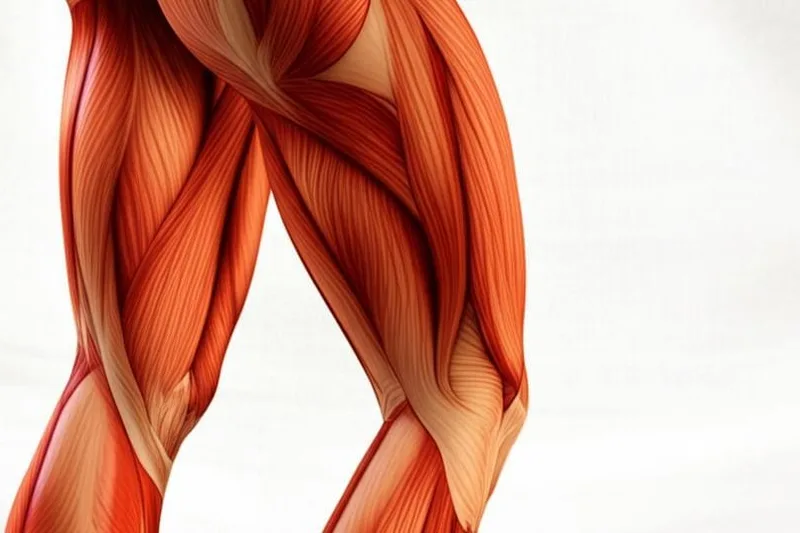
We all love to run, jump, walk, and dance, right? Our legs help us with all of these. But when we say legs, we mean not only bones, but also the most important part that gives strength and movement to these muscles. So today, let's talk about the muscles in the legs, how important they are, what problems they can cause, and how to keep them healthy.
What happens to the leg muscles?
Simply put, the muscles in your legs are what help you stand, walk, run, jump, bend your legs, and stretch your legs. Think about it, these muscles are the ones that support the entire weight of your body. They work with your bones, tendons, and ligaments to keep your body stable and help you move.
Things that happen with the muscles of the lower leg
The muscles in your lower leg, that is, below the knee, also have a special job.
- Anterior muscles: These are located on the front of your lower leg. These muscles help you move your foot up and down, and lift your toes.
- Lateral muscles: These are located along the outside of your lower leg. They help keep your foot stable when you walk and run. They also allow you to swing your foot from side to side.
- Posterior muscles: These are located on the back of the lower leg. Some are superficial and some are deeper. These include:
- Helps you bend and straighten your fingers.
- It helps to provide a boost to jump, run, and sprint.
- Helps lock and unlock the knee.
- It helps to stabilize the legs and maintain good posture.
- It supports the arch of your foot and helps you stand upright.
Things that happen with the muscles of the upper leg
The muscles of the upper leg, also known as the thigh, are very strong. They are the main ones that help support your body weight and move your hips and legs.
- Anterior muscles: These help keep your body stable and maintain balance. They also:
- Bend your knees and stretch them.
- Bend your thighs at the hip joints.
- Rotate your legs through your hips.
- Medial muscles: These help to pull the hip inward (hip adduction) (i.e., bring the leg toward the center of the body). They also help to flex, extend, and rotate the thigh.
- Posterior muscles: These are also called the hamstring muscles. These are what help move the leg forward and backward and rotate the leg in the hip socket.
How are the leg muscles located?
Now let's see where these muscles are located in the leg. This is a bit scientific, but it's good to add to your knowledge.
How the muscles of the lower leg are arranged
- Anterior muscles: There are four muscles on the front of the lower leg. These extend from the knee to the foot.
- `Extensor digitorum longus`
- `Extensor halluces longus`
- `Fibularis tertius`
- `Tibialis anterior`
- Lateral muscles: The two muscles called Fibularis longus and Fibularis brevis run along the outside of the lower leg, starting just below the knee and extending to the ankle.
- Posterior muscles: These are the muscles at the back of the lower leg:
- Calf muscles - These include the muscles called the Gastrocnemius and Soleus.
- `Flexor digitorum longus`
- `Flexor halluces longus`
- `Popliteus` - This is a muscle located behind the knee joint, slightly inward.
- `Tibialis posterior`
How the muscles of the upper leg are arranged
The muscles of your upper leg (thigh) extend from your hip to your knee.
- Anterior Muscles: There are three main muscles in the upper leg. There is also a muscle called the Iliopsoas, which starts in your lower back and attaches to the thigh bone (femur). The main muscles of the upper leg are:
- `Pectineus`
- Quadriceps femoris (also known as the quads) - This is actually a group of four muscles. They start in the upper leg and end near the knee.
- `Sartorius`
- Medial muscles: Also called the hip adductors, they are located on the inner side of the thigh. There are five muscles in this area.
- `Adductor brevis`
- `Adductor longus`
- `Adductor magnus`
- `Gracilis`
- `Obturator externus`
- Posterior muscles: These are commonly called the hamstrings. They start just below the buttocks, run down the leg, and attach to the inside and outside of the knee. These muscles are:
- `Biceps femoris`
- `Semimembranosus`
- `Semitendinosus`
How do leg muscles look?
The muscles in your legs, which are part of your musculoskeletal system, are a type of skeletal muscle. They are made up of very fine fibers. These fibers are bundled together, giving these muscles a striated appearance, like a piece of striped cloth.
What diseases affect the leg muscles?
There are various diseases that can affect the leg muscles. Let's look at a few of them.
- Foot drop: This is when you have difficulty, if not impossible, lifting your foot up, that is, toward the knee. This can cause your foot to drag along the ground when you walk. This condition can be caused by conditions such as stroke or nerve injury.
- Leg cramps: Muscle spasms in the calves are very common. They can be caused by pregnancy, dehydration, certain medications, and certain medical conditions. They can occur during the day or at night. People over the age of 60 are especially likely to experience leg cramps at night.
- Muscle strain: This is the most common injury to the muscles of the leg. It occurs when a muscle fiber is overstretched or torn. It can occur anywhere in the leg. For example, a torn calf muscle can be injured, or a hamstring injury can occur. These injuries are often caused by strenuous exercise or overuse. This is especially common in sports that require sudden stops and starts.
- Tennis leg: This is also a condition that causes pain in the groin area due to a muscle strain. Although it can occur in any sport, it is called "tennis leg" because it is most common when tennis players serve with their legs extended and their feet bent.
What are the common characteristics of these diseases?
When there is a problem with the leg muscles, symptoms such as:
- Muscle pain, stiffness, and stiffness. The pain can be sharp, stabbing, or dull. It can start as a mild ache and gradually increase in intensity.
- Muscle weakness or decreased range of motion.
- Pain, tenderness, or bruising.
How do you check the health of your leg muscles?
A doctor can often diagnose muscle strains with a physical examination. Your doctor will look for swelling and tenderness. They may also ask you to move your leg or foot in different ways to check for muscle activity.
To see if there is damage to muscles, tendons, or other soft tissues, your doctor may order an imaging study, such as an ultrasound or MRI. These can help make an accurate diagnosis.
What are the treatments for leg muscle disorders?
Depending on the location and severity of the injury, your doctor may suggest treatments such as:
- Massage therapy: Massage can help you recover from an injury, while also increasing muscle flexibility and range of motion. For those who roll their legs, massaging the rolled muscle manually or with a roller can help reduce pain and relax tight muscles.
- Medications: Your doctor may prescribe pain-relief medications. They may also prescribe nonsteroidal anti-inflammatory drugs (NSAIDs), which you can buy at the pharmacy. There are also other medications that can help stop your legs from moving at night, such as muscle relaxants.
- RICE method: Minor muscle strains and sprains can be treated with rest. Ask your doctor about the RICE method. It stands for Rest , Ice , Compression , and Elevation . Apply ice or a cold compress for 20-minute intervals. Always protect your skin, or you could get skin burns.
- Physical therapy (PT): After a muscle strain or tear, a physical therapy program can help strengthen your leg muscles. Your doctor will tell you when to start PT after an injury. Physical therapists may also use techniques such as dry needling and cupping to treat muscle problems.
- Stretching: Gentle stretching exercises can help reduce pain and stiffness caused by sprains or muscle strains. Ask your doctor if this type of exercise is right for you.
- Surgery: If a muscle is severely torn, your doctor may recommend surgery. The torn area will be repaired, stitched, and allowed to heal.
How to keep leg muscles healthy?
Here are some things you can do to reduce the risk of problems with your leg muscles:
- Maintain a healthy weight: People who are overweight are more likely to develop muscle strains. Being overweight puts pressure on your legs and increases your risk of developing conditions like muscle strains. If you are obese or overweight, talk to your doctor about what weight is right for you.
- Stay hydrated: Drinking plenty of water and fluids can help reduce leg cramps.
- Stretch and warm up before exercising: Warm muscles are less likely to strain or tear. Before any physical activity, do a warm-up program that stretches your leg muscles and increases flexibility. When exercising, do not increase the intensity all at once, but gradually increase it.
- Be careful with medications: Some medications can cause leg cramps. Talk to your doctor about whether you can take another medication that doesn't have this side effect.
Important: Don't ignore leg muscle pain. Sometimes it can be a sign of something more serious.
When should you see a doctor about leg muscles?
If you have severe, sudden, or persistent calf pain that doesn't go away after a day or two of rest, see your doctor. Calf pain and other symptoms of a muscle strain could actually be a sign of a more serious condition, such as a blood clot, deep vein thrombosis (DVT), nerve damage, or Achilles tendonitis.
If you have any of these symptoms, seek medical advice immediately:
- Hair swelling (edema/swelling), warmth, redness, or tenderness.
- Numbness or tingling.
- Severe muscle weakness or difficulty moving the lower leg.
The most important things to remember
The muscles in your upper and lower legs work together to help you move, support your weight, and maintain good posture. They help you perform large movements like running and jumping, as well as small movements like wiggling your toes. Pulling leg muscles, especially in the hamstrings, quads, and groin, is common. To keep your leg muscles working properly, don't overload your body. Warm up before exercising, stop if you feel pain, and see a doctor if you have a leg muscle problem that doesn't go away after a few days. Your legs are valuable to you, so take care of them!
` Leg muscles, muscle disorders, exercise, leg curls, physical therapy, healthy living, physical fitness


💬 Comments (0)
No comments yet. Be the first to share your thoughts here.
Add Your Comment