
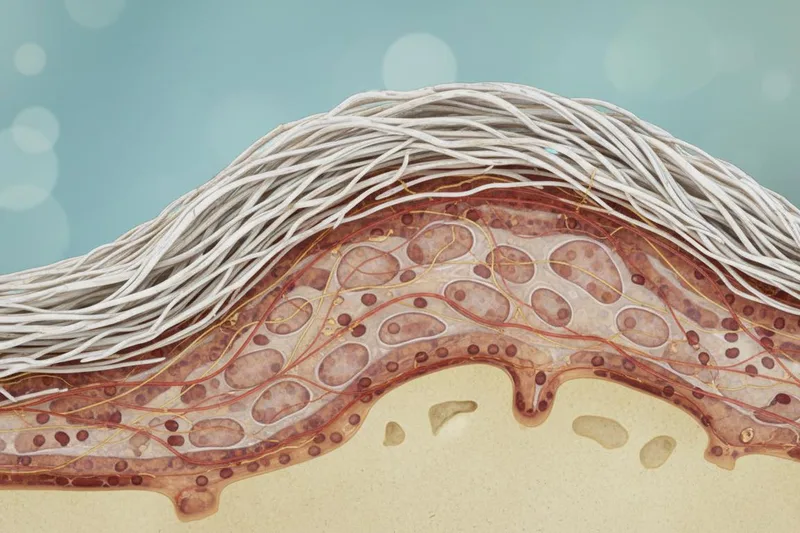
Have you ever wondered how our bones, no matter how strong they are, get their blood and nerve supply, and how they grow back when they break? There is something very special around our bones that helps with that. That's what we call the periosteum in medical science. It's like a protective, nourishing 'cover' around our bones. Let's talk about this periosteum in more detail today, okay?
What actually happens to the periosteum?
Simply put, this membrane (periosteum) performs three main functions for our bones. Let's take a look at what they are.
1. Providing blood supply to the bones
Think about it, our bones are just like plants. They also need nourishment and oxygen to live and be strong. That nourishment, that is, new blood, along with oxygen, is brought to us through tiny blood channels in this (periosteum). These blood channels are connected to the circulatory system throughout our body, bringing the fresh, oxygen-rich blood that our bones need.
2. Giving sensation to bones
Have you ever felt a "pop" when you hit a bone? Or the excruciating pain that comes with breaking an arm or leg? That feeling, that pain, is caused by the nerves in this (periosteum). That is, it is this nerve that provides 'sensation' to our bones. It is because of these nerves that we can sense any injury or damage to our bones.
3. Bone growth and repair
This is the amazing job of the periosteum.
When we are young, when we are babies, our bones gradually grow and lengthen. A special type of cell that helps with this, called osteoblasts , is formed inside this periosteum. These osteoblasts are the cells that make new bone tissue and grow bones. Just like building a house, you add bricks.
So, because the bones of babies and young children are still growing, they have a lot of these (Osteoblasts) cells active in their (Periosteum).
But when we grow up, when bone growth stops, these (Osteoblasts) cells decrease a little. But, imagine if you break your arm or some other bone, either in an accident or a fall. Then, a type of basic cell called (Osteoprogenitor cells) like 'sleeping' heroes in this (Periosteum) wakes up and starts making those (Osteoblasts) again. That's when the broken bone heals beautifully again, new bone tissue forms and fills that gap. That means when something like a bone fracture happens, it's the cells in this (Periosteum) that heal it.
Where is this (periosteum) located?
In fact, most of the bones in our body have this membrane called the periosteum around them. It covers almost every part of the bones. But there are only two places where it is missing. And those are:
- In places where the ends of bones are covered with cartilage .
- Where our muscles and ligaments and tendons connect to our bones.
Are there bones without periosteum?
Yes, there is such a type of bone. They are called (Sesamoid bones) . These are small bones that are usually embedded in our muscles or ligaments. For example:
- Your kneecap (patella) .
- Some of the small bones in the hands and wrists.
- Some small bones in the feet.
Since these (sesamoid bones) do not have a direct blood supply from the (periosteum), if they are damaged, they take a little longer to heal than other bones.
Layers of the Periosteum
This membrane (periosteum) is made up of two main layers.
1. Outer layer: This is the protector. It protects the inner layer and the bone underneath. It is made up of collagen fibers . Most of the blood vessels and nerves in the periosteum are located in this outer layer.
2. Inner layer: This is sometimes called the cambium layer . The osteoprogenitor cells mentioned earlier and the cells that develop from them (osteoblasts) are found in this layer. That is, the cells in this layer are at work when the bone is growing or when it is healing after a fracture.
An important thing is that the periosteum of young children and young adults is a little thicker because their bones are still growing. As they get older, when bone growth stops, this periosteum becomes a little thinner.
What are (Periosteum), (Endosteum) and (Perichondrium)?
These are all three layers of tissue surrounding our bones. Since they can get a little confusing, let's look at them separately.
- Periosteum: This is the outer covering of the bones we're talking about. It contains blood vessels, nerves, and cells that help the bones grow and heal.
- (Endosteum): This is also a membrane. But this is on the inside of the bones, covering the cavity where the bone marrow is.
- Perichondrium: This is very similar to the Periosteum, but it covers the cartilage at the ends of the bones. The Periosteum helps the bones grow, and the cells in the Perichondrium help new cartilage grow where cartilage is needed.
Do you understand the difference between those three?
What are the common diseases that affect the periosteum?
There are two main problems that affect the periosteum.
1. Periostitis
This is the medical name for inflammation of the periosteum. When the muscles attached to the periosteum are overused, meaning that they continue to move in the same way, the periosteum can become stressed and begin to swell and hurt.
Shin splints are a common example of this. This is a pain that occurs in the front of the shin bone in people who play sports that involve running and jumping. However, this condition (periostitis) can develop in any area of the body where the periosteum is overused.
Sometimes, periostitis can also be caused by infections . If you have any of these symptoms, you should see a doctor or go to the hospital immediately:
- Severe pain near a bone.
- Discharge of pus or other fluid.
- Fever .
2. Bone fractures
This is something we all know. In medical terms, a broken bone is called a bone fracture. These usually occur in severe accidents like car accidents and falls. The symptoms of a bone fracture are:
- Severe pain.
- Swelling.
- Tenderness.
- Inability to move a body part that can normally be moved.
- Bruising or skin discoloration.
- A knot or deformity that is not normally present is visible.
If you have had an accident and think you have a broken bone, you should go to an emergency room immediately .
What tests are done to examine the periosteum?
Usually, there is no specific test to look at just the periosteum. Tests done on your bones often focus on the entire bone.
A common test to check bone health is a bone density test . You may have heard of it as a DEXA scan or DXA scan. It uses low-level X-rays to measure how strong your bones are. It is used to measure bone loss as you age.
If you have a fracture, your doctor or surgeon may need imaging tests like these:
- X-rays
- Magnetic Resonance Imaging (MRI)
- CT scan (CT scan - Computed Tomography scan)
If your doctor suspects that you have an infection or other problem, they may take a piece of tissue and do a biopsy .
How to keep your periosteum healthy?
Keeping your periosteum healthy is actually keeping your entire skeleton healthy . It's important to follow a good diet, exercise plan, and regular checkups with your doctor.
Remember these simple tips to protect yourself from accidents:
- Always wear a seatbelt when riding in a car.
- Wear appropriate safety equipment when playing sports and engaging in other activities.
- Keep your home and workplace tidy and free of unnecessary items. This will help reduce the risk of slipping and falling.
- When picking up something from above, use appropriate equipment (like a ladder). Do not climb on chairs, tables, or counters.
- If you have difficulty walking or are at high risk of falling, use your cane or walker .
Finally, what to remember! (Take-Home Message)
We usually think of our bones as just solid, lifeless things. But they're actually a complex system of living tissues . The membrane that surrounds your bones, called the periosteum, helps them grow and become strong. It's also the one that releases special cells to help heal them if you ever injure a bone.
So, take care of your bone health. Talk to your doctor and learn about ways to keep your bones strong. Because the stronger your bones are, the less likely they are to be damaged in an accident. Healthy bones are the foundation for a healthy life!
` Periosteum, bones, bone health, bone fracture, periostitis, bone growth, nerve supply


💬 Comments (0)
No comments yet. Be the first to share your thoughts here.
Add Your Comment