
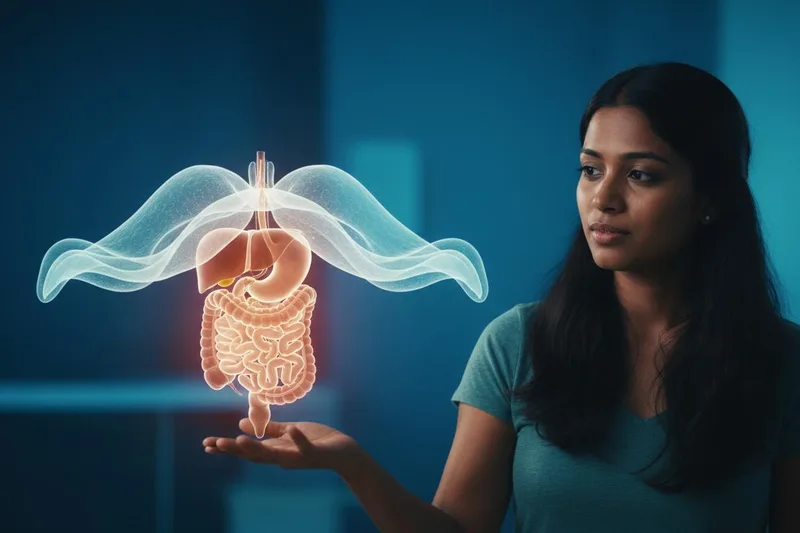
Have you ever wondered how the vital organs inside your abdomen, like your liver, stomach, and intestines, are kept in order and protected? The peritoneum is a thin, smooth membrane that helps keep them in place. It's like a comfortable, protective covering around the organs inside our abdomen. Let's talk about the peritoneum in a little more detail today, because it silently serves a great service in our bodies.
What is the peritoneum? Simply put...
Simply put, the peritoneum is a thin layer of tissue that lines your abdominal cavity (the empty space inside your belly) and pelvic cavity. It also provides a cushion around the organs inside your abdomen. Think of it like a balloon with a balloon inside.
There are two parts to this peritoneal membrane:
- Parietal peritoneum: This is what lines the inside walls of your abdomen and pelvis.
- Visceral peritoneum: This is the membrane that surrounds the organs inside your abdomen (for example, stomach, liver, intestines).
The small space between these two membranes is called the peritoneal cavity . This cavity contains a small amount of fluid that reduces friction when organs rub against each other.
Why is the peritoneum so important to us? What does it do?
This peritoneal membrane performs many important functions in our bodies. Some of them are still being studied by researchers. Here are some of the main ones that are currently known:
- Insulation: This layer of membrane contains fat. This provides warmth and some protection for our organs. Think of it like a little cushion.
- Lubrication: That peritoneal fluid I mentioned earlier helps our organs, especially those that move like the intestines, slide over each other. Otherwise, they could rub against each other and get injured, right?
- Structure and Support: Our organs are connected to each other by special ligaments in the peritoneum. It also helps to attach the intestines to the back wall of the abdomen.
- Blood, lymph and nerve supply: The blood vessels, lymph vessels and nerves needed by our organs pass through this peritoneal membrane.
- Immunity: This is very important. The peritoneum is like the first line of defense against injuries and germs that enter our abdominal cavity. That is, it identifies harmful things from the outside and sends white blood cells to attack them. It also helps filter the fluid inside the peritoneal cavity and remove waste. The amazing thing is that this tissue has the ability to heal quickly if injured.
Think of it like the peritoneum, a silent guardian inside our abdomen. Without it, our organs would be in big trouble.
Where is the peritoneum located in our body?
The peritoneum is located in your abdominopelvic cavity . It starts just below your diaphragm (the muscle that separates your chest and abdomen) and extends all the way to your pelvic floor.
- The parietal peritoneum covers the walls of this entire cavity.
- Visceral peritoneum mainly surrounds the stomach, liver, spleen, and some parts of the small intestine and large intestine.
Organs completely surrounded by the visceral peritoneum are called "intraperitoneal" , while organs that are not completely surrounded and are behind the peritoneum are called "retroperitoneal" .
How is this made? Let's look at it in a little more detail.
The peritoneum is a serous membrane . That is, a membrane that secretes a fluid like serum. This type of tissue is found in several other cavities in our body, and is commonly called the mesothelium .
This is mainly made up of two layers:
1. Epithelial cells: These are the top layer. These cells secrete and absorb the aforementioned lubricating fluid. They also help filter out things like germs and carry blood, lymph, and nerves.
2. Connective tissue: This is located beneath the epithelial cell layer. It is what holds everything together. This connective tissue helps to attach some organs to the abdominal wall and to keep others suspended within the cavity.
Special formations of the peritoneum
As the visceral peritoneum wraps around the organs, it folds in places, forming double layers and sac-like structures.
- Omentum: This is a large double layer of peritoneum that acts like an apron and covers some of the organs in the front of your abdomen.
- Mesentery: This is also a double layer. This is what connects your intestines to the back wall of your abdomen.
The adipose tissue between these layers provides additional protection and warmth, and also helps carry nerves and blood vessels to the organs.
How is the nerve supply?
This is also very important.
- The visceral peritoneum, which surrounds your organs, receives the same autonomic nerve supply as your organs. Therefore, the pain you feel here is a bit vague, and it's hard to pinpoint exactly where it hurts. It feels stretched when the intestines fill with air or food. It also feels irritated if chemicals like blood or bile leak out.
- The parietal peritoneum, which covers your abdominal wall, receives the same somatic nerve supply as the abdominal wall itself. Therefore, it can pinpoint the exact location of things like pressure, pain, and temperature.
What are the diseases that affect the peritoneum? Let's be aware!
Unfortunately, this peritoneal membrane can also develop various diseases. Let's talk about a few of them.
1. Peritonitis - This is not a game!
Peritonitis is inflammation of the peritoneum. It is most often caused by an infection within the peritoneal cavity. However, it can also be an early symptom of some gastrointestinal diseases.
Peritonitis is a medical emergency. Because the peritoneum is a membrane that absorbs things quickly, an infection in the peritoneal cavity can enter the bloodstream and spread throughout the body, causing a dangerous condition called septicemia.
2. Ascites - fluid accumulation in the abdomen
Ascites is the accumulation of excess fluid in the peritoneal cavity. This causes the abdomen to swell for no apparent reason. It is often a symptom of advanced liver disease (especially cirrhosis ). In cirrhosis, pressure in the main vein in the abdomen (portal hypertension) increases, causing fluid to leak from the veins. Sometimes, ascites can also be a symptom of congestive heart failure or cancer.
3. Hernia - Is this also related to the peritoneum?
A hernia is a protrusion of tissue from one part of the body through a muscle wall into another. Most hernias occur through the abdominal wall. Often, the peritoneum is also between the protruding tissue. Sometimes, an internal organ may be pushed out, but it is still wrapped in the peritoneum. Hernias usually do not damage the peritoneum, but if the blood supply to it is cut off, it can be a problem. Most hernias require surgery.
4. Abdominal Adhesions - A problem that occurs after surgery
If the peritoneum is cut during abdominal surgery, it can form thick bands of scar tissue as it heals. This is called abdominal adhesions . These don't always cause problems. However, if these bands of scar tissue form between organs, they can interfere with the free movement of organs. Sometimes, the movement of things inside the organs can also be blocked. The most dangerous thing that can happen is a bowel obstruction . If the intestines become blocked, food and drink cannot leave the body.
5. Sclerosing mesenteritis or mesenteric panniculitis
This is a very rare condition. It affects the fatty tissue in the mesentery, the fold of peritoneum that connects your small intestine to the back wall of your abdomen. Although the exact cause is unknown, chronic inflammation of this tissue leads to extensive scarring (fibrosis). This scarring can cut off blood flow to the tissue and cause tissue death (necrosis). In some cases, intestinal obstruction can occur.
6. Mesenteric lymphadenitis
Lymphadenitis is the swelling and inflammation of the lymph nodes. If it occurs in the mesentery, it is called mesenteric lymphadenitis . This is often a sign of an infection. When our immune system is activated, the lymph nodes help filter and remove germs. This can cause abdominal pain and fever, but this is usually temporary.
7. Cancer
Cancers that develop in the organs of the abdominal and pelvic cavity can easily spread to the peritoneum. This is called peritoneal carcinomatosis . Rarely, cancer can start in the peritoneum itself. Examples include primary peritoneal cancer and peritoneal mesothelioma (cancer of the mesothelium). Pseudomyxoma peritonei is a rare type of cancer that causes the peritoneal cavity to fill with a mucus-like substance. Any cancer that develops in the peritoneum can spread to organs that touch it.
How do I know if there is a problem with my peritoneum?
The most common symptoms of any condition affecting the peritoneum are abdominal pain and abdominal swelling .
- If you feel diffuse pain that is spread throughout your abdomen and is difficult to pinpoint, it could be pain coming from your visceral peritoneum, the inner layer of your abdomen.
- If the pain is more intense and localized, it may be due to irritation of the outer layer, the parietal peritoneum.
There can be many causes of stomach pain, but many of them involve the peritoneum in some way.
What tests are done to check the health of the peritoneum?
If your doctor suspects a problem with the peritoneum, they may perform tests such as:
- Peritoneal fluid analysis: This can help diagnose conditions such as peritonitis or ascites. The doctor inserts a small, hollow needle into the abdominal cavity and removes a small amount of peritoneal fluid. The fluid is then sent to a laboratory for testing. The fluid is analyzed to determine whether the fluid is due to inflammation or a blood vessel leak. It can also look for evidence of infection, cancer cells, or chemicals leaking from another organ.
- Peritoneal biopsy: Sometimes the doctor may want to take a sample of peritoneal tissue. This can be done by inserting a special needle into the abdomen (needle biopsy). Or it can be done during a laparoscopy . Laparoscopy is a procedure that involves making a small incision in the abdomen and inserting a camera through it to examine the abdominal cavity. If the doctor wants to see what's going on inside the abdomen, he or she may suggest a laparoscopy and biopsy.
What are the treatments for the peritoneum?
There are various treatments for diseases related to the peritoneum. There are also treatments that utilize some of the properties of the peritoneum.
- Peritoneal dialysis: Doctors sometimes use the peritoneum to treat people with kidney failure. This is because the peritoneum has an amazing ability to filter waste products. Dialysis does what the kidneys do, which is to remove waste products and excess fluid from the blood. In this process, you or your doctor fills your peritoneal cavity with a special liquid solution. The fluid is filtered through your peritoneum, and then the fluid is removed.
- Hyperthermic Intraperitoneal Chemotherapy (HIPEC): This is a new, targeted chemotherapy treatment for cancer. It takes advantage of the absorption capacity of the peritoneum. A concentrated, heated chemotherapy solution is given directly into the peritoneal cavity. If you have cancer in one area of your peritoneal cavity, HIPEC can treat only that area. Traditional chemotherapy gives drugs into the blood, which affects the entire body, so there are more side effects. But HIPEC is different, and may even be more effective.
- Cytoreductive/debulking surgery: A combination of surgery and chemotherapy is usually used to treat abdominal and pelvic cancer. Cytoreductive surgery tries to remove as many cancer cells as possible, wherever they are. Sometimes this means removing part or all of your peritoneum (peritonectomy). Most often, it affects the omentum. Some cancers spread there first. Then, you have to have an omentectomy to remove the omentum.
So, finally, a few things to remember...
You probably now understand that the peritoneum is something that plays a silent, but very important role in our body.
- If you have abdominal pain or bloating, don't ignore it. Sometimes, even if the symptoms are minor, the underlying problem could be serious. So, don't hesitate to see a doctor for advice.
- The peritoneum is a protective membrane between our skin and many of our internal organs. It provides protection, warmth, structure, blood, and nerve supply to our organs.
- Additionally, the peritoneum has powerful wound healing and immune functions.
- Inflammation of the peritoneum can be the first warning sign of an undiagnosed condition in one of your organs.
So, isn't it important to know that these amazing things are happening inside our bodies? Take care of your health!
` Peritoneum, Peritoneum, Abdominal cavity, Peritonitis, Ascites, Hernia, Abdominal pain, Abdominal health, Body composition


💬 Comments (0)
No comments yet. Be the first to share your thoughts here.
Add Your Comment