
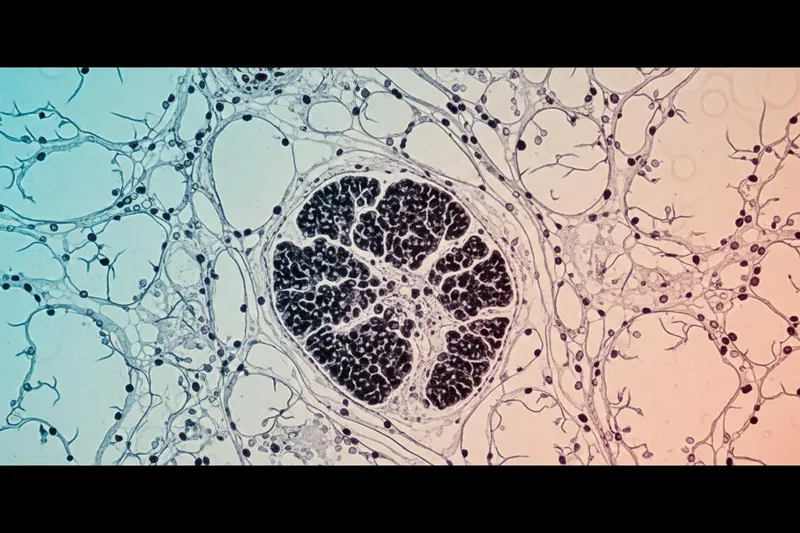
Things you need to know about the black matter of the brain (Substantia Nigra)!

Things you need to know about the black matter of the brain (Substantia Nigra)!
Have you ever wondered how your body's movements, the way you walk, the way you move your arms and legs, are controlled? All of this is connected to a small but very important part of our brain. That part is simply called the Substantia Nigra . Today, we're going to talk about this amazing part.

So, what happens to the Substantia Nigra?

Simply put, this part called the substantia nigra is part of the 'Basal Ganglia' system in your brain. To be precise, this is what helps control your movements and muscle tone. The main reason for this is that the substantia nigra produces a very important chemical called dopamine . This dopamine is like a messenger in our brain. There are two main parts of this substantia nigra. The work of each of them is slightly different.

1. SN pars reticulata

This part is mainly involved in controlling the movements of your eyes, and your ability to learn new things and think. The brain cells in this area contain a chemical called gamma-aminobutyric acid (GABA) . GABA works by reducing the unnecessary activity of brain cells. That is, it helps stop the brain from sending unnecessary signals to the muscles. This is like a traffic policeman stopping unnecessary vehicles.

2. SN pars compacta

The neurons, or nerve cells, in this part are where the chemical dopamine mentioned earlier is most abundant. Therefore, this part is involved in many things, such as your emotions, your ability to learn, how you judge risks and rewards, and your motivations. A decrease in dopamine is the primary cause of conditions like Parkinson's disease .

So, where is the Substantia Nigra located?

This part called the substantia nigra (SN) is located in the middle of your brain, which is called the midbrain . As the name suggests, it is located in the middle of your brain. To be precise, it is located a little above the brainstem , near the point where the head and neck meet and the spinal cord begin. Although we call it the 'substantia nigra', there are actually two parts of your brain. They are located on either side of the midbrain. Each part contains the previously mentioned parts called the pars reticulata (SN pars reticulata) and the pars compacta (SN pars compacta). When these two are combined, they are called the 'substantia nigra' (substantiae nigrae).

What does this look like? What color is it? Is it big?

You see, the name Substantia Nigra comes from Latin. It means 'black substance' . The reason for this is that while the rest of your brain is usually a light pinkish gray, this part called Substantia Nigra is much darker. To be precise, it looks like a black band surrounded by light-colored tissue. The reason for this is that the brain cells in this area contain a chemical called Melanin . Did you know, Melanin is also found in our skin cells. When exposed to the sun, our skin turns brown (tan) because of this Melanin. If you ask how big it is, it's actually a very small part. Imagine, you could fit about 25 of these substantia nigras inside a regular golf ball! It's that small. Another thing, although it's part of the basal ganglia, the substantia nigra (SN) is not a ganglion. It's a nucleus , which is a structure in the nervous system that contains a group of cells that do the same thing, or have the same kind of connections.

What is the Substantia Nigra made of?

Your basal ganglia, including the substantia nigra, are made up of two main types of cells. Let's talk about them in detail.
  • Neurons : These are the cells in your brain and nervous system. They are the ones that transmit and send signals. They can transfer signals either chemically or electrically.
  • Glial cells: These are like the helper cells of the nervous system. Although they don't directly transmit nerve signals, they help the neurons that do that job.

A little bit about neurons

Neurons are a type of cell that sends and receives messages through your nervous system using electrical and chemical signals. A neuron has these parts:
  • Cell body: This is the main part of the cell.
  • Axon: This is a long, arm-like part that extends from the cell body. At the other end of the axon are several long, finger-like parts. This is where the electrical signal from the neuron is converted into a chemical signal. These finger-like parts are also called synapses . These are where the neuron connects to other nearby nerve cells .
  • Dendrites: These are the tiny, branch-like structures on the cell body (the name comes from the Latin word meaning 'tree-like'). Dendrites receive chemical signals from synapses on other neurons.
  • Myelin (Myelin : This is a thin, fatty layer that surrounds the axon of a neuron. It acts as a protective covering.
Neuronal connections are very complex. The dendrites in a single neuron can connect to thousands of other synapses. Some neurons are long, some are short. This depends on where they are in the body and what function they perform.

What are glial cells?

Glial cells do a lot of different things. They help neurons grow and develop when you're young, and they help manage how neurons function throughout your life. They also protect your nervous system from infection, regulate the chemical balance of your nervous system, and make the myelin sheath around your axons. Did you know? There are about ten times more glial cells than neurons in your nervous system!

What are the common diseases that affect the Substantia Nigra?

There are several diseases and conditions that can affect the Substantia Nigra. Some of them are:
  • Alzheimer's disease
  • Brain tumors
  • Head injuries , especially traumatic brain injuries such as concussions
  • Exposure to toxic substances or toxins such as Trichloroethylene (TCE)
  • Infections (especially infections that cause inflammation of the brain, such as encephalitis )
  • Inflammatory or autoimmune conditions, such as lupus
  • Inherited conditions such as Huntington 's disease
  • Lewy body dementia
  • Multiple system atrophy
  • Parkinson's disease - This is the most talked about disease associated with the Substantia Nigra, because in this disease, the cells that produce dopamine are destroyed.
  • Progressive supranuclear palsy
  • Stroke
  • Wilson's disease

What are the common symptoms of diseases associated with the Substantia Nigra?

The symptoms of diseases that affect the basal ganglia system, or substantia nigra, depend largely on the type of disease. However, there are some common symptoms:
  • Balance and coordination problems
  • Muscle weakness and spasms
  • Shakiness and tremors
  • Trouble with focusing, thinking or problem-solving
  • Difficulty controlling eye movements, causing vision problems

What tests are done to diagnose such conditions?

There are several tests that can help diagnose conditions that affect your brain, or substantia nigra. The most commonly used tests are:
  • Blood tests: These can detect a variety of things, from immune system problems to whether toxins and poisons, especially metals like copper, mercury, and lead, have entered the body.
  • Computerized tomography (CT) scan
  • Evoked potentials (sensory tests)
  • Genetic testing
  • Magnetic resonance imaging (MRI) scan
  • Positron emission tomography (PET) scan
  • Single-photon emission computed tomography (SPECT scan)
Because there are so many conditions that can affect the substantia nigra, the treatments available are also very varied. The type of treatment you receive depends entirely on the condition you have. Sometimes these conditions can be managed with medication . Other conditions may require surgery . While some conditions can be completely cured, others may not respond to treatment. In cases where a condition cannot be completely cured, it is usually best to control the symptoms .

What can I do to protect my Substantia Nigra?

Many conditions that affect your brain, or substantia nigra, can be prevented or at least delayed. However, Parkinson's diseaseSome diseases, such as cancer, are difficult to prevent because they occur unexpectedly. However, here are some of the most important things you can do:
  • Eat a balanced diet. The food you eat affects the health of your circulatory system and your weight. Both of these are directly related to the health of your brain.
  • Be physically active regularly and maintain a healthy weight. Your weight and activity level can help prevent or delay diseases that affect the brain, especially high blood pressure or stroke.
  • Wear protective equipment when necessary. Head injuries, especially concussions and other traumatic brain injuries, can cause brain damage. The damage can sometimes be permanent. Therefore, it is essential to wear protective equipment to prevent brain injuries, both at work and during leisure time.
  • Manage your chronic conditions. Many conditions that affect the brain and nervous system get worse over time. Treating these chronic conditions properly can slow their progression and reduce the impact of symptoms.

Final Take-Home Message

As you can see, the substantia nigra is a very small part of our brain, but it performs an extremely important function. Although experts are still learning a lot about it, we already know a lot. It is a major part of our brain's electrical and chemical signaling systems. It also helps coordinate our movements, vision, and many other things.
Remember, your brain health is very important to your overall health. So, never forget to take care of your brain and follow a healthy lifestyle.
As technology advances and medical research advances, we will learn more about the inner workings of the Substantia Nigra and how to treat diseases that affect it. So, it's important to have hope!
Substantia Nigra, Brain, Dopamine, Parkinson's Disease, Movement, Nervous System
⚠️ Important: The medical articles and information on Nirogi Lanka are for general awareness only, and are by no means a substitute for professional medical advice, diagnosis, or treatment. For any medical problem you have, consult a qualified physician immediately.

💬 Comments (0)

No comments yet. Be the first to share your thoughts here.

Add Your Comment

Please calculate: 6 + 8 =
Things you need to know about the black matter of the brain (Substantia Nigra)!
How the Body WorksFebruary 19, 2026

Things you need to know about the black matter of the brain (Substantia Nigra)!

Have you ever wondered how your body's movements, the way you walk, the way you move your arms and legs, are controlled? All of this is connected to a small but very important part of our brain. That part is simply called the Substantia Nigra . Today, we're going to talk about this amazing part.

So, what happens to the Substantia Nigra?

Simply put, this part called the substantia nigra is part of the 'Basal Ganglia' system in your brain. To be precise, this is what helps control your movements and muscle tone. The main reason for this is that the substantia nigra produces a very important chemical called dopamine . This dopamine is like a messenger in our brain. There are two main parts of this substantia nigra. The work of each of them is slightly different.

1. SN pars reticulata

This part is mainly involved in controlling the movements of your eyes, and your ability to learn new things and think. The brain cells in this area contain a chemical called gamma-aminobutyric acid (GABA) . GABA works by reducing the unnecessary activity of brain cells. That is, it helps stop the brain from sending unnecessary signals to the muscles. This is like a traffic policeman stopping unnecessary vehicles.

2. SN pars compacta

The neurons, or nerve cells, in this part are where the chemical dopamine mentioned earlier is most abundant. Therefore, this part is involved in many things, such as your emotions, your ability to learn, how you judge risks and rewards, and your motivations. A decrease in dopamine is the primary cause of conditions like Parkinson's disease .

So, where is the Substantia Nigra located?

This part called the substantia nigra (SN) is located in the middle of your brain, which is called the midbrain . As the name suggests, it is located in the middle of your brain. To be precise, it is located a little above the brainstem , near the point where the head and neck meet and the spinal cord begin. Although we call it the 'substantia nigra', there are actually two parts of your brain. They are located on either side of the midbrain. Each part contains the previously mentioned parts called the pars reticulata (SN pars reticulata) and the pars compacta (SN pars compacta). When these two are combined, they are called the 'substantia nigra' (substantiae nigrae).

What does this look like? What color is it? Is it big?

You see, the name Substantia Nigra comes from Latin. It means 'black substance' . The reason for this is that while the rest of your brain is usually a light pinkish gray, this part called Substantia Nigra is much darker. To be precise, it looks like a black band surrounded by light-colored tissue. The reason for this is that the brain cells in this area contain a chemical called Melanin . Did you know, Melanin is also found in our skin cells. When exposed to the sun, our skin turns brown (tan) because of this Melanin. If you ask how big it is, it's actually a very small part. Imagine, you could fit about 25 of these substantia nigras inside a regular golf ball! It's that small. Another thing, although it's part of the basal ganglia, the substantia nigra (SN) is not a ganglion. It's a nucleus , which is a structure in the nervous system that contains a group of cells that do the same thing, or have the same kind of connections.

What is the Substantia Nigra made of?

Your basal ganglia, including the substantia nigra, are made up of two main types of cells. Let's talk about them in detail.
  • Neurons : These are the cells in your brain and nervous system. They are the ones that transmit and send signals. They can transfer signals either chemically or electrically.
  • Glial cells: These are like the helper cells of the nervous system. Although they don't directly transmit nerve signals, they help the neurons that do that job.

A little bit about neurons

Neurons are a type of cell that sends and receives messages through your nervous system using electrical and chemical signals. A neuron has these parts:
  • Cell body: This is the main part of the cell.
  • Axon: This is a long, arm-like part that extends from the cell body. At the other end of the axon are several long, finger-like parts. This is where the electrical signal from the neuron is converted into a chemical signal. These finger-like parts are also called synapses . These are where the neuron connects to other nearby nerve cells .
  • Dendrites: These are the tiny, branch-like structures on the cell body (the name comes from the Latin word meaning 'tree-like'). Dendrites receive chemical signals from synapses on other neurons.
  • Myelin (Myelin : This is a thin, fatty layer that surrounds the axon of a neuron. It acts as a protective covering.
Neuronal connections are very complex. The dendrites in a single neuron can connect to thousands of other synapses. Some neurons are long, some are short. This depends on where they are in the body and what function they perform.

What are glial cells?

Glial cells do a lot of different things. They help neurons grow and develop when you're young, and they help manage how neurons function throughout your life. They also protect your nervous system from infection, regulate the chemical balance of your nervous system, and make the myelin sheath around your axons. Did you know? There are about ten times more glial cells than neurons in your nervous system!

What are the common diseases that affect the Substantia Nigra?

There are several diseases and conditions that can affect the Substantia Nigra. Some of them are:
  • Alzheimer's disease
  • Brain tumors
  • Head injuries , especially traumatic brain injuries such as concussions
  • Exposure to toxic substances or toxins such as Trichloroethylene (TCE)
  • Infections (especially infections that cause inflammation of the brain, such as encephalitis )
  • Inflammatory or autoimmune conditions, such as lupus
  • Inherited conditions such as Huntington 's disease
  • Lewy body dementia
  • Multiple system atrophy
  • Parkinson's disease - This is the most talked about disease associated with the Substantia Nigra, because in this disease, the cells that produce dopamine are destroyed.
  • Progressive supranuclear palsy
  • Stroke
  • Wilson's disease

What are the common symptoms of diseases associated with the Substantia Nigra?

The symptoms of diseases that affect the basal ganglia system, or substantia nigra, depend largely on the type of disease. However, there are some common symptoms:
  • Balance and coordination problems
  • Muscle weakness and spasms
  • Shakiness and tremors
  • Trouble with focusing, thinking or problem-solving
  • Difficulty controlling eye movements, causing vision problems

What tests are done to diagnose such conditions?

There are several tests that can help diagnose conditions that affect your brain, or substantia nigra. The most commonly used tests are:
  • Blood tests: These can detect a variety of things, from immune system problems to whether toxins and poisons, especially metals like copper, mercury, and lead, have entered the body.
  • Computerized tomography (CT) scan
  • Evoked potentials (sensory tests)
  • Genetic testing
  • Magnetic resonance imaging (MRI) scan
  • Positron emission tomography (PET) scan
  • Single-photon emission computed tomography (SPECT scan)
Because there are so many conditions that can affect the substantia nigra, the treatments available are also very varied. The type of treatment you receive depends entirely on the condition you have. Sometimes these conditions can be managed with medication . Other conditions may require surgery . While some conditions can be completely cured, others may not respond to treatment. In cases where a condition cannot be completely cured, it is usually best to control the symptoms .

What can I do to protect my Substantia Nigra?

Many conditions that affect your brain, or substantia nigra, can be prevented or at least delayed. However, Parkinson's diseaseSome diseases, such as cancer, are difficult to prevent because they occur unexpectedly. However, here are some of the most important things you can do:
  • Eat a balanced diet. The food you eat affects the health of your circulatory system and your weight. Both of these are directly related to the health of your brain.
  • Be physically active regularly and maintain a healthy weight. Your weight and activity level can help prevent or delay diseases that affect the brain, especially high blood pressure or stroke.
  • Wear protective equipment when necessary. Head injuries, especially concussions and other traumatic brain injuries, can cause brain damage. The damage can sometimes be permanent. Therefore, it is essential to wear protective equipment to prevent brain injuries, both at work and during leisure time.
  • Manage your chronic conditions. Many conditions that affect the brain and nervous system get worse over time. Treating these chronic conditions properly can slow their progression and reduce the impact of symptoms.

Final Take-Home Message

As you can see, the substantia nigra is a very small part of our brain, but it performs an extremely important function. Although experts are still learning a lot about it, we already know a lot. It is a major part of our brain's electrical and chemical signaling systems. It also helps coordinate our movements, vision, and many other things.
Remember, your brain health is very important to your overall health. So, never forget to take care of your brain and follow a healthy lifestyle.
As technology advances and medical research advances, we will learn more about the inner workings of the Substantia Nigra and how to treat diseases that affect it. So, it's important to have hope!
Substantia Nigra, Brain, Dopamine, Parkinson's Disease, Movement, Nervous System
⚠️ Important: The medical articles and information on Nirogi Lanka are for general awareness only, and are by no means a substitute for professional medical advice, diagnosis, or treatment. For any medical problem you have, consult a qualified physician immediately.

💬 Comments (0)

No comments yet. Be the first to share your thoughts here.

Add Your Comment

Please calculate: 6 + 8 =