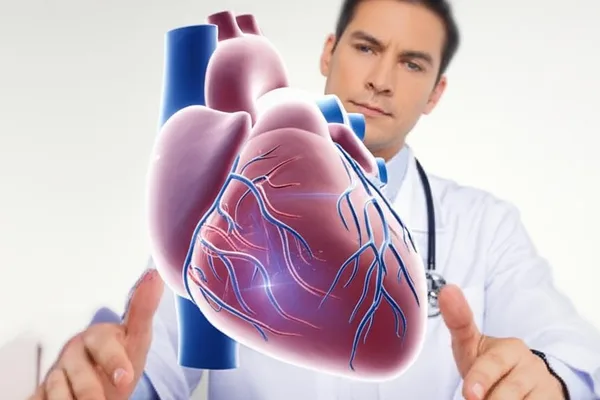
Do you know about this very important blood vessel in your heart? (Left Anterior Descending Artery) Let's talk!

Do you know about this very important blood vessel in your heart? (Left Anterior Descending Artery) Let's talk!
Have you ever heard of the `(Left Anterior Descending Artery)` or `(LAD artery)`? Maybe your doctor has talked about it, or you have read about it somewhere. This is a very important blood vessel for our heart. In fact, it is like the lifeblood of our heart. So, today we will talk about this `(LAD artery)`, what it does, the problems it can cause, and how we can take care of it in a simple way that you can understand.

What is this `(Left Anterior Descending Artery)`? It's like a map of the heart!

Simply put, your `(Left Anterior Descending Artery)`, or let's call it `(LAD)` for short, is one of the two branches of the `(left main coronary artery)` on the left side of your heart. The word ``Anterior'' means ``in front.'' This means that this blood vessel mainly supplies blood to the front of your heart. Think about it, the main pumping chamber on the lower left side of your heart, the `(ventricle),'' is what receives the most oxygenated blood from this `(LAD). Not only that, but there is a muscle tissue that separates the walls of the heart, we call it `( Septum ),'' and this `(LAD)` also supplies blood to it.
Sometimes doctors also call this blood vessel the ``anterior interventricular branch.`` Although the name may sound a bit complicated, its job is very simple – to carry blood to the heart!
But here's something to be aware of: If this `(LAD)` artery becomes completely blocked, it can cause a heart attack. This is often called a `(widowmaker heart attack )`. Hearing this name can be a bit scary, because this type of heart attack can often be fatal. That's why we need to be so careful about this `(LAD)`.

What is really going on with `(LAD)`? The main supplier of the heart!

As we mentioned earlier, the LAD is the largest coronary artery in your heart. These are a special type of blood vessel in the heart, part of the circulatory system that carries blood throughout our bodies. Can you imagine, almost half of the blood your heart needs is carried through this LAD! That means it is essential for the healthy functioning of the heart.

Where is this `(LAD)`?

We say that the main coronary artery on the left side of your heart divides into two branches. Those two branches are the Left Anterior Descending Artery and the Circumflex Artery. Just like a road divides into two, this main artery also divides into two parts here. Doctors also call this a bifurcation. This LAD artery is located inside the protective membrane on the outside of your heart, the epicardium. It runs along the septum of the heart, like a little canal, from the base of the heart to the apex of the heart.

What are the branches in `(LAD)`?

This `(LAD)` duct divides into two smaller branches:
  • Diagonal branches: These branches supply blood to the front and bottom parts of the ventricle, which is located on the lower left side of the heart.
  • (Septal branches): These branches supply blood to the anterior two-thirds of the septum of the heart.
These branches are responsible for ensuring that different parts of the heart receive adequate blood supply.

What is "left-dominant circulation"?

This is a bit of a deep subject, but let's try to understand it simply. There is another artery called the ``posterior descending artery (PDA)`` that carries blood to the lower and back parts of your heart and to part of the ``septum``.
  • Right-dominant circulation : If you take ten people, about eight of them have blood coming from the main coronary artery on the right side.
  • Left-dominant circulation: However, in about one in ten people, this PDA receives blood from a branch of the left main coronary artery (either the LAD or the circumflex artery).
  • Codominant circulation: In about two out of ten people, the PDA is supplied by the LAD or circumflex artery, as well as the right coronary artery.
This can vary from person to person. It's just a natural position of the heart.

What are the medical conditions that affect `(LAD)`?

This is where we need to focus the most. Inside this LAD, fatty deposits, which we call plaque, can build up. This condition is called atherosclerosis . It's like rust building up in a water pipe. In some people, this plaque builds up so much that the LAD becomes completely blocked. What happens then? Oxygen-rich blood can't get to the heart. That's when we get the widowmaker heart attack we talked about earlier, which is often fatal. Although the term widowmaker may seem to only apply to men, this heart disease can affect both men and women.
Imagine, Nishantha is about 50 years old. He is a bit overweight and has diabetes. One day, he suddenly started sweating with severe chest pain. When he was rushed to the hospital, it was discovered that he had a `(widowmaker heart attack)`. Fortunately, he survived because he received prompt treatment. This shows how urgent this was.
Also, in a very small number of people, the LAD artery may be slightly narrowed or shortened at birth. This condition is called hypoplastic left anterior descending artery. This also increases some risks:

What are the symptoms of a blockage in the LAD?

If the LAD becomes narrowed or blocked, you may experience chest pain (angina) . This can be either stable angina or unstable angina. A heart attack is a medical emergency that requires immediate treatment . If you have any of these symptoms, call 911 (emergency number 1990 in Sri Lanka) immediately:
  • Chest pain or tightness (Angina)
  • Feeling cold and sweating
  • Dizziness, a feeling of spinning in the head
  • Fatigue and weakness
  • Heart palpitations
  • Nausea
  • Difficulty breathing
  • Pain in the shoulder or arm (especially the left arm)
If you have one or more of these symptoms, never ignore them.

How do doctors check the health of your `(LAD)`?

Doctors use tests like these to check the condition of your coronary arteries, especially the LAD:
  • Cardiac catheterization: This checks for coronary artery disease .
  • Coronary computed tomography angiogram (CCTA): This can produce three-dimensional (3D) images of the blood flow in the heart.
  • Intravascular optical coherence tomography (IVOCT) or intravascular ultrasound (IVUS): These methods can take very clear, high-resolution images from inside an artery.
  • Fractional flow reserve (FFR): This measures the pressure of blood inside an artery, which can help determine how severe a blockage is.
These tests can accurately determine if there is any blockage or narrowing in your LAD.

How are conditions affecting the `(LAD)` treated?

To open a blocked LAD, you may need to undergo cardiac catheterization, along with procedures such as angioplasty and stent placement .
  • Angioplasty is a procedure that involves inserting a small balloon into an artery, inflating it to open up the blocked area, and widening the artery.
  • A stent is a small wire mesh tube that helps keep the artery from narrowing again after angioplasty.
These treatments can restore blood flow to the heart and reduce the risk of heart attack.

How can I protect my LAD artery? The path to a healthy heart!

There are many things you can do to keep your circulatory system, including your (LAD), healthy. Here are the most important things:
  • Eat a heart-healthy diet: This can help lower cholesterol levels. Foods that are low in oil, salt, and sugar, and high in fruits and vegetables are good.
  • Reduce your alcohol use: If you are addicted to alcohol, get help.
  • Exercise and maintain a healthy weight: Walking for at least 30 minutes a day is also a great thing.
  • Be aware of your fat types: Reduce unhealthy fats (saturated and trans fats).
  • Take steps to control diabetes and high blood pressure: Reducing salt intake also helps with this.
  • Ask for help to quit smoking: Smoking is one of the biggest enemies of the heart.
By doing these things, you can keep not only your `(LAD)`, but your entire heart and body healthy.

Finally, what to remember (Take-Home Message)

By now you probably understand that the `(Left Anterior Descending Artery)` is a blood vessel that is essential for the health of our heart. A blockage in this can lead to a fatal condition, especially a `(widowmaker heart attack)`. This is because this is the main artery that supplies the left side of the heart with the most blood. There is a high chance that this `(LAD)` artery `(plaque)` will accumulate and `(atherosclerosis)` will develop, which can lead to coronary artery disease. If that happens, you will have to undergo treatment such as `(angioplasty)` and `(stent)` to open the artery and reduce the risk of heart attack. But the best thing is to prevent such conditions before they occur. By talking to your doctor and making the necessary changes to your lifestyle and diet, you can keep your heart, that is, your `(LAD)`, healthy and happy. Your heart will thank you!

⚠️ Important: The medical articles and information on Nirogi Lanka are for general awareness only, and are by no means a substitute for professional medical advice, diagnosis, or treatment. For any medical problem you have, consult a qualified physician immediately.

💬 Comments (0)

No comments yet. Be the first to share your thoughts here.

Add Your Comment

Please calculate: 1 + 7 =
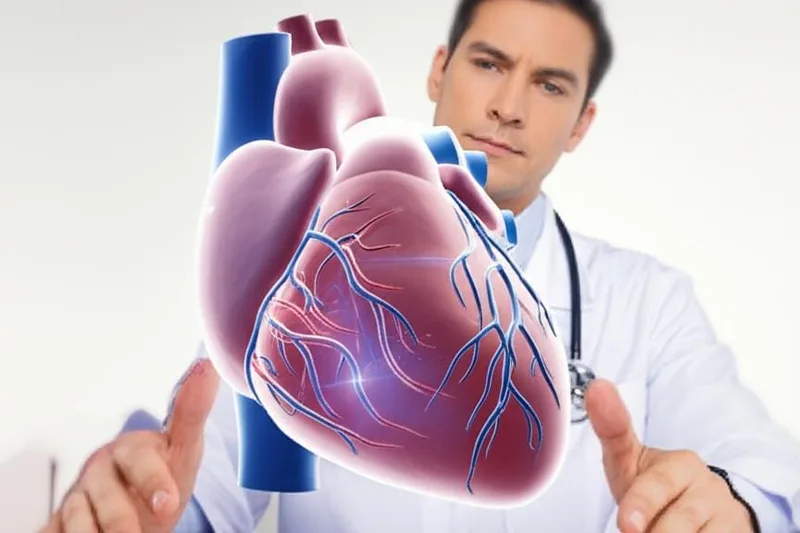
Do you know about this very important blood vessel in your heart? (Left Anterior Descending Artery) Let's talk!
How the Body WorksSeptember 5, 2025

Do you know about this very important blood vessel in your heart? (Left Anterior Descending Artery) Let's talk!

Have you ever heard of the `(Left Anterior Descending Artery)` or `(LAD artery)`? Maybe your doctor has talked about it, or you have read about it somewhere. This is a very important blood vessel for our heart. In fact, it is like the lifeblood of our heart. So, today we will talk about this `(LAD artery)`, what it does, the problems it can cause, and how we can take care of it in a simple way that you can understand.

What is this `(Left Anterior Descending Artery)`? It's like a map of the heart!

Simply put, your `(Left Anterior Descending Artery)`, or let's call it `(LAD)` for short, is one of the two branches of the `(left main coronary artery)` on the left side of your heart. The word ``Anterior'' means ``in front.'' This means that this blood vessel mainly supplies blood to the front of your heart. Think about it, the main pumping chamber on the lower left side of your heart, the `(ventricle),'' is what receives the most oxygenated blood from this `(LAD). Not only that, but there is a muscle tissue that separates the walls of the heart, we call it `( Septum ),'' and this `(LAD)` also supplies blood to it.
Sometimes doctors also call this blood vessel the ``anterior interventricular branch.`` Although the name may sound a bit complicated, its job is very simple – to carry blood to the heart!
But here's something to be aware of: If this `(LAD)` artery becomes completely blocked, it can cause a heart attack. This is often called a `(widowmaker heart attack )`. Hearing this name can be a bit scary, because this type of heart attack can often be fatal. That's why we need to be so careful about this `(LAD)`.

What is really going on with `(LAD)`? The main supplier of the heart!

As we mentioned earlier, the LAD is the largest coronary artery in your heart. These are a special type of blood vessel in the heart, part of the circulatory system that carries blood throughout our bodies. Can you imagine, almost half of the blood your heart needs is carried through this LAD! That means it is essential for the healthy functioning of the heart.

Where is this `(LAD)`?

We say that the main coronary artery on the left side of your heart divides into two branches. Those two branches are the Left Anterior Descending Artery and the Circumflex Artery. Just like a road divides into two, this main artery also divides into two parts here. Doctors also call this a bifurcation. This LAD artery is located inside the protective membrane on the outside of your heart, the epicardium. It runs along the septum of the heart, like a little canal, from the base of the heart to the apex of the heart.

What are the branches in `(LAD)`?

This `(LAD)` duct divides into two smaller branches:
  • Diagonal branches: These branches supply blood to the front and bottom parts of the ventricle, which is located on the lower left side of the heart.
  • (Septal branches): These branches supply blood to the anterior two-thirds of the septum of the heart.
These branches are responsible for ensuring that different parts of the heart receive adequate blood supply.

What is "left-dominant circulation"?

This is a bit of a deep subject, but let's try to understand it simply. There is another artery called the ``posterior descending artery (PDA)`` that carries blood to the lower and back parts of your heart and to part of the ``septum``.
  • Right-dominant circulation : If you take ten people, about eight of them have blood coming from the main coronary artery on the right side.
  • Left-dominant circulation: However, in about one in ten people, this PDA receives blood from a branch of the left main coronary artery (either the LAD or the circumflex artery).
  • Codominant circulation: In about two out of ten people, the PDA is supplied by the LAD or circumflex artery, as well as the right coronary artery.
This can vary from person to person. It's just a natural position of the heart.

What are the medical conditions that affect `(LAD)`?

This is where we need to focus the most. Inside this LAD, fatty deposits, which we call plaque, can build up. This condition is called atherosclerosis . It's like rust building up in a water pipe. In some people, this plaque builds up so much that the LAD becomes completely blocked. What happens then? Oxygen-rich blood can't get to the heart. That's when we get the widowmaker heart attack we talked about earlier, which is often fatal. Although the term widowmaker may seem to only apply to men, this heart disease can affect both men and women.
Imagine, Nishantha is about 50 years old. He is a bit overweight and has diabetes. One day, he suddenly started sweating with severe chest pain. When he was rushed to the hospital, it was discovered that he had a `(widowmaker heart attack)`. Fortunately, he survived because he received prompt treatment. This shows how urgent this was.
Also, in a very small number of people, the LAD artery may be slightly narrowed or shortened at birth. This condition is called hypoplastic left anterior descending artery. This also increases some risks:

What are the symptoms of a blockage in the LAD?

If the LAD becomes narrowed or blocked, you may experience chest pain (angina) . This can be either stable angina or unstable angina. A heart attack is a medical emergency that requires immediate treatment . If you have any of these symptoms, call 911 (emergency number 1990 in Sri Lanka) immediately:
  • Chest pain or tightness (Angina)
  • Feeling cold and sweating
  • Dizziness, a feeling of spinning in the head
  • Fatigue and weakness
  • Heart palpitations
  • Nausea
  • Difficulty breathing
  • Pain in the shoulder or arm (especially the left arm)
If you have one or more of these symptoms, never ignore them.

How do doctors check the health of your `(LAD)`?

Doctors use tests like these to check the condition of your coronary arteries, especially the LAD:
  • Cardiac catheterization: This checks for coronary artery disease .
  • Coronary computed tomography angiogram (CCTA): This can produce three-dimensional (3D) images of the blood flow in the heart.
  • Intravascular optical coherence tomography (IVOCT) or intravascular ultrasound (IVUS): These methods can take very clear, high-resolution images from inside an artery.
  • Fractional flow reserve (FFR): This measures the pressure of blood inside an artery, which can help determine how severe a blockage is.
These tests can accurately determine if there is any blockage or narrowing in your LAD.

How are conditions affecting the `(LAD)` treated?

To open a blocked LAD, you may need to undergo cardiac catheterization, along with procedures such as angioplasty and stent placement .
  • Angioplasty is a procedure that involves inserting a small balloon into an artery, inflating it to open up the blocked area, and widening the artery.
  • A stent is a small wire mesh tube that helps keep the artery from narrowing again after angioplasty.
These treatments can restore blood flow to the heart and reduce the risk of heart attack.

How can I protect my LAD artery? The path to a healthy heart!

There are many things you can do to keep your circulatory system, including your (LAD), healthy. Here are the most important things:
  • Eat a heart-healthy diet: This can help lower cholesterol levels. Foods that are low in oil, salt, and sugar, and high in fruits and vegetables are good.
  • Reduce your alcohol use: If you are addicted to alcohol, get help.
  • Exercise and maintain a healthy weight: Walking for at least 30 minutes a day is also a great thing.
  • Be aware of your fat types: Reduce unhealthy fats (saturated and trans fats).
  • Take steps to control diabetes and high blood pressure: Reducing salt intake also helps with this.
  • Ask for help to quit smoking: Smoking is one of the biggest enemies of the heart.
By doing these things, you can keep not only your `(LAD)`, but your entire heart and body healthy.

Finally, what to remember (Take-Home Message)

By now you probably understand that the `(Left Anterior Descending Artery)` is a blood vessel that is essential for the health of our heart. A blockage in this can lead to a fatal condition, especially a `(widowmaker heart attack)`. This is because this is the main artery that supplies the left side of the heart with the most blood. There is a high chance that this `(LAD)` artery `(plaque)` will accumulate and `(atherosclerosis)` will develop, which can lead to coronary artery disease. If that happens, you will have to undergo treatment such as `(angioplasty)` and `(stent)` to open the artery and reduce the risk of heart attack. But the best thing is to prevent such conditions before they occur. By talking to your doctor and making the necessary changes to your lifestyle and diet, you can keep your heart, that is, your `(LAD)`, healthy and happy. Your heart will thank you!
⚠️ Important: The medical articles and information on Nirogi Lanka are for general awareness only, and are by no means a substitute for professional medical advice, diagnosis, or treatment. For any medical problem you have, consult a qualified physician immediately.

💬 Comments (0)

No comments yet. Be the first to share your thoughts here.

Add Your Comment

Please calculate: 1 + 7 =