

If you are a person undergoing treatment for cancer, or if you have a family member or friend who is, you may have wondered about this. Cancer treatment is a life-saving treatment. However, sometimes this treatment can have an impact on our hearts. Today, we are going to talk about a group of specialists who come to our aid at such times.
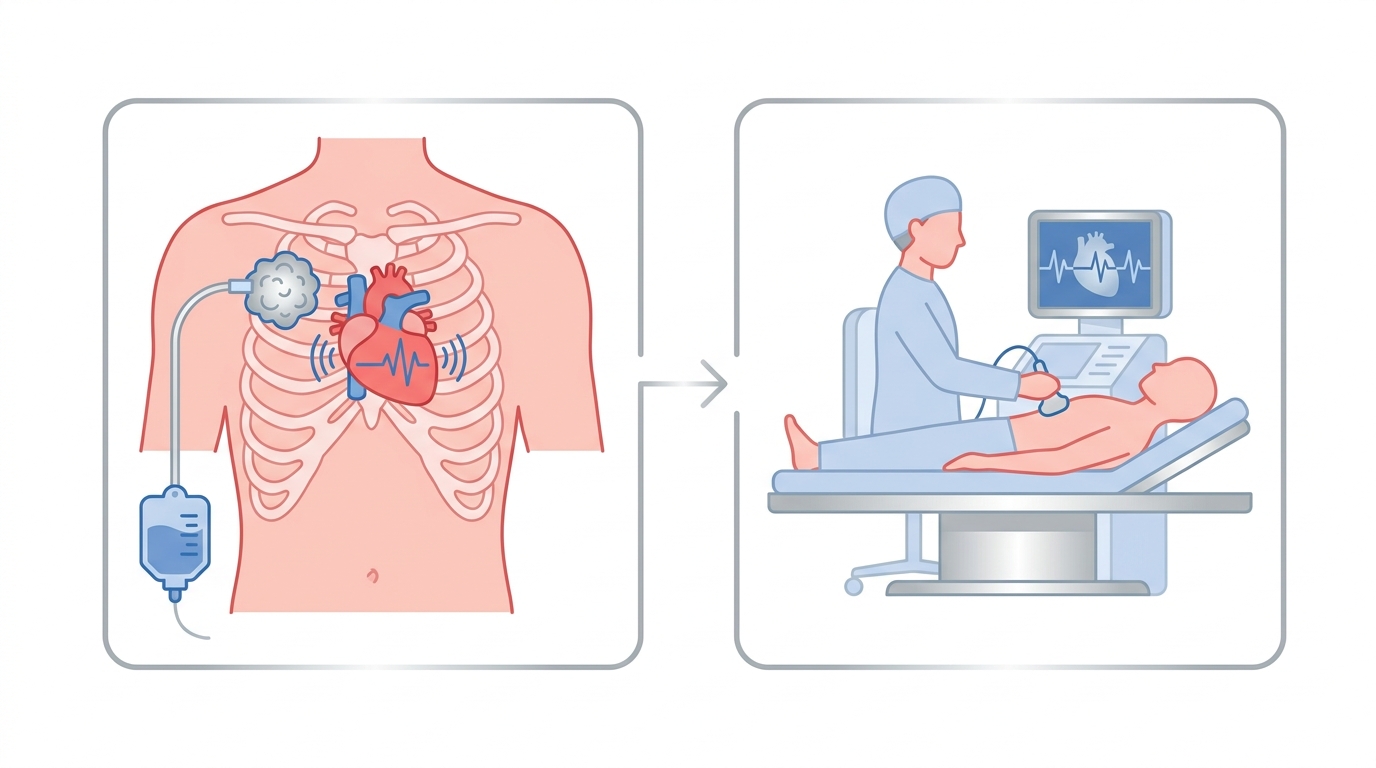
Who is this cardio-oncologist?
Simply put, these are doctors who pay special attention to the heart health of cancer patients when treating them. Now look, there are cardiologists, and there are oncologists. A ``cardio-oncologist'' doctor is either a cardiologist or an oncologist. However, in addition to their primary specialty, they have received special training to manage heart disease in cancer patients.
You know, cancer treatments, like chemotherapy and radiation therapy , help people live longer. That's great. But unfortunately, these treatments can have side effects . Some of these are new heart disease or worsening of existing heart disease. The type of damage to your heart and the risk of problems can vary greatly from treatment to treatment. This type of damage to the heart is called cardiotoxicity , or radiation heart disease.
This is why a new subspecialty of medicine called Cardio-Oncology has emerged. Cardio-Oncology focuses on diagnosing, monitoring, and treating cardiovascular disease caused by cancer treatment. The goal is to minimize the side effects of cancer treatment on your cardiovascular system.
These cardio-oncology specialists help you get the most effective cancer treatment possible, with the least amount of damage to your heart. They work with other healthcare providers to plan your treatment to fit your needs.
What kind of training do these specialists receive?
These ``Cardio-Oncologists`` are doctors who already have expertise in their field, either ``Cardiology`` or ``Oncology.`` In addition to their specialist training, they receive additional training to learn the following:
- What are the side effects of cancer treatment that affect your cardiovascular system?
- How cancer affects the entire body, especially the cardiovascular system.
- How to screen for cardiovascular risk before, during, and after cancer treatment.
- How to identify and manage cardiovascular disease in people with cancer.
- How to decide which chemotherapy treatments are safe for your heart and which ones pose the highest risk.
- How to monitor your heart muscle and heart valves for side effects of cancer treatments, both during and after treatment.
This training is often provided through an intensive specialist training program (Fellowship) lasting about a year. It includes:
- Direct teaching through lectures.
- Attending conferences.
- Gain practical experience with patients in Cardio-Oncology Clinics.
- Research experience.
Some cardio-oncology specialists even hold board certification from the International Cardio-Oncology Society, which means their knowledge and skills are internationally recognized.
Why are these cardio-oncology specialists so important?
As cancer treatments improve day by day, the importance of these `(Cardio-Oncologist)` doctors has increased even more. The reason for this is that the number of people recovering from cancer is steadily increasing. Just think, in 2016, there were more than 15 million cancer survivors in the United States alone. Researchers predict that this number will increase to 26 million by 2040! So, as the number of people recovering from cancer increases, the number of people experiencing side effects from treatment also increases, right?
About seven out of every ten cancer survivors are over the age of 65. As these cancer survivors age, they may face increased risks of heart disease due to their cancer treatments. In addition, the risk increases with age, lifestyle factors, and other related diseases. So, it is essential to treat them taking all of these factors into account .
These cardio-oncology specialists have the training and experience needed to support this growing population.
What exactly does this cardio-oncologist do?
These people diagnose and treat cardiovascular problems in cancer patients. The first thing they need to do is to find the exact underlying cause of the problem. For example, it is not always clear whether a condition like heart failure is caused by cancer treatment. Often, people with cancer have otherThere may be risk factors for heart disease . So, these ``Cardio-Oncologists'' doctors have to find the real cause among these various possible causes of heart disease.
Also, they have to balance two goals that can sometimes conflict with each other:
- The need for treatment for your cancer.
- The need to protect your heart .
This is where multidisciplinary collaboration becomes so important. Cardio-Oncologists work with other specialists to determine the best treatment plan for each individual.
Here are some of the tasks a cardiologist performs as part of their duties:
- Before starting cancer treatment, a detailed assessment of your cardiovascular risk is performed.
- State-of-the-art imaging tests and diagnostic tests are performed to detect any problems with the heart or blood vessels.
- A treatment plan is created to target your cancer in a way that causes as little damage to your heart as possible.
- You will be monitored throughout your cancer treatment and any heart problems will be identified quickly.
- Follow-up care is provided even after your cancer treatment is complete.
- Surgery and other treatments are recommended for heart disease caused by cancer treatment.
These ``Cardio-Oncologists'' help manage a variety of heart conditions. Here are a few examples:
- Heart rhythm irregularities (Arrhythmias), such as Atrial Fibrillation and Torsade de Pointes.
- Coronary Artery Disease.
- Heart Failure.
- Heart Valve Disease.
- High blood pressure (Hypertension).
- Restrictive Cardiomyopathy.
Who receives treatment from these cardio-oncology specialists?
These doctors care for people with cancer who have heart disease or risk factors for heart disease. They also treat people who develop heart disease after cancer treatment. Some cardiotoxicities appear immediately. But others appear years after cancer treatment (maybe 10 years or more). That sounds scary, doesn't it? But don't worry, there are solutions for that too.
Cardio-Oncologist doctors help people like:
- People who are about to start cancer treatment and have one or more risk factors for heart disease. Examples of these are obesity , diabetes, and high blood pressure .
- Those who are about to start cancer treatment, as well as those who already have heart disease.
- People who develop heart symptoms while receiving chemotherapy or radiation therapy. Examples of these are swelling (edema) , fatigue , chest pain, and irregular heartbeat (arrhythmia).
- People who have previously undergone cancer treatment and are now experiencing new heart problems.
- People who have developed heart problems due to cancer treatment and need heart surgery or other treatments.
- People with a heart tumor.
Do I also need to see a cardiologist?
The best person to ask about your care needs is your primary care provider or the doctor who is treating your cancer (oncologist). To see a cardio-oncologist, you will need a referral from your doctor.
If you fall into one of these categories, you may also need to see this specialist:
- If you have heart disease and have recently been diagnosed with cancer.
- If you have been treated for cancer in the past, even when you were young.
- If you are currently undergoing treatment for cancer.
When should I see a cardiologist?
The amount of time you need to see a cardio-oncologist varies greatly from person to person. You may start receiving care before you start cancer treatment and then have follow-up appointments for years. You should follow the instructions from your medical team about how often you should visit.
Cardiovascular imaging tests, such as echocardiograms , are a very important part of your heart-cancer care. This is true even after your cancer treatment is over. These tests can show early signs of heart disease. So, it's very important to keep all your doctor appointments .
Coming out of cancer treatment is a big step. Then, finding out that you have heart problems and need treatment for them can be overwhelming. It can feel like you've finished a marathon and suddenly have to run another one. But remember, you're not alone in this journey . Cardio-oncologists are specialists who can help you manage heart disease, whether you're at risk or have been diagnosed with it. Talk to your family doctor or oncologist to learn more about how a cardio-oncologist can help you.
The most important things to remember from what we have discussed (Take-Home Message)
Okay, so, shall we simply remind you of some of the most important things to keep in mind from what we've talked about?
- (Cardio-Oncologist)This means a doctor who pays special attention to the heart health of cancer patients when treating them.
- Cancer treatments (e.g., `(Chemotherapy)`, `(Radiation Therapy)`) can cause side effects on the heart. This is called `(Cardiotoxicity)` .
- These specialists help to minimize damage to the heart while providing the best treatment for cancer.
- If you have heart disease with cancer, have risk factors for heart disease, or develop heart symptoms after cancer treatment, talk to your doctor about seeing a cardio-oncologist.
- It is very important to pay constant attention to your heart before, during, and after cancer treatment.
Remember, it can be difficult to think about your heart health while fighting cancer. But, there are experts out there to help you and take care of you. So don't be afraid!
` Cardio-oncologist, cancer treatment, heart disease, side effects, chemotherapy, radiation therapy, heart health
Doctor's Note
A cardio-oncologist is a cardiologist specially trained to protect the heart health of patients undergoing cancer treatment (chemotherapy or radiation therapy). Some anticancer drugs can weaken the heart muscle (cardiotoxicity), cause irregular heartbeat or raise blood pressure. Therefore, proper monitoring of cardiac function before, during and after cancer treatment is essential.
❓ Some more questions you may encounter (FAQ)
Who can have heart effects from cancer treatment?▼
Patients over 60 years of age, with preexisting heart disease or high blood pressure, and receiving high doses of anticancer drugs are at increased risk.
What are the basic tests to detect a heart problem?▼
ECG ECG, echocardiogram and cardiac enzyme tests (Troponin) are commonly used.
Should I still see a cardiologist after cancer treatment?▼
Yes, long-term follow-up is important as the effects of some medications may appear even years after treatment ends.


💬 Comments (0)
No comments yet. Be the first to share your thoughts here.
Add Your Comment