

Do you notice painful blisters forming on your lips or around the corners of your mouth? Or perhaps you are feeling uncomfortable because of a genital herpes infection? If your doctor prescribed Acyclovir cream, you are in the right place to learn how to use it safely and effectively. Let us walk through everything you need to know in simple terms.
Skin infections caused by viruses can be frustrating, painful, and hard to manage on your own. Using your prescription medicine correctly helps you heal faster and keeps the infection from spreading. Read on to find clear, step-by-step guidance designed to support your treatment journey.
Key Takeaways at a Glance
- Acyclovir cream is an antiviral medicine that slows down virus growth.
- It controls outbreaks of cold sores and genital herpes, but it does not cure the virus completely.
- Always wash your hands before and after applying the cream to prevent spreading the infection.
- Complete your full prescribed treatment course even if your skin starts to look better.
- Seek medical help right away if you notice severe allergic reactions like swelling of the face or throat.
Know your body mass index (BMI) and weight classification
What is Acyclovir?
Simply put, Acyclovir is an antiviral medicine. This means it fights against specific viruses in your body. You might see it sold under brand names like Zovirax. Doctors commonly prescribe this cream to control infections caused by the herpes virus group, such as:
- Cold sores on your lips and around your mouth.
- Genital herpes infections in the intimate areas.
However, you must understand one very important detail. This cream only controls how the virus behaves. It stops the virus from multiplying and spreading further. It cannot kill the virus completely or remove it from your body. Because of this, even while using the medicine, you can still pass the virus to someone else.
Remember that because this is an antiviral medicine, it does not work on regular colds, flu, or skin sores caused by bacteria.
Things to Tell Your Doctor Before Using This Medicine
Your doctor needs a complete picture of your health before prescribing this cream. Make sure you share the following details openly during your visit.
- Allergies: Tell your doctor if you are allergic to Acyclovir, or any other medicines, foods, or dyes used in creams.
- Skin Conditions: Let your doctor know if you have large, burned, or severely damaged skin areas where you plan to apply the cream.
- Pregnancy and Breastfeeding: Inform your doctor if you are pregnant, planning to become pregnant, or breastfeeding a baby. Always get medical advice before using any skin cream during these times.
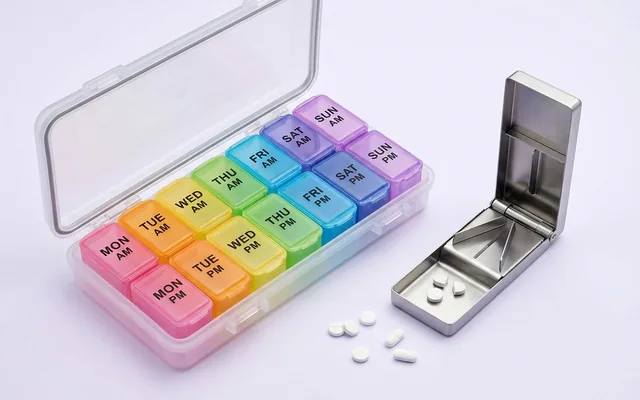
Airtight double-lock weekly medication organizer with removable day pods and a surgical stainless-steel tablet cutter for accurate half-tablet splitting and adherence.
View Clinical Details →How to Apply the Cream Correctly
To get the best results from your medicine, you must use it correctly every single time. Follow these simple steps carefully.
1. For skin use only: This medicine is strictly for external use on your skin. Never swallow it or put it inside your body.
2. Wash your hands: Wash your hands thoroughly with soap both before and after you apply the cream. This stops the infection from spreading to other parts of your body.
3. Use protection: If possible, wear a finger cot or a clean disposable glove when applying the cream. This keeps your bare fingers from spreading the virus to sensitive areas like your eyes.
4. Apply a thin layer: You do not need a thick layer of cream. Just put enough to cover the sore or blister area completely with a thin layer.
5. Protect your eyes: Keep the cream away from your eyes. If it accidentally gets into your eyes, rinse them thoroughly with clean water for several minutes.
6. Follow your schedule: Apply the cream exactly as your doctor told you, keeping to the correct number of times each day (for example, 5 times a day every 4 hours).
7. Finish your course: Do not stop early just because your skin feels better. To keep the virus under control, use the cream for the full number of days your doctor ordered.
Using It for Young Children
If you need to use this medicine on a young child, extra care is required. Always talk to your doctor first to get specific safety guidelines before applying it to a child's skin.
What to Do If You Miss a Dose or Use Too Much
If you forget to apply your cream:
If you miss a dose, apply it as soon as you remember. However, if it is almost time for your next scheduled application (within about an hour), skip the missed dose. Just stick to your normal schedule. Never apply two doses at the same time to make up for a missed one.
If you use too much (Overdose):
Because this cream goes on the skin, severe poisoning is rare. However, if you think you used way too much, or if someone swallowed the cream by mistake, call your local poison control center right away. In the US, call 911 or poison control at 1-800-222-1222. In the UK, call 999 or NHS 111. You can also visit your nearest Emergency Department (ER or A&E).
This medicine is for you alone. It was prescribed specifically for your health condition. Never share your prescription medicine with other people.
Possible Side Effects
Like all medicines, Acyclovir cream can cause side effects in some people. Most effects are mild, but you should know what to watch for.
| Side Effect Type | What You Should Do |
|---|---|
| Severe Allergic Reactions: Skin rash, hives, intense itching, swelling of the face, lips, tongue, or throat. | Stop using the cream right away and go to the nearest emergency department for urgent medical care. |
| Mild Application Site Reactions: Mild burning, stinging, tingling, dry skin, flaking, or mild crusting where you applied the cream. | These usually fade away within a day or two. If they bother you or do not go away, talk to your doctor. |
When to Call Emergency Services
Call 911 (US/Canada), 999 (UK), or your local emergency number right away if you experience trouble breathing, sudden swelling of your tongue or throat, or widespread severe hives. These are signs of a dangerous allergic reaction that needs immediate medical treatment.
Other Important Things to Know
- Other Skin Products: Do not put other creams, makeup, lip balms, or sunscreens on the treated sore unless your doctor gives you permission.
- Sexually Transmitted Infections: If you are treating genital herpes, avoid sexual contact until your treatment course is completely finished. This prevents passing the infection to your partner. Your partner may also need medical evaluation and treatment. Talk to your doctor about this.
- Storing Your Medicine: Keep your cream tube in a dry place at room temperature (between 15°C to 25°C or 59°F to 77°F), well out of reach of young children and pets. Keep the cap tightly closed. Safely throw away any leftover medicine after the expiration date.
💡 Take-Home Message
Acyclovir cream is a helpful antiviral treatment that controls cold sores and herpes outbreaks, but it does not cure the virus permanently. Always follow your doctor's exact instructions and finish your full treatment course. Practice good hygiene by washing your hands before and after application, and protect your eyes from accidental contact. If you experience severe allergic signs like facial swelling, seek emergency medical care right away.


No comments yet. Be the first to share your question or experience below.