

Have you recently had an operation, especially a surgery on your belly? Or do you often feel a strange pulling pain in your stomach that your Primary Care Physician (PCP) or Family Doctor cannot quite explain? Sounds familiar, right? Sometimes, the hidden cause is something you might not expect at all. Just think about it for a second—what goes on beneath the skin after an operation isn't always visible on the outside.
Inside your body, tissues and organs can sometimes stick together as they heal. In medical terms, we call this condition abdominal adhesions (postoperative peritoneal adhesions). This name might sound new to you, but it is much more common than most people think. Let us break down everything you need to know about adhesions in simple, everyday words. Have you ever wondered why some people bounce right back after surgery while others deal with lingering aches? Let's explore that together.
📌 Key Takeaways
- Internal Scarring: Adhesions are bands of fibrous scar tissue that form inside your body after surgery, injury, or infection.
- Silent Condition: Most adhesions cause no symptoms at all, but some can lead to persistent pain or serious gut blockages.
- Urgent Red Flags: Severe stomach cramps, persistent vomiting, and abdominal bloating after past surgeries require immediate emergency medical care.
- Diagnostic Limits: Doctors usually confirm internal adhesions accurately only during a direct surgical procedure like a laparoscopy.
- Treatment Paradox: While surgery can cut and remove troublesome adhesions, they can sometimes grow back during the body's healing process.
Know your body mass index (BMI) and weight classification
What Are Adhesions?
Simply put, adhesions are internal scars that form inside your body. Think about what happens when you get a scrape on your skin. Once the wound heals, a visible scar stays behind on the outside. Pretty surprising, right? We don't usually think about our internal organs forming scars in the exact same way, but they do.
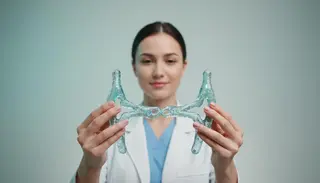
Internal scars can form between two organs or tissues that should normally remain separate and slide smoothly against each other. These internal bands can look like thin, clear sheets of cellophane, or they can feel like thick, tough strings. The main reason these adhesions form is your body's natural healing process. When your tissues suffer damage from a surgical operation, an infection, physical trauma, or even radiation therapy, your body right away goes to work to repair itself. During this healing process, if a healing organ touches another nearby organ, your repair cells can sometimes fail to tell them apart. As a result, the body creates a band of scar tissue to connect them together. That unwanted connection is an adhesion.
Where Do Adhesions Commonly Form?
Adhesions can form in almost any part of your body where tissues heal, but we doctors see them most often in the abdomen after procedures like appendectomies, gallbladder removals, or cesarean sections. Let us look closely at where they happen and what they do. When you have surgery in your pelvic or abdominal cavity, the natural movement of your intestines and internal organs means that healing surfaces frequently come into contact with one another. When those surfaces stick, it can restrict normal organ movement. Makes sense, right?
What Are the Symptoms of Adhesions?
The most important thing to know is that many adhesions cause zero symptoms. They can sit quietly inside your body for years without causing you any trouble or discomfort. Symptoms only appear when an adhesion starts pulling on an organ or blocks its normal work. When symptoms do show up, what do they feel like?
If you have gut adhesions, you might feel a sharp pulling sensation in your abdomen when you exercise, stretch, or bend over. Be honest, you've probably tried twisting or stretching to figure out where a random ache is coming from, haven't you? In women, pelvic adhesions near the womb or vaginal tissues can cause pain during sexual intercourse or pelvic exams. Lung adhesions can make deep breathing painful or cause shortness of breath. Similarly, heart-related adhesions can sometimes lead to chest discomfort after cardiac surgeries. Just like we said a moment ago, these symptoms depend entirely on where the scar tissue forms and how much it pulls on surrounding structures.
| Symptom / Situation | What It Might Mean / What You Should Do |
|---|---|
| Mild, dull pulling pain when stretching after past surgery | What It Might Mean: Possible mild internal scar tissue stretching What You Should Do: Rest, apply a warm compress, and mention it at your next routine family doctor visit. |
| Sharp abdominal cramps that come and go after eating | What It Might Mean: Potential partial slowing of digestive flow What You Should Do: Eat smaller, frequent meals; stay well-hydrated; consult your primary care physician. |
| Severe, sudden cramping, vomiting, and inability to pass gas | What It Might Mean: Possible acute bowel obstruction What You Should Do: Call your local emergency number (911, 999, 112, or 000) or go straight to the nearest Emergency Department. |
Bowel Obstruction: This Is a Medical Emergency!
The most serious complication caused by abdominal adhesions is a bowel obstruction (intestinal blockage). We doctors view this condition as an urgent medical emergency that requires prompt care. In this condition, an internal scar band pinches or twists a section of your intestine so tightly that digested food, liquids, and gas cannot pass through. Recognizing the warning signs early can save your life. Look out for:
- Sudden, severe cramps in your belly that come in waves every few minutes and often worsen after eating.
- Frequent vomiting that accompanies the stomach pain, though vomiting may temporarily relieve your nausea.
- Severe stomach bloating and noticeable swelling across your abdomen.
- Loud, high-pitched sloshing or gurgling sounds echoing from inside your gut.
- As the blockage worsens, the pain becomes constant, stomach noises stop entirely, and you can no longer pass gas or have a bowel movement. A fever may also develop.
🚨 When to Seek Emergency Care (Red Flags)
If you notice any of these warning signs, don't wait — call your local emergency number right away (911 in the US/Canada, 999 in the UK, 112 in Europe, or 000 in Australia) or go to the nearest hospital Emergency Department (ER / A&E):
- Severe, unbearable, or steadily worsening abdominal pain that does not go away with rest or over-the-counter pain relievers like acetaminophen (paracetamol).
- Persistent, forceful vomiting where you cannot keep any liquids down.
- Complete inability to pass gas or have a bowel movement accompanied by a distended, hard belly.
- High fever, chills, dizziness, or fainting alongside severe stomach cramps.
How Do Doctors Diagnose Adhesions?
Diagnosing adhesions is tricky because standard tests like X-rays, ultrasounds, and CT scans cannot easily see thin bands of scar tissue. While these imaging scans can spot a bowel obstruction or fluid buildup, they cannot always confirm that adhesions caused it. See? That's exactly why we always say imaging is only part of the puzzle.
In fact, doctors can only confirm the presence of adhesions with one hundred percent certainty during an actual surgical procedure. To do this when symptoms are severe or unexplained, surgeons often use a minimally invasive method called laparoscopy (keyhole surgery). During a laparoscopy, the doctor makes a tiny cut in your belly and inserts a lighted camera to look directly inside your abdominal cavity. If the surgeon spots troublesome adhesions during this check, they can often cut and remove them right then and there.
What Treatments Are Available?
If your adhesions cause no symptoms or health problems, you do not need any treatment at all. However, if painful symptoms or dangerous blockages happen, medical treatments are available. The primary treatment involves surgery to cut and release the stuck tissues. Medical experts call this surgical procedure adhesiolysis (surgical lysis of adhesions).
There is one frustrating catch with this treatment. Because any surgery causes trauma to your tissues, the body's natural healing process can sometimes trigger brand new adhesions to form in the exact same spot. Because of this, we doctors only recommend surgery when symptoms are severe, recurrent, or causing dangerous complications like bowel obstructions.
✔️ Do's and ❌ Don'ts
- DO follow all post-operative instructions given by your surgical team and family doctor.
- DO stay well-hydrated and eat balanced, fiber-rich meals (like oatmeal, cooked vegetables, and lean broths) to support smooth digestion.
- DO reach out to your local clinic if you notice persistent, unusual pulling or cramping weeks after surgery.
- DON'T ignore severe, wave-like stomach cramps combined with vomiting or an inability to pass gas.
- DON'T take heavy prescription pain medications or strong laxatives for unexplained post-surgical pain without talking to your doctor first.
Can You Prevent Adhesions from Forming?
While surgeons cannot prevent adhesions completely every single time, modern surgical teams take careful steps to lower your risk during operations. These preventive measures include:
- Keeping the total duration of the surgery as short as possible.
- Handling delicate internal tissues with extreme care and gentleness.
- Keeping exposed internal body tissues moist throughout the procedure with sterile saline.
- Using specialized starch-free and latex-free surgical gloves.
- Placing special barrier films (anti-adhesion barriers) between organs in certain cases to keep them from sticking together during healing.
If you are preparing for an upcoming surgery, talk openly with your surgeon about these preventive techniques. Do you recall what we mentioned at the very beginning about how healing works? Minimizing tissue irritation is the best defense.
💡 Take-Home Message
- Adhesions are internal scar bands that develop inside the body, most commonly after previous surgeries.
- Most scar bands cause no harm, but some lead to chronic pain or dangerous bowel blockages.
- Severe stomach cramps, vomiting, and bloating after past surgeries can indicate a bowel obstruction, which is a medical emergency requiring immediate attention.
- Doctors usually confirm the presence of internal adhesions accurately only during a direct surgical examination.
- Treating adhesions with surgery helps relieve pain, but scar bands can sometimes form again during the healing process.
- Never hesitate to talk to your doctor if you experience unusual symptoms after any surgical procedure.





No comments yet. Be the first to share your question or experience below.