Are you looking for a remedy for a minor wound on your skin? Let's learn about this cream! (Triple Antibiotic Ointment)

Are you looking for a remedy for a minor wound on your skin? Let's learn about this cream! (Triple Antibiotic Ointment)

While we do our daily work, sometimes we get small scrapes and cuts. Sometimes we get a little burn. At times like these, you think, 'Oh, I don't know if this will heal,' right? Today we are going to talk about a medicine that can be used at times like these. Many people call this `(Triple Antibiotic Ointment)`, which means it is an ointment that contains three types of antibiotics .

What is this medicine?

Simply put, this is an ointment, which means it is a cream-like ointment that is applied to the skin. It mainly contains three types of antibiotics – `(Bacitracin)`, `(Neomycin)`, and `( Polymyxin B )`. The main thing that these three types of medicine do together is that when you have a small wound or scratch on your skin, it becomes a bacterial infection , prevents it from getting worse, and prevents it from getting worse. Think of it like three guards, each one fighting a different type of bad bacteria and protecting the wound. That is why it is called `(Triple Antibiotic)`. You can also buy it at the pharmacy under different brand names, such as `(Neosporin)`. However, doctors may sometimes recommend it for other skin problems as well. So if you have any questions about this medicine, it's best to ask your doctor or the person at the pharmacy.

What should I tell the doctor before using this medicine?

Okay, now if you're thinking about using this cream, or if a doctor has told you to use it, there are a few things you should definitely tell your doctor or anyone else who is treating you. These are very important , because only then will they be able to decide for sure if this medicine is really right for you, or if you need another treatment.

  • If you are bitten or scratched by an animal: Imagine that an animal like a cat or dog has scratched you or caused a wound by chewing on you. This cream alone is not suitable for wounds like this. This is because animals can have dangerous germs in their mouths and claws. They may require separate treatment, possibly a tetanus injection.
  • If it's a deep wound: If it's not just a small scratch, but a deep, large wound like a knife cut, definitely tell the doctor about it. Because applying a cream like this to deep wounds may not control the infection inside the wound. You may even need stitches.
  • A significant burn is: Not just a little red from a hot shower, but a big burn, blisters, and peeling skin. You should also mention that. Larger burns require specialized treatment, and this cream alone may not be enough.
  • If you have an allergy to any of the following medications: Bacitracin, Neomycin, Polymyxin B, or any other medication, food, skin product, perfume, or preservative in this cream, you should definitely tell your doctor if you have had an allergic reaction in the past. Otherwise, applying this cream may cause the allergy to come back and make the wound worse.
  • If you are pregnant or trying to get pregnant: Not all medications are safe to use during pregnancy. Some medications can affect the baby. So it is very important to tell your doctor about this.
  • If you are a breastfeeding mother: If you are breastfeeding, tell your doctor. Some medications can pass through breast milk to your baby. It is best to talk to your doctor to make sure it is safe.

How should I use this medicine?

Okay, so let's see how to use this cream exactly. This is for external use only . So definitely don't take it by mouth, right? That can be dangerous.

1. Wash your hands: Wash your hands thoroughly with soap and water before and after applying the medicine. This is very important, otherwise germs on your hands can get into the wound, or you can cause problems if you touch your eyes or mouth with the medicine on your hands.

2. Clean the wound: If possible, before applying the medication, apply a little soap to the wound, gently wash it with lukewarm, clean water, and pat it dry with a clean cloth or gauze. But do not rub or scratch the wound too hard. Doing so can make the wound worse.

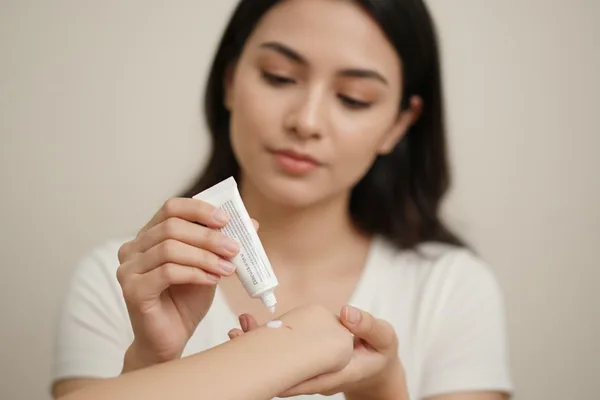
3. Apply as a thin film: Take a small amount of the medicine on your finger (or a clean cotton bud) and apply it as a thin film on the affected area and a small area around it. You don't need to apply it too thickly or in a large layer. There is no special benefit to doing so.

4. Use it on time: Follow the doctor's instructions on how many times a day and for how many days to take it. Usually, you can take it from once to three times a day. This information is clearly stated on the medicine's label.

5. Do not use more than the prescribed amount: Do not use more than the doctor has prescribed, or more often than the prescribed amount. Doing so will not help you recover faster, and may cause side effects .

6. Covering the wound: After applying the medication, if necessary, you can cover the wound with a piece of clean gauze or an adhesive plaster (like a `Band-Aid`). This will prevent dust, water, and germs from entering the wound, and it will also reduce the chance of the wound rubbing against clothing. However, it is best to ask your doctor about this. Some wounds are better left uncovered.

When used with small children

If you are using this medicine on your young child, be sure to ask a pediatrician about it. Because young children's skin is very sensitive, and their reaction to medicines may be different from adults. Therefore, special care is definitely needed. Use it exactly as the doctor says, in the amount and manner prescribed.

What to do if you take too much medicine or get it in your mouth? (Overdosage)

If you think you have accidentally taken too much of this medicine, or if a small child has accidentally put it in their mouth, do not panic and take them to the nearest hospital emergency room . Or call the National Poisons Information Centre - telephone number 0112686143 - for advice immediately.

Important: This medicine is for your own use only. Even if a friend or relative has the same injury as you, do not give it to them without first consulting a doctor. Everyone's situation is different.

What if I miss a dose?

Let's say I forgot to take my medicine this morning/afternoon/evening. If that happens, don't worry. Take the missed dose as soon as you remember . However, if it is very close to the time of your next dose when you remember (for example, within two or three hours), skip the missed dose and take the next dose at the scheduled time. Never take two doses at once (Do not use double or extra doses) . Doing so will not make you feel better, and may cause side effects.

What other things may interact with this medication?

Generally, you would not expect this `(Triple Antibiotic Ointment)` to interact with other medications, especially since it is a topical cream. However, you should not apply any other cream, ointment, liquid, or powder to the affected area without first consulting your doctor or pharmacist . This may interfere with the effectiveness of the two medications, or may have adverse effects on the skin.

It's a good idea to tell your doctor about all the medications you take (not just those prescribed by your doctor, but also vitamins you buy from the pharmacy, traditional medicines, Ayurvedic medicines, and even dietary supplements). Also, tell your doctor if you smoke, drink alcohol, or use other illegal drugs, as some things may not be compatible with your medication.

What should I watch for while using this medication?

When using this cream, you need to be a little careful about the condition of your wound. It's not a good idea to just apply it and leave it alone.

  • If symptoms do not improve or worsen: If the sore does not improve after a few days of treatment (about 2-3 days), if the pain, redness, and swelling do not decrease, or if the sore becomes more red, swollen, painful, or pus appears, see a doctor immediately . This may mean that the medicine is not working, or that the infection is severe.
  • Do not use for more than 7 days: Unless your doctor specifically tells you to, do not use this cream for more than 7 days at a time . If you continue to use it, it may be harmful to your skin, or it may develop bacteria that are resistant to this medicine. Then, if you really need it later, this medicine may not work. Therefore, if the wound does not heal completely in 7 days, be sure to see a doctor for advice.

What side effects may I notice from receiving this medication?

Like all medicines, some people may experience minor side effects from this `(Triple Antibiotic Ointment)`. However, most people do not. If you experience one or more of these symptoms, stop taking the medicine for a while and tell your doctor or healthcare provider immediately:

  • Allergic reactions: These are the most common side effects.
  • Skin rash - Red, small blisters may appear at or around the site of application.
  • Severe itching or hives - An unbearable itch may occur.
  • Swelling of the face, lips, or tongue - This is a bit more serious. If something like this happens, it can be accompanied by difficulty breathing. If this happens , go to the hospital immediately .
  • Wound infection, redness, and swelling: Sometimes the area where the medication is applied may become redder, swollen, and more painful. This could mean that your skin is sensitive to the medication, or there could be another problem.
  • Dry skin, peeling skin, or a burning sensation where the medicine was applied.

Important: This list does not include all possible side effects. If you notice anything unusual, ask your doctor about it. You can also report these side effects to the FDA (Food and Drug Administration) through their website or by calling 1-800-FDA-1088 (if you are in the United States). In Sri Lanka, it is best to tell your doctor .

Where should I keep my medication?

This is also a very important issue for maintaining the quality of the medicine.

  • Keep them out of reach of children: Small children may see these as toys, or they may be curious and put them in their mouths. So keep them out of reach of children, either on top or in a locked cupboard.
  • Store at room temperature: Store at room temperature (between 20 and 25 degrees Celsius, or 68 and 77 degrees Fahrenheit). Do not store in very hot places (direct sunlight, near a stove), or very cold places, such as the refrigerator. Doing so may change the composition of the medicine and reduce its effectiveness.
  • Dispose of expired medications: The expiration date is clearly printed on the medicine tube or box. Do not use medications that have passed that date. They are not only ineffective, but may also be harmful. Dispose of them properly. You can ask your pharmacy how to dispose of unused medications in an environmentally friendly way.

Okay, so here are some important things to remember:

I hope that from what we have discussed, you have gained a good understanding of this `(Triple Antibiotic Ointment)`. In summary, keep these points in mind:

  • This is a topical ointment used to prevent and treat bacterial infections in minor cuts, scrapes, and burns .
  • Wash your hands thoroughly before use. Clean the wound and apply a thin layer as often as directed by your doctor.
  • Use only as directed by your doctor, for the duration of the treatment . Generally, do not use continuously for more than 7 days, without special advice from a doctor.
  • If you develop symptoms of an allergy (redness, severe itching, swelling), or if the wound does not heal or gets worse, see a doctor immediately .
  • Keep out of reach of children, at room temperature, and check the expiration date .

Finally, this is only for minor wounds. Do not use this alone for large wounds, animal bites, deep wounds, severe burns, or wounds that are oozing pus or are very swollen. Always seek medical advice. This article is written to provide you with general knowledge and understanding about this medicine. Do not consider this as medical advice in any way. If you have any health concerns, always consult a qualified medical professional.


` Wound medicine, skin infections, creams, ointments, Triple Antibiotic, Neosporin, antibacterial

⚠️ Important: The medical articles and information on Nirogi Lanka are for general awareness only, and are by no means a substitute for professional medical advice, diagnosis, or treatment. For any medical problem you have, consult a qualified physician immediately.

💬 Comments (0)

No comments yet. Be the first to share your thoughts here.

Add Your Comment

Please calculate: 7 + 6 =
Are you looking for a remedy for a minor wound on your skin? Let's learn about this cream! (Triple Antibiotic Ointment)
MedicationsFebruary 21, 2026

Are you looking for a remedy for a minor wound on your skin? Let's learn about this cream! (Triple Antibiotic Ointment)

While we do our daily work, sometimes we get small scrapes and cuts. Sometimes we get a little burn. At times like these, you think, 'Oh, I don't know if this will heal,' right? Today we are going to talk about a medicine that can be used at times like these. Many people call this `(Triple Antibiotic Ointment)`, which means it is an ointment that contains three types of antibiotics .

What is this medicine?

Simply put, this is an ointment, which means it is a cream-like ointment that is applied to the skin. It mainly contains three types of antibiotics – `(Bacitracin)`, `(Neomycin)`, and `( Polymyxin B )`. The main thing that these three types of medicine do together is that when you have a small wound or scratch on your skin, it becomes a bacterial infection , prevents it from getting worse, and prevents it from getting worse. Think of it like three guards, each one fighting a different type of bad bacteria and protecting the wound. That is why it is called `(Triple Antibiotic)`. You can also buy it at the pharmacy under different brand names, such as `(Neosporin)`. However, doctors may sometimes recommend it for other skin problems as well. So if you have any questions about this medicine, it's best to ask your doctor or the person at the pharmacy.

What should I tell the doctor before using this medicine?

Okay, now if you're thinking about using this cream, or if a doctor has told you to use it, there are a few things you should definitely tell your doctor or anyone else who is treating you. These are very important , because only then will they be able to decide for sure if this medicine is really right for you, or if you need another treatment.

  • If you are bitten or scratched by an animal: Imagine that an animal like a cat or dog has scratched you or caused a wound by chewing on you. This cream alone is not suitable for wounds like this. This is because animals can have dangerous germs in their mouths and claws. They may require separate treatment, possibly a tetanus injection.
  • If it's a deep wound: If it's not just a small scratch, but a deep, large wound like a knife cut, definitely tell the doctor about it. Because applying a cream like this to deep wounds may not control the infection inside the wound. You may even need stitches.
  • A significant burn is: Not just a little red from a hot shower, but a big burn, blisters, and peeling skin. You should also mention that. Larger burns require specialized treatment, and this cream alone may not be enough.
  • If you have an allergy to any of the following medications: Bacitracin, Neomycin, Polymyxin B, or any other medication, food, skin product, perfume, or preservative in this cream, you should definitely tell your doctor if you have had an allergic reaction in the past. Otherwise, applying this cream may cause the allergy to come back and make the wound worse.
  • If you are pregnant or trying to get pregnant: Not all medications are safe to use during pregnancy. Some medications can affect the baby. So it is very important to tell your doctor about this.
  • If you are a breastfeeding mother: If you are breastfeeding, tell your doctor. Some medications can pass through breast milk to your baby. It is best to talk to your doctor to make sure it is safe.

How should I use this medicine?

Okay, so let's see how to use this cream exactly. This is for external use only . So definitely don't take it by mouth, right? That can be dangerous.

1. Wash your hands: Wash your hands thoroughly with soap and water before and after applying the medicine. This is very important, otherwise germs on your hands can get into the wound, or you can cause problems if you touch your eyes or mouth with the medicine on your hands.

2. Clean the wound: If possible, before applying the medication, apply a little soap to the wound, gently wash it with lukewarm, clean water, and pat it dry with a clean cloth or gauze. But do not rub or scratch the wound too hard. Doing so can make the wound worse.

3. Apply as a thin film: Take a small amount of the medicine on your finger (or a clean cotton bud) and apply it as a thin film on the affected area and a small area around it. You don't need to apply it too thickly or in a large layer. There is no special benefit to doing so.

4. Use it on time: Follow the doctor's instructions on how many times a day and for how many days to take it. Usually, you can take it from once to three times a day. This information is clearly stated on the medicine's label.

5. Do not use more than the prescribed amount: Do not use more than the doctor has prescribed, or more often than the prescribed amount. Doing so will not help you recover faster, and may cause side effects .

6. Covering the wound: After applying the medication, if necessary, you can cover the wound with a piece of clean gauze or an adhesive plaster (like a `Band-Aid`). This will prevent dust, water, and germs from entering the wound, and it will also reduce the chance of the wound rubbing against clothing. However, it is best to ask your doctor about this. Some wounds are better left uncovered.

When used with small children

If you are using this medicine on your young child, be sure to ask a pediatrician about it. Because young children's skin is very sensitive, and their reaction to medicines may be different from adults. Therefore, special care is definitely needed. Use it exactly as the doctor says, in the amount and manner prescribed.

What to do if you take too much medicine or get it in your mouth? (Overdosage)

If you think you have accidentally taken too much of this medicine, or if a small child has accidentally put it in their mouth, do not panic and take them to the nearest hospital emergency room . Or call the National Poisons Information Centre - telephone number 0112686143 - for advice immediately.

Important: This medicine is for your own use only. Even if a friend or relative has the same injury as you, do not give it to them without first consulting a doctor. Everyone's situation is different.

What if I miss a dose?

Let's say I forgot to take my medicine this morning/afternoon/evening. If that happens, don't worry. Take the missed dose as soon as you remember . However, if it is very close to the time of your next dose when you remember (for example, within two or three hours), skip the missed dose and take the next dose at the scheduled time. Never take two doses at once (Do not use double or extra doses) . Doing so will not make you feel better, and may cause side effects.

What other things may interact with this medication?

Generally, you would not expect this `(Triple Antibiotic Ointment)` to interact with other medications, especially since it is a topical cream. However, you should not apply any other cream, ointment, liquid, or powder to the affected area without first consulting your doctor or pharmacist . This may interfere with the effectiveness of the two medications, or may have adverse effects on the skin.

It's a good idea to tell your doctor about all the medications you take (not just those prescribed by your doctor, but also vitamins you buy from the pharmacy, traditional medicines, Ayurvedic medicines, and even dietary supplements). Also, tell your doctor if you smoke, drink alcohol, or use other illegal drugs, as some things may not be compatible with your medication.

What should I watch for while using this medication?

When using this cream, you need to be a little careful about the condition of your wound. It's not a good idea to just apply it and leave it alone.

  • If symptoms do not improve or worsen: If the sore does not improve after a few days of treatment (about 2-3 days), if the pain, redness, and swelling do not decrease, or if the sore becomes more red, swollen, painful, or pus appears, see a doctor immediately . This may mean that the medicine is not working, or that the infection is severe.
  • Do not use for more than 7 days: Unless your doctor specifically tells you to, do not use this cream for more than 7 days at a time . If you continue to use it, it may be harmful to your skin, or it may develop bacteria that are resistant to this medicine. Then, if you really need it later, this medicine may not work. Therefore, if the wound does not heal completely in 7 days, be sure to see a doctor for advice.

What side effects may I notice from receiving this medication?

Like all medicines, some people may experience minor side effects from this `(Triple Antibiotic Ointment)`. However, most people do not. If you experience one or more of these symptoms, stop taking the medicine for a while and tell your doctor or healthcare provider immediately:

  • Allergic reactions: These are the most common side effects.
  • Skin rash - Red, small blisters may appear at or around the site of application.
  • Severe itching or hives - An unbearable itch may occur.
  • Swelling of the face, lips, or tongue - This is a bit more serious. If something like this happens, it can be accompanied by difficulty breathing. If this happens , go to the hospital immediately .
  • Wound infection, redness, and swelling: Sometimes the area where the medication is applied may become redder, swollen, and more painful. This could mean that your skin is sensitive to the medication, or there could be another problem.
  • Dry skin, peeling skin, or a burning sensation where the medicine was applied.

Important: This list does not include all possible side effects. If you notice anything unusual, ask your doctor about it. You can also report these side effects to the FDA (Food and Drug Administration) through their website or by calling 1-800-FDA-1088 (if you are in the United States). In Sri Lanka, it is best to tell your doctor .

Where should I keep my medication?

This is also a very important issue for maintaining the quality of the medicine.

  • Keep them out of reach of children: Small children may see these as toys, or they may be curious and put them in their mouths. So keep them out of reach of children, either on top or in a locked cupboard.
  • Store at room temperature: Store at room temperature (between 20 and 25 degrees Celsius, or 68 and 77 degrees Fahrenheit). Do not store in very hot places (direct sunlight, near a stove), or very cold places, such as the refrigerator. Doing so may change the composition of the medicine and reduce its effectiveness.
  • Dispose of expired medications: The expiration date is clearly printed on the medicine tube or box. Do not use medications that have passed that date. They are not only ineffective, but may also be harmful. Dispose of them properly. You can ask your pharmacy how to dispose of unused medications in an environmentally friendly way.

Okay, so here are some important things to remember:

I hope that from what we have discussed, you have gained a good understanding of this `(Triple Antibiotic Ointment)`. In summary, keep these points in mind:

  • This is a topical ointment used to prevent and treat bacterial infections in minor cuts, scrapes, and burns .
  • Wash your hands thoroughly before use. Clean the wound and apply a thin layer as often as directed by your doctor.
  • Use only as directed by your doctor, for the duration of the treatment . Generally, do not use continuously for more than 7 days, without special advice from a doctor.
  • If you develop symptoms of an allergy (redness, severe itching, swelling), or if the wound does not heal or gets worse, see a doctor immediately .
  • Keep out of reach of children, at room temperature, and check the expiration date .

Finally, this is only for minor wounds. Do not use this alone for large wounds, animal bites, deep wounds, severe burns, or wounds that are oozing pus or are very swollen. Always seek medical advice. This article is written to provide you with general knowledge and understanding about this medicine. Do not consider this as medical advice in any way. If you have any health concerns, always consult a qualified medical professional.


` Wound medicine, skin infections, creams, ointments, Triple Antibiotic, Neosporin, antibacterial

⚠️ Important: The medical articles and information on Nirogi Lanka are for general awareness only, and are by no means a substitute for professional medical advice, diagnosis, or treatment. For any medical problem you have, consult a qualified physician immediately.

💬 Comments (0)

No comments yet. Be the first to share your thoughts here.

Add Your Comment

Please calculate: 7 + 6 =