
Have you ever felt a sharp pain in your shoulder when you suddenly raise your hand to bowl a ball while playing cricket? Or, have you been bothered by a pain coming from your hip bone for no apparent reason? Sometimes the cause of this kind of pain can be a tear in a part of the cartilage inside our joints. In medical science, we call this a "Labrum Tear", which means a tear in the labrum. Many people are scared when they hear this name, but if you are properly informed about it and do the right things, you can manage this condition well. Let's talk about this today.
Simply put, what is this Labrum?
Think of our shoulder and hip joints as ball-and-socket joints. To prevent the bones in this joint from rubbing against each other and to keep the joint stable, there is a strong ring of cartilage around that cup. That ring is called the labrum .
Simply put, it's like the rubber beading on a car door. It keeps the door firmly in place, just like the frame, while the labrum helps keep the ball of our joint stable inside the cup. This labrum can tear during sports, in an accident, or due to changes that occur with age.
There are two main types of labrum tears in the shoulder.
- SLAP tear: In this case, the upper part of the labrum is torn.
- Bankart tear: In this case, the front and lower part of the labrum is torn.
The labrum can tear in the hip joint in a similar way. This condition can take anywhere from a few months to a year to heal. Therefore, you need to be very patient when treating this.
| Type of labrum tear | Affected joint | A simple explanation |
|---|---|---|
| SLAP tear | Shoulder | A tear in the upper part of the labrum of the shoulder joint, separating from the front to the back. |
| Bankart tear | Shoulder | Tear of the anterior lower edge of the labrum of the shoulder joint. |
| Hip Labral Tear | Hip | Tear of the labrum cartilage around the hip joint. |
The most important thing is that if you suspect you have this condition, you should definitely see your doctor for a proper diagnosis before starting any exercise program . He or she will refer you to a physiotherapist if necessary.
Exercises to Help with a Torn Hip Labrum
This exercise should be done very slowly and with control . If you feel pain, stop immediately.
1. Single-Leg Deadlift Exercise
This will strengthen your hip muscles and improve your balance. Try this without any weights first.
- Step 1: Stand straight with your feet hip-width apart. If you prefer, hold a very light weight (light dumbbell or kettlebell) in one hand. Step the leg on that side slightly back.
- Step 2: Now bend forward at the hips. As the weighted arm goes down, lift the back leg straight back. If possible, lift the leg until it is parallel to the floor. If you have difficulty maintaining balance, keep the toes of the back leg on the floor.
- Step 3: Slowly return to the starting position. Repeat this 12-20 times.
- Step 4: Now do the same on the other side. Do this for 2-3 sets, several days a week.
2. Forward and Lateral Walk Exercise
This opens the hip joint well and increases muscle endurance.
- Step 1: Place a resistance band just above your ankles. Now bend your knees slightly and push your hips back into a slight squat position.
- Step 2: Sitting in the same position, walk forward 15-20 feet. Rest for 30 seconds.
- Step 3: Return to the squat position and walk 15-20 feet laterally. Rest for 30 seconds.
- Step 4: Now walk the same way to the other side. Do this for 2-3 sets.
3. Dead Bug Exercise
This will help you strengthen your back and core muscles without putting any pressure on your hips.
- Step 1: Lie faceup on the floor. Bend your knees to 90 degrees and lift them up. Raise both arms straight up.
- Step 2: Tighten your abdominal muscles and slowly straighten your right leg and lower it, while bringing your left arm straight back over your head.
- Step 3: Return to the starting position and do the same with the other leg and arm.
- Step 4: Do 3 sets of 12-20 repetitions per side.
Exercises to help with a torn shoulder labrum
You need to be very careful when doing shoulder exercises. If you feel even the slightest pain, stop immediately .
1. Cross Body Stretch
This will stretch the tight muscles in your shoulder.
- Step 1: Lie on your side. Bend your knees and hips. Keep your lower shoulder and elbow at a 90-degree angle.
- Step 2: Now with your other hand, grab the elbow of the lower arm and slowly pull it across your chest. You should feel a stretch in the back or side of your shoulder. Hold for about 30 seconds.
- Step 3: Do the same on the other side. Do this every day, morning and night.
2. Shoulder Flexion Exercise
This strengthens the shoulder muscles while reducing pressure on the torn labrum.
- Step 1: Lie on your side. Hold a light-weight dumbbell in your upper arm. Keep your elbow straight and your arm parallel to the floor.
- Step 2: Now slowly raise your arm above your head, then lower it back down under control.
- Step 3: Do this 12-20 times.
- Step 4: Repeat on the other side. It's best to do 2-3 sets.
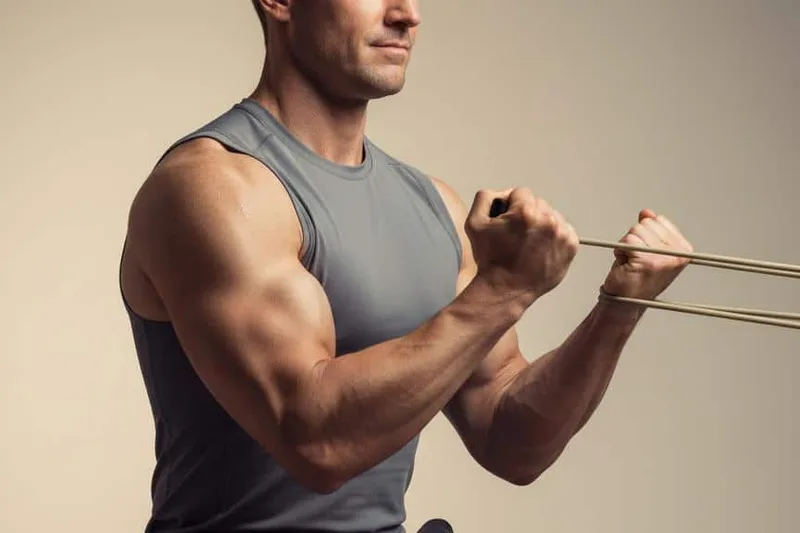
3. Diagonal External Rotation Exercise
This strengthens the rotator cuff muscles, which help move the shoulder.
- Step 1: Stand up straight and hold a resistance band in one hand. Tie the other end of the band to a sturdy place somewhere at waist level.
- Step 2: Start by placing your hand near the front pocket of the opposite hand. Keep your elbow bent at 90 degrees.
- Step 3: Now tighten the muscles and rotate the arm outward across the body. Pause for 1-2 seconds, then slowly return to the starting position.
- Step 4: Do 12-20 times.
- Step 5: Repeat on the other side. Do 3 sets.
Be especially careful about these things when exercising.
A labrum tear is a condition that limits your movement and causes severe pain, so it's important to listen to your body when exercising.
- Listen to the pain: If you experience sharp, severe pain while doing an exercise, stop immediately . The saying "no pain, no gain" does not apply here.
- Start slowly: Don't try to do too much at once. Start small and gradually increase the amount of exercise as you feel comfortable.
- Medical advice: If your pain increases, and you are not relieved by applying ice packs or using painkillers (e.g. NSAIDs) prescribed by your doctor, do not waste time and see your doctor again . He or she will refer you for further treatment.
Take-Home Message
- The labrum is an important cartilage ring that helps stabilize the shoulder and hip joints.
- It can tear due to sports accidents, falls, or age. Patience is very important as it takes time to heal.
- Before starting any exercise program, be sure to see a doctor for a proper diagnosis and advice.
- When exercising, do it slowly and with control . Stop immediately if you feel any sharp pain.
- If the pain increases or becomes uncontrollable, consult your doctor again for advice.


💬 Comments (0)
No comments yet. Be the first to share your thoughts here.
Add Your Comment