
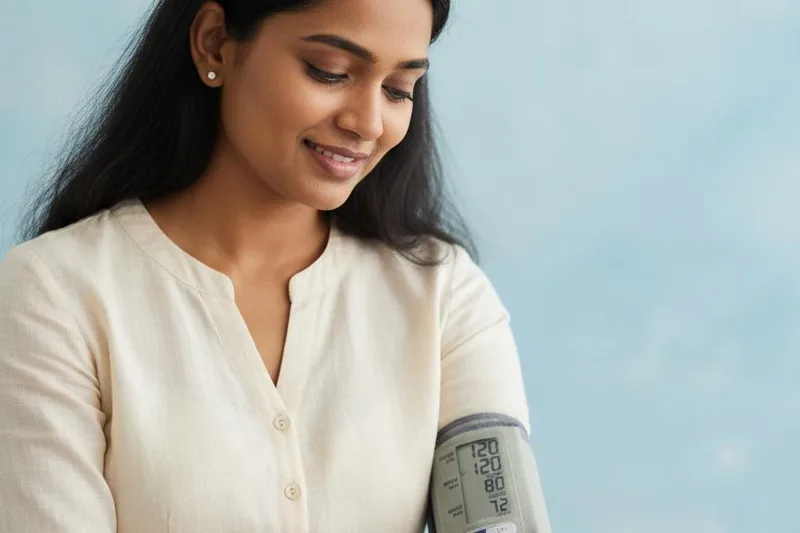
When you go to see a doctor, you've probably seen a nurse or doctor put a band around your arm, pump it up, and look at a meter, right? That's your 'pressure', or as we medically call it, your blood pressure. It's not just two numbers, it's a very important thing that says a lot about the health of your entire body. So let's talk about this from the beginning.
What is blood pressure simply?
Think of the blood vessels in your body as a system of pipes that carry water. The heart is the motor that pumps the water through it. So, every time the heart beats, it pushes blood into the main blood vessel in your body. We call it the aorta. In this way, the heart pumps blood about 60-100 times a minute, 24 hours a day.
Blood pressure is the pressure that the blood pumped by your heart exerts on the walls of your blood vessels. These blood vessels carry oxygen and nutrients to every part of your body, every organ.
But this blood pressure is not always the same. It changes depending on what you do.
- Your blood pressure rises when you exercise, climb stairs, or run after a bus.
- It can also increase when you are happy or anxious.
- When you sleep, calmly and restfully, your blood pressure decreases.
- Also, some medications you take, your position (standing, sitting, lying down), and age can change this pressure.
Why is blood pressure important to us?
We talk about blood pressure so much because it can have a big impact on your health. Simply put, it's like a breathing valve. If you keep it in check, you'll be healthy, but if you lose control of it, it can cause big problems.
- High blood pressure (Hypertension): This is what we call 'high blood pressure'. This is a major risk factor for developing cardiovascular disease. This means that there is a high chance of developing serious conditions like heart attack and stroke. Sometimes blood pressure can become very high. We call it a ``Hypertensive emergency''. This is an emergency that can even be life-threatening.
- Hypotension: This is a condition called 'low blood pressure '. This can make you feel dizzy, your eyes may turn blue, and you may lose consciousness and fall . If you fall, you may also have other accidents, such as hitting your head. If your blood pressure drops too low, the amount of blood flowing to your vital organs, such as your brain and kidneys, can decrease, and you may even develop a life-threatening condition called ``shock.''
Most of the time, we don't feel whether our blood pressure is high or low. That's why some people call it the 'silent enemy.' The only way to know for sure is to measure it properly.
This is usually done when you visit your doctor. You can also check this at home with a blood pressure monitor (BP machine). However, it is important to remember that even if you check at home, it is not a substitute for seeing a doctor .
When should you check your blood pressure?
It's important to have your family doctor check your blood pressure at least once a year . If your doctor has any concerns about your blood pressure levels, or if you're treating someone else, they may ask you to check more often to see how well your treatment is working.
Sometimes your doctor may ask you to check your blood pressure at home, either daily or once a week. Some people also have a 24-hour blood pressure monitoring test. This can track your blood pressure throughout the day, even while you sleep.
Just think, some people may experience a slight increase in blood pressure due to the fear and anxiety they have when seeing a doctor or going to the hospital. We call it ``White coat syndrome''. The 24-hour test also helps to accurately identify such conditions.
How does this blood pressure test work?
When you measure your blood pressure, you get two numbers. For example, 120/80. What do these two numbers mean?
- The top number (Systolic blood pressure): This is the pressure inside your blood vessels when your heart beats and pumps blood into your veins. This is the higher of the two numbers.
- The bottom number (Diastolic blood pressure): This is the pressure inside the blood vessels when the heart relaxes between beats. This is the lower number.
There are two main ways for a doctor to measure this:
1. Manually: This method uses a cuff and a gauge that shows the pressure. The doctor wraps the cuff around your arm, pumps it up, and inflates it. Then, using a stethoscope, the doctor gradually releases the air while listening to the sound of blood flowing through your arm.
2. Automatic method: This method uses an electronic device (BP machine). This automatically inflates and deflates the cuff. Your blood pressure readings are clearly displayed on a digital screen. This method does not require a stethoscope.
How to prepare before measuring blood pressure?
To get the most accurate value possible, do these things.
- Avoid smoking, exercising, and drinking caffeine-containing beverages such as coffee/tea 30 minutes before measuring your blood pressure.
- Go to the bathroom before that. Even when the bladder is full, there may be a slight change in pressure.
- Sit quietly and do not talk for at least 5 minutes before taking the measurement.
- If you wear a short-sleeved shirt, the doctor can easily put the belt on your hand.
Blood Pressure Levels and Their Meaning
Once you have your blood pressure reading, it's important to know what level it is in. This is how blood pressure levels for adults are usually classified.
| Pressure Level (Category) | Systolic mm Hg | AND/OR | Lower value (Diastolic mm Hg) |
|---|---|---|---|
| Healthy level (Normal) | Less than 120 | and | Less than 80 |
| Slightly elevated | Between 120 – 129 | and | Less than 80 |
| Hypertension - Stage 1 | Between 130 – 139 | Or | Between 80 – 89 |
| Hypertension - Stage 2 | 140 or more | Or | 90 or more |
| Hypertensive Crisis - Seek immediate medical attention! | More than 180 | and/or | More than 120 |
Important: If your upper and lower values fall into two categories, your doctor will consider the highest category. For example, if your blood pressure is 132/78, it falls into the 'High Blood Pressure - Stage 1' category.
Low blood pressure (Hypotension) is usually defined as a reading below 90/60. However, some people may naturally have slightly lower blood pressure without any problems. However, it is only when there are symptoms such as dizziness that you should be concerned.
When should you see a doctor?
There are times when you need to be concerned about your blood pressure. Sometimes you can just talk to your doctor, but sometimes you need to seek treatment right away.
| Opportunity | What to do |
|---|---|
| In such a case, talk to your doctor. | |
| If your blood pressure readings at home are consistently high or low. | Talk to your doctor about these values. You may need to change your medication dosage or start a new treatment. |
| If you feel dizzy, your eyes are turning blue, or you feel nauseous (these could be signs of low blood pressure). | Sit or lie down immediately. Then inform the doctor. |
| If you have any questions about your blood pressure or treatment. | Never guess. Ask your doctor directly to clear your doubts. |
| In this case, go to the ETU (Emergency Treatment Unit) immediately! | |
| If your blood pressure is 180/120 or higher, and you are also experiencing symptoms such as chest pain, difficulty breathing, severe headache, and blurred vision. | This is an emergency called a ``Hypertensive crisis.`` Go to the nearest hospital's ETU (Emergency Treatment Unit) immediately. |
| If the pressure drops and you lose consciousness, fall and hit your head, or if you show signs of shock, such as your body becoming cold, sweating, and breathing rapidly. | This is also an emergency. You need to take him to the ETU immediately. |
Your blood pressure is a very important number that your doctor will monitor for years. Even if you feel fine and have no problems, your internal pressure may be high. So getting it checked regularly is the only way to know if you're in a healthy range.
Take-Home Message
- Blood pressure is a very important measure of your overall health. It's not just two numbers.
- Most of the time, high blood pressure (Hypertension) has no specific symptoms. So you may not notice it. The only way to know is to get it checked regularly.
- Know your blood pressure readings and what they mean. A healthy reading is less than 120/80.
- If your doctor tells you that you have high blood pressure, it is essential to take the medication he prescribes exactly and make lifestyle changes (diet, exercise).
- Never ignore the warning signs of very high or very low blood pressure. Seek immediate medical attention if necessary.
- If you and your doctor work as a team and control your blood pressure, you can protect yourself from serious illnesses like heart disease.


💬 Comments (0)
No comments yet. Be the first to share your thoughts here.
Add Your Comment