
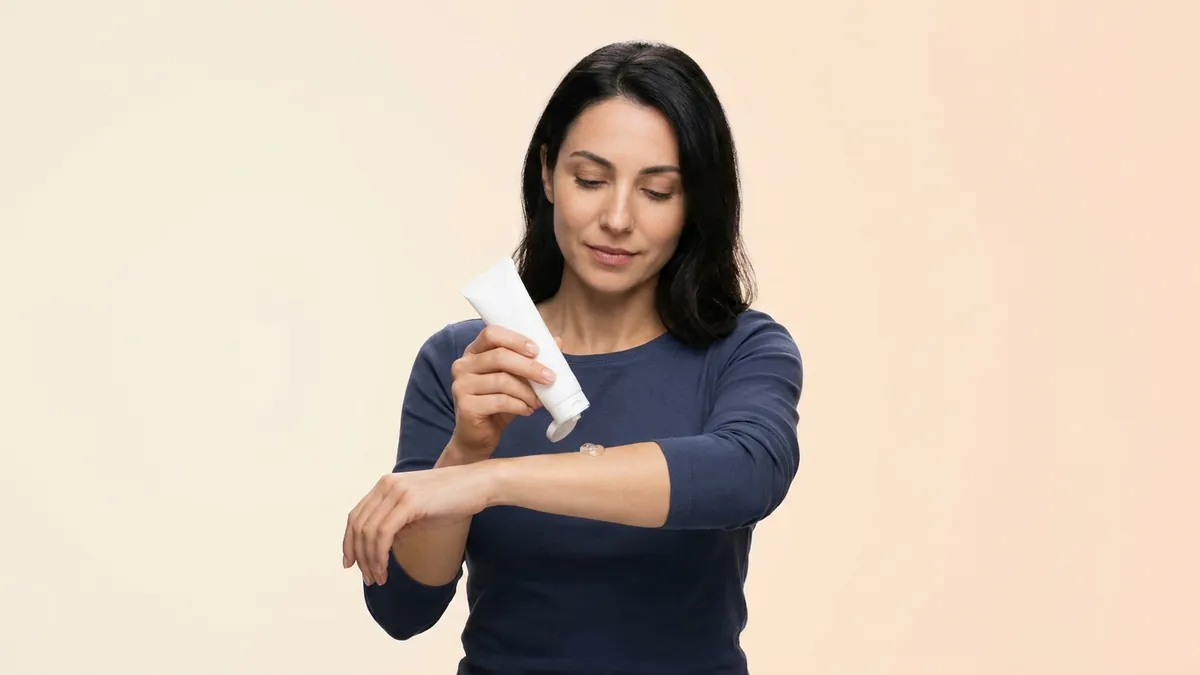
Have you ever wondered does crotamiton kill scabies when you or someone in your family is dealing with an unbearable, relentless skin itch that gets ten times worse the moment you climb into bed at night? If you are noticing tiny red bumps, blister-like spots, or faint, thread-like tracks between your fingers, around your wrists, or along your waistline, we doctors frequently look for a common microscopic culprit known as scabies (Sarcoptes scabiei infestation).
To clear these stubborn skin invaders and calm that maddening urge to scratch, we doctors often prescribe or recommend a dual-action topical medication called crotamiton cream or lotion (commonly known by brand names like Eurax in the UK and Australia, or Crotan and generic crotamiton 10% lotion in the US and Canada). Because applying a full-body treatment requires very specific timing—and because post-treatment itching can easily trick you into thinking the medicine failed—let us walk through everything you need to know about how crotamiton works, how to apply it step by step, and how to protect your whole household.
📌 Key Takeaways at a Glance
- Dual-Action Relief: Crotamiton is both a mite-killer (topical scabicide) that eradicates scabies mites and an anti-itch medication (antipruritic) that provides hours of soothing relief.
- The 24- and 48-Hour Rule: For scabies, you apply crotamiton from the chin down to the soles of your feet, apply a second coat 24 hours later without bathing in between, and wash it all off 48 hours after the final application.
- Treat the Whole Household: Everyone living in your home—and any close skin-to-skin contacts—must be treated on the exact same day, even if they do not feel itchy yet.
- Post-Scabies Itch Is Normal: Your skin may continue to itch for 2 to 4 weeks after the mites are dead as your immune system clears away their microscopic debris; crotamiton can help soothe this lingering itch.
Does Crotamiton Kill Scabies and What Is Crotamiton Used For?
Yes, crotamiton kills scabies mites directly while simultaneously blocking the nerve signals that cause severe skin itching. Prepared as a 10% topical cream or lotion, crotamiton works as both an anti-parasitic scabicide—disrupting the nervous and muscular systems of Sarcoptes scabiei mites—and a fast-acting antipruritic for itchy skin conditions.
Think about it for a second: most skin creams only do one job. Either they attack an infection, or they numb an itch. Crotamiton is unique because it wears two hats at the exact same time. When we doctors look at scabies under a microscope, we see tiny eight-legged mites that burrow just beneath the upper layer of your skin (the stratum corneum) to live and lay eggs. You cannot see them with the naked eye, but your immune system certainly knows they are there! Your body reacts to the mites, their eggs, and their waste by triggering a massive allergic-style itch response, especially at night when your body temperature rises under warm blankets.
When you rub crotamiton 10% cream or lotion onto your skin, it penetrates that upper skin layer to paralyze and kill the mites. Pretty impressive, right? Even better, scientific studies show that crotamiton calms specific itch-sensing nerve pathways (such as histamine and TRPV1/TRPA1 channels in your skin's sensory nerves), giving you roughly 6 to 10 hours of cooling, soothing itch relief after each application.
Because of this soothing property, what are the main crotamiton cream uses we recommend in everyday family practice? We use it for:
- Active Scabies Infestations: Eradicating burrowing mites in adults and children (often used when first-line permethrin cream is unavailable, not tolerated, or when severe itching is the dominant symptom).
- Post-Scabietic Pruritus (Lingering Scabies Itch): Calming the fierce, leftover allergy itch that stays behind for weeks after scabies mites have already been killed.
- General Itchy Skin Conditions (Pruritus): Soothing non-scabies skin irritation caused by allergic rashes, eczema flare-ups, sunburn, hives, or mosquito and insect bites.
What Should You Tell Your Doctor Before Using Crotamiton?
Before your Primary Care Physician (PCP), family GP, or local pharmacist hands you a tube of crotamiton cream or a bottle of crotamiton lotion, we always want to check a few important details about your health. We rarely stop to think about how much our skin absorbs, do we? While very little crotamiton enters your bloodstream when applied to intact skin, certain situations change how safely your body handles topical medications.
Be sure to tell your doctor or pharmacist if any of the following apply to you:
- Raw, Oozing, or Badly Broken Skin: If you have scratched your skin so hard that you have open sores, weeping blisters, or raw, acutely inflamed patches (acute exudative dermatitis), do not put crotamiton on those areas. Applying it to raw skin causes intense stinging and allows too much medicine to absorb into your body.
- Previous Allergies: Let us know if you have ever had an allergic reaction (contact dermatitis) to crotamiton, other skin creams, preservatives, perfumes, or dyes.
- Pregnancy and Breastfeeding: If you are pregnant, trying to conceive, or currently breastfeeding, tell your doctor right away. Out of caution, we generally avoid applying crotamiton during pregnancy—especially in the first trimester—unless clearly needed, and breastfeeding mothers should never apply it to the nipple or surrounding chest area where a baby could accidentally swallow it.
- Treating Infants and Toddlers: In the UK, Australia, and North America, crotamiton should only be used in children under 3 years of age under direct medical supervision from your family GP or pediatrician, as young children have thinner, more absorbent skin.
How to Use Crotamiton Cream for Scabies (Step-by-Step Guide)
Have you ever wondered why some people treat scabies, only to have the rash come roaring back three weeks later? Nine times out of ten, it is not because the medication failed—it is because a tiny patch of skin was missed, or the lotion was washed off too early! How you apply crotamiton depends entirely on whether you are treating general itching or an active scabies infestation.
1. How to Apply Crotamiton for Scabies
If your doctor has prescribed crotamiton specifically to kill scabies, follow this exact step-by-step routine:
- Step 1: Take a Warm Shower or Bath First. Wash your body gently with mild soap and warm water, then pat your skin completely dry with a clean towel. Let your skin cool down for 10 to 15 minutes before applying the medicine. (If you are using crotamiton lotion rather than the cream, give the bottle a really good shake first!)
- Step 2: Trim Your Fingernails and Toenails. Scabies mites and their eggs love to hide under long nails as you scratch. Clip your nails short and gently clean under them. If you use an old toothbrush to apply lotion under the nail tips, wrap that toothbrush up and throw it straight into the trash afterward so nobody accidentally puts it in their mouth!
- Step 3: Apply From Your Chin Down to Your Toes. Rub a thin, even layer of crotamiton over your entire body surface from the chin and neck all the way down to the soles of your feet. Do not just dab it on the red bumps! Pay extra attention to the warm, folded areas where mites love to hide: between every finger and toe, around your wrists, under your armpits, around your belly button, along your waistline, in the groin and buttocks creases, and on the bottoms of your feet. Rub it in well until the cream disappears into the skin.
- Step 4: Apply a Second Coat 24 Hours Later (Do Not Bathe!). Here is the step people often forget: leave that first layer on your skin for a full 24 hours. Then, without taking a bath or shower, apply a second full-body coat from your chin to your toes in the exact same way. (Note: In some cases, particularly for young children or stubborn infestations, your doctor may advise applying it once daily for up to 3 to 5 consecutive days—always follow the exact schedule on your prescription label.)
- Step 5: Reapply to Hands if Washed. Whenever you wash your hands after using the bathroom or before eating during your treatment window, immediately reapply a little crotamiton to your hands and between your fingers.
- Step 6: The 48-Hour Wash-Off Bath. Wait a full 48 hours (two days) after your final application, and then hop into a warm shower or bath to thoroughly wash the medication off your skin.
2. How to Apply Crotamiton for General Itching (Non-Scabies)
If you are using crotamiton simply to calm an itchy rash, bug bite, or leftover post-scabies itch, you do not need to cover your whole body. Gently massage a thin layer purely onto the itchy areas 2 to 3 times a day (every 6 to 8 hours) as needed. Now that makes sense, right?
Why Must the Whole Household Be Treated and How Do You Clean Your Home?
Be honest—if you are the only one in your house scratching right now, it is tempting to think you are the only one who needs the cream, isn't it? Let us look at what actually happens with scabies. When a person catches scabies for the very first time, it can take anywhere from 2 to 6 weeks for their immune system to react and start itching. That means your partner, children, or housemates could already have mites on their skin right now without feeling a single itch!
If you treat yourself today, and your symptom-free partner hugs you tomorrow, you will catch the mites right back—a frustrating cycle we doctors call "ping-pong reinfection." To break the cycle once and for all:
- Treat Everyone on the Same Day: Every person living in the same household, as well as any recent sexual partners or close skin-to-skin contacts, should apply scabies treatment on the exact same evening.
- Hot Wash Your Linens and Clothes: The morning after you apply your treatment, strip all bedsheets, pillowcases, duvet covers, pajamas, underwear, and towels used in the past 3 days. Wash them in your washing machine on a hot cycle (at least 122°F / 50°C) and dry them in a hot tumble dryer.
- Bag What Cannot Be Washed: What about winter coats, decorative throw pillows, or your child's favorite stuffed animals? Because scabies mites cannot survive away from human skin for more than 2 to 3 days, simply seal non-washable items inside a tightly tied plastic garbage bag for at least 72 hours (up to a week for extra peace of mind). Vacuum your carpets and upholstered couches thoroughly, too.
✔️ What You Should Do & ❌ What to Avoid
- ✔️ DO apply crotamiton to clean, cool, completely dry skin, making sure to cover every crease between your fingers, toes, underarms, and soles of your feet when treating scabies.
- ✔️ DO use a gentle, fragrance-free daily moisturizer (emollient) after your treatment course is finished to soothe dry skin, which can otherwise make lingering itching worse.
- ✔️ DO wash your clothes, towels, and bedding in hot water and dry them on high heat the morning after treatment.
- ❌ DON'T get crotamiton near your eyes, inside your nose or mouth, or on delicate mucous membranes. If it accidentally gets into your eyes, flush them immediately with plenty of cool or lukewarm tap water.
- ❌ DON'T apply crotamiton to raw, bleeding, oozing, or infected skin sores.
- ❌ DON'T keep applying scabies-level full-body doses week after week if you still itch—talk to your doctor first so you do not irritate your skin with medication overuse.
What If You Miss a Dose, Use Too Much, or Mix Other Creams?
Life gets busy, and when you are managing a multi-day skin routine for yourself or your kids, hiccups happen. Let us go over how we doctors recommend handling common medication slip-ups and questions about drug interactions.
What If I Miss a Dose?
If you are using crotamiton on a scheduled 24-hour scabies routine and forget your second application, apply it as soon as you remember. However, if it is already very close to the time for your next scheduled dose, skip the missed application and continue with your regular schedule. Never slap on a double-thick layer of cream to make up for a missed application.
What If Someone Uses Too Much or Accidentally Swallows It?
Applying crotamiton too frequently or over raw skin can cause severe skin redness, burning, and irritation. More importantly, crotamiton is strictly for external skin use only—it can be toxic if swallowed, causing burning in the mouth, nausea, vomiting, stomach pain, and in severe cases, drowsiness or blood oxygen changes (methemoglobinemia).
If you or a child accidentally swallows crotamiton cream or lotion, do not wait: in the United States or Canada, call Poison Control immediately at 1-800-222-1222 (or 911); in the United Kingdom, call NHS 111 or 999; and in Australia, call the Poisons Information Centre at 13 11 26 (or 000), or head straight to your nearest hospital Emergency Room (ER / A&E) and bring the medicine container with you.
Does Crotamiton Interact With Other Medications?
Because crotamiton works locally on the skin, it rarely interacts with oral tablets or capsules you take by mouth. However, you should never layer other medicated skin creams, hydrocortisone ointments, or thick body lotions over the exact same area at the same time while crotamiton is doing its job, unless your doctor specifically prescribed a combination product. Mixing creams can dilute the crotamiton or alter how deeply it absorbs into your skin. Always give your doctor or pharmacist a quick rundown of any prescription drugs, over-the-counter allergy pills, or herbal supplements you take.
What Are the Possible Crotamiton Side Effects and Why Does Itching Last?
When patients search for crotamiton side effects (or Crotan side effects), they are usually worried about two things: "Will this burn my skin?" and "Why am I still itching after I finished the bottle?" Remember how we talked earlier about your immune system reacting to the mites? Even after crotamiton kills 100% of the mites, their tiny microscopic shells remain trapped in the upper layer of your skin until your skin naturally sheds and renews itself. This causes post-scabietic itch, which can easily last for 2 to 4 weeks after a completely successful cure!
Alongside understanding that normal leftover itch, it helps to know which side effects are mild and expected, and which ones mean you need to wash the cream off and call your doctor. Look at the comparison table below to see how we doctors tell them apart:
| Symptom or Skin Reaction | Clinical Explanation & What You Should Do |
|---|---|
| Mild Warmth, Redness, or Slight Tingling | A gentle warming sensation or mild temporary flushing right where you rubbed the cream in is the most common side effect and usually settles down quickly. What you should do: Continue your treatment as normal. Avoid taking hot showers right before applying, as heat opens skin pores and increases tingling. |
| Lingering Itch for 2–4 Weeks (Post-Scabietic Pruritus) | Your skin's immune system continues reacting to dead mite debris for a few weeks after the infection is cured. This does not automatically mean treatment failed. What you should do: Do not repeat full-body scabies courses unnecessarily. Ask your family GP or pharmacist about using a daily moisturizing emollient, spot-applying crotamiton for itch relief, or taking an oral antihistamine (like cetirizine or loratadine for daytime, or a sedating antihistamine at night). |
| Worsening Rash, Burning, or Contact Dermatitis | Sometimes your skin develops a local sensitivity or allergic reaction to crotamiton or the inactive base ingredients in the cream/lotion. What you should do: Stop applying the medication, gently wash it off with mild soap and cool water, and book an appointment at your PCP / family GP clinic to switch to an alternative treatment. |
| Yellow Crusting, Pus, or Expanding Hot Redness | Heavy scratching can introduce everyday skin bacteria (like Staphylococcus or Streptococcus) into broken skin, causing a secondary bacterial skin infection (impetigo or cellulitis). What you should do: Visit your family GP or local Urgent Care center promptly. You may need a short course of prescription antibiotic cream or oral antibiotics to clear the bacterial infection. |
| New Burrow Tracks or Rash 4+ Weeks Later | If itching steadily worsens past 4 weeks or you spot brand-new greyish-white burrow lines between your fingers or wrists, you may have treatment resistance or household reinfection. What you should do: See your doctor for a skin check. We may prescribe an alternative scabicide such as 5% permethrin cream or oral ivermectin tablets. |
🚨 When to Seek Immediate Emergency Care (Red-Flag Symptoms)
If you or someone near you develops any of these red-flag symptoms, do not wait — call 911 (US & Canada), 999 or 111 (UK), or 000 (Australia) immediately or go straight to the nearest hospital Emergency Room (ER / A&E):
- Signs of a Severe Allergic Reaction (Anaphylaxis): Sudden swelling of the face, lips, tongue, or throat, difficulty breathing, wheezing, dizziness, or a racing heartbeat after applying the cream.
- Accidental Swallowing of the Lotion or Cream: Especially in young children or toddlers, or if someone experiences burning in the mouth, severe vomiting, confusion, or bluish-grey tinting of the lips and fingernails.
- Spreading Skin Infection with Systemic Illness: Rapidly expanding, hot, swollen, painful red skin accompanied by a high fever, chills, or red streaks spreading from the rash.
How Should You Store and Dispose of Crotamiton Safely?
Keeping topical medications safe at home is simple, right? Still, a few quick habits ensure the cream stays effective and your family stays protected:
- Keep Out of Reach and Sight of Children and Pets: Because crotamiton lotion bottles look very similar to everyday moisturizing lotions or liquid antacids, store them on a high, locked shelf where curious toddlers cannot grab them.
- Store at Normal Room Temperature: Keep the tube or bottle in a cool, dry place between 59°F and 86°F (15°C to 30°C), ideally around 68°F to 77°F (20°C to 25°C). Keep it away from direct sunlight, steamy bathroom radiators, or freezing temperatures.
- Dispose of Expired or Leftover Medicine Properly: Check the expiry date printed on the crimped end of the tube or bottle label. Never use expired medication; instead, drop unwanted or out-of-date creams off at your local pharmacy's medicine take-back program so they can dispose of it safely.
💡 Key Take-Home Message
- Crotamiton is a safe, time-tested topical cream or lotion that both kills scabies mites and provides hours of relief from intense skin itching.
- When treating scabies, apply it thoroughly from the chin down to the soles of your feet, apply a second coat 24 hours later without bathing, and wash it off 48 hours after the final dose.
- Treat every member of your household on the same day and hot-wash all bedding, towels, and recently worn clothing to stop mites from bouncing back and forth.
- Never apply crotamiton to your eyes, mouth, or raw, oozing skin, and speak with your family GP if post-scabies itching lasts longer than 4 weeks.





No comments yet. Be the first to share your question or experience below.