
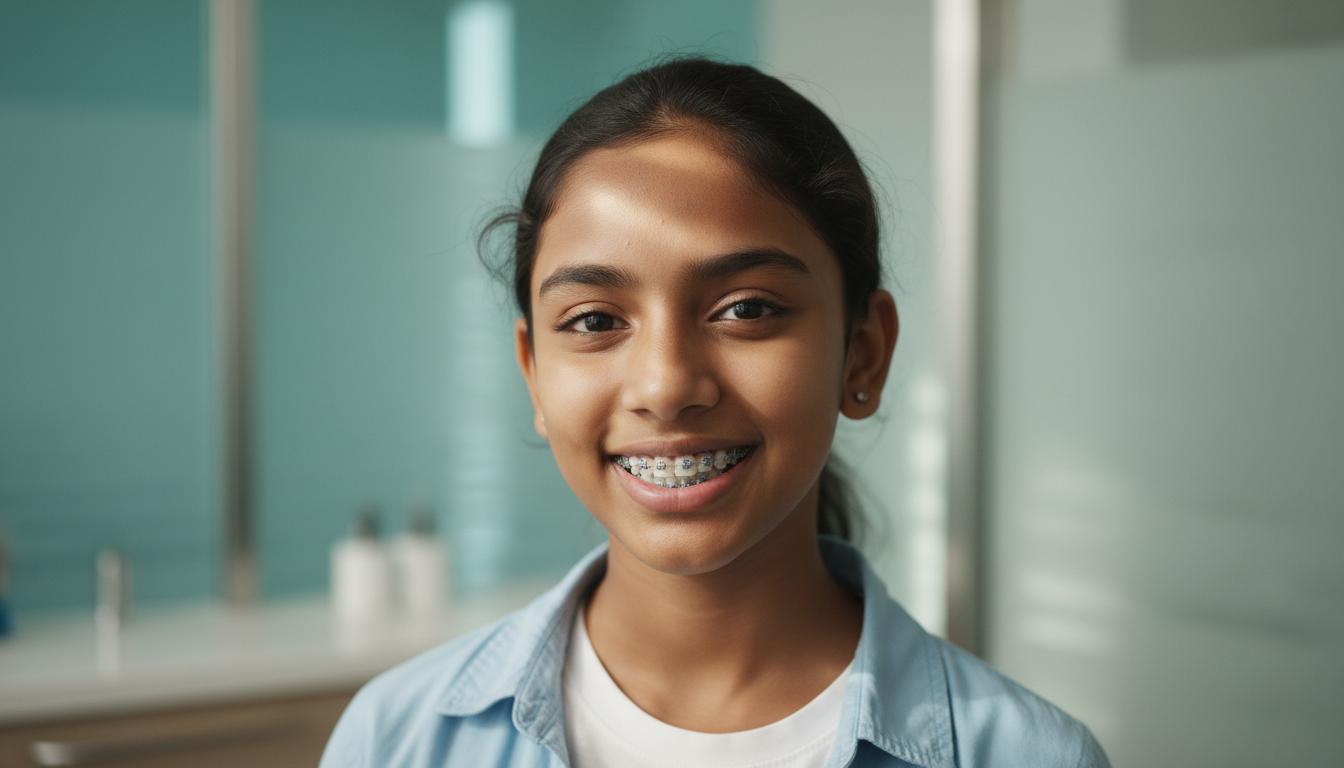
You notice your eight-year-old’s adult incisors coming in crooked, or perhaps your family dentist pauses during a routine cleaning, taps a molar, and casually suggests an orthodontic consult. For many parents, this moment triggers a wave of immediate questions: Is my child too young? Will this hurt? Can misaligned teeth correct themselves over time, or are braces inevitable?
Orthodontic assessment in childhood is not purely about aesthetics. Correcting misaligned teeth and jaw discrepancies during growth windows safeguards long-term chewing function, protects permanent enamel from uneven attrition, prevents periodontal disease, and resolves speech impediments. This clinical guide breaks down the biological mechanisms of pediatric orthodontics, diagnostic timelines, appliance choices, home maintenance, and financial planning.
Key Clinical Takeaways for Parents.
- The Age 7 Screening Rule: Both the American Association of Orthodontists (AAO) and the British Orthodontic Society (BOS) recommend a first orthodontic evaluation by age 7 to detect subtle skeletal growth discrepancies early.
- Active Treatment Window: complete fixed appliance therapy (traditional braces) most commonly begins between ages 9 and 14, once primary teeth have shed and permanent dentition erupts.
- Biology Over Speed: Tooth movement relies on a slow biological process called alveolar bone remodeling. The average treatment duration ranges between 18 and 24 months.
- Retention is Mandatory: Without wearing a post-treatment retainer, natural biomechanical forces will cause teeth to drift back toward their original positions (relapse).
BMI Calculator
Know your body mass index (BMI) and weight classification
What Are Braces and How Does Orthodontic Movement Work?
Dental braces are custom-fitted orthopedic and dental devices that exert gentle, controlled, continuous mechanical force over extended periods to guide teeth and the surrounding alveolar bone into optimal alignment.
At the cellular level, teeth do not sit directly in bone like nails in wood; they are suspended in the socket by a fibrous sling called the periodontal ligament (PDL). When an orthodontic archwire applies continuous pressure to a tooth:
- Compression Zone: On the side of the socket facing the direction of force, blood supply is temporarily compressed, signaling specialized cells called osteoclasts to break down and resorb bone tissue.
- Tension Zone: On the opposite side where the ligament is stretched, tension signals osteoblasts to deposit fresh bone mineral.
Through this continuous process of micro-resorption and bone deposition, the tooth physically migrates through the jaw without losing structural bone support.
Why Do Children Need Braces? Common Indications and Malocclusions.
Misalignment of teeth and jaws is medically classified as a malocclusion. While some alignment problems are genetic (such as mismatched jaw size inherited from parents), others stem from premature baby tooth loss, developmental abnormalities, or prolonged non-nutritive sucking habits (thumb sucking or prolonged pacifier use beyond age 3).
1. Dental Crowding and Spacing.
- Overcrowding: Occurs when the dental arch is too narrow or teeth are too large to fit in alignment. Crowded teeth overlap and twist, creating plaque traps that greatly increase the risk of dental caries (tooth decay) and gingivitis.
- Diastema (Spacing): Large gaps between teeth can destabilize surrounding dentition, entrap food debris, and irritate gingival tissues.
2. Skeletal and Dental Bite Discrepancies.
- Class II Malocclusion (Increased Overjet / Deep Overbite): The upper jaw or teeth protrude greatly ahead of the lower jaw. Pronounced upper incisor protrusion increases the clinical risk of anterior dental trauma (chipped or fractured front teeth during falls or sports).
- Class III Malocclusion (Underbite): The lower jaw extends forward past the upper arch, causing the lower front teeth to overlap the upper teeth. This can trigger speech difficulties and chronic temporomandibular joint (TMJ) strain.
- Crossbite: Upper teeth bite inside the lower teeth—either laterally (posterior crossbite) or anteriorly. Left untreated during active growth, crossbites can lead to facial asymmetry and irregular jaw development.
- Open Bite: Anterior upper and lower teeth fail to meet when the back molars are closed, often caused by tongue thrusting or prolonged thumb sucking. This impairs incision of food and alters speech patterns (such as lisping).
⚠️ Emergency Red Flags: When to Seek Urgent Clinical Care.
Most orthodontic discomforts are manageable at home, but seek immediate emergency attention (call 911 in the US/Canada, 999 in the UK, or visit your local Emergency Department / A&E) if your child experiences:
- Airway Compromise or Ingestion: Inhaling (aspirating) or swallowing a dislodged appliance component causing choking, shortness of breath, or stridor.
- Spreading Facial Infection: Rapid swelling of the cheek, jaw, or neck accompanied by high fever or difficulty swallowing/opening the mouth (suspected odontogenic cellulitis or deep facial space abscess).
- Acute Orofacial Trauma: Severe maxillofacial impact resulting in fractured alveolar bone, uncontrollable intraoral hemorrhage, or avulsed permanent teeth.
Diagnostic Pathways: What to Expect at the Orthodontic Consultation.
An orthodontic evaluation is painless and structured to gather complete clinical records before formulating a treatment plan:
- Extraoral and Intraoral Examination: The specialist assesses facial symmetry, soft tissue profile, lip incompetence, TMJ range of motion, and dynamic tooth contact during mastication (chewing).
- Panoramic and Cephalometric Radiographs: Low-dose digital X-rays allow clinicians to examine unerupted permanent teeth, root angulation, bone levels, and skeletal relationships between the maxilla and mandible.
- Digital 3D Intraoral Scanning: Modern practices use optical wand scanners to construct a digital 3D model of your child's dental arches, largely replacing traditional alginate putty trays that previously caused gagging.
- Photographic Records: High-resolution clinical photographs of the face and intraoral structures document baseline conditions for progress tracking.
Types of Orthodontic Appliances for Children.
Modern orthodontics provides several appliance modalities tailored to your child's anatomical needs and lifestyle:
| Appliance Type. | Primary Indications. | Advantages. | Clinical Considerations. |
|---|---|---|---|
| Traditional Metal Braces. | Mild to severe malocclusion, complex rotations, root torque. | Most cost-effective, precise torque control, non-removable (zero compliance issue). | High visibility, requires strict dietary restrictions to avoid bracket breakage. |
| Ceramic Braces. | Moderate to severe cases where aesthetics matter. | Tooth-colored brackets blend with natural enamel. | Higher cost, slightly more brittle than stainless steel, ligatures can stain. |
| Clear Aligners. | Mild to moderate crowding, non-skeletal bite issues. | Virtually invisible, removable for eating and effortless brushing/flossing. | Requires 20–22 hours/day strict wear; easy for children to lose or damage. |
| Palatal Expanders. | Constricted maxillary arch, posterior crossbite, severe crowding. | Widens the upper jawbone along the midpalatal suture before it fuses in adolescence. | Temporary speech alterations, mild nasal fullness or pressure during active turns. |
Dietary Rules and Daily Oral Hygiene During Treatment.
Fixed appliances introduce irregular surfaces and wire margins that accumulate dental plaque rapidly. Inadequate oral hygiene during treatment can cause irreversible white spot lesions (early enamel demineralization) around the brackets, or severe gingivitis.
| Do's (Recommended Care & Foods). | Don'ts (Foods & Habits to Avoid). |
|---|---|
| Brush after every single meal using an orthodontic-cut toothbrush and fluoridated toothpaste (1,350–1,500 ppm fluoride). | Do not eat hard, crunchy foods (popcorn kernels, hard taco shells, ice cubes, nuts). |
| Use an interdental proxy-brush or orthodontic threader daily to clean beneath the archwire and between teeth. | Avoid chewy or sticky confections (toffee, caramel, taffy, chewing gum) that peel brackets off enamel. |
| Cut whole apples, raw carrots, and crusty bread into small, bite-sized pieces before chewing with the back molars. | Do not bite directly into whole foods using front incisors. |
| Rinse thoroughly with water or an antimicrobial mouthwash if brushing is temporarily delayed after snacking. | Never chew on pen caps, pencils, or fingernails, which bend orthodontic wires and detach brackets. |
Managing Normal Discomfort and Minor Appliance Emergencies.
Following initial bracket placement and subsequent wire tightening adjustments (typically scheduled every 4 to 8 weeks), children normally experience mild dental soreness lasting 48 to 72 hours.
- medicine-based Management: Age- and weight-appropriate pediatric paracetamol (acetaminophen) or ibuprofen can mitigate inflammatory discomfort. Follow all packaging instructions or pharmacist guidance.
- Orthodontic Relief Wax: If an archwire tip or bracket rubs against the labial or buccal mucosa (lips or cheeks), dry the area with a tissue, roll a pea-sized ball of medical-grade silicone or beeswax, and press it firmly over the offending bracket.
- Loose Archwire: If a flexible wire slips out of the terminal molar slot, gently reposition it using the clean eraser end of a pencil or a cotton bud until you can attend your clinic.
- Dietary Adjustments: Emphasize soft foods such as warm vegetable purées, scrambled eggs, yogurt, and well-cooked porridge during the first 3 days post-adjustment.
The Retention Phase: Why the Journey Isn't Over When Braces Come Off.
The day brackets are debonded is a celebration, but it marks the start of the retention phase. Bone surrounding freshly straightened teeth requires 9 to 12 months to remodel completely and stabilize. also, natural lifelong physiological processes—such as late mandibular growth and gradual mesial drift—constantly push teeth toward crowding.
Orthodontists prescribe either removable retainers (clear thermoformed Essix retainers or acrylic/wire Hawley retainers) or fixed retainers (a thin wire bonded permanently behind the lingual surfaces of the front teeth). Removable retainers are usually worn full-time for the first 3 to 6 months, transitioning to nightly wear indefinitely to preserve the alignment.
Navigating Costs, Insurance, and Treatment Access.
complete pediatric orthodontic care is an investment. Financial structures vary across healthcare systems:
- Private Dental Insurance (US, Canada, Global): Many complete family plans include a dedicated lifetime orthodontic benefit covering 25% to 50% of allowable costs up to a specified cap. Flexible Spending Accounts (FSA) and Health Savings Accounts (HSA) can offset remaining out-of-pocket costs with pre-tax funds.
- Public Healthcare Systems (e.g., UK NHS): Under the NHS, orthodontic treatment is fully covered for patients under 18 who meet clinical necessity criteria on the Index of Orthodontic Treatment Need (IOTN)—grades 4 and 5 (severe crowding, impacted canines, or marked overjets). Mild or purely cosmetic cases are excluded, and waiting lists at hospital or specialist units can be lengthy.
- University Dental Clinics: Families seeking cost-effective treatment can explore regional university teaching dental hospitals, where care is delivered by postgraduate orthodontic residents under the direct supervision of board-certified faculty.
Clinical References & Authoritative Guidelines:
- American Association of Orthodontists (AAO): Clinical practice guidelines on the timing of initial orthodontic examinations and management of malocclusion in children (Reviewed 2023).
- National Health Service (NHS): Orthodontics in children and adolescents, Index of Orthodontic Treatment Need (IOTN) clinical indications, and NHS dental eligibility criteria (Updated 2024).
- Mayo Clinic: Dental Braces: Indications, procedure details, risks, and oral hygiene recommendations (Pediatric Dentistry & Orthodontics).
- National Institutes of Health (NIH) / National Institute of Dental and Craniofacial Research (NIDCR): Biology of tooth movement, alveolar bone remodeling, and malocclusion etiology in pediatric populations.






No comments yet. Be the first to share your question or experience below.