
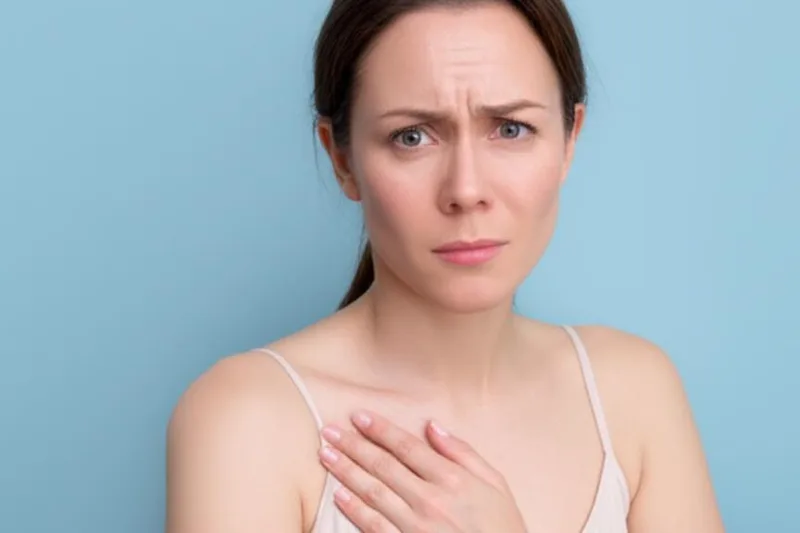
Do you also have breast pain? (Mastalgia) Let's talk about this!

Do you also have breast pain? (Mastalgia) Let's talk about this!
In fact, many people, especially women, may experience breast pain at some point in their lives. Sometimes it can feel like a slight tingling or heaviness. Other times, it can be a sharp, stabbing pain that is unbearable. This breast pain, which we medically call `(Mastalgia),` can affect your daily activities, sleep, and even your mental health if it occurs frequently. Also, if the pain is persistent and does not subside, it may be a symptom of another underlying health problem. Therefore, it is very important to be aware of this. Think about it, this pain can be caused by a type of hormone medication you are taking, hormonal changes associated with your monthly period, wearing a bra that does not fit properly, or perhaps an infection. Men can also experience breast pain. The main reason for this is a condition called `(Gynecomastia),` which is the enlargement of breast tissue in men. But the important thing is, most of the time, breast pain is not a symptom of breast cancer . But we should still be a little concerned about it.

There are two main types of breast pain!

We can divide this breast pain into two main categories: cyclic breast pain and noncyclic breast pain.

1. What is cyclic breast pain?

This is the most common type. As the name suggests, this pain is related to your monthly menstrual cycle . It usually occurs in women between the ages of 20 and 50. It can affect one or both breasts. This is often caused by changes in the natural hormone levels in our bodies. This pain can occur about a week before your period starts. The best part is that this cyclical pain often subsides on its own once your period starts. However, it can come back as your next period gets closer. This happens in a predictable pattern. If you are taking hormonal medications like birth control pills or hormone replacement therapy, you may also experience this type of pain when you make changes. After menopause, which is when your periods stop completely, this cyclical pain usually does not occur.

2. What is noncyclic breast pain?

This type of breast pain has nothing to do with your monthly menstrual cycle . It is most common in women over 40 and can continue after menopause. Unlike cyclical pain, it does not have a specific pattern. Sometimes it comes and goes, other times it is constant. Most of the time, this pain is felt in one breast, in a specific place. This non-cyclical pain can be caused by a breast injury, the size of the breast, or a benign tumor.

How common is breast pain?

Breast pain is actually more common than you might think. It is estimated that about 70% of women will experience breast pain at least once in their lives. It is especially common among women who are not yet menopausal, meaning they are still menstruating. Even among men, between 50% and 65% will experience breast pain at some point in their lives. But the important thing to remember is that most of the things that cause this pain are not serious or life-threatening.

What are the symptoms of breast pain?

Symptoms may vary slightly depending on whether you have cyclical or non-cyclical breast pain. With cyclical breast pain, your breasts may feel like this:
  • It may feel painful and sensitive when touched.
  • It may look a little swollen .
  • It may feel heavy .
The intensity of this pain varies from person to person. For some, this pain may spread to the armpit area and shoulder area. Symptoms of non-cyclic breast pain may vary slightly:
  • Pain can occur in only one breast, in a specific place .
  • It may be a sharp, sudden pain .
  • There may be a burning sensation in that specific spot, like being stabbed with a knife .

What does breast pain caused by cancer feel like?

Most of the time, breast cancer is not painful. But if it is, it can feel like a burning or squeezing pain in a specific area of ​​the breast. Even more common in breast cancer are changes in the skin of the breast. The skin may become rough and pitted, like an orange peel. Or the skin may become itchy or red. You may also see changes in the nipple, such as a discharge from the nipple or a nipple that has turned inward (nipple inversion).

What kind of breast pain should we be more concerned about?

If your breast pain persists for more than two weeks, or if it comes and goes without any pattern, it could be a sign that it's time to see a doctor. Also, if you experience breast pain after menopause, it's important to tell your doctor.

Is it normal for only one breast to hurt?

Yes, it can be normal. Breast pain can affect just one breast or both breasts. Although pain caused by hormonal changes often affects both breasts, it does not happen to everyone. Also, an infection or other underlying condition can affect just one breast, or both. Therefore, it is best to see a doctor and get checked out to find the exact cause.

What are the causes of breast pain?

As we've discussed before, the main cause of cyclical breast pain is the hormonal changes associated with your natural monthly menstrual cycle. Non-cyclical breast pain can have a number of causes. Some of them are:
  • Birth control pills
  • Pregnancy
  • Breast infections such as mastitis
  • Inflammation
  • Hormone therapy
  • Previous radiation therapy
  • Some antidepressants, such as SSRIs (selective serotonin reuptake inhibitors),
  • Breast cysts (fluid-filled cysts in the breasts)
  • Non-cancerous lumps (Fibroadenomas)
  • Costochondritis , an inflammation of the bones and cartilage of the chest
  • Scar tissue from previous surgeries
  • Injuries or accidents to the breasts
Also, some of our habits can also cause non-cyclical breast pain:
  • Smoking
  • Excessive caffeine consumption (like coffee, tea)
  • Severe stress
  • Breastfeeding (in some cases)
  • Frequent consumption of oily and fatty foods
Sometimes what we think of as chest pain can actually be chest wall pain. When the muscles and tissues around our heart and lungs become inflamed, the pain can feel like it's coming from our breasts. In many cases, there may be no clear, specific underlying cause for breast pain.

Is breast pain a sign of breast cancer?

Usually not. People with breast cancer can develop lumps in the breast area, which can be painful. However, most breast pain is not caused by cancerous lumps or tumors. If you suspect you have breast pain, especially if you have risk factors for breast cancer (for example, a family history), it is wise to see a doctor and have a breast exam.

Can stress and anxiety cause breast pain?

Maybe. There are several studies that show a link between breast pain and anxiety. It's always a good idea to talk to a doctor about ways to manage your stress and anxiety.

Why do breasts hurt during pregnancy?

During pregnancy, your body starts producing more hormones than usual, especially the hormone estrogen. This directly affects your breasts. That's why both breasts often become sore and tender to the touch.

Who is more likely to get breast pain?

You are more likely to have breast pain if you have these factors:
  • For those with large breasts . People with large breasts often experience shoulder, neck, and back pain.
  • For those who have had previous breast surgery and therefore have scar tissue .
  • People taking medications that affect hormones . This can include birth control pills, fertility drugs, and hormone therapy.
  • For those who drink too much caffeine . Research has shown a link between breast pain and excessive caffeine use.

What are the complications of breast pain?

Complications that can occur due to breast pain vary depending on the cause. If it is non-cyclical, it can include:
  • Difficulty falling asleep.
  • Problems during sexual intimacy .
  • Inability to exercise or engage in strenuous activities.
However, some breast pain is caused by an underlying disease or infection. If left untreated, these conditions can lead to more serious complications.
Although rare, breast pain can also be caused by cancer. Therefore, if you have breast pain for more than two weeks, or if you have symptoms such as a lump, skin changes, or discharge from the nipple, see a doctor immediately.

How to recognize breast pain?

When you see a doctor, before a breast exam, he or she will ask you about your symptoms, how long they have been present, how severe the pain is, and how often they occur. During a breast exam, he or she will carefully examine your breasts to check for lumps or other signs of pain. You may be asked to bend forward to see if the pain is coming from your breast itself or from inside your chest. Your doctor may order a mammogram or ultrasound scan. However, whether these tests are needed depends on several factors:
  • The nature of your pain.
  • What to look for in a breast exam.
  • your age.
  • How long has it been since you last had a breast exam?

How to treat breast pain?

Cyclical breast pain is a normal part of your monthly menstrual cycle, so it doesn't require major treatment. However, if the pain is unbearable, there are some painkillers you can take to help manage your symptoms:
  • Acetaminophen (e.g. Tylenol®)
  • `Ibuprofen` (e.g. `Advil®`, `Motrin®`)
  • `Naproxen sodium` (e.g. `Aleve®`, `Naprosyn®`)
  • `Aspirin` (e.g. `Anacin®`, `Bayer®`)
  • `Diclofenac` (e.g. `Voltaren®`) - This is also available as an ointment.
If your breast pain is more severe, your doctor may suggest two medications called Danazol or Tamoxifen (which should only be taken with a doctor's prescription). However, both of these medications have side effects, so it's important to talk to your doctor before taking them and decide if they're worth it for your situation. There are also a few other things you can do to help reduce your breast pain:
  • Stopping, changing the dosage, or quitting hormonal medications (such as birth control pills) or medications known to cause breast pain. But don't do this without medical advice.
  • Wearing a well-fitting, supportive bra. (Breasts change in size and shape over time. So, make sure you always fit into the correct bra size.)
  • Avoiding tobacco products such as cigarettes.
  • Reduce or stop caffeine use .
  • Apply a warm compress to the most painful area of ​​the breast (be careful not to damage the skin).
  • Taking vitamin E supplements . Some studies have shown that this may be helpful for those who experience breast pain due to menstruation.
  • Applying evening primrose oil to the breasts. Some studies have shown that this can reduce breast pain.
  • Taking magnesium supplements . Taking these during the menstrual cycle, about two weeks before your period, can help relieve symptoms.
  • Applying pain-relieving ointments such as ``OTC - over-the-counter'' ``Trolamine salicylate cream'', which can be purchased from a pharmacy without a doctor's prescription.
  • Using relaxation therapies to reduce stress.
Please remember that some of these treatments have not been studied in depth, and they may not work for everyone. It is best to talk to your doctor to see if these treatments might be helpful for you.
If you have non-cyclical breast pain, your doctor may suggest treatments similar to those for cyclical pain. However, if he or she finds that the underlying cause of your pain is something like an infection or a non-cancerous tumor, specific treatment (such as antibiotics or surgery) may be needed for that cause.

Can breast pain be prevented?

Cyclical breast pain is a normal part of your monthly menstrual cycle, so it's impossible to completely prevent it. But there are some lifestyle changes you can make to help keep your symptoms from getting worse. These include wearing a good supportive bra, cutting down on caffeine, and quitting smoking.

How long can breast pain last?

Before menopause, you may experience cyclical breast pain with each monthly menstrual cycle. While breast pain is a relatively constant problem, the severity of the pain depends on how you treat it - that is, with specific pain medications and lifestyle changes. Non-cyclical breast pain can also be treated with medications and lifestyle changes. However, with this type of pain, your doctor may recommend specific medications or treatments to address the underlying cause of the pain.

What kind of breast pain is "normal"?

Some causes of breast pain may be common, such as hormonal changes or birth control pills. But that doesn't mean you have to live with the pain or not seek treatment. For example, changing the type of birth control pill you take may help.
While occasional breast pain can be normal, it can also be a sign of a problem. It's always best to see a doctor to make sure there's no serious underlying cause and find a solution to your pain.

When should I see a doctor about my breast pain?

See a doctor if your breast pain is like this:
  • If it gets worse day by day.
  • If it doesn't decrease after two weeks.
  • If it interferes with your daily activities or sleep.
If your pain is accompanied by a lump, nipple discharge, or skin changes, see a doctor right away. While breast pain can be a significant discomfort, it is often not serious. Your doctor can help you manage your symptoms with treatments such as medication and various self-care methods. It is always a good idea to let your doctor know if pain lasts longer than two weeks or if it gets worse. He or she can then run the necessary tests, examine your breasts, and find the underlying cause of the pain.

Take-Home Message: Things to Remember

So, breast pain (mastalgia) is something that many people experience. Most of the time, it is not a sign of serious cancer. It can be cyclical pain associated with the menstrual cycle, or non-cyclical pain due to other causes.
  • If your pain is new, severe, persistent, or accompanied by lumps, skin changes, or nipple discharge, be sure to see a doctor.
  • Simple things like wearing a properly fitting bra, reducing caffeine, and avoiding smoking can sometimes provide relief.
  • It's best to talk to a doctor and decide what treatment is right for you. Never guess and go for medication on your own.
It's very important to take care of your health. I hope this information is useful to you!

⚠️ Important: The medical articles and information on Nirogi Lanka are for general awareness only, and are by no means a substitute for professional medical advice, diagnosis, or treatment. For any medical problem you have, consult a qualified physician immediately.

💬 Comments (0)

No comments yet. Be the first to share your thoughts here.

Add Your Comment

Please calculate: 7 + 1 =
Do you also have breast pain? (Mastalgia) Let's talk about this!

Do you also have breast pain? (Mastalgia) Let's talk about this!

In fact, many people, especially women, may experience breast pain at some point in their lives. Sometimes it can feel like a slight tingling or heaviness. Other times, it can be a sharp, stabbing pain that is unbearable. This breast pain, which we medically call `(Mastalgia),` can affect your daily activities, sleep, and even your mental health if it occurs frequently. Also, if the pain is persistent and does not subside, it may be a symptom of another underlying health problem. Therefore, it is very important to be aware of this. Think about it, this pain can be caused by a type of hormone medication you are taking, hormonal changes associated with your monthly period, wearing a bra that does not fit properly, or perhaps an infection. Men can also experience breast pain. The main reason for this is a condition called `(Gynecomastia),` which is the enlargement of breast tissue in men. But the important thing is, most of the time, breast pain is not a symptom of breast cancer . But we should still be a little concerned about it.

There are two main types of breast pain!

We can divide this breast pain into two main categories: cyclic breast pain and noncyclic breast pain.

1. What is cyclic breast pain?

This is the most common type. As the name suggests, this pain is related to your monthly menstrual cycle . It usually occurs in women between the ages of 20 and 50. It can affect one or both breasts. This is often caused by changes in the natural hormone levels in our bodies. This pain can occur about a week before your period starts. The best part is that this cyclical pain often subsides on its own once your period starts. However, it can come back as your next period gets closer. This happens in a predictable pattern. If you are taking hormonal medications like birth control pills or hormone replacement therapy, you may also experience this type of pain when you make changes. After menopause, which is when your periods stop completely, this cyclical pain usually does not occur.

2. What is noncyclic breast pain?

This type of breast pain has nothing to do with your monthly menstrual cycle . It is most common in women over 40 and can continue after menopause. Unlike cyclical pain, it does not have a specific pattern. Sometimes it comes and goes, other times it is constant. Most of the time, this pain is felt in one breast, in a specific place. This non-cyclical pain can be caused by a breast injury, the size of the breast, or a benign tumor.

How common is breast pain?

Breast pain is actually more common than you might think. It is estimated that about 70% of women will experience breast pain at least once in their lives. It is especially common among women who are not yet menopausal, meaning they are still menstruating. Even among men, between 50% and 65% will experience breast pain at some point in their lives. But the important thing to remember is that most of the things that cause this pain are not serious or life-threatening.

What are the symptoms of breast pain?

Symptoms may vary slightly depending on whether you have cyclical or non-cyclical breast pain. With cyclical breast pain, your breasts may feel like this:
  • It may feel painful and sensitive when touched.
  • It may look a little swollen .
  • It may feel heavy .
The intensity of this pain varies from person to person. For some, this pain may spread to the armpit area and shoulder area. Symptoms of non-cyclic breast pain may vary slightly:
  • Pain can occur in only one breast, in a specific place .
  • It may be a sharp, sudden pain .
  • There may be a burning sensation in that specific spot, like being stabbed with a knife .

What does breast pain caused by cancer feel like?

Most of the time, breast cancer is not painful. But if it is, it can feel like a burning or squeezing pain in a specific area of ​​the breast. Even more common in breast cancer are changes in the skin of the breast. The skin may become rough and pitted, like an orange peel. Or the skin may become itchy or red. You may also see changes in the nipple, such as a discharge from the nipple or a nipple that has turned inward (nipple inversion).

What kind of breast pain should we be more concerned about?

If your breast pain persists for more than two weeks, or if it comes and goes without any pattern, it could be a sign that it's time to see a doctor. Also, if you experience breast pain after menopause, it's important to tell your doctor.

Is it normal for only one breast to hurt?

Yes, it can be normal. Breast pain can affect just one breast or both breasts. Although pain caused by hormonal changes often affects both breasts, it does not happen to everyone. Also, an infection or other underlying condition can affect just one breast, or both. Therefore, it is best to see a doctor and get checked out to find the exact cause.

What are the causes of breast pain?

As we've discussed before, the main cause of cyclical breast pain is the hormonal changes associated with your natural monthly menstrual cycle. Non-cyclical breast pain can have a number of causes. Some of them are:
  • Birth control pills
  • Pregnancy
  • Breast infections such as mastitis
  • Inflammation
  • Hormone therapy
  • Previous radiation therapy
  • Some antidepressants, such as SSRIs (selective serotonin reuptake inhibitors),
  • Breast cysts (fluid-filled cysts in the breasts)
  • Non-cancerous lumps (Fibroadenomas)
  • Costochondritis , an inflammation of the bones and cartilage of the chest
  • Scar tissue from previous surgeries
  • Injuries or accidents to the breasts
Also, some of our habits can also cause non-cyclical breast pain:
  • Smoking
  • Excessive caffeine consumption (like coffee, tea)
  • Severe stress
  • Breastfeeding (in some cases)
  • Frequent consumption of oily and fatty foods
Sometimes what we think of as chest pain can actually be chest wall pain. When the muscles and tissues around our heart and lungs become inflamed, the pain can feel like it's coming from our breasts. In many cases, there may be no clear, specific underlying cause for breast pain.

Is breast pain a sign of breast cancer?

Usually not. People with breast cancer can develop lumps in the breast area, which can be painful. However, most breast pain is not caused by cancerous lumps or tumors. If you suspect you have breast pain, especially if you have risk factors for breast cancer (for example, a family history), it is wise to see a doctor and have a breast exam.

Can stress and anxiety cause breast pain?

Maybe. There are several studies that show a link between breast pain and anxiety. It's always a good idea to talk to a doctor about ways to manage your stress and anxiety.

Why do breasts hurt during pregnancy?

During pregnancy, your body starts producing more hormones than usual, especially the hormone estrogen. This directly affects your breasts. That's why both breasts often become sore and tender to the touch.

Who is more likely to get breast pain?

You are more likely to have breast pain if you have these factors:
  • For those with large breasts . People with large breasts often experience shoulder, neck, and back pain.
  • For those who have had previous breast surgery and therefore have scar tissue .
  • People taking medications that affect hormones . This can include birth control pills, fertility drugs, and hormone therapy.
  • For those who drink too much caffeine . Research has shown a link between breast pain and excessive caffeine use.

What are the complications of breast pain?

Complications that can occur due to breast pain vary depending on the cause. If it is non-cyclical, it can include:
  • Difficulty falling asleep.
  • Problems during sexual intimacy .
  • Inability to exercise or engage in strenuous activities.
However, some breast pain is caused by an underlying disease or infection. If left untreated, these conditions can lead to more serious complications.
Although rare, breast pain can also be caused by cancer. Therefore, if you have breast pain for more than two weeks, or if you have symptoms such as a lump, skin changes, or discharge from the nipple, see a doctor immediately.

How to recognize breast pain?

When you see a doctor, before a breast exam, he or she will ask you about your symptoms, how long they have been present, how severe the pain is, and how often they occur. During a breast exam, he or she will carefully examine your breasts to check for lumps or other signs of pain. You may be asked to bend forward to see if the pain is coming from your breast itself or from inside your chest. Your doctor may order a mammogram or ultrasound scan. However, whether these tests are needed depends on several factors:
  • The nature of your pain.
  • What to look for in a breast exam.
  • your age.
  • How long has it been since you last had a breast exam?

How to treat breast pain?

Cyclical breast pain is a normal part of your monthly menstrual cycle, so it doesn't require major treatment. However, if the pain is unbearable, there are some painkillers you can take to help manage your symptoms:
  • Acetaminophen (e.g. Tylenol®)
  • `Ibuprofen` (e.g. `Advil®`, `Motrin®`)
  • `Naproxen sodium` (e.g. `Aleve®`, `Naprosyn®`)
  • `Aspirin` (e.g. `Anacin®`, `Bayer®`)
  • `Diclofenac` (e.g. `Voltaren®`) - This is also available as an ointment.
If your breast pain is more severe, your doctor may suggest two medications called Danazol or Tamoxifen (which should only be taken with a doctor's prescription). However, both of these medications have side effects, so it's important to talk to your doctor before taking them and decide if they're worth it for your situation. There are also a few other things you can do to help reduce your breast pain:
  • Stopping, changing the dosage, or quitting hormonal medications (such as birth control pills) or medications known to cause breast pain. But don't do this without medical advice.
  • Wearing a well-fitting, supportive bra. (Breasts change in size and shape over time. So, make sure you always fit into the correct bra size.)
  • Avoiding tobacco products such as cigarettes.
  • Reduce or stop caffeine use .
  • Apply a warm compress to the most painful area of ​​the breast (be careful not to damage the skin).
  • Taking vitamin E supplements . Some studies have shown that this may be helpful for those who experience breast pain due to menstruation.
  • Applying evening primrose oil to the breasts. Some studies have shown that this can reduce breast pain.
  • Taking magnesium supplements . Taking these during the menstrual cycle, about two weeks before your period, can help relieve symptoms.
  • Applying pain-relieving ointments such as ``OTC - over-the-counter'' ``Trolamine salicylate cream'', which can be purchased from a pharmacy without a doctor's prescription.
  • Using relaxation therapies to reduce stress.
Please remember that some of these treatments have not been studied in depth, and they may not work for everyone. It is best to talk to your doctor to see if these treatments might be helpful for you.
If you have non-cyclical breast pain, your doctor may suggest treatments similar to those for cyclical pain. However, if he or she finds that the underlying cause of your pain is something like an infection or a non-cancerous tumor, specific treatment (such as antibiotics or surgery) may be needed for that cause.

Can breast pain be prevented?

Cyclical breast pain is a normal part of your monthly menstrual cycle, so it's impossible to completely prevent it. But there are some lifestyle changes you can make to help keep your symptoms from getting worse. These include wearing a good supportive bra, cutting down on caffeine, and quitting smoking.

How long can breast pain last?

Before menopause, you may experience cyclical breast pain with each monthly menstrual cycle. While breast pain is a relatively constant problem, the severity of the pain depends on how you treat it - that is, with specific pain medications and lifestyle changes. Non-cyclical breast pain can also be treated with medications and lifestyle changes. However, with this type of pain, your doctor may recommend specific medications or treatments to address the underlying cause of the pain.

What kind of breast pain is "normal"?

Some causes of breast pain may be common, such as hormonal changes or birth control pills. But that doesn't mean you have to live with the pain or not seek treatment. For example, changing the type of birth control pill you take may help.
While occasional breast pain can be normal, it can also be a sign of a problem. It's always best to see a doctor to make sure there's no serious underlying cause and find a solution to your pain.

When should I see a doctor about my breast pain?

See a doctor if your breast pain is like this:
  • If it gets worse day by day.
  • If it doesn't decrease after two weeks.
  • If it interferes with your daily activities or sleep.
If your pain is accompanied by a lump, nipple discharge, or skin changes, see a doctor right away. While breast pain can be a significant discomfort, it is often not serious. Your doctor can help you manage your symptoms with treatments such as medication and various self-care methods. It is always a good idea to let your doctor know if pain lasts longer than two weeks or if it gets worse. He or she can then run the necessary tests, examine your breasts, and find the underlying cause of the pain.

Take-Home Message: Things to Remember

So, breast pain (mastalgia) is something that many people experience. Most of the time, it is not a sign of serious cancer. It can be cyclical pain associated with the menstrual cycle, or non-cyclical pain due to other causes.
  • If your pain is new, severe, persistent, or accompanied by lumps, skin changes, or nipple discharge, be sure to see a doctor.
  • Simple things like wearing a properly fitting bra, reducing caffeine, and avoiding smoking can sometimes provide relief.
  • It's best to talk to a doctor and decide what treatment is right for you. Never guess and go for medication on your own.
It's very important to take care of your health. I hope this information is useful to you!
⚠️ Important: The medical articles and information on Nirogi Lanka are for general awareness only, and are by no means a substitute for professional medical advice, diagnosis, or treatment. For any medical problem you have, consult a qualified physician immediately.

💬 Comments (0)

No comments yet. Be the first to share your thoughts here.

Add Your Comment

Please calculate: 7 + 1 =