
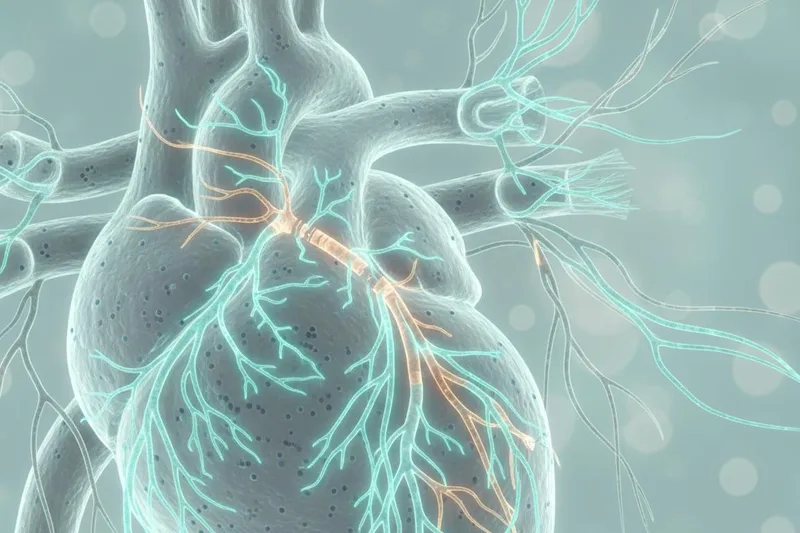
Have you ever had an ECG done and seen the words `Bundle Branch Block` on the report? Or maybe you have felt a slight strangeness or heaviness in your heart, but you can't figure out exactly what is causing it. Sometimes this condition can be present without any symptoms. Today, we will talk about this condition called `Bundle Branch Block`, very simply, in a way that you can understand.
What is Bundle Branch Block? Let's understand it simply!
Okay, now look... our heart is like a little motor, isn't it? It has to keep working. In order for this heart to beat, it needs a little electrical signal. It's like the current in our house to turn on the lights. These electrical signals travel along specific pathways in the heart. These pathways are what we call ``bundle branches.'' The electrical signals travel through these and tell the two main chambers at the bottom of the heart, the ``ventricles,'' to say, "Okay, now you guys are going to contract and pump some blood."
Normally, both of these heart chambers contract at the same time. That's when the heart pumps blood properly. However, when there is a ``Bundle Branch Block'', that means there is an obstruction or blockage in the electrical signal path I mentioned, that is, in the ``bundle branch''. It's like a wire is broken or blocked somewhere. Then that electrical signal doesn't go properly, it's delayed. Because of this, the two chambers don't contract at the same time. One contracts, and the other contracts a little later. This is what we call an abnormal heart rhythm.
However, not all bundle branch blocks require major treatment. Most of the time, doctors look for other underlying conditions that may be causing the problem and try to treat those.
Are there any types of Bundle Branch Block?
Yes, there are two main types of bundle branch block, depending on whether it affects the right side of the heart or the left side.
1. Right Bundle Branch Block (RBBB): This is when there is a blockage in the pathway that carries electrical signals to the right ventricle. Simply put, there is a problem with the right-sided wire.
2. Left Bundle Branch Block (LBBB): This is when there is a blockage in the pathway that carries electrical signals to the left ventricle. This means there is a problem with the left bundle branch block.
Sometimes, only one of these branches may be affected. Or, very rarely, both branches may be affected at the same time.
Who can develop this (Bundle Branch Block)? How common is it?
Actually, anyone can develop this condition called ``Bundle Branch Block''. However, with age and if you have other heart conditions, the risk of developing this is slightly higher.
- Right bundle branch block (RBBB): This is more common than LBBB. By the age of 50, about one in 100 people (0.8%) may have it. By the age of 80, about 11 in 100 people (11.3%) may have this condition.
- Left bundle branch block (LBBB): This is not as common as RBBB. In countries like the United States, it affects between 0.06% and 0.1% of the population. However, in people with heart failure, about one-third of them may have LBBB.
How does a bundle branch block affect the body?
We call the system that controls our heartbeat the ``heart conduction system''. Those pathways that I mentioned earlier, the ``bundle branches'', are also parts of this system. So, depending on where this obstruction is, the way it affects our body changes.
- Right bundle branch block (RBBB): If you have RBBB, the blockage is in the pathway that carries the electrical signal to the right ventricle. This causes your left ventricle to contract before the right ventricle.
- Left bundle branch block (LBBB): If you have LBBB, the blockage is in the pathway that carries the electrical signal to the left ventricle. This causes the right ventricle to contract before the left. This makes it harder for the heart to pump blood efficiently. Often, if you are diagnosed with LBBB, it means that you may have another underlying heart condition.
- Blockage of both the right and left bundle branches: This is a more serious condition. If this happens, the electrical signals from the upper chambers of the heart to the lower chambers (atrial fibrillation) can be completely blocked. This can cause a very slow heart rate (bradycardia) and can lead to other serious health problems.
What are the main causes of bundle branch block?
There are various reasons why a ``Bundle Branch Block'' can occur. Let's see what they are:
- Congenital heart disease
- Dilated cardiomyopathy (a condition in which the heart muscle becomes weak and enlarged)
- A myocardial infarction, or as we all know it, a heart attack
- Heart disease, especially coronary artery disease
- Heart failure
- Heart infection (myocarditis)
- Heart valve disease
- High blood pressure (hypertension)
- Hypertrophic cardiomyopathy (a condition in which the heart muscle thickens)
- Weakening or hardening of the heart muscle (cardiomyopathy)
In addition, right bundle branch block (RBBB) can also be caused by lung diseases. For example:
- Chronic obstructive pulmonary disease (COPD), a long-standing lung disease
- Pulmonary embolism
- High blood pressure in the lungs (Pulmonary hypertension - PH)
However, sometimes no specific cause can be found for this ``Bundle Branch Block``. The heart of such people may be healthy in all other respects.
What are the symptoms of a bundle branch block?
One of the surprising things about this is that most of the time, there are no symptoms even if you have a ``Bundle Branch Block``. However, if symptoms do occur, they can include things like:
- Dizziness
- Fainting, loss of consciousness `(syncope)`
- Feeling like you're about to faint (presyncope)
However, as I said, if there is blockage in both the right and left bundle branches of the heart, the symptoms may be a little different, and may even be a little more pronounced:
- An irregular heartbeat (arrhythmia)
- Difficulty breathing (dyspnea)
- Slow heart rate (bradycardia)
Symptoms are usually more noticeable in situations like these:
- If you have any other underlying heart disease.
- If there is obstruction in both the right and left bundle branches.
- If the `(Bundle Branch Block)` is at a slightly more severe level.
How do I find out if I have a Bundle Branch Block?
Doctors use two main tests to diagnose bundle branch block:
1. Electrocardiogram (EKG or ECG): You've probably had this done. Small stickers called electrodes are placed on your chest, arms, and legs, and a machine records your heart's electrical activity while you lie still. This can look at the way the heart's electrical signals travel and determine if you have a bundle branch block, and if so, whether it's on the right or left side.
2. Echocardiogram (echo): This involves applying a gel to your chest, placing a small device (wand) over your chest, and using high-frequency sound waves to take pictures of your heart's chambers and valves. This allows your doctor to see how your heart is beating, how it pumps blood, and whether there are any underlying heart conditions.
If you are diagnosed with bundle branch block, your doctor will also check for other related health conditions. They may also do tests such as:
- Blood pressure measurement (to check if the pressure is high (hypertension) or low (hypotension)).
- A blood test to check cholesterol levels in the blood.
- Cardiac catheterization (a test to examine the blood vessels of the heart)
- A ``Nuclear cardiac stress test'' is done to check for coronary artery disease.
- Pulmonary function testing is a test that checks how well the lungs are working.
How is Bundle Branch Block treated?
If you have no symptoms and no other serious underlying medical conditions, you may not need any specific treatment for bundle branch block. However, if you have other problems, such as high blood pressure or heart failure, you may need to take medications to control them.
But if you have symptoms like fainting, your doctor may suggest a pacemaker . This is a small device that is implanted under the skin of your chest by a cardiac electrophysiologist. It sends signals through wires connected to your heart, keeping your heart beating at a steady rate.
If you have heart failure or dilated cardiomyopathy, your doctor may recommend a treatment called Cardiac Resynchronization Therapy (CRT) . This uses a special type of pacemaker called a Biventricular Pacemaker . This helps both chambers of the heart contract at the same time. This CRT treatment can help reduce symptoms such as shortness of breath.
How to reduce the risk of developing bundle branch block?
To protect ourselves from `(Bundle Branch Block)` and other heart diseases, we need to adopt a healthy lifestyle. That means:
- Eat a heart-healthy diet (vegetables, fruits, greens, low-fat foods).
- Exercise regularly (such as walking, running, cycling).
- Maintain a healthy weight .
- Control cholesterol levels .
- Stop smoking and using tobacco products completely.
- If your blood pressure is high, get it under control.
- Go for regular medical checkups .
What are the risks if there are other diseases along with Bundle Branch Block?
If you have a ``Bundle Branch Block'' with these conditions, the risk to life may be slightly increased :
- Heart attack
- Other heart diseases
- Heart failure
One thing to remember in particular is that if you have a new case of `(Left Bundle Branch Block - LBBB)` and are also experiencing chest pain, it could be a sign of a serious underlying condition, such as a heart attack. If this happens, you should seek medical advice immediately.
What happens to someone with Bundle Branch Block? What's next?
Bundle Branch Block is usually a lifelong condition . The blockage may remain the same, or it may get worse over time.
Because Left Bundle Branch Block (LBBB) can sometimes be an early sign of complete heart block, pilots in countries like the US and UK are restricted from flying if they have LBBB. However, unless you have severe symptoms, having a Bundle Branch Block usually won't have a major impact on your daily activities.
In terms of outlook, if you don't have any other major underlying medical conditions, Bundle Branch Block may not have a significant impact on your overall health or lifespan. However, if you have other conditions that affect your heart, Bundle Branch Block may make those conditions get worse more quickly and your symptoms may increase.
If I have (Bundle Branch Block), how do I take care of myself?
If you have bundle branch block, tell your doctor every time you see a new doctor. This information will help them better understand your heart health and overall well-being.
Make sure your doctor knows you have a bundle branch block, especially in these cases:
- If you are doing an exercise stress test (because some diseases can be a little difficult to diagnose when you have LBBB).
- In the event of a medical emergency, such as a heart attack.
- If you are having surgery for another heart condition.
It's also a good idea to keep a copy of your ECG report handy, as it can be useful in an emergency.
What are the best times to see a doctor?
If you develop new symptoms, or if your symptoms get worse, be sure to see a doctor. Seek immediate medical attention, especially if you have any of the following symptoms:
- If you feel chest pain, discomfort, or tightness .
- If you feel very tired .
- If you feel like you are about to faint (presyncope).
- If you lose consciousness .
- If you have difficulty breathing or feel suffocated.
In summary (Take-Home Message)
Okay, so let's simply recall the `(Bundle Branch Block)` we talked about today:
- Bundle Branch Block (BBB) is a blockage in the electrical signal pathway in the heart. This can cause irregular heartbeats.
- This can affect the right side (RBBB), the left side (LBBB), or both sides.
- Most of the time, there are no symptoms .
- This is mainly detected through `ECG` and `Echo` tests.
- Treatment for `BBB` itself is not always necessary, but it is important to treat the underlying cause .
- Many people can live a normal life with bundle branch block, but the risk may be increased if you have other heart conditions.
So, if you too have a suspicion about this kind of condition, and have been told by a good doctor, don't be afraid. Follow the necessary instructions, live a healthy lifestyle. Then you too can stay healthy.
` bundle branch block, heart disease, ECG, heartbeat, heart electricity, RBBB, LBBB




💬 Comments (0)
No comments yet. Be the first to share your thoughts here.
Add Your Comment