
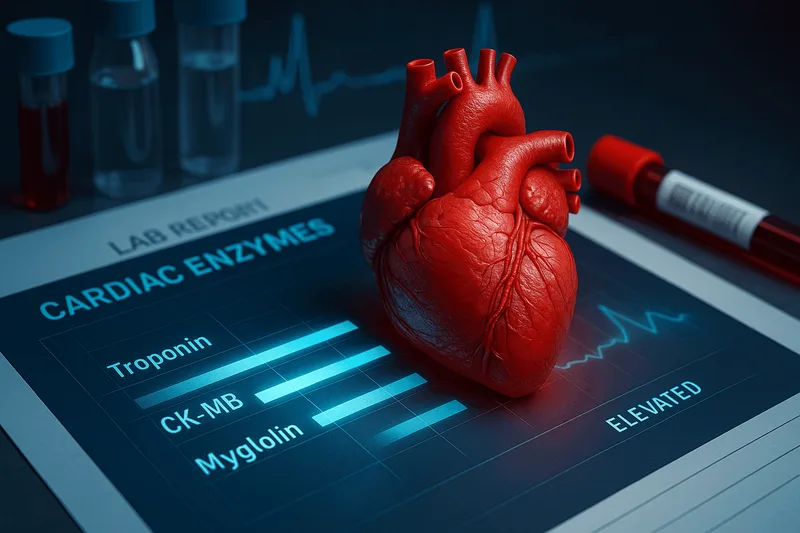
Sometimes we feel very scared when we suddenly have chest pain or difficulty breathing, don't we? We think, "Is this a heart attack?" At times like these, there is a special blood test that doctors use to find out exactly if there is something wrong with your heart. That is what this cardiac enzyme test is called.
What are these cardiac enzymes?
Simply put, cardiac enzymes are special proteins found inside the cells of our heart. Enzymes are chemicals that help our body carry out chemical processes, such as digestion , properly. Think of it this way: your heart is like a house. There are many valuable things inside this house. Normally, these things stay inside the house and don't come out.
However, if something is damaged in this house called the heart, for example, if the heart does not get enough oxygen (we call this ischemia ), or if a condition such as a heart attack occurs, the cells of the heart are damaged. It is like when a wall of a house is broken, the contents inside jump out. Then, the cardiac enzymes that were inside those cells start to accumulate in the blood. So, an increase in the amount of these enzymes in the blood is an important clue that there has been some pressure, damage, or stress on the heart . These are also called cardiac biomarkers , because they provide a “signal” about the health of the heart.
So, what is this Cardiac Enzyme Marker Test?
A cardiac enzyme marker test is a test that takes a sample of your blood and measures the levels of these specific enzymes, or biomarkers. This is a very simple blood test. A small amount of blood is taken from a vein in your arm.
The doctor uses this test to check whether the level of this enzyme in the blood is normal or elevated. If the level of this enzyme is much higher than the recommended level , it means that a heart attack may have occurred, or that there may be some stress on the heart. Therefore, this is a very important test.
How do doctors use these cardiac biomarkers?
Now you might be wondering, how can doctors diagnose a disease with just this blood test? In fact, doctors can understand a lot by looking at the levels of these cardiac biomarkers. It's like a detective putting together clues.
For example:
- Acute Coronary Syndrome (ACS): This is a condition caused by a sudden decrease in blood flow to the heart. This can be a precursor to a heart attack or it can be a heart attack. Cardiac enzyme levels can rise rapidly during this time.
- Myocardial Ischemia: This is when the heart muscle does not get enough oxygen. Just like a plant withers when it lacks water. When the heart cells are deprived of oxygen, they are stressed and release these enzymes.
- Injury to the heart muscle: Other causes, such as certain infections and a severe heart attack, can also cause damage to the heart muscle. These enzymes also accumulate in the blood at that time.
Each of these conditions has a different treatment approach. So, it's important to get an accurate diagnosis , because that's when you can get the most appropriate and prompt treatment.
What are the goals of this cardiac biomarker test?
Doctors check the levels of these cardiac markers for a few main reasons. Let's take a look at what they are:
- Screen for heart damage and other problems: Sometimes we may not have any major symptoms, but we may have small problems starting inside our hearts. This test can also identify such hidden problems.
- Diagnose heart conditions that cause symptoms like chest pain and shortness of breath : This is a test that is often done in an emergency. If you go to the hospital with chest pain, this is one of the first tests that doctors will do.
- Monitor how well heart medications and heart surgery work: After you start treatment for a heart attack, these enzyme levels should gradually decrease. By seeing if that happens, you can measure the success of the treatment.
- Predict a prognosis for various heart conditions: That is, these enzyme levels help to get an idea of how the disease will progress, how serious it is, and what the chances of recovery are.
“This test is like a book that tells the story of the heart. It gives clues about what happened to the heart, its current state, and what might happen in the future.”
Where is this cardiac enzyme test done?
Taking a blood sample for this cardiac enzyme test can be done in just a few minutes.
- In an emergency: If you have an emergency, such as chest pain, and go to the hospital's Emergency Treatment Unit (ETU), this blood test will be done right there.
- In a non-emergency situation: Sometimes your doctor may order this test, either during a routine checkup or due to other symptoms. In that case, you can go to a blood testing lab and have it done.
What types of cardiac enzymes (biomarkers) are there?
There are different types of cardiac biomarkers that can tell you about heart problems. Almost all of these are enzymes or proteins. Elevated levels of some of these can indicate that you may have cardiovascular disease or another heart condition.
- Troponin: This is the most important and commonly used biomarker . Doctors first look at troponin levels to see if the heart has been damaged by a heart attack or ACS. Troponin levels start to rise in the blood within a few hours (about 3-4 hours) of a heart attack, and can stay elevated for up to 12 hours. Also, it can remain elevated in the blood for a week or two. Therefore, doctors sometimes repeat this troponin test every few hours or days to understand the extent of the damage and how the condition is changing.
- Natriuretic Peptides (NPs): These are another type of protein. They are released into the blood when the heart is under too much strain, especially in conditions like heart failure . Although doctors can measure several types of these peptides, the most common is called N-terminal proBNP (NT-proBNP) . This can be used to assess how much strain the heart is under due to heart failure.
Who needs this cardiac enzyme (biomarker) test?
Your doctor may order this cardiac enzyme test if you have symptoms that suggest you have a heart problem. Such symptoms include:
- Chest pain or discomfort: This is the main symptom that most people fear. It can come in one form or another. Some people may feel like a pressure, some may feel like a weight, and others may feel like a burning sensation. This pain can also spread to the jaw, neck, mid-back, shoulders, or left arm.
- Dizziness: When the heart is not working properly, the amount of blood flowing to the brain can decrease, causing dizziness.
- Nausea or Vomiting: Some heart attacks also show these symptoms, especially in women.
- Profuse sweating: If you suddenly feel cold and start sweating for no reason, that is also a symptom to pay attention to.
- Shortness of breath: If you find it difficult to breathe even with minor exertion, such as climbing stairs, or if you feel short of breath even when just standing still, this should also be taken into consideration.
- Heart failure exacerbation: If a person already has heart failure has a sudden increase in symptoms (e.g., swelling of the legs, increasing shortness of breath).
If you have one or more of these symptoms, it is very important to seek medical advice immediately.
What other blood tests do doctors use to diagnose a heart attack or heart damage?
In addition to the cardiac enzyme test, your doctor may order several other blood tests to better understand your condition:
- Complete Blood Count (CBC): This measures the number of red cells, white cells, and platelets in the blood. It helps detect conditions such as anemia.
- Basic Metabolic Panel (BMP) : This tests things like electrolytes (such as sodium and potassium), kidney function, and sugar levels in the blood.
- Blood Gas Test (ABG): This measures the oxygen, carbon dioxide, and acid-base balance in the blood. This is important to find the cause of breathing difficulties.
What other equipment and tests are used to diagnose a heart attack or heart damage?
In addition to blood tests, your doctor may decide to perform several other tests to determine the exact condition of your heart:
- Chest X-ray: This can be used to see things like the size and shape of the lungs and heart.
- Echocardiogram: This is like an ultrasound scan of the heart. It can look closely at the heart's chambers, valves, and how the heart is beating. Sometimes a special echo test called a Transesophageal Echocardiogram (TEE) may also be done.
- Electrocardiogram (ECG or EKG): This records the electrical activity of the heart. It can detect problems with the heart's rhythm and symptoms of a heart attack.
- Exercise stress test or nuclear cardiac stress test: These tests are done to see how your heart responds when you exercise.
- Angiogram: This test is done to see exactly where there is a blockage in the coronary arteries that supply blood to the heart.
- Positron Emission Tomography (PET) Scan: This high-tech scan is used to see how healthy the heart cells are and how well blood is flowing.
The question, “Am I having a heart attack or not?” is a big one. At times like these, you need clear answers to move forward. That’s why doctors use cardiac biomarker tests and other tests. If your blood levels of cardiac enzymes are elevated, it can indicate that your heart is damaged, stressed, or inflamed. Now is the time to ask your doctor questions about your cardiac enzymes and what your test results mean.
Important things to remember (Take-Home Message)
Okay, so let's summarize some of the things you need to remember from what we've talked about:
- Cardiac enzymes are proteins released from heart cells. These accumulate in the blood when the heart is damaged.
- The cardiac enzyme test is a simple blood test that measures the levels of these enzymes.
- This test can detect conditions such as heart attacks, other heart damage, and heart stress. Troponin is the main enzyme used for this.
- If you experience symptoms such as chest pain, difficulty breathing, or dizziness, it is important to seek medical advice immediately.
- Don't have any doubts about your test results. Talk to the doctor and clarify everything.
Your heart is your most precious possession. It is your responsibility to take care of it. Being aware of tests like these will help you fulfill that responsibility!




💬 Comments (0)
No comments yet. Be the first to share your thoughts here.
Add Your Comment