
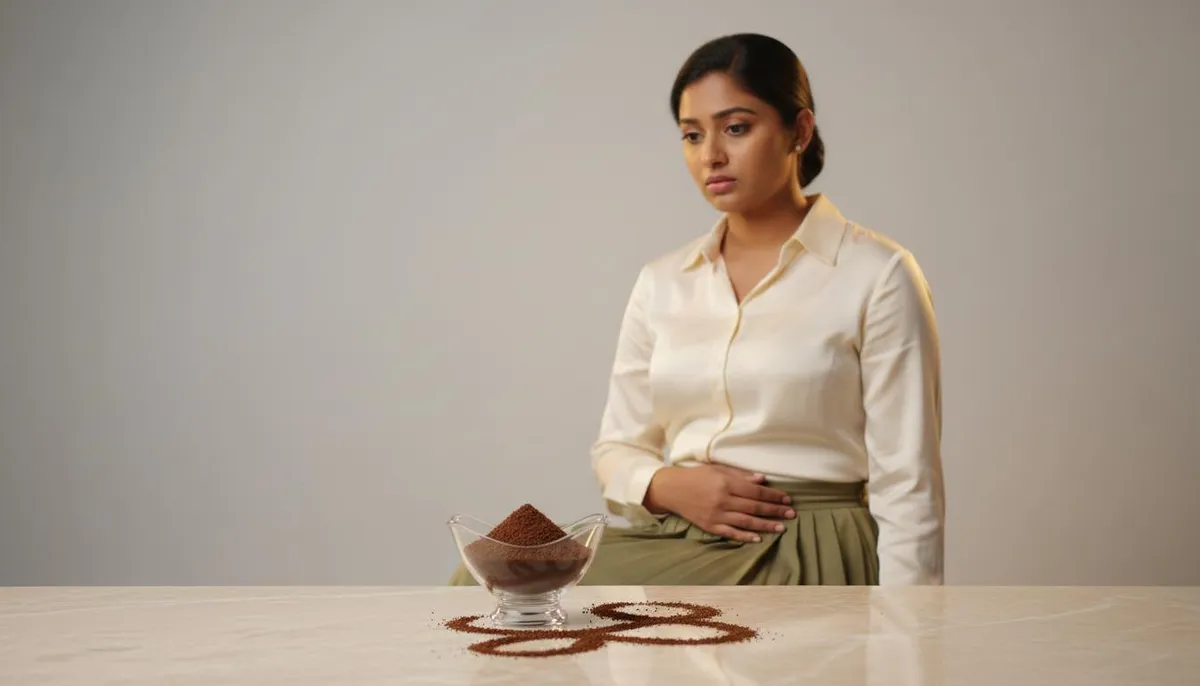
Many people assume that if you are bleeding internally in your stomach, whatever you throw up must be bright, alarming red. Because of that common belief, when someone vomits dark brown, grainy fluid and feels a bit better afterward, they often brush it off as leftover chocolate, yesterday's dark soda, or just a strange stomach bug and try to sleep it off with a glass of ginger ale. Be honest, you might have thought the exact same thing, haven't you? In truth, we doctors see this dangerous misconception delay vital hospital care all the time.
When vomit looks dark brown or black and has a gritty, speckled texture just like wet coffee grounds left in a filter, it is almost never harmless food residue. In medicine, we call this coffee ground vomitus (or coffee ground emesis), and it is one of the clearest warning signs your body can give you that bleeding is happening inside your upper digestive tract. Even if your stomach isn't hurting right this second, this is a symptom you should never ignore or try to treat at home.
Let's sit down and walk through everything you need to know right now—what causes that distinct dark brown appearance, why it happens, who is most at risk, and exactly what our medical teams will do to keep you safe when you arrive at the hospital.
📌 Key Takeaways at a Glance
- The Medical Meaning: Coffee ground vomitus is coagulated blood that has sat inside your stomach and reacted chemically with strong stomach acid, turning dark brown or black.
- Why It Is Serious: It points directly to an upper gastrointestinal bleed (in your food pipe, stomach, or upper small intestine) and requires prompt hospital evaluation.
- Top Triggers: Bleeding stomach ulcers, frequent use of over-the-counter anti-inflammatory pain relievers (like ibuprofen, naproxen, or aspirin), severe acid reflux, and liver disease.
- Immediate Action: Stop eating or drinking immediately, and head to your nearest hospital Emergency Room (ER or A&E). Call 911 (US/Canada), 999 (UK), or 000 (Australia) if you feel dizzy, faint, or short of breath.
Caffeine half-life calculator. See how much caffeine is in your system at bedtime based on when you last drank coffee or energy drinks.
What Is Coffee Ground Vomitus (Coffee Ground Emesis) in Medical Terms?
Coffee ground vomitus (medically termed coffee ground emesis, a specific form of hematemesis) is the vomiting of dark brown or black, granular material that looks like wet coffee grounds. It occurs when blood from an upper gastrointestinal bleed sits in the stomach and oxidizes upon contact with gastric acid.
Have you ever wondered why blood in your stomach would turn brown instead of staying red? Think about it for a second—your stomach is essentially an acid bath designed to break down tough food fibers. It produces powerful hydrochloric acid (gastric acid) along with digestive enzymes like pepsin.
When a blood vessel leaks in your esophagus (food pipe), your stomach, or your duodenum (the very first curve of your small intestine), that blood pools inside the stomach cavity. As the iron molecules inside your red blood cells (hemoglobin) come into contact with gastric acid, a rapid chemical oxidation occurs. This reaction converts red hemoglobin into a dark brown pigment called hematin, while clumping the blood proteins together into tiny, gritty specks. Pretty fascinating how fast chemistry works inside us, right?
For us doctors, seeing this specific dark brown, granular texture gives us an immediate clinical clue. Unlike bright red blood—which tells us a vessel is bleeding rapidly and freshly right now—coffee ground vomitus tells us the bleeding has been slow, steady, or has recently slowed down enough to sit in the stomach acid for at least a short period before you threw up.
Why Does Coffee Ground Vomiting Happen? Main Causes of Dark Brown Vomit
When patients ask us why they are suddenly throwing up dark brown specks, we explain that the culprit is almost always located in the upper gastrointestinal (GI) tract. A common myth is that a blockage way down in your lower colon causes dark vomit, but that is rarely the case. Bleeding in the lower bowel typically passes downward, while bleeding above the middle of the small intestine triggers nausea and comes back up.
Here are the primary medical conditions we look for when evaluating coffee ground vomitus:
- Peptic Ulcer Disease (Stomach or Duodenal Ulcers): This is the number one cause we see in emergency departments. Ulcers are open sores that eat through the protective mucus lining of your stomach or upper small intestine. If an ulcer erodes deep enough to hit a tiny underlying blood vessel, it bleeds directly into your stomach acid.
- Gastritis and Esophagitis: Severe inflammation of the stomach lining (erosive gastritis) or the swallowing tube (esophagitis)—often triggered by chronic acid reflux (GERD), stress on the body, or infection—can cause the delicate surface tissue to ooze blood steadily.
- Mallory-Weiss Tears: Have you recently had a bout of food poisoning, a severe stomach virus, or morning sickness where you were retching and dry-heaving violently? Forceful coughing or repeated vomiting can cause a small, sharp tear in the tissue right where your esophagus meets your stomach, leading to bleeding.
- Esophageal Varices: These are enlarged, swollen veins in the lower food pipe, usually seen in people with chronic liver disease or cirrhosis. Because blood cannot flow easily through a scarred liver, it backs up into these fragile veins, which can leak or rupture.
- Benign Polyps or Upper GI Tumors: Though much less common than ulcers, abnormal growths or cancers in the stomach or esophagus can develop fragile blood vessels on their surface that bleed slowly over time, often causing unexplained fatigue before coffee ground vomiting ever appears.
Bright Red Blood vs. Coffee Ground Vomit vs. Dark Stool: What Is the Difference?
When internal bleeding happens in your digestive system, the color and texture of what leaves your body tell us doctors a detailed story about where the bleed is and how fast it is moving. Look at how we compare these symptoms in the clinic:
| Symptom or Appearance | Clinical Meaning & What You Should Do |
|---|---|
| Coffee Ground Vomitus (Dark brown or black granular specks in vomit) |
Indicates blood has been sitting in the stomach long enough for stomach acid to oxidize the iron into dark brown hematin. Suggests a slow, oozing, or recently paused upper GI bleed (such as a bleeding peptic ulcer or severe gastritis). What you should do: Stop eating and drinking immediately. Take a quick smartphone photo of the vomit to show the medical team, and have someone drive you to the nearest hospital Emergency Room (ER / A&E) today. |
| Bright Red Vomitus (Fresh red liquid or large dark red clots) |
Indicates active, brisk bleeding in the esophagus or stomach that is happening too fast to react with stomach acid. This can come from a ruptured esophageal vein (varix) or a deep ulcer cutting into an artery. What you should do: Treat this as a life-threatening emergency. Do not drive yourself—call 911 (US/Canada), 999 (UK), or 000 (Australia) immediately for an ambulance. |
| Black, Tarry Stools (Melena) (Sticky, jet-black bowel movements with a strong odor) |
Remember how we talked about stomach acid turning blood dark brown? When blood from an upper GI bleed travels all the way down through your intestines instead of being vomited up, digestive enzymes turn your stool jet-black and sticky like road tar. What you should do: Seek urgent medical evaluation at an Emergency Room (ER / A&E) the same day, especially if accompanied by coffee ground vomiting or lightheadedness. |
| Food or Drink Mimics (Dark vomit right after consuming dark items) |
Drinking black coffee, dark cola, red wine, or eating dark chocolate, Oreos, or blueberries shortly before getting sick can closely mimic coffee grounds. Bismuth subsalicylate (Pepto-Bismol) or iron supplements can also turn stomach contents and stools black. What you should do: Never guess at home. Unless you are 100% certain and feel completely fine, contact your Primary Care Physician (PCP) / family GP clinic, visit a local Urgent Care center, or call 111 (in the UK) to have a clinician test a sample for hidden blood. |
Who Is at Greater Risk for Upper GI Bleeding?
We rarely stop to think about how everyday tablets in our medicine cabinet affect our stomach lining, do we? While anyone can develop an upper digestive bleed, certain medications, infections, and health conditions make the protective barrier of your stomach much more vulnerable.
- Regular Use of NSAID Pain Relievers: Over-the-counter Non-Steroidal Anti-Inflammatory Drugs (NSAIDs)—including ibuprofen (Advil, Motrin, Nurofen), naproxen (Aleve), and daily aspirin—block the natural chemicals that protect your stomach lining from its own acid. Taking these frequently for arthritis, back pain, or headaches is one of the biggest triggers we see.
- Blood Thinners (Anticoagulants and Antiplatelets): If you take medications like warfarin, apixaban, rivaroxaban, or clopidogrel for heart health or stroke prevention, they won't necessarily cause an ulcer by themselves, but they will make even a tiny stomach scratch bleed much more heavily.
- Helicobacter pylori (H. pylori) Infection: This very common spiral-shaped bacterium quietly lives in the stomach lining of millions of people, gradually weakening the mucus coat and causing chronic ulcers.
- Heavy Alcohol Use or Liver Conditions: Alcohol directly irritates and erodes the stomach lining, while long-term liver disease increases pressure in the veins around the food pipe.
- Older Adults and Chronic Illness: As we get older, our stomach lining repairs itself more slowly, and we are more likely to be taking a combination of heart or pain medicines that raise bleeding risk.
What Will a Doctor Do at the Hospital? Diagnosis & Treatment
Walking into an Emergency Room (ER or A&E) when you are throwing up dark material can feel overwhelming. Knowing ahead of time what our hospital teams will do takes away a huge amount of that anxiety. Now that makes sense, right? When you arrive, doctors and nurses work efficiently with two main priorities: keeping your circulation completely stable, and finding the exact spot that is bleeding.
1. Asking Questions About Your Health & Checking Vitals
First, the nurse and doctor will check your blood pressure, heart rate, and oxygen levels—often taking your blood pressure while you are lying down and again when you sit or stand up to see if blood loss is making your pressure drop. We will ask focused questions about when the vomiting started, whether you have noticed black, tarry stools (melena), and whether you have had burning stomach pain or acid reflux. Be ready to tell us every single medication you take, including over-the-counter pain pills, herbal supplements, or blood thinners, as well as your honest alcohol intake.
2. Running Important Lab & Diagnostic Tests
To get a complete picture of what is happening inside your body, the emergency team will arrange a few key investigations:
- Comprehensive Blood Tests: We draw blood to check your Complete Blood Count (CBC), paying close attention to your hemoglobin levels to see if you have become anemic from blood loss. We also check your blood clotting speed (coagulation panel), your kidney function (since digested blood in the gut temporarily raises a lab value called blood urea nitrogen, or BUN), and your liver enzymes, while cross-matching your blood type just in case you need a transfusion.
- Upper Endoscopy (EGD / Gastroscopy): Once you are stable, we refer you to a digestive specialist (a gastroenterologist) at the hospital for an esophagogastroduodenoscopy (EGD). While you are given sedative medicine through an IV so you are relaxed, comfortable, and sleepy, the specialist gently guides a thin, flexible tube with a tiny high-definition camera down your throat to inspect the lining of your esophagus, stomach, and duodenum directly.
3. Providing Targeted Treatment to Stop the Bleed
Here is the most reassuring part: an upper endoscopy isn't just a camera test—it allows the specialist to fix the bleeding on the spot! Through the tiny channel in the scope, the doctor can place microscopic metal clips onto a bleeding vessel, inject medication right around an ulcer, apply gentle heat cautery, or place delicate elastic bands around swollen veins.
Alongside the procedure, you will receive intravenous (IV) fluids to keep your blood pressure steady and high-dose acid-suppressing medication called a Proton Pump Inhibitor (PPI) (such as omeprazole or pantoprazole) through your IV. Lowering stomach acid immediately allows your body's natural blood clots to stay firm and heal the raw tissue without being dissolved by acid. Once you head home, we will coordinate follow-up care with your Primary Care Physician (PCP) or family GP clinic—often prescribing oral acid blockers or antibiotics if an H. pylori infection is found.
✔️ What You Should Do & ❌ What to Avoid Right Now
- ✔️ DO stop eating and drinking immediately: Keep your stomach completely empty (not even water, crackers, or peppermint tea). An empty stomach gives the specialist a clear view during an endoscopy and keeps you safe during sedation.
- ✔️ DO take a clear photo or save a small sample: Snap a quick picture of the vomit on your phone so the ER doctor can see the exact color, texture, and volume right away.
- ✔️ DO bring your medication list: Grab your pill bottles or a list on your phone, including any ibuprofen, aspirin, or blood thinners you have taken in the past week.
- ❌ DON'T take antacids, Pepto-Bismol, or milk: Coating your stomach with chalky liquids or bismuth turns the lining white or black, making it much harder for the camera to spot a tiny bleeding vessel.
- ❌ DON'T take any more NSAID pain relievers: Even if you have a headache or stomach ache, never take aspirin, ibuprofen, or naproxen when you suspect upper GI bleeding.
- ❌ DON'T drive yourself to the hospital: Hidden blood loss can make you suddenly dizzy or faint behind the wheel. Have a family member, friend, or ambulance take you safely.
When Should You See a Doctor vs. Go Straight to the ER?
Patients often ask us, "Can I just book an appointment with my family GP or stop by a local Urgent Care center tomorrow morning?" Let's be crystal clear: true coffee ground vomitus cannot be evaluated properly in a standard doctor's office or walk-in urgent care clinic because those clinics do not have endoscopy equipment or inpatient blood labs on standby.
The only time a routine conversation with your Primary Care Physician (PCP) or family GP is appropriate is after you have been treated at the hospital and discharged, or if you have mild, ongoing heartburn and want to prevent ulcers before any bleeding ever starts. If you actually see coffee-ground material in the bowl today, your destination needs to be a hospital Emergency Department.
🚨 When to Seek Immediate Emergency Care (Red-Flag Symptoms)
If you or someone near you develops any of these red-flag symptoms alongside dark or bloody vomit, do not wait—call 911 (US & Canada), 999 or 111 (UK), or 000 (Australia) immediately, or go straight to the nearest hospital Emergency Room (ER / A&E):
- Vomiting dark brown coffee-ground specks repeatedly or vomiting fresh, bright red blood.
- Feeling dizzy, lightheaded, faint, or unsteady when you try to sit up or stand.
- Sudden confusion, extreme drowsiness, or difficulty staying awake.
- Cold, clammy, pale, or sweaty skin combined with a racing or fluttering heartbeat.
- Shortness of breath or chest discomfort, even while resting.
- Severe, sharp abdominal pain or passing black, tarry stools (melena).
💡 Key Take-Home Message
- Never brush off dark, gritty vomit: Coffee ground vomitus means blood has reacted with stomach acid inside your upper digestive system.
- Keep your stomach empty: Do not eat food, drink water, or take liquid stomach remedies once you notice this symptom so your doctors can safely perform an endoscopy if needed.
- Know your triggers: Frequent use of NSAID painkillers (like ibuprofen or aspirin), untreated acid reflux, H. pylori bacteria, and alcohol irritation are top causes that can be successfully managed once treated.
- Act early for a smooth recovery: Heading straight to the Emergency Room allows doctors to stabilize your fluid levels and seal off bleeding ulcers quickly with minimally invasive tools.





No comments yet. Be the first to share your question or experience below.