
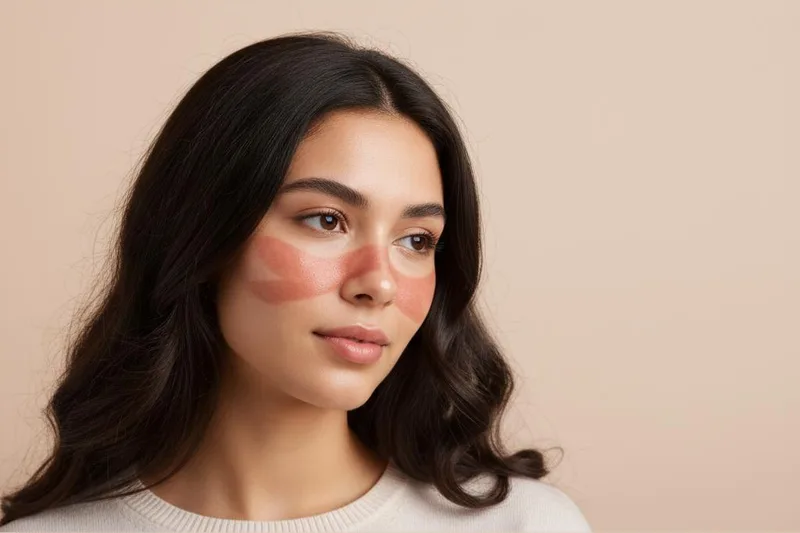
Have you ever noticed that some people have a red spot in the shape of a butterfly across their cheeks and nose? Or that after spending some time in the harsh Sri Lankan sun, a rash suddenly appears on their skin? These are not just skin problems. Sometimes these can be external signs of a problem inside our bodies. Today we are talking about a condition that shows such symptoms, which many people are not exactly aware of, but is very important to be aware of. That is Cutaneous Lupus.
What is Cutaneous Lupus?
Simply put, cutaneous lupus is an autoimmune disease that affects our skin. Now you're probably wondering what this "autoimmune" thing is. Okay, let me explain it this way.
Imagine that our country's army is there to protect us from external enemies. Similarly, our body also has an immune system. Its job is to protect us from diseases by fighting against enemies like germs, viruses, and bacteria that enter the body from outside.
But, in an autoimmune disease, something very unfortunate happens. Our own body's defense system, the immune system, gets confused. It can't tell who is friend and who is enemy. So instead of attacking foreign germs, it starts attacking our own healthy cells . It's like our own army attacking our own people.
In cutaneous lupus, the immune system attacks our skin cells, causing persistent inflammation of the skin, leading to symptoms such as rashes, spots, itching, and swelling.
Is this the same disease that everyone knows about when they say lupus?
No. You may have heard of a disease called Systemic Lupus Erythematosus (SLE). That is also a type of lupus. But in SLE, the immune system attacks not only the skin. It can also affect our entire body, including major organs like the joints, blood vessels, kidneys, and heart.
Cutaneous Lupus Erythematosus (CLE) is a type of lupus that is primarily limited to the skin. However, sometimes, someone with CLE can develop SLE later on. Therefore, it is very important to be aware of any signs of lupus in the skin.
Remember, cutaneous lupus (CLE) is two to three times more common than systemic lupus (SLE).
Are there different types of lupus?
Yes, cutaneous lupus can come and go. For some people, symptoms come and go. For others, they continue to have symptoms, some days less severe and some days more severe. The disease is classified according to how long the symptoms last and the type of skin lesions. Let's look at the main types.
| Type of lupus | Nature and characteristics |
|---|---|
| Chronic Cutaneous Lupus | In this type, symptoms can last a long time, sometimes a lifetime. They may not go away completely. Sometimes, scars or skin discoloration may remain after the spots heal. Discoid lupus is the most common subtype. |
| Acute Cutaneous Lupus | This is also a lifelong condition. But the symptoms are not constant. They appear suddenly and disappear after a while. But they can reappear. Most of the time, they do not leave scars. The butterfly-shaped rash (malar rash) we talked about belongs to this type. |
| Subacute Cutaneous Lupus | In this type, symptoms are limited in duration, but they recur. For example, these symptoms may appear every year during the summer when the sun is strong. They affect a layer slightly deeper than the surface of the skin. |
What are the symptoms of this disease?
Cutaneous lupus can cause a variety of skin symptoms. Some symptoms are specific to lupus. Others can also be seen in other skin diseases. Let's take a look at the main symptoms.
Commonly seen symptoms
- Red, scaly patches: These can be discoid or annular. They are most common on sun-exposed areas such as the head, neck, and hands. In people with darker skin, these patches may appear purple or brown.
- Malar Rash: This is the symptom that most people think of when they think of lupus. It is a red rash that appears across the cheeks and bridge of the nose, resembling a butterfly spreading its wings.
- Skin color changes: After areas where previous blemishes have healed, the skin color in those areas may become lighter (hypopigmentation) or darker (hyperpigmentation).
- Photosensitivity: People with lupus experience increased skin symptoms when exposed to sunlight. Even a short period of exposure to the sun can cause a rash, and the rash can become severe.
- Hair loss: If lupus spots (discoid lesions) develop on the scalp, they can become scarred and cause permanent hair loss.
- Sores inside the mouth or nose: Painless, small sores can occur on the roof of the mouth, inside the cheeks, or inside the nostrils.
- Itching and swelling of the skin: Some spots may be accompanied by itching and swelling, especially around the eyes (edema).
Why does this happen? What are the risk factors?
As we mentioned earlier, this is an autoimmune disease. This means that it is caused by a mistake in our own immune system. Scientists are still not 100% sure why this happens. But they believe that a combination of factors may play a role.
They are genetic predisposition and environmental triggers .
Simply put, some people have a slight predisposition to develop this type of disease in their genes. But the disease does not develop just because they have that predisposition. When a person with that genetic predisposition is exposed to certain environmental factors, it can stimulate the immune system and cause the disease to appear.
The most powerful environmental trigger for cutaneous lupus is ultraviolet (UV) radiation , which means exposure to sunlight or artificial light sources such as fluorescent light.
Other factors that increase risk:
- Being a woman: Women are at higher risk of developing lupus than men, especially during periods when estrogen levels are high.
- Heredity: If someone in your family has lupus or another autoimmune disease, you may also be at slightly increased risk.
- Having other autoimmune diseases: People with other autoimmune diseases, such as thyroid disease and rheumatoid arthritis, are at higher risk of developing lupus.
- Long-term use of certain medications: Some high blood pressure medications and epilepsy medications, when used long-term, can cause a lupus-like condition.
- Severe mental or physical stress: Severe stress on the body, such as a severe infection or accident, can sometimes trigger the disease.
- Smoking: Smoking is a strong cause of lupus and worsening of symptoms.
How does a doctor find this?
If you experience these skin symptoms, the best thing to do is to see a doctor, preferably a dermatologist . He or she will ask you about your symptoms and examine your skin carefully.
Some lupus rashes (such as the malar rash) can be recognized immediately. However, because some spots resemble other skin conditions, further tests may be needed to confirm the diagnosis.
- Skin Biopsy: This involves taking a small amount of numbing medicine from a spot and taking a small piece of skin and examining it under a microscope. This can help determine if there are any changes in the skin cells that are related to lupus.
- Direct Immunofluorescence: This is also a special test done on a skin biopsy. It can detect whether there is evidence that the immune system is attacking the skin.
- Blood tests: Sometimes your doctor will also recommend some blood tests. These are done to check for signs of SLE, a condition that affects the body's internal organs, in addition to lupus on the skin.
What are the treatments for this?
The first and most important thing to say is that there is still no cure for cutaneous lupus, because it is related to the functioning of our own immune system.
But don't worry! This doesn't mean you have to suffer with these symptoms forever. With proper treatment and lifestyle changes , you can manage your symptoms very well and live a normal life.
The treatment plan is determined by considering the type of lupus you have, the severity of your symptoms, and how they are affecting your life.
The main treatment methods and instructions are:
1. Sun protection: This is the most important and must-do thing. Exposure to the harsh Sri Lankan sun should be minimized as much as possible.
- Avoid going out in the strong sun between 10:00 am and 4:00 pm.
- If you go outside, wear clothing that covers your body, such as a wide-brimmed hat and long-sleeved clothing.
- Use a good sunscreen with an SPF of 50 or higher, as recommended by your doctor. Apply 20 minutes before going outside.
2. Topical Medications:
- Your doctor may prescribe creams, lotions, or ointments to control skin inflammation and rashes. Corticosteroid creams and tacrolimus ointments are the most commonly used.
3. Drug injection:
- Sometimes, if the spots are very thick and do not respond to treatment, the doctor may inject a steroid medication directly into the spot.
4. Oral Medications:
- If skin symptoms are severe or not controlled with topical medications, oral medications may be prescribed. The most commonly used medications for lupus are hydroxychloroquine and chloroquine . These help control the overactivity of the immune system.
5. Vitamin D:
- Avoiding sun exposure may cause a vitamin D deficiency in your body. Your doctor will test you for this and prescribe vitamin D tablets if necessary.
Things to consider when living with lupus
Cutaneous lupus is a lifelong condition, but with proper management, you can live with it successfully. While it may be difficult to adjust to these changes at first, over time they will become a part of your life.
- Avoid picking or scratching at skin blemishes. Doing so can further damage the skin and cause new blemishes to appear.
- If you are concerned about blemishes, use special cosmetics recommended by your doctor to cover them.
- It would also be good if you could reduce the use of fluorescent lights (tube lights) at home and at work . They also emit a small amount of UV rays.
- See your doctor regularly. Attend regular checkups to monitor your condition and check for other conditions, such as SLE.
- Think about your mental health too. Visible blemishes on your skin can sometimes make you feel sad and anxious. At times like these, talk to someone you trust and seek counseling if necessary.
Cutaneous lupus is not a life-threatening disease. But it can affect your quality of life. The most important thing is to be well-informed about the disease, follow your doctor's instructions carefully, and find the treatment and lifestyle that is right for you.
Take-Home Message
- Cutaneous lupus is a disease caused by our own immune system attacking the skin. It is not contagious.
- Its main symptoms are a butterfly-shaped rash across the cheeks and nose, and scaly patches that worsen with sun exposure.
- The main cause of this disease is exposure to sunlight (UV rays) . Therefore, sun protection is essential.
- Although this cannot be completely cured, it can be very well controlled with medication and lifestyle changes.
- If you have these symptoms, it is very important to see a doctor, especially a dermatologist, as soon as possible.




💬 Comments (0)
No comments yet. Be the first to share your thoughts here.
Add Your Comment