
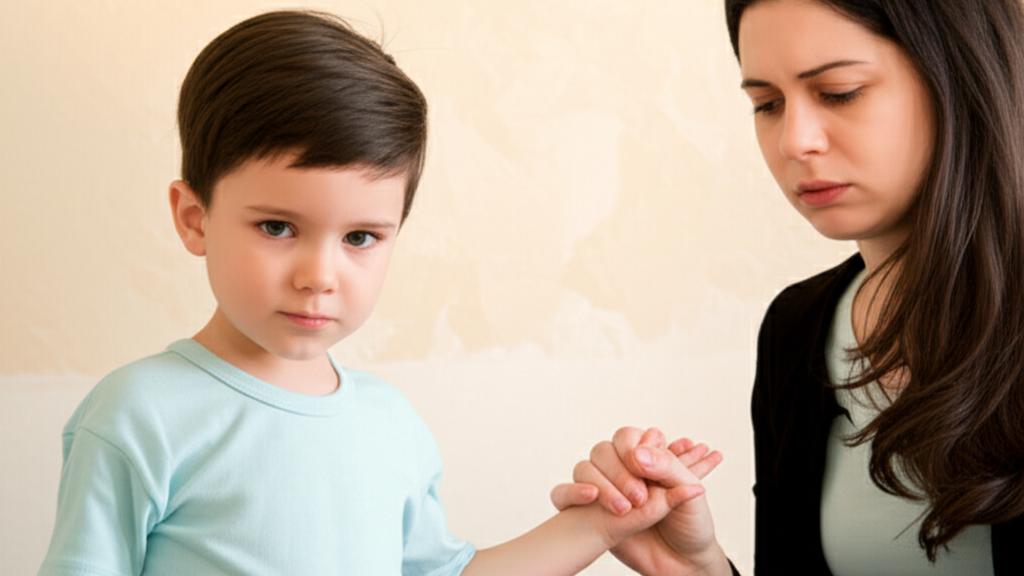
As a parent, you want to protect your child from harm. When you visit the doctor for routine shots, you might feel nervous. This is completely normal and expected.
Many parents worry about vaccine safety because of rumors online. One major myth claims that vaccines cause autism. Is this true, or is it a harmful misunderstanding?
Let us explore this topic using solid science. We will use simple, clear words so you can understand the facts easily.
Key Takeaways: What You Need to Know
- Vaccines do not cause autism. Extensive global research proves this fact beyond doubt.
- The original claim came from a flawed and fraudulent 1998 study with only twelve children.
- Removing thimerosal from vaccines did not change autism rates at all.
- Giving multiple vaccines at once does not overwhelm a baby's immune system.
- Always speak with your doctor if you have questions or worries about your child's shots.
BMI Calculator
Know your body mass index (BMI) and weight classification
How Did This Story Start? The MMR Vaccine Controversy
This entire story started in the year 1998. A researcher in England named Andrew Wakefield published a medical paper. He claimed that the measles, mumps, and rubella shot caused autism. This shot is known as the MMR vaccine.
Parents around the world read this news and felt terrified. But this study had a major flaw. It looked at only twelve children. Twelve children is far too small a group to prove a medical fact.
Other scientists tried to repeat his results. They wanted to see if his claims were true. At least twelve large follow-up studies took place across the globe. None of these studies found any link between the MMR vaccine and autism.
Later, investigative journalists and medical boards looked closely at Wakefield's original work. They discovered severe errors and intentional fraud. The General Medical Council in England investigated the case deeply.
In 2010, they announced that the study was dishonest. They revoked Wakefield's medical license. Investigations showed he received large sums of money from lawyers who wanted to sue vaccine makers.
To put it simply, the rumor that started a global panic was built entirely on a lie. The initial research paper was fake and fraudulent.
What About Thimerosal?
After the MMR scare, fears shifted to another target. People began talking about a compound called thimerosal. Thimerosal was used in some multi-dose vaccine vials to prevent germ growth.
It contains a form of mercury called ethylmercury. When people hear the word mercury, they panic. They know that high levels of mercury can harm the human brain and body.
But context matters greatly in medicine. The amount of thimerosal in vaccines was extremely small. This tiny amount was entirely safe for the human body. Ethylmercury leaves the body very quickly.
It does not build up in tissues like methylmercury does. Still, to ease public anxiety, health agencies took action. By 2001, makers removed thimerosal from almost all childhood routine vaccines in the United States and Europe.
Researchers tested what happened next. They compared children who received vaccines with thimerosal to children who received vaccines without it. Around nine major studies looked at this question.
None of them found any difference in autism rates. The strongest proof is simple. Makers removed thimerosal from vaccines completely. Yet, autism diagnoses continued to rise steadily.
This clear fact shows that thimerosal does not cause autism. If thimerosal caused autism, rates would have dropped after its removal. Instead, they kept rising because doctors got better at spotting autism early.
Are Multiple Vaccines Given Together a Problem?
Some people worry about the sheer number of shots. Babies receive many vaccines during their first two years of life. Some parents wonder if this causes an immune system overload.
They think too many vaccines at once might trigger autism. Scientists studied this question carefully. They compared two large groups of children. One group followed the standard, recommended vaccine schedule.
The second group delayed shots or skipped certain vaccines. What did the data show? There was no difference in autism rates between the two groups.
The number of vaccines given together does not cause autism. A baby's immune system faces thousands of germs every single day. The antigens in vaccines are a tiny fraction of what babies handle naturally.
| Common Myth | Scientific Fact |
|---|---|
| MMR vaccine causes autism. | This myth comes from a fraudulent study. Over twelve large follow-up studies proved no link exists. |
| Thimerosal in vaccines causes autism. | The amount was safe. Removing it did not lower autism rates, proving it was never the cause. |
| Too many shots at once overwhelm babies. | Studies show children with delayed schedules have the same autism rates as those on time. |
What Does Science Say?
Medical experts have studied this question for over twenty years. In 2004, the Institute of Medicine reviewed all available data. They released a massive report stating that vaccines do not cause autism.
Research did not stop there. In 2019, scientists completed one of the largest studies ever done. They followed nearly 660,000 children over eleven years. Their final conclusion matched all previous findings.
Vaccines and autism share no connection. Vaccines protect your children from dangerous diseases. They stop measles, polio, and whooping cough. They save millions of lives around the world every single year.
When to Call the Doctor or Emergency Services
Mild side effects like a low fever or a sore arm are normal after shots. However, watch for severe signs. Call your doctor right away if your child shows unusual symptoms.
- High fever that does not go down with medicine.
- Uncontrolled crying lasting for more than three hours.
- Signs of a severe allergic reaction like trouble breathing, swelling of the face, or hives.
- Call 911 (US/Canada) or 999 (UK) right away if your child experiences life-threatening emergency symptoms.
💡 Take-Home Message
Vaccines do not cause autism. This is a proven scientific fact supported by thousands of studies across decades. The original claim was a proven fraud.
Vaccines protect your family from deadly infectious diseases. If you have any doubts, do not trust social media posts. Talk directly to your family doctor or pediatrician. They will give you accurate, science-based guidance.






No comments yet. Be the first to share your question or experience below.