

Is your leg suddenly swollen? Does it hurt? Does it feel hot? Shall we talk a little about DVT ?
Has this happened to you too? Suddenly one leg swells up, and when you walk, you feel a strange pain in the area, maybe that area is red and feels hotter than the other leg when you touch it... Or, after sitting on a bus or plane for a long time, your leg suddenly swells up and hurts?
At times like this, we may think, “Oh, it’s probably just fatigue.” However, this is not something to take lightly. Because, these symptoms can sometimes be signs of a more serious condition called Deep Vein Thrombosis (DVT) . Also, sometimes the symptoms of a skin infection like cellulitis can be similar. Therefore, it is very important to see a doctor to find out exactly what the problem is . DVT is something that can cause problems if left untreated. It is also important to know that some people can have DVT without showing any symptoms.
🔎 Simply put, what is DVT?
Imagine, we have veins that carry blood inside our bodies. Some veins are deep in the body. DVT is when a blood clot (called a thrombus) forms in one of these deep veins (usually in the leg). This can be caused by slow blood flow, damage to a vein (such as surgery or an injury), or some other condition that makes blood clot easily.
👀 Do you have these signs too? (DVT symptoms)
If you have DVT, you may see or feel things like this in your leg:
- Swelling of the affected leg (usually one leg).
- Pain or aching in that leg (may start in the groin area).
- A change in the color of the skin on the leg (may become reddish or purple).
- Feeling warmer in one leg than the other.
But remember: Some people can develop DVT without feeling any of this.
🚑 Why is DVT dangerous? Risk of blood clots in the lungs (PE)
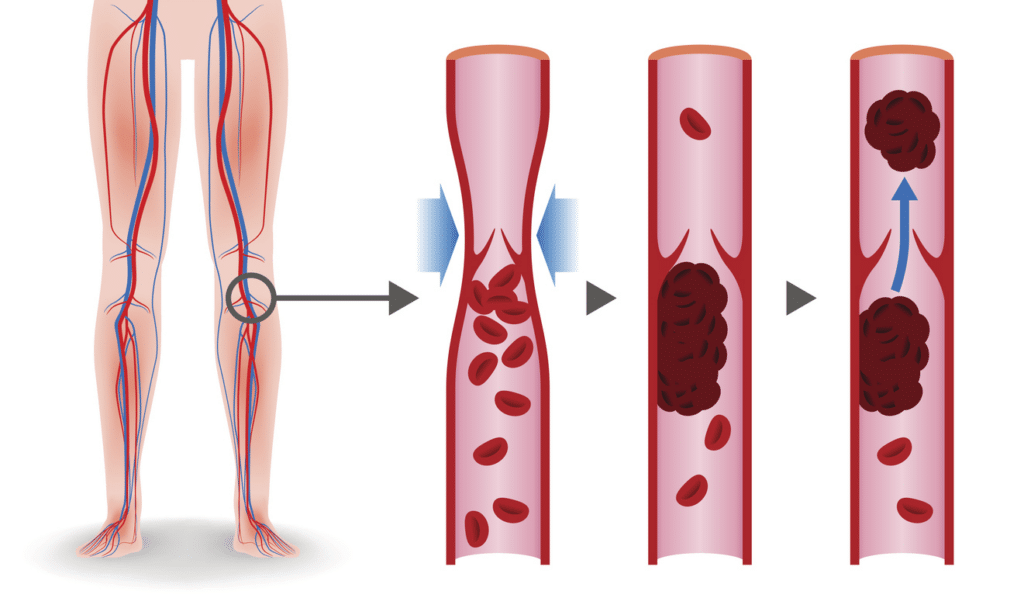
Here's the biggest risk of DVT: That blood clot in your leg, or a piece of it, can break off and travel with your blood and get stuck in a blood vessel in your lungs. Think of it like something getting stuck in a water pipe and stopping the water from flowing. This is called a Pulmonary Embolism (PE) . PE is a very dangerous, life-threatening emergency.
If both DVT and PE occur together, it is called Venous Thromboembolism (VTE) .
Be aware of these signs of PE immediately! (Go to the hospital immediately if you have these):
- Sudden severe shortness of breath .
- Chest pain (worsening when breathing or coughing).
- Feeling dizzy or faint.
- The heart rate suddenly increases .
- Breathing rate increases .
- A little blood comes out when you cough .
If something like this happens to you or someone you know, you should go to a place where you can get emergency treatment (a hospital) without wasting time.
📜 Who is more likely to develop DVT? (Risk factors)
There are several factors that contribute to the development of DVT. If any of these apply to you, it's a good idea to be a little more careful about DVT:
- Age: More likely to be for those over 60 (but it can happen at any age).
- Staying in one place: When traveling for a long time (plane, bus, car), staying in bed due to illness or after surgery. (Because when we walk, the leg muscles contract and pump blood upwards, which does not happen when we stay in one place).
- Surgery or injury : If the veins in the body are damaged.
- Pregnancy : There is still a risk for up to 6 weeks after delivery.
- Birth control pills/ hormonal medications: These can affect blood clotting.
- Weight gain (obesity).
- Smoking.
- Cancer: Some cancers and their treatments.
- Heart Failure.
- Some intestinal diseases (IBD).
- If you or someone in your family has had DVT/PE before.
- Some conditions come from genes.
- Sometimes DVT can occur even when no cause can be found (Unprovoked VTE).
⚠️ What else can happen due to DVT? (Other complications)
In addition to PE, DVT can also cause:
- Postphlebitic Syndrome: DVT causes damage to the veins, resulting in persistent leg pain, swelling, skin discoloration, and bruising.
- Side effects of medications: Blood thinners for DVT carry a risk of bleeding. That's why you should check with your doctor when taking these medications.
🩺 When should I see a doctor?
Remember this well:
- If you have any signs that you think you may have DVT, such as swelling, pain, redness/purple discoloration, or warmth in your leg , see a doctor without delay. These signs can also be caused by other conditions (such as cellulitis), so it's important to find out exactly what's causing it.
- If you have any of the warning signs of a PE (such as the aforementioned shortness of breath and chest pain) , go to the hospital for emergency treatment right away. It's best not to delay.
🛡️ What can we do to prevent DVT?
You can reduce your risk of developing DVT by taking care of certain things:
- Move your legs: When you are sitting, traveling, or after surgery, move your legs as often as possible. Try not to cross your legs when sitting. After a long journey, get up and walk around for a while, stretch your legs, and rotate your ankles.
- If you smoke, stop.
- Control your weight and exercise (at least 30 minutes a day).
- Drink plenty of water.
- Compression Stockings (a special type of sock): During times of risk, such as when going on a long journey, wearing these can be helpful if your doctor recommends it.
💡 Finally, what to remember:
DVT can be a bit serious, but if recognized in time, it can be treated. The most important thing is to be aware of the signs mentioned, think about whether you are at risk, do what you can to prevent it, and if in doubt, see a doctor immediately. Especially if you have signs of PE, do not delay even a second and seek emergency treatment. This awareness is the greatest protection!


💬 Comments (0)
No comments yet. Be the first to share your thoughts here.
Add Your Comment