
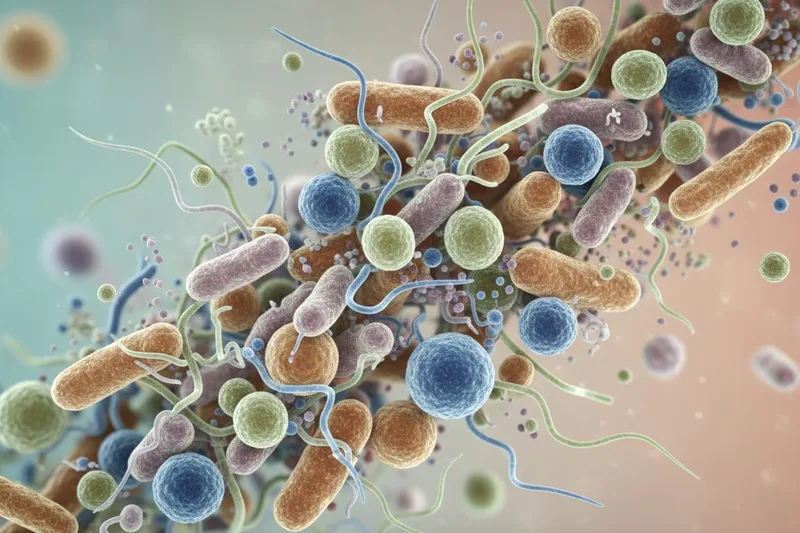
It might sound a bit strange to think that someone else's feces is being used to treat someone else's illness, right? But this is a very effective treatment method used in medicine for some serious diseases. Today we are going to talk about this surprising but very important treatment method, called fecal microbiota transplantation (FMT).
What is a fecal transplant?
Simply put, this involves taking a small sample of a healthy person's stool and inserting it into the colon of someone with a diseased condition. This may sound unpleasant. But a healthy stool sample contains millions of beneficial microorganisms (microbiota). When these microorganisms are introduced into a diseased colon, they can do wonders to restore its health.
Currently, doctors mostly recommend this treatment as a treatment for severe bacterial infections in the intestines. This transplant sends a large number of good bacteria to fight the bad, disease-causing bacteria in the diseased intestines. When these good bacteria are gone, the balance of the microbial system (gut microbiome) inside our intestines is restored.
How does this work? What happens inside our stomach?
Think of your gut as a beautiful garden. In this garden, there are both good plants (good bacteria) that we need, and bad plants (bad bacteria). As long as everything is in balance, the garden is beautiful, which means we are healthy.
But some of the medications we take, especially antibiotics, some illnesses, and other factors can kill off many of the good plants in this garden. What happens then? The weeds, or bad bacteria, take over the entire garden and spread rapidly. That's when our gut becomes unbalanced and we get sick.
A fecal transplant is like replanting a garden that has been overrun with weeds, bringing in thousands of healthy plants (good bacteria). These new good bacteria compete with the bad bacteria, keep them in check, and restore a healthy balance in the gut.
What kind of diseases is this treatment used for?
Currently, this treatment is most successfully and proven to be used to treat recurrent C. difficile infection (CDI), a type of intestinal infection caused by the bacteria C. difficile, which is difficult to control even with antibiotics. Sometimes, when antibiotics fail to control this infection, fecal transplants can be surprisingly successful.
However, doctors and scientists believe that this treatment method can be useful for many other diseases. Because the microorganisms in our intestines have a great impact not only on our digestive system, but also on our metabolism and immune system. Therefore, research is underway to see if it can treat many other diseases.
| Other conditions for which Fecal Transplant treatment is being researched | |
|---|---|
| Digestive system diseases | - Inflammatory Bowel Disease (IBD) - ``Irritable Bowel Syndrome (IBS)'' |
| Metabolic diseases | - Obesity - Liver disease - Diabetes |
| Other situations | - Food allergies - ``Autism Spectrum Disorder (ASD)'' - Anxiety and Depression - `Multiple Sclerosis (MS)` |
How is a fecal transplant performed? What are the methods?
There are several ways to introduce this healthy stool sample into a patient's colon. Your doctor will choose the method that is most appropriate for your situation.
| Treatment method | Simple explanation |
|---|---|
| Colonoscopy | A thin tube with a camera (colonoscope) is inserted through the anus and passed along the large intestine. Through this tube, stool fluid can be injected directly into the intestine. This is the most commonly used and successful method. |
| Upper Endoscopy | A tube (endoscope) is inserted into the stomach or small intestine through the mouth or nose. However, this method is less successful because the microorganisms have to travel a long way through the small intestine before reaching the large intestine. |
| Enema | Fecal fluid is introduced through a small tube inserted into the rectum. This method is more successful because the microorganisms go directly to the large intestine. The first product approved by the FDA in the United States, Fecal Transplant, is given in this way. |
| Oral Capsule | This is the newest and easiest method. You swallow pills containing dried, frozen fecal microorganisms with water. These pills are designed to remain insoluble until they reach the large intestine. |
Where do you get the stool for this treatment?
For this purpose, stool is collected from very healthy volunteers (donors) . Before selecting someone as a donor, they undergo a series of very strict medical tests. They ensure that there are 100% no infectious agents or disease germs in that person's stool.
After the stool sample is collected, it is sent to a lab, cleaned, mixed with a liquid such as saline, filtered, and made into a liquid. Sometimes this is frozen for later use, or dried and made into capsules.
Who is not eligible to be a stool donor?
This will give you an idea of how much testing is done before a person's stool is transplanted into another person. No one with the following conditions will be selected as a donor.
- If you have recently used antibiotics.
- If there are other dangerous bacterial infections like `E. coli`.
- If you have viral infections like hepatitis, HIV, or COVID-19.
- If there are parasites in the intestine.
- If you use drugs.
- If you have inflammatory bowel disease (IBD) or autoimmune diseases.
- If anyone in the family has a history of cancer.
What are the benefits and risks of this treatment?
The main advantage
This treatment is 80% to 95% effective in preventing recurrent C. diff infections. This is a great hope for this disease, which has been so debilitating that even antibiotics have failed to control it.
Side effects and risks
Minor discomfort may occur for a day or two after treatment.
- Stomach bloating, flatulence
- Nausea or vomiting
- Stomach pain
- Fever and chills for some people
These are usually not severe and subside in about two days.
The most serious risk is the possibility, although very rare, that a harmful germ that was controlled in the donor's body could enter the weakened body of the recipient and cause an infection. But to minimize this risk, donors are screened very carefully and stool samples are cleaned very thoroughly. This risk is very low with the approved products used today.
Although this treatment may sound strange, there is a lot of science behind it. It is a great example of how the tiny microbes in our bodies can affect our health. For patients suffering from C. diff, this is a truly life-changing treatment.
Take-Home Message
- Fecal transplants may sound strange, but they are a very effective medical treatment for severe infections like recurrent C. diff.
- This involves introducing 'good bacteria' from the feces of a healthy person into the intestines of a sick person, restoring the microbial balance there.
- Stool samples used for treatment are subjected to very rigorous testing to ensure that they are free of any disease, so great care is taken regarding safety.
- This is not something you can do at home. This is a specialized medical procedure performed in a hospital or clinic by qualified doctors.
- If you or someone you know suffers from recurring intestinal infections that are not controlled by antibiotics, talk to your doctor about this treatment option.




💬 Comments (0)
No comments yet. Be the first to share your thoughts here.
Add Your Comment