
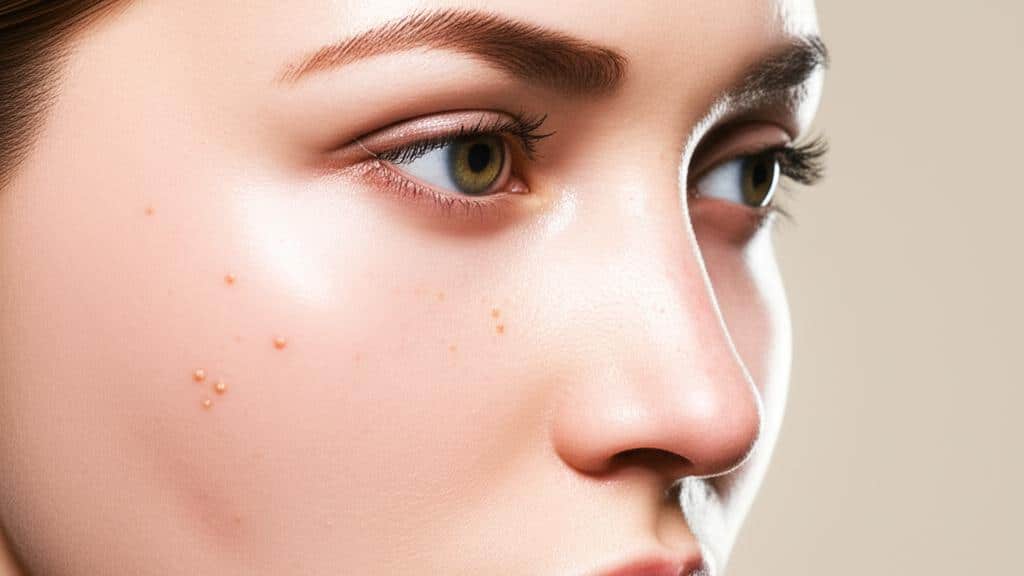
Have you ever noticed small, flat, skin-colored bumps on your face, hands, or neck? You might have wondered what they are and how they got there.
Do not worry. These tiny spots are very common and are usually harmless skin growths known as flat warts. Let us explore everything you need to know about them in simple, clear terms.
Key Takeaways About Flat Warts.
- Flat warts are small, smooth, non-cancerous bumps that often appear in clusters.
- They are caused by specific strains of the human papillomavirus (HPV).
- They most commonly affect children and teenagers on the face and hands.
- Many flat warts go away on their own without any treatment over time.
- Good hygiene and avoiding picking at the skin help prevent spreading.
BMI Calculator
Know your body mass index (BMI) and weight classification
What Are Flat Warts?
Simply put, flat warts are small skin growths that are not cancer. Compared to other types of warts, these are much flatter and smaller.
In fact, they are often about the size of a pinhead. Their color can vary quite a bit. Some are yellowish-brown, some are pink, and others match your natural skin color.
The most important thing to know is that they rarely appear alone. Instead, they usually show up in large clusters. You might find ten, twenty, or even a hundred of them grouped closely together on your skin.
Who Gets Flat Warts Most Often?
Flat warts are sometimes called juvenile warts. This is because they appear much more often in children and teenagers than in older adults.
If you notice these tiny bumps on your child or teen, it is a very common issue. A doctor can easily confirm what they are.
What Do They Look Like and Where Do They Appear?
Let us look more closely at what flat warts look like and where they tend to show up on your body.
You will usually find them on your face and the backs of your hands. They can also spread to areas where you shave. For example, young men might see them in their beard area, and young women might see them on their legs.
Shaving can create tiny, invisible scrapes on your skin. These small breaks make it very easy for a virus to enter.
You might also find them around scratches or cuts on your neck and fingers. Here are some key physical features to help you identify them:
- Color: Usually matches your skin or appears yellowish, brownish, or pink.
- Size: Very tiny, measuring about one to five millimeters across.
- Surface: Smoother and flatter than ordinary warts.
- Shape: Round or oval in shape.
- Height: Raised just slightly above the surface of the skin.
- Spread: Almost always grow in clusters of many small bumps together.
Normally, flat warts do not cause any pain. However, they can sometimes be stubborn to clear up.
What Causes Flat Warts?
So, what is the main reason flat warts develop? The primary cause is the human papillomavirus, which doctors call HPV.
There are more than one hundred different types of HPV. Flat warts are specifically caused by HPV types 3, 10, 28, and 49.
An important note is that these specific HPV strains do not cause cancer. They are completely benign. They are also entirely different from the HPV types that cause genital warts, so you do not need to worry about that connection.
The HPV virus loves warm, moist environments. Once the virus enters your skin, it thrives in these conditions. The virus causes the top layer of your skin to grow faster and thicken, which creates the visible wart.
Risk Factors for Flat Warts.
Several factors can increase your chances of developing flat warts. Let us look at what makes you more vulnerable:
- Direct skin-to-skin contact with someone who has warts, which happens easily when children play together.
- Touching objects that carry the HPV virus, though this is less common.
- Having open cuts, scrapes, or skin wounds that let the virus enter your body.
- Not practicing regular hand washing and basic personal hygiene.
- Having a weak immune system due to certain health conditions or medicines.
Are Flat Warts Contagious and How Do They Spread?
Many people wonder if flat warts can spread. Yes, flat warts are contagious because the HPV virus spreads easily through contact.
However, they do not spread aggressively. They usually pass from person to person through direct skin contact.
The virus enters your body through tiny cuts, scratches, or breaks in your skin. You can also spread the warts to other parts of your own body.
For example, if you scratch a wart and then touch another patch of healthy skin with that same finger, the virus can spread there. Rarely, sharing items or touching contaminated surfaces can also spread the virus.
How to Prevent the Spread of Warts.
You can take simple steps to stop flat warts from spreading to other people or other parts of your body:
- Never share personal items like clothing, towels, or razors with anyone else.
- Avoid direct skin contact with people who have active warts where possible.
- Wear sandals or shower shoes in public locker rooms and shared bathrooms.
How Are Flat Warts Diagnosed?
If you notice any new bumps or spots on your skin, the best step is to visit a doctor. They can examine your skin closely.
In most cases, a doctor can tell if you have flat warts just by looking at them. Sometimes, to be completely sure, they may take a tiny skin sample for a test called a biopsy.
A biopsy simply means looking at a small skin sample under a microscope. Your doctor may also refer you to a skin specialist called a dermatologist.
How Are Flat Warts Treated?
Now, let us discuss how to treat flat warts. The truth is that many flat warts do not need any medical treatment at all.
They often go away completely on their own. However, this process can take several months or even a few years.
How long it takes depends on your overall health and where the warts are located. Studies show that about seventy-eight percent of flat warts disappear on their own within two years.
If you want to clear them up faster, you can buy over-the-counter wart removers at your local pharmacy. These products usually contain salicylic acid.
Salicylic acid works by dissolving the top layer of skin infected with the HPV virus. However, these home treatments are not always successful and can sometimes irritate your skin.
The most important rule is that if your warts are painful, spreading rapidly, or bothering you in your daily life, you should see a doctor right away to discuss safe treatment options.
Keep in mind that wart removal methods do not always destroy the virus completely. Treatments can sometimes cause the warts to spread further or return later. Medical treatments can also cause mild pain or leave small scars.
Medical Treatments Available.
Doctors often choose gentle treatments to remove flat warts, especially when they are on your face or hands, to keep scarring to a minimum.
- Topical Creams: Your doctor may prescribe a special prescription cream. These creams gently irritate the skin surface to help the body push the warts out. They often contain ingredients like retinoic acid or benzoyl peroxide.
- Electrocautery or Laser: A doctor uses a special heated tool or laser beam to carefully remove the wart tissue.
- Cryotherapy: The doctor applies liquid nitrogen, which is an extremely cold substance, to freeze the wart so it falls off later. This method can sting a little.
- Cantharidin Treatment: The doctor paints a safe chemical extract called cantharidin onto the wart. This causes a small blister to form underneath, lifting the wart away from the skin.
- Surgical Removal: A doctor uses a tiny surgical blade to scrape or cut away the wart. This is usually saved for cases where other treatments fail.
How to Prevent Flat Warts.
What can you do to help prevent flat warts in the first place? Following these healthy habits can help stop the virus from spreading:
- If you have warts, never pick, scratch, or squeeze them. This is the most important rule.
- Wash your hands thoroughly with soap and water right away if you touch a wart.
- Keep your skin clean, healthy, and dry every day.
- Avoid direct skin contact with anyone who has active warts.
- Never share towels, washcloths, or personal clothing with family members or friends.
- Wear protective footwear in public swimming pools, gyms, and public showers.
- Clean children's toys regularly if multiple children play with them.
What to Expect If You Have Flat Warts.
What can you expect if you are living with flat warts? Most of the time, flat warts cause no pain and have no other symptoms.
They usually go away on their own over time, though complete clearance can take many months or even a few years.
If the warts bother you or cause discomfort, speak with a doctor to explore treatment choices. Remember that some treatments can cause temporary skin irritation or scars.
Also, keep in mind that even after successful treatment, flat warts can sometimes return.
When to Call a Doctor.
Seek medical advice right away if your skin bumps become red, swollen, warm, painful, or start draining pus, as these are signs of a secondary bacterial infection. Call emergency services (911 in the US/Canada or 999 in the UK) or visit your nearest Emergency Department if you experience severe allergic reactions, widespread systemic symptoms, or sudden severe skin rashes accompanied by a high fever.
Flat Warts vs. Common Warts.
To help you understand the differences, here is a quick comparison table of skin wart types:
| Wart Type. | Appearance. | Common Location. |
|---|---|---|
| Flat Warts. | Very small, smooth, flat-topped bumps, skin-colored or pink. | Face, hands, neck, and shaved legs. |
| Common Warts. | Rough, grainy texture with a rounded top, often with tiny black dots. | Fingers, hands, and around nails. |
| Plantar Warts. | Hard, grainy growths that grow inward due to pressure. | Soles of the feet. |
💡 Take-Home Message.
Flat warts are common skin issues that are rarely dangerous and usually clear up on their own over time.
If you have any doubts, feel discomfort, or notice them spreading, consulting a doctor is always a smart choice. Good hygiene habits and avoiding picking at your skin will help protect you and your family.






No comments yet. Be the first to share your question or experience below.