
If you use Ozempic, Wegovy, Rybelsus, Mounjaro, or Zepbound — or if your doctor recently suggested starting one — seeing alarming news headlines about "Ozempic blindness" and "optic nerve strokes" probably made your stomach drop a little. Be honest, when a weekly injection is helping you steady your blood sugar, protect your heart, or finally lose stubborn weight, the last thing you want to worry about is waking up with damaged eyesight, right?
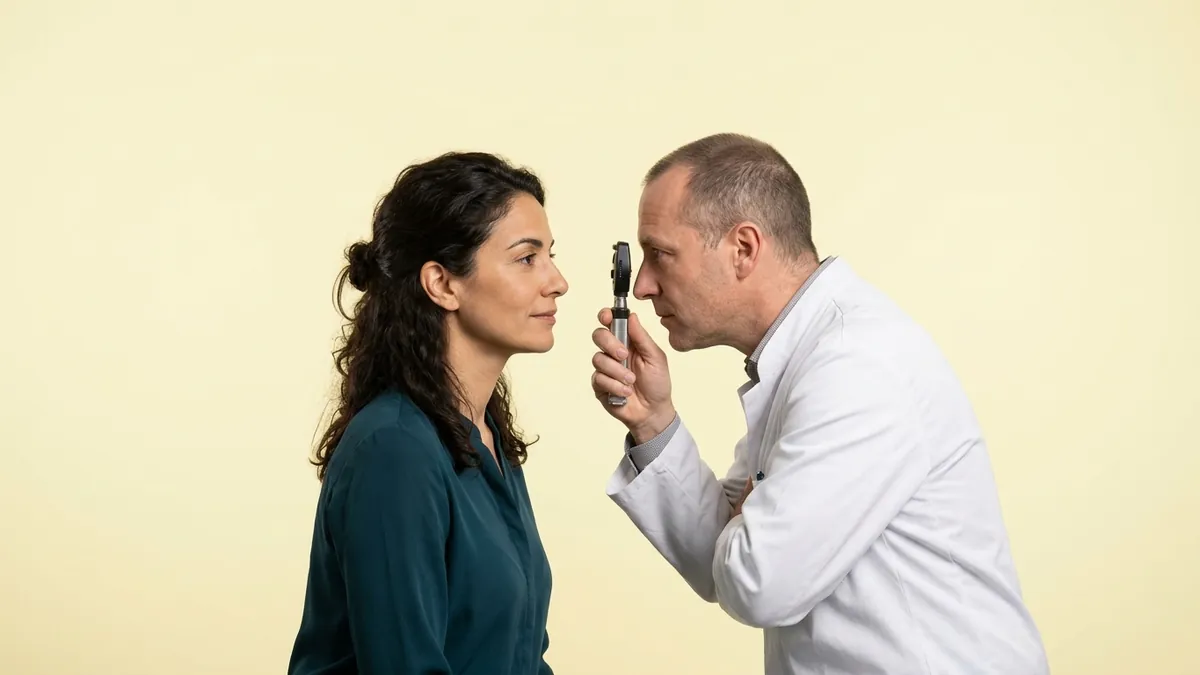
Here is the reassuring truth upfront: permanent optic nerve injury linked to GLP-1 medications is very rare, and most blurry vision people notice in the first few weeks of treatment is actually a harmless, temporary focusing shift caused by falling blood sugar. Even better, a routine eye checkup where an ophthalmologist shines an ophthalmoscope into your pupil can spot your personal optic nerve anatomy and retinal health in just a few minutes. Let's walk through what the latest clinical research really shows, how to tell harmless blurriness apart from a true eye emergency, and why you should never abruptly quit life-saving diabetes or heart treatment out of panic.
📌 Key Takeaways at a Glance
- Very rare absolute risk: In 2025, the European Medicines Agency (EMA PRAC) classified NAION (nonarteritic anterior ischemic optic neuropathy, or "optic nerve stroke") as a very rare side effect of semaglutide, affecting up to 1 in 10,000 patients.
- Not all blurriness is nerve damage: Mild, fluctuating blurry vision during the first 2 to 8 weeks of GLP-1 therapy is usually temporary lens swelling from rapid blood-sugar improvement — not optic nerve injury.
- Anatomy matters ("crowded optic disc"): People born with tightly packed optic nerve fibres (a small cup-to-disc ratio) alongside sleep apnea, diabetes, or steep nighttime blood-pressure dips carry higher NAION susceptibility.
- Pre-existing retinopathy needs slow, steady care: Rapid drops in HbA1c can temporarily worsen existing diabetic retinopathy (first flagged in the SUSTAIN-6 trial), making a baseline dilated eye exam essential.
- Never stop abruptly without medical advice: Keep taking your prescribed GLP-1 medication unless you develop sudden, painless vision loss or a dark shadow in one eye, which requires immediate emergency care.
Can Ozempic, Wegovy, or Mounjaro Cause Vision Loss or NAION?
Yes, semaglutide medications (Ozempic, Wegovy, and Rybelsus) have been linked to a roughly doubled relative risk of a painless optic nerve stroke called nonarteritic anterior ischemic optic neuropathy (NAION), though the absolute risk remains very rare at roughly 1 in 10,000 patients per year.
Think about how differently "doubled risk" sounds compared to "1 in 10,000." Pretty dramatic difference, isn't it? Public concern first surged in July 2024 when neuro-ophthalmologists at Harvard's Massachusetts Eye and Ear hospital published an observational study in JAMA Ophthalmology (Hathaway et al., 2024). Looking at patients referred to a specialized eye hospital, they noticed noticeably higher rates of NAION among adults prescribed semaglutide for type 2 diabetes or weight management compared with patients taking non-GLP-1 medications.
Because specialty eye clinics naturally see more complex cases, researchers quickly tested that signal across entire national populations. A massive Danish registry study tracking 424,152 adults with type 2 diabetes (Grauslund et al., 2024) and large multinational cohort studies (Chou et al., 2025) confirmed a statistically real but numerically tiny association: once-weekly semaglutide roughly doubled five-year NAION risk, translating to roughly one additional case per 10,000 treated patient-years. Following a comprehensive safety review in 2025, the European Medicines Agency's Pharmacovigilance Risk Assessment Committee (EMA PRAC) officially updated product labels for Ozempic, Wegovy, and Rybelsus to list NAION as a "very rare" side effect.
What About Mounjaro and Zepbound (Tirzepatide)?
Have you wondered whether switching from semaglutide to tirzepatide (sold as Mounjaro for type 2 diabetes and Zepbound for weight management) eliminates eye concerns? Tirzepatide is a dual GIP and GLP-1 receptor agonist that lowers blood sugar and body weight even more rapidly in many patients. Large observational studies and isolated clinical reports are still actively tracking whether tirzepatide carries a similar class-wide optic nerve signal. Until multi-year trial data settle the question completely, we doctors advise using the exact same common-sense eye screening and symptom awareness whether you take Ozempic, Wegovy, Rybelsus, Mounjaro, Zepbound, Trulicity, or Saxenda.
Why Blurry Vision on GLP-1 Medications Usually Isn't NAION: 3 Distinct Eye Effects
When patients notice fuzzy letters on their phone screen a few weeks after starting a GLP-1 pen, their mind understandably jumps straight to the worst-case scenario. Yet in everyday clinical practice, GLP-1 drugs can affect vision in three completely different ways — and two of them have nothing to do with an optic nerve stroke.
1. Temporary Blurry Vision From Rapid Blood-Sugar Shifts (Osmotic Lens Swelling)
Here is something almost nobody tells you before your first injection: when blood sugar has been running high for months, extra glucose and water seep into the clear focusing lens sitting right behind your pupil. Once Ozempic or Mounjaro brings your blood glucose down briskly, fluid shifts back out of that lens, temporarily changing its curvature and focusing power.
For 2 to 8 weeks, street signs or text messages may look slightly out of focus, often in both eyes, and may even fluctuate from morning to evening. Your optic nerve and retina are completely unharmed! Once your blood sugars settle at their healthier baseline, your vision clears right back up. That is why we doctors always tell patients: hold off on spending hundreds of dollars on new prescription glasses during the first two months of dose escalation.
2. Early Worsening of Pre-Existing Diabetic Retinopathy
Back in 2016, the landmark SUSTAIN-6 cardiovascular outcomes trial (Marso et al., New England Journal of Medicine) proved that semaglutide significantly cuts heart attacks and strokes in high-risk type 2 diabetes — yet it also revealed a surprise increase in diabetic retinopathy complications such as vitreous bleeding or need for retinal laser/injections.
Follow-up analyses (Vilsbøll et al., 2018) uncovered the real culprit: it was not direct chemical toxicity from semaglutide, but rather how fast HbA1c dropped (often by 1.5 to 2.5 percentage points within weeks) in patients who already had damaged, fragile retinal blood vessels and were frequently using insulin. Medically, we call this "early worsening of diabetic retinopathy" — the exact same phenomenon seen when type 1 diabetes or pregnancy blood sugars are tightened very rapidly. When an ophthalmologist checks and stabilizes existing retinopathy beforehand and your doctor steps up GLP-1 doses gradually, your retina stays much safer over the long haul.
3. Nonarteritic Anterior Ischemic Optic Neuropathy (NAION — "Optic Nerve Stroke")
Unlike temporary lens blur or gradual retinal changes, NAION happens when microscopic blood vessels feeding the very front tip of your optic nerve — the main data cable carrying images from your eyeball to your brain — suffer a sudden drop in blood flow (ischemia). The word "nonarteritic" simply means the blockage comes from sluggish local micro-circulation rather than autoimmune artery inflammation (giant cell arteritis).
Because the optic nerve has zero pain receptors for low oxygen, NAION strikes without any eye pain, redness, or scratchiness. Roughly 70 percent of patients first notice it immediately upon waking up in the morning: one eye suddenly sees the world through a dim gray shadow, often losing the lower or upper half of its visual field (an altitudinal visual field defect) alongside washed-out colors.
What Is a "Crowded Optic Disc" (Small Cup-to-Disc Ratio), and Who Has Higher Risk?
If millions of people safely inject GLP-1 medications every week, why would 1 in 10,000 experience reduced blood flow to the optic nerve? The biggest anatomical clue sits right at the back of the eye: a structural trait eye specialists call a "crowded optic disc" or "disc-at-risk."
Picture more than one million microscopic nerve fibres bundling together at the back of your retina and exiting through a tiny circular opening in the eyeball wall. In most people, that exit ring is spacious enough to leave a visible little hollow or "cup" right in the center — giving a healthy cup-to-disc ratio of around 0.3 to 0.5. However, some people are naturally born with a narrower scleral opening where all one million nerve fibres are squeezed shoulder-to-shoulder with almost no central cup at all (a small cup-to-disc ratio below 0.2).
Having a crowded optic disc is not a disease by itself — your eyesight is completely normal! Think of it like four lanes of rush-hour traffic merging into a tight single-lane tunnel. As long as traffic flows smoothly, nobody notices. Yet if mild fluid swelling or a brief overnight dip in blood pressure occurs inside that cramped tunnel, tiny nourishing capillaries get pinched against neighboring nerve fibres, starving the optic nerve head of oxygen. During a quick, painless exam with a handheld ophthalmoscope or an optical coherence tomography (OCT) scan, an ophthalmologist or optometrist can look straight at your optic nerve and tell you your exact cup-to-disc ratio.
Everyday Health Factors That Compound Optic Nerve Risk
Anatomy rarely acts alone. Clinical studies show that NAION almost always arises when a crowded optic disc meets one or more circulation stressors:
- Obstructive sleep apnea (OSA): Repeated nighttime breathing pauses starve the optic nerve of oxygen and spike carbon dioxide while you sleep, making untreated sleep apnea one of the strongest modifiable NAION triggers.
- Nighttime blood-pressure dips (nocturnal hypotension): Naturally, blood pressure drops by 10 to 20 percent during deep sleep. Taking strong blood-pressure medications right before bedtime — combined with blood-pressure reductions from weight loss — can drop overnight perfusion pressure to the optic nerve too low, which explains why NAION is so often discovered upon waking.
- Dehydration from GLP-1 stomach side effects: Nausea, vomiting, reduced thirst, or diarrhea during dose increases can lower blood volume and thicken blood slightly if you forget to hydrate steadily.
- Cardiometabolic conditions and smoking: Long-standing type 2 diabetes, high blood pressure, high cholesterol, age over 50, and tobacco smoking stiffen tiny blood vessels around the optic nerve.
- Prior NAION in the other eye or PDE5 medications: Anyone who has previously experienced NAION in one eye carries a significantly higher baseline risk in the fellow eye, and erectile dysfunction or pulmonary hypertension drugs (sildenafil, tadalafil) can also transiently lower nighttime optic nerve perfusion.
Should You Stop Taking Ozempic, Wegovy, or Mounjaro Over Eye Risk?
Let's address the question weighing on every patient's mind right now: should you throw away your injector pen in the fridge to protect your eyes? No — if your vision is stable, you must not stop your prescribed GLP-1 or GIP/GLP-1 medication on your own without speaking to your doctor.
Remember how we weighed relative risk against real-world benefit earlier? Uncontrolled type 2 diabetes is itself the leading cause of preventable working-age blindness worldwide through proliferative diabetic retinopathy and macular edema, while also driving heart attacks, strokes, and kidney failure. Large trials like SUSTAIN-6 and SELECT proved that semaglutide cuts major cardiovascular events by 20 to 26 percent and protects kidney function. Quitting abruptly out of fear causes rebound blood-sugar spikes that put your retina, heart, and brain in far greater danger than a 1-in-10,000 optic nerve event.
The clinical rule endorsed by eye specialists and regulatory agencies (including EMA PRAC) is clear and balanced: keep taking your medication with smart preventive eye checks, unless you experience sudden painless vision loss, sudden dimming, or a dark curtain/shadow in one eye. If that emergency symptom strikes, seek urgent same-day hospital or ophthalmic assessment — and if an ophthalmologist confirms NAION, your medical team will discontinue semaglutide and switch you to a safer alternative diabetes or weight-management plan.
How to Tell GLP-1 Eye Symptoms Apart: Side-by-Side Guide
Because mild focusing changes, dry eyes, diabetic retinal leaks, and optic nerve strokes require completely different responses, use this quick two-column clinical guide to understand what different eye symptoms mean:
| Eye Symptom & Likely Condition | What Is Happening & What You Should Do |
|---|---|
| Mild, fluctuating blurry vision in both eyes (Usually during weeks 2–8 after starting or raising your dose) Osmotic Lens Shift |
Rapid improvement in blood sugar temporarily alters fluid balance and curvature inside your eye's natural focusing lens without harming any nerves. What to do: Keep taking your medication, stay well hydrated, wait 6–8 weeks before updating glasses prescriptions, and mention it at your next routine checkup. |
| New dark floaters, cobwebs, wavy lines, or gradual central blur (Especially in long-standing diabetes) Diabetic Retinopathy / Macular Edema |
A fast drop in HbA1c can stress pre-existing fragile blood vessels in the retina, causing tiny leaks or swelling. What to do: Book a prompt dilated retinal exam with an ophthalmologist within days (urgent same-day if a shower of dark spots appears), and ask your doctor about slower dose titration. |
| Sudden, painless dark shadow/curtain or dimness in ONE eye (Often noticed immediately upon waking up, with faded colors) Suspected NAION ("Optic Nerve Stroke") |
Reduced blood flow to the front of the optic nerve head is starving nerve fibres of oxygen, often in a "crowded optic disc." What to do: Treat as an immediate medical emergency! Go straight to an Eye Emergency clinic or Hospital ER / A&E, and hold your next GLP-1 dose until doctors evaluate you. |
| Sudden vision loss WITH temple headache, jaw pain when chewing, or scalp tenderness Suspected Giant Cell Arteritis (Arteritic ION) |
Dangerous autoimmune blood-vessel inflammation in adults over 50 that can rapidly blind the second eye within days if untreated. What to do: Go to the Hospital Emergency Department immediately! High-dose emergency steroid treatment is sight-saving. |
| Gritty, burning eyes that clear briefly when you blink Dehydration / Tear-Film Dryness |
Reduced fluid intake or mild stomach side effects on GLP-1 therapy can thin your natural tear film, especially during screen work. What to do: Sip water consistently throughout the day, use preservative-free lubricating artificial tears, and take regular screen breaks. |
Smart Eye-Protection Steps Before and During GLP-1 Therapy
The best news about GLP-1 eye safety is how much practical control you and your healthcare team have. Before starting Ozempic, Wegovy, Rybelsus, Mounjaro, or Zepbound — or right now if you are already taking one — scheduling a baseline dilated eye exam gives you tremendous peace of mind. Ask your ophthalmologist or optometrist two simple questions during that visit: "Is there any background diabetic retinopathy?" and "Do I have a small cup-to-disc ratio (crowded optic disc)?"
If you already have moderate-to-severe diabetic retinopathy or a crowded optic disc, you are not automatically barred from modern metabolic care; instead, your prescribing doctor can step up doses much more gently so HbA1c and blood pressure come down smoothly rather than plunging overnight. Review the timing of any blood-pressure tablets with your doctor so you avoid deep nocturnal blood-pressure dips, get loud snoring or daytime sleepiness tested for sleep apnea (and wear your CPAP mask nightly if prescribed), and keep a water bottle handy whenever mild GLP-1 nausea lowers your thirst.
✔️ Do's and ❌ Don'ts
- ✔️ Get a baseline dilated eye exam: Have an ophthalmologist or optometrist check your retina and optic nerve cup-to-disc ratio when starting or continuing GLP-1 therapy, especially if you have diabetes or are over 50.
- ✔️ Hydrate steadily through stomach side effects: Drink small, frequent sips of water or oral rehydration fluids if GLP-1 nausea, vomiting, or diarrhea reduces your daily fluid intake.
- ✔️ Treat sleep apnea and review bedtime blood-pressure meds: Use your CPAP device consistently if you have sleep apnea, and ask your doctor whether taking blood-pressure pills in the morning rather than right before sleep is safer for your overnight optic nerve blood flow.
- ❌ Don't stop your GLP-1 pen abruptly out of fear: Never quit diabetes, heart, or weight-management injections on your own if your eyesight is normal; sudden blood-sugar rebounds harm your retina and blood vessels.
- ❌ Don't rush to buy new prescription glasses in month one: Wait 6 to 8 weeks for blood glucose levels to stabilize before paying for new lenses if you experience mild, symmetric focusing blur.
- ❌ Don't "sleep off" sudden one-eyed shadow vision: Painless darkening or loss of the upper or lower half of sight in one eye will not clear with eye drops — get emergency medical care immediately.
🚨 When to Seek Emergency Care (Red Flags)
If you notice any of these warning signs, don't wait — call your local emergency number right away (911 / 999 / 112, or 000 in Australia) or go immediately to the nearest Hospital Emergency Department (ER / A&E) or Urgent Eye Casualty:
- Sudden, painless loss or dimming of vision in one eye (or both eyes), especially noticed upon waking up in the morning.
- A dark gray or black shadow, wedge, or "curtain" blocking the lower half, upper half, or center of your sight.
- Colors suddenly looking dull, faded, or washed out in one eye compared with the other.
- A sudden shower of dozens of dark floating spots, cobwebs, or flashing lights across your vision (signs of retinal bleeding or detachment).
- Sudden vision changes accompanied by a new throbbing temple headache, pain in your jaw while chewing, fever, or tenderness when combing your hair.
- Severe eye pain, redness, halos around lights, and nausea or vomiting.
💡 Take-Home Message
- NAION ("optic nerve stroke") is a real but very rare risk of semaglutide — affecting up to 1 in 10,000 patients — whereas heart, kidney, and metabolic benefits protect far more lives.
- Mild blurry vision in both eyes during the first few weeks of Ozempic, Wegovy, or Mounjaro is usually temporary lens fluid shifting as blood sugar improves.
- A quick dilated eye exam identifies both background diabetic retinopathy and a "crowded optic disc" (small cup-to-disc ratio) before problems arise.
- Staying hydrated, treating sleep apnea, avoiding steep overnight blood-pressure drops, and escalating doses gradually help protect optic nerve circulation.
- Never stop GLP-1 therapy on your own unless sudden painless vision loss or a dark shadow appears in one eye — in which case, seek emergency eye care immediately.






No comments yet. Be the first to share your question or experience below.