

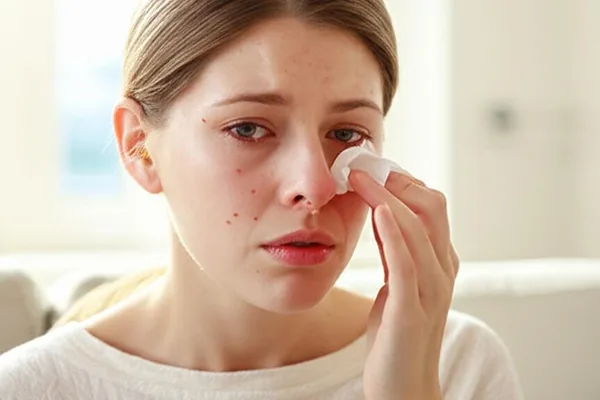
Imagine you're working on something... Suddenly you start to get hives , not just once or twice, but continuously. Your eyes become red, itchy, and a watery liquid comes out of your nose. Sometimes your skin breaks out in little blisters and starts to itch. This is what we call an 'allergy attack'. It's like something sneaking up on you and attacking you, right? What exactly is an allergy? What can we do to protect ourselves from it? Let's talk about it in detail today.
What exactly is this allergy?
Simply put, an allergy is when our body's immune system reacts to something that is normally harmless, as if it were a dangerous enemy. The things that cause this reaction are called allergens .
There are many types of allergens in our environment. The main ones are:
- Pollen in flowers and trees
- Dust mites are tiny creatures that live in the dust of houses.
- Mold that forms in damp places
- Animal dander
- Bites from some insects
If you are sensitive to these things, your body may react in different ways. There are several levels of this reaction.
| Level of reaction | Features to see |
|---|---|
| Mild Reaction | Skin rash, itchy and red eyes, stuffy or runny nose. |
| Moderate Reaction | Itching all over the body, difficulty breathing. |
| Severe Reaction (Anaphylaxis) | This is a very serious and even life-threatening condition! The whole body reacts at once. Symptoms such as difficulty breathing, swelling of the throat and tongue, and fainting occur. If you see such symptoms, you should immediately take the patient to the hospital's Emergency Treatment Unit (ETU). |
Okay, now let's see what we can do to stay safe from these major allergens.
How to protect yourself from pollen?
The air is filled with pollen when trees, grass , and flowers are in bloom. This is especially true from spring to autumn.
- Check the time: Pollen is usually highest in the morning and afternoon, so it's best to limit your time outdoors during those times.
- Keep the windows closed: It is good for the body to keep the windows closed during high pollen times. Use an air conditioner if possible.
- Don't hang clothes outside: Clothes and bedding that are hung outside can retain pollen. So try to dry them indoors.
- Get help with gardening: If you have allergies when mowing the lawn or working with flowers in the garden, get someone else to help with those tasks. If possible, wear a face mask . Take a good shower when you're done and wash your clothes.
- Close the car windows: When driving, keep the windows closed and the AC on.
Let's get rid of the problem of mold
Mold is something that grows in damp , dark places. It is commonly found in places like bathrooms, basements, and laundry rooms. Mold even grows on the walls of our houses during the rainy season, right?
- Don't sweep up leaves: When you sweep up dry leaves that fall from trees, the mold spores in them can be released into the air and you can inhale them.
- Stay away from damp places: Avoid hanging out in damp places like garages and basements.
- Stay indoors on rainy days: On rainy and windy days, mold spores can be in the air, so it's wise to stay indoors on such days.
- Keep your home clean: Regularly clean bathroom surfaces like tiles and shower curtains with something like diluted bleach.
- Control humidity: Ensure that areas prone to mold growth are well ventilated. Use a dehumidifier if possible.
Dust Mites - Invisible Enemies
These tiny creatures are invisible to the naked eye, but they live in the dust of our homes. Their favorite places to live are especially mattresses, pillows, sofas, carpets, and stuffed animals.
- Cover mattresses and pillows: Put plastic covers on your mattresses, pillows, and box springs. It's best to use hypoallergenic pillows if possible.
- Wash your bedding regularly: Wash your bed sheets and pillowcases in hot water at least once a week.
- Reduce carpet use: If possible, choose tile or wood flooring instead of carpet. Dust mites can easily settle on carpet.
- Wash toys: Wash children's toys (stuffed animals) in hot water and dry thoroughly in the sun.
- Avoid thick curtains: Instead of thick curtains on windows, use lightweight curtains that can be easily washed.
Can pet dander cause allergies?
Yes. If you have a pet like a puppy or kitten at home, you can also be allergic to small particles of the animal's fur and saliva. These, like dust mites, live in sofas, carpets, and bedding.
Imagine, even if you don't have a pet, if you adopt a puppy from your friend's house, the animal's fur will get on your clothes. Then when you get into the car wearing those clothes, that allergen will get on your car seat.
- Don't bring pets into the bedroom: Stop bringing pets into the bedroom and living room, where you spend the most time.
- Vacuum regularly: Vacuum your home thoroughly at least twice a week. Don't forget your car too.
- Bathe your pets: Bathing your pets regularly can reduce the amount of allergens on their bodies.
- Use an air purifier: An air purifier helps remove allergens like these from the air.
When should we see a doctor?
Most of the time, allergies can be controlled with simple things like these. However, sometimes it is necessary to seek medical advice.
- If your allergies are frequent and interfere with your daily activities .
- If you are not getting relief from the over-the-counter medications you are taking.
- If you have other respiratory diseases such as asthma .
- If you are showing severe symptoms such as difficulty breathing and chest tightness.
Remember, your doctor can do tests to find out exactly what you're allergic to. He or she can then prescribe the right treatment for it. So don't suffer alone, see a doctor.
Take-Home Message
- An allergy is an overreaction of our body to something that is harmless.
- Try to identify what you are allergic to, such as pollen, dust, mold, or animal dander.
- Keeping your home and surrounding environment clean and dry can go a long way in controlling these allergens.
- If you develop severe symptoms such as difficulty breathing or swelling of the throat, it can be life-threatening. So go to the hospital's Emergency Department (ETU) immediately.
- If allergies are disrupting your life, don't suffer alone. Talk to your family doctor. He or she will give you the right guidance.




💬 Comments (0)
No comments yet. Be the first to share your thoughts here.
Add Your Comment