
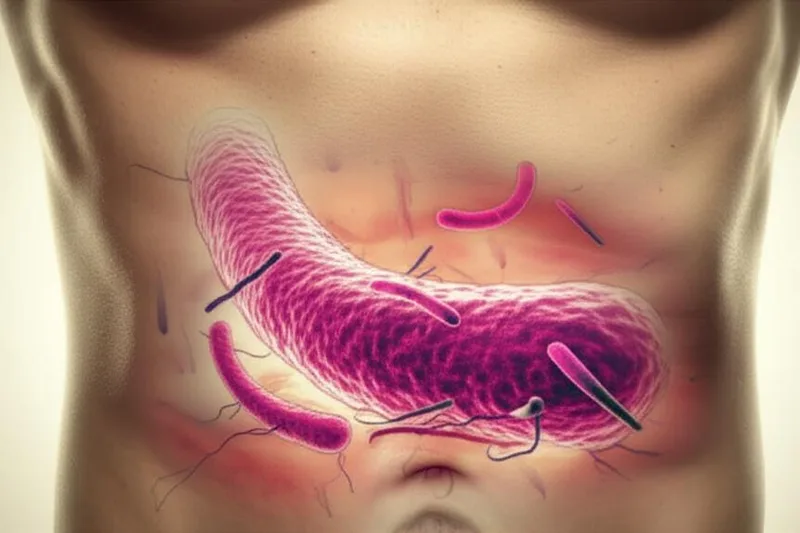
A problem that many people have is this stomach inflammation, called gastritis . Although we blame each and every thing for this problem that comes after eating food from the store, eating something too oily, or sleeping after eating at night, sometimes a small bacteria hiding inside our stomach is responsible for all of this. It is Helicobacter pylori, or what we call `(Helicobacter pylori)` or `H. pylori` for short.
Who is this H. pylori?
Simply put, `H. pylori` is a type of bacteria that can live in our stomach, that is, in the stomach. Now you might be thinking, “Won't this bacteria be killed by the strong acids in the stomach?” The amazing thing is, this bacteria has a special ability to survive in that acidic environment.
What this does is damage the inner lining of our stomach. Imagine that there is a thin protective membrane inside our stomach. This bacteria damages that membrane and weakens it. Then the harsh acids in the stomach can directly damage the stomach lining. This is what causes gastritis and peptic ulcers .
It is said that about half of the world's population will be infected with this `H. pylori` at some point in their lives. But don't worry, most people don't have any symptoms. However, for some, it can be a little annoying.
How does this get into our bodies?
H. pylori is usually spread from person to person. It can also be spread through the following ways:
- From contaminated food, water, or dishes: This can be transmitted by drinking water that has not been properly purified, or eating vegetables and fruits that have not been washed thoroughly.
- Mouth to mouth: Infection can occur when a body fluid, such as saliva, from an infected person enters the body of a healthy person (for example, through kissing).
- Contact with infected feces or vomit : This risk is higher in places with poor sanitation .
The most important thing is that, yes, H. pylori is a contagious infection . Therefore, it is important to be very careful about personal hygiene.
Who is most at risk of developing this disease?
Most of the time, we get this infection when we are young. But adults can also get it. There are several factors that increase the risk:
- Crowded living conditions: When this happens, the chance of spreading the disease from one person to another is high.
- Lack of clean water and sanitation facilities: The risk increases if dirty water is used.
- Living with an infected person: If someone in the family has it, there is a chance that others will also be infected.
- Living in a developing country: Infection is common in these countries due to poor sanitation.
What are the symptoms of H. pylori infection?
As mentioned earlier, not everyone who has the bacteria in their body will get sick. Symptoms only appear if you develop gastritis or a peptic ulcer. The main symptom is a burning or dull pain in the upper abdomen. This pain comes and goes. It can be especially bad on an empty stomach. It may feel better after eating, drinking a little milk, or taking an antacid.
| Bloating | Feeling as if the stomach is full of air, whether you have eaten or not. |
| Frequent burping | Going to the bathroom more often than usual. |
| No appetite | Loss of appetite. |
| Nausea and Vomiting | Nausea or vomiting with stomach pain. |
| Weight loss without reason | Losing weight without you trying. |
Is there a change in stool?
Most people have normal bowel movements. But if your stool is dark black, tarry, or has blood in it, it could be a serious sign. If so, call your doctor right away.
When you need to see a doctor urgently!
Sometimes stomach wounds can cause bleeding into the stomach. This is a dangerous condition. If you have any of the following symptoms, do not waste time and go to the nearest hospital's Emergency Department (ETU).
| Blood in the stool, dark red or black stools | Difficulty breathing |
| Dizziness or loss of consciousness | Pale skin |
| Vomiting blood or coffee grounds | Severe, sharp stomach pain |
Long-term H. pylori infection is a risk factor for stomach cancer. This is rare, but it's important to be aware of it. If you have persistent symptoms such as stomach pain , bloating, nausea , feeling full even after eating a small amount of food, or unexplained weight loss, be sure to see a doctor.
How do you find this, Doctor?
When you go to see your doctor, he will ask about your symptoms and the medications you are taking. Then he will examine you and check for any swelling or tenderness in your stomach. There are several tests that can be done to determine if you have H. pylori.
- Stool tests: This is the most common test. A sample of your stool is tested for the presence of proteins (antigens) associated with the H. pylori bacteria. Sometimes a stool PCR test can be done to find out if the bacteria are present and if they are resistant to certain antibiotics .
- Urea breath test: This is a very simple test. First, you are asked to breathe into a bag. Then, you are given a liquid or pudding containing urea to drink. After a few minutes, you are asked to breathe into another bag. If you have H. pylori in your stomach, they break down the urea and produce carbon dioxide gas. If the second breath you exhale contains more carbon dioxide, it means you have an infection.
- Endoscopy: If you suspect you have a stomach ulcer , this test may be done. A thin, thin tube with a camera is passed through your mouth into your stomach to look directly at the inside of your stomach. At this time, a biopsy, or small piece of tissue from the stomach wall, may be taken for testing.
What are the treatments for this?
Stomach ulcers caused by H. pylori are usually treated with a combination of antibiotics and a medicine that reduces stomach acid .
1. Antibiotics: Two types of antibiotics are given at the same time to kill bacteria. This is because if the bacteria become resistant to one type, the other type can kill it.
2. Proton Pump Inhibitors (PPIs): These work by reducing the amount of acid your stomach produces. It's like turning off the acid-producing pumps. When you take these, stomach ulcers start to heal faster.
3. Other medications: Sometimes medications like `Bismuth subsalicylate` (a medicine for diarrhea) are also given to protect the stomach.
Most importantly: It is important to take the antibiotics your doctor prescribes for the full duration. Don't stop taking them just because you feel better. Doing so may not completely kill the bacteria and may cause problems later.
About four weeks after treatment, the doctor will check you again to see if the infection has completely cleared up.
How to protect yourself from H. pylori?
Just as you protect yourself from other germs, you also need to protect yourself from H. pylori. It is very important to follow these simple habits.
- Wash your hands often: Wash your hands thoroughly with soap and water after using the bathroom, before preparing food, and before eating. Teach your children this habit too.
- Use clean food and water: Avoid drinking water and eating food from suspicious places.
- Eat only well-cooked food: Avoid eating raw or undercooked food.
- Be careful about cleanliness: Avoid eating food served by people who have not washed their hands.
Recent research has shown that people who eat more fresh vegetables, fruits, nuts, and whole grains have a lower risk of developing H. pylori. Similarly, people who eat more processed foods, sugar, salt, and flour-based foods are at higher risk. Therefore, eating a balanced, nutritious diet is also very good for your health.
Take-Home Message
- H. pylori is a common bacteria that lives in the stomach. For most people, it causes no harm.
- This bacteria is the main cause of stomach inflammation, gastritis, and peptic ulcers.
- If you experience symptoms such as severe stomach pain, black stools, or vomiting blood, seek medical advice immediately.
- This condition can be completely cured with antibiotics and acid-reducing medications. Use the medications exactly as prescribed by your doctor.
- Good hygiene practices (especially hand washing and eating clean) can protect against this infection.
H. pylori, Helicobacter pylori, gastritis, stomach inflammation, stomach ulcers, peptic ulcer, stomach cancer, stomach cancer, H. pylori symptoms Sinhala, H. pylori treatment Sinhala


💬 Comments (0)
No comments yet. Be the first to share your thoughts here.
Add Your Comment