

Do you get frequent nosebleeds that seem to start for no clear reason? Have you noticed tiny red spots on your face, lips, or fingertips? Perhaps your parents or other family members experience similar health issues, and you have always assumed it is just a family trait.
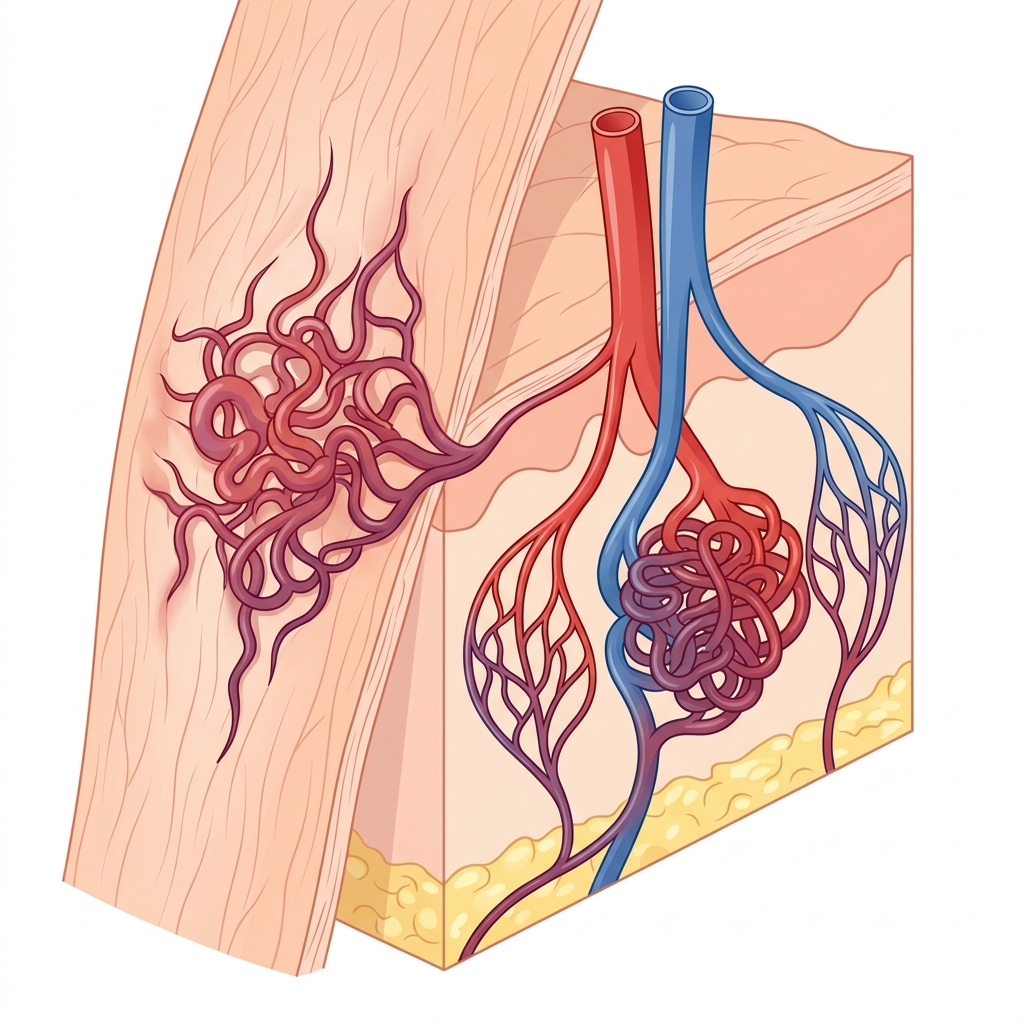
While harmless traits do run in families, these signs can sometimes point to an underlying medical condition called HHT. Short for Hereditary Hemorrhagic Telangiectasia, HHT is a rare genetic disorder that affects how your blood vessels form and function. Understanding this condition can help you and your doctor manage symptoms and protect your long-term health.
Key Takeaways About HHT.
- HHT is a genetic condition that causes abnormal connections between arteries and veins.
- Frequent nosebleeds and small red spots on the skin are the most common early warning signs.
- While there is no complete cure, many safe and effective treatments help control symptoms.
- Early screening and medical checkups can prevent serious complications in organs like the lungs and brain.
What Is HHT?
HHT stands for Hereditary Hemorrhagic Telangiectasia. It is a genetic condition passed down through families. To understand how it works, think of your blood supply as a vast road network.
Your body has large highways called arteries and major roads called veins. Tiny connecting roads known as capillaries link these two systems together. In a person with HHT, these tiny capillaries do not form correctly.
Instead, arteries and veins connect directly to each other without capillaries in between. Doctors call these abnormal connections Arteriovenous Malformations, or AVMs. These weak connections can form in many parts of the body, including the nose, lungs, gut, and brain.
Small AVMs near the surface of the skin are called telangiectasias. They appear as tiny red or purple spots on your lips, mouth, and fingers. Because these blood vessels are fragile, they break easily and cause bleeding.
Many people live with HHT for years without knowing they have it. Although there is no permanent cure, modern treatments help control symptoms and prevent serious health problems.
This condition affects about one in every 5,000 people worldwide. Because many cases go undiagnosed, the actual number of people affected may be higher. It affects people of all ages and backgrounds and is also known as Osler-Weber-Rendu syndrome.
Symptoms of HHT.
HHT symptoms vary widely from person to person. They depend entirely on where the abnormal blood vessels form inside your body. Some people experience very mild signs. This others face more serious health challenges.
| Symptom Category. | Description and Examples. |
|---|---|
| Common Symptoms. |
|
| Internal Bleeding Signs. |
|
| Organ AVM Symptoms. |
|
| Serious Complications. |
|
Causes of HHT.
HHT is purely a genetic condition. It is not contagious and cannot be caught from someone else. Instead, it is passed down from parents to their children.
HHT is an autosomal dominant disorder. This means that if one of your parents has HHT, you have a 50 percent chance of inheriting the gene change yourself.
Mutations in specific genes, most commonly the ENG gene and the ACVRL1 gene, cause HHT to develop. Researchers continue to study these genes to understand the condition better.
If you have HHT, talk with your doctor about your family planning goals and the likelihood of passing the gene condition on to your children.
How Doctors Diagnose HHT.
Your doctor will review your medical symptoms and family history to check for signs of HHT. While genetic testing can confirm the diagnosis, doctors often diagnose HHT based on specific clinical criteria.
Your doctor will suspect HHT if you have at least three of the following features:
- Spontaneous, recurrent nosebleeds.
- Multiple telangiectasias in typical skin areas like the lips, fingers, and face.
- An AVM or telangiectasia inside internal organs such as the lungs, liver, or brain.
- A first-degree relative, such as a parent or sibling, diagnosed with HHT.
Tests to Confirm the Diagnosis.
Your doctor may order several diagnostic tests to check your internal organs and confirm your status:
- Ultrasound scan: Helps check your liver for any hidden abnormal blood vessels.
- MRI scan: Creates detailed images to check your brain for blood vessel malformations.
- CT scan: Provides clear pictures of internal organs to locate hidden AVMs.
- Bubble test: A specialized echocardiogram that checks your lungs for abnormal blood flow.
Treatments for HHT.
There is currently no complete cure for HHT. However, many effective treatments help control symptoms, reduce bleeding risks, and support a normal lifestyle.
Your doctor will treat your active symptoms while screening for any hidden AVMs that have not yet caused problems.
Common treatment approaches include:
- Nosebleed management: Using saline nasal sprays and moisturizing ointments to keep nasal passages moist and prevent cracks.
- Treating anemia: Taking iron supplements or receiving blood transfusions if iron levels drop too low.
- Laser therapy: Using medical lasers to seal and destroy fragile blood vessels that bleed often.
- Embolization: A procedure where doctors place a tiny device to block abnormal blood flow through risky AVMs.
- Surgery or radiation: Used in certain cases to remove or shrink larger AVMs safely.
- medicine review: Stopping blood-thinning medicines like aspirin under strict medical guidance if they worsen bleeding.
Important Note: If you have HHT, especially lung AVMs, you may need antibiotics before dental procedures like tooth extractions. This helps prevent serious infections such as brain abscesses. Always discuss this with your doctor and dentist.
When to Seek Emergency Care.
Call 911 (US/Canada), 999 (UK), or go to your nearest Emergency Department right away if you experience sudden severe shortness of breath, coughing up large amounts of blood, sudden weakness, speech changes, severe headache with confusion, or a nosebleed that does not stop after 20 minutes of steady pressure.
Living Well With HHT.
Managing HHT requires lifelong medical supervision and routine checkups. With proper care and regular monitoring, people with HHT can enjoy a normal life expectancy and good health.
Tips to Manage Nosebleeds.
- Avoid medicines that increase bleeding risks, such as regular aspirin or NSAIDs, unless your doctor advises otherwise.
- Keep the air in your home moist by using a room humidifier, and use saline sprays as recommended by your doctor.
- Keep a symptom journal to track what triggers your nosebleeds and share this information with your care team.
If you receive an HHT diagnosis, encourage your close family members to get screened as well. Early diagnosis allows families to catch symptoms early and prevent severe complications.
Take-Home Message.
- HHT is an inherited genetic condition that causes blood vessel weaknesses throughout the body.
- Frequent nosebleeds and small red spots on the skin are the most common warning signs.
- Anyone having these signs alongside a family history should consult a doctor promptly.
- While not curable, safe treatments successfully control symptoms and prevent dangerous complications like stroke or severe bleeding.
- Early diagnosis and regular medical checkups help ensure a healthy and active life.
A Note from Dr. Priya Sammani.
Hereditary Hemorrhagic Telangiectasia is a rare genetic condition that requires ongoing care and attention. Frequent nosebleeds and skin spots are key clues, but hidden blood vessel changes in internal organs also require regular medical monitoring. Scheduling routine scans and staying in close touch with your healthcare team is essential for protecting your health and living a full, active life.


💬 Comments (0)
No comments yet. Be the first to share your thoughts here.
Add Your Comment