

Have you ever walked into your bathroom on a rainy morning and spotted a curious creature curled up in the corner? You might feel a sudden jolt of surprise when you notice its long, segmented body and dozens of tiny moving legs. Many people refer to these creeping critters as millipedes, and seeing them indoors can spark instant worry. Are these slow-moving visitors actually dangerous to you and your family? Why do they suddenly decide to invade your living space? Let us explore everything you need to know about millipedes, how they interact with humans, and how you can manage them safely and effectively in your home.
Understanding the true nature of household pests helps reduce unnecessary panic. While insects and arthropods can sometimes look intimidating, most garden visitors mean you no harm. By learning their habits, identifying key physical differences between similar species, and applying simple home maintenance steps, you can keep your living environment comfortable and pest-free.
Key Takeaways
- Millipedes are completely non-venomous creatures that do not bite or attack humans.
- They enter homes primarily seeking moisture during heavy rainstorms or prolonged dry spells.
- Their main defense mechanism involves releasing mild defensive fluids that can cause temporary skin irritation or discoloration in sensitive people.
- If eye contact occurs with their defensive fluid, rinse thoroughly with clean water for fifteen to twenty minutes and seek medical evaluation right away.
- The best long-term control method involves sealing entry points, reducing indoor humidity, and clearing outdoor debris from around your foundation.
BMI Calculator
Know your body mass index (BMI) and weight classification
Understanding What Millipedes Are
To understand millipedes, we must first look at their biological classification. Millipedes are not insects at all. They actually belong to the major animal group known as arthropods. Simply put, they share close biological ties with creatures like crabs, lobsters, and shrimp rather than true insects like ants or flies.
A millipede features a long, cylindrical body shaped much like a tiny tube. Its exterior shell is divided into numerous distinct body segments. While many people call them thousand-legged worms, they do not actually have a thousand legs. Most common millipede species possess far fewer than one hundred legs in total.
Their most fascinating anatomical feature lies in how their legs are arranged. Each body segment actually produces four legs, grouped neatly into two distinct pairs. This unique physical trait separates them from many other crawling creatures found in your garden soil.
Millipedes Versus Centipedes: Knowing the Difference
Many homeowners easily confuse millipedes with centipedes. Although both creatures share a multi-legged appearance, important biological differences separate the two species. Understanding these differences helps you identify what you are looking at in your garden or home.
| Feature | Millipede | Centipede |
|---|---|---|
| Body Shape | Cylindrical, rounded tube-like body structure. | Flattened, dorsoventrally compressed body. |
| Leg Arrangement | Four legs (two pairs) per body segment. | Two legs (one pair) per body segment. |
| Dietary Habits | Feeds on decaying matter, leaves, and wood. Herbivore. | Hunts other small insects and spiders. Carnivore. |
| Defense Mechanism | Curls into a tight spiral. May release defensive fluid. | Flees quickly or bites defensively using venom claws. |
| Human Impact | Harmless to touch. Does not bite or inject venom. | Bites can cause localized pain and swelling. Venomous. |
What Do They Eat and How Do They Live?
Millipedes play a vital role in our global ecosystem. They act as nature natural cleaning crew, breaking down organic waste. Their primary diet consists of decaying matter, such as damp rotting wood, fallen autumn leaves, and decaying plant material.
By eating this organic debris, millipedes help recycle nutrients back into the soil. They rarely target healthy, living plants unless their preferred decaying food sources completely disappear from their immediate environment.
A healthy millipede can live for up to seven years in ideal natural conditions. Female millipedes deposit their eggs deep in damp soil. Within a few weeks, tiny young millipedes hatch out. As they grow toward adult size, they shed their outer skin roughly ten times.
Why Do Millipedes Enter Homes?
You might wonder why these garden-dwelling creatures decide to wander inside your living quarters. Several common environmental triggers explain this indoor migration behavior:
- Seeking Moisture: When outdoor weather turns hot and dry, millipedes search for cool, humid spaces like bathrooms, basements, and under sink cabinets to prevent drying out.
- Escaping Heavy Rain: During intense rainstorms, soil gets completely flooded with water. Millipedes crawl upward out of the wet dirt to find dry shelter inside human dwellings.
- Food Shortage: If decaying organic matter in the surrounding garden runs low, they may wander closer to foundations in search of nourishment.
Millipedes usually enter houses through tiny cracks in exterior walls, gaps under exterior doors, or unsealed vents. Sealing these entry points effectively prevents indoor visits.
Are Millipedes Really Dangerous?
Let us address the most common question on everyone is mind. Are millipedes dangerous? Are they poisonous or venomous?
The simple answer is no. Millipedes are not dangerous creatures for humans. They do not bite, and they do not possess venom glands.
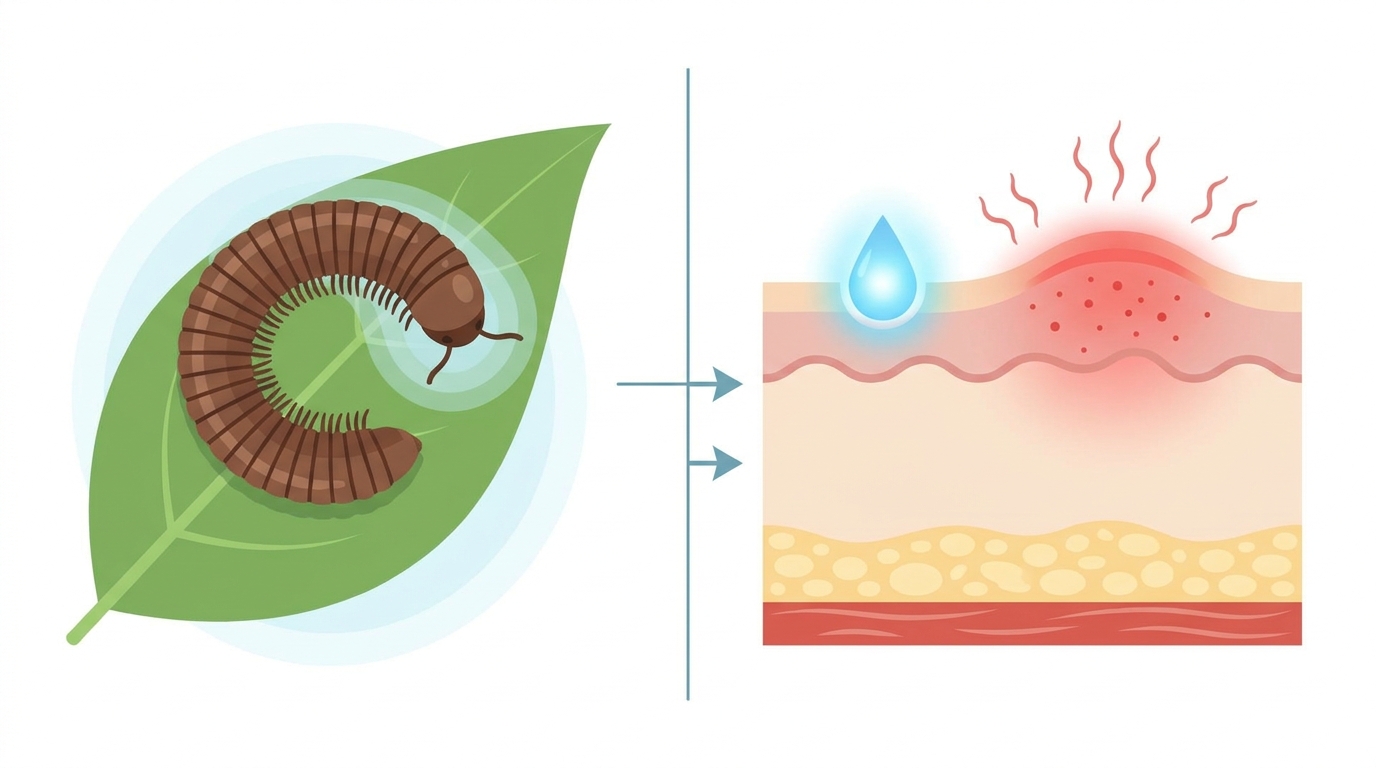
However, like many animals, millipedes have evolved an effective defense mechanism to protect themselves from predators. When a millipede feels threatened or handled roughly, it curls its body tightly into a defensive spiral shape. Following this, many species secrete a mild defensive liquid from specialized pores along their sides.
This defensive secretion can contain trace amounts of various chemical compounds, including:
- Hydrochloric acid .
- Hydrogen cyanide compounds in minute traces .
- Natural organic acids .
- Phenol derivatives .
- Benzoquinones .
Do not panic when you read these chemical names! The amount of fluid a tiny millipede secretes is extremely small, meaning it poses no systemic health threat to humans.
However, people with sensitive skin or existing allergies may experience a localized skin reaction if this defensive fluid contacts bare skin. Potential signs include:
- Mild skin redness and persistent itching .
- A warm, tingling, or burning sensation .
- Occasional small fluid-filled blisters on the skin .
- Temporary brownish discoloration of the skin surface .
Also, if this defensive fluid accidentally gets into your eyes, it can cause stinging, irritation, and inflammation. Taking proper precautions around these animals keeps your eyes and skin safe.
What to Do If You Experience a Skin Reaction
If you handle a millipede or accidentally come into contact with its defensive secretions and develop skin irritation or itching, follow these essential first-aid steps:
- Wash Right away with Soap and Water: Thoroughly scrub the affected skin area using gentle soap and plenty of running water to remove all chemical residues.
- Avoid Touching Your Eyes: Never touch your face or eyes with hands that may carry millipede secretions. If fluid accidentally splashes into your eye, rinse your eyes thoroughly with clean running water for fifteen to twenty minutes straight, then seek medical attention right away.
- Symptomatic Skin Care: For mild skin redness or itching, ask your doctor or pharmacist about using a soothing, over-the-counter soothing cream.
- Consult a Doctor: If skin blisters worsen, burning pain becomes severe, or itching persists for several days, schedule an appointment with a doctor for proper evaluation.
How to Control Millipedes at Home
Spraying heavy chemical pesticides inside your living areas will not solve a millipede problem permanently. New creatures will simply continue to crawl inside from the surrounding yard. The most effective control strategy involves removing the environmental conditions that attract millipedes to your home.
- Clear Yard Debris: Rake up fallen leaves, remove rotting wooden logs, and clear damp garden waste away from the immediate perimeter of your house.
- Manage Indoor Moisture: Lower humidity levels inside damp areas. Fix leaking plumbing pipes promptly, keep bathrooms well-ventilated, and use a dehumidifier in basement rooms if necessary.
- Seal Entry Gaps: Inspect your exterior foundation walls and seal any visible cracks, gaps, or crevices using quality cement mortar or weather-resistant silicone sealant.
- Keep Mulch and Firewood Away: Store firewood stacks and thick garden mulch beds several feet away from your home foundation walls.
- Use Natural Barriers: Apply food-grade diatomaceous earth powder along common entry points such as doorways, window sills, and basement entry thresholds.
If millipedes continue entering your living space despite these thorough maintenance steps, consider contacting a licensed professional pest control company for specialized assistance.
When to Call Emergency Services or Seek Immediate Medical Care
While millipede encounters rarely require emergency intervention, contact emergency services (such as 911 in the US or Canada, or 999 in the UK) or visit your nearest Emergency Department (ER / A&E) right away if you experience any of the following severe symptoms:
- Severe allergic reactions, breathing difficulties, or swelling of the face, lips, or throat.
- Intense, worsening eye pain, blurred vision, or chemical conjunctivitis following accidental eye exposure to millipede fluids.
- Extensive skin blistering, spreading inflammation, or signs of secondary bacterial skin infection (such as pus or spreading warmth).
💡 Take-Home Message
Millipedes are fascinating garden creatures that pose no serious threat to human health. They do not bite, nor do they carry dangerous venom. They enter homes primarily in search of moisture during extreme weather. If their defensive fluid touches your skin, wash the area thoroughly with soap and water. Should fluid enter your eyes, flush them with water and consult a doctor right away. Maintaining a clean, dry home environment and sealing foundation gaps remains your best defense against indoor visitors.


No comments yet. Be the first to share your question or experience below.